Film und Foto, held in Stuttgart in the summer of 1929, gathered about 1,200 works by some 200 authors and gave the New Vision its first great international showcase. This is the second chapter of our series on the exhibitions that made photography history.
Just nineteen years after Buffalo, a very different kind of photography filled the halls of a German city. Instead, the pictures were sharp, unsentimental and often shot from dizzying angles. They came from art, advertising, propaganda and the press, and most of them made no attempt to imitate a painting.
The German Werkbund organized Film und Foto, usually shortened to FiFo, as a deliberate break with the soft, hand-worked style we met in our chapter on the Buffalo exhibition of 1910. Indeed, it argued that the camera had its own language, and that this language belonged to the machine age.
Film und Foto in Stuttgart: A Show Built Against Softness
According to the Museum of Modern Art, Film und Foto ran from May 18 to July 7, 1929, in Stuttgart.1 Specifically, the venue was the city’s new exhibition hall on the Interim Theatre Square, and the organizer was the Deutscher Werkbund, an association of architects, designers, craftspeople and industrialists.
First, the scale was striking. The Staatsgalerie Stuttgart, which marked the show’s 80th anniversary in 2009, describes about 1,200 works by 200 authors, and it quotes the claim that FiFo offered the first systematic overview of international developments in film and photography.2 In short, nobody had tried to put so many kinds of modern image-making under one roof.
From Pictorialism to the New Vision
To see why Film und Foto felt so radical, it helps to remember what came before. Pictorialism, for its part, prized atmosphere, hand-crafted prints and the look of painting. By the 1920s, however, a younger generation had grown suspicious of that style.
The camera as a modern eye
Instead, these photographers valued the camera’s mechanical precision. For example, they tilted their viewpoints, shot from above and below, and moved in close until a plant or a machine part became an abstract pattern. Similarly, Karl Blossfeldt’s close-ups of plants, published in 1928, belong to this moment.
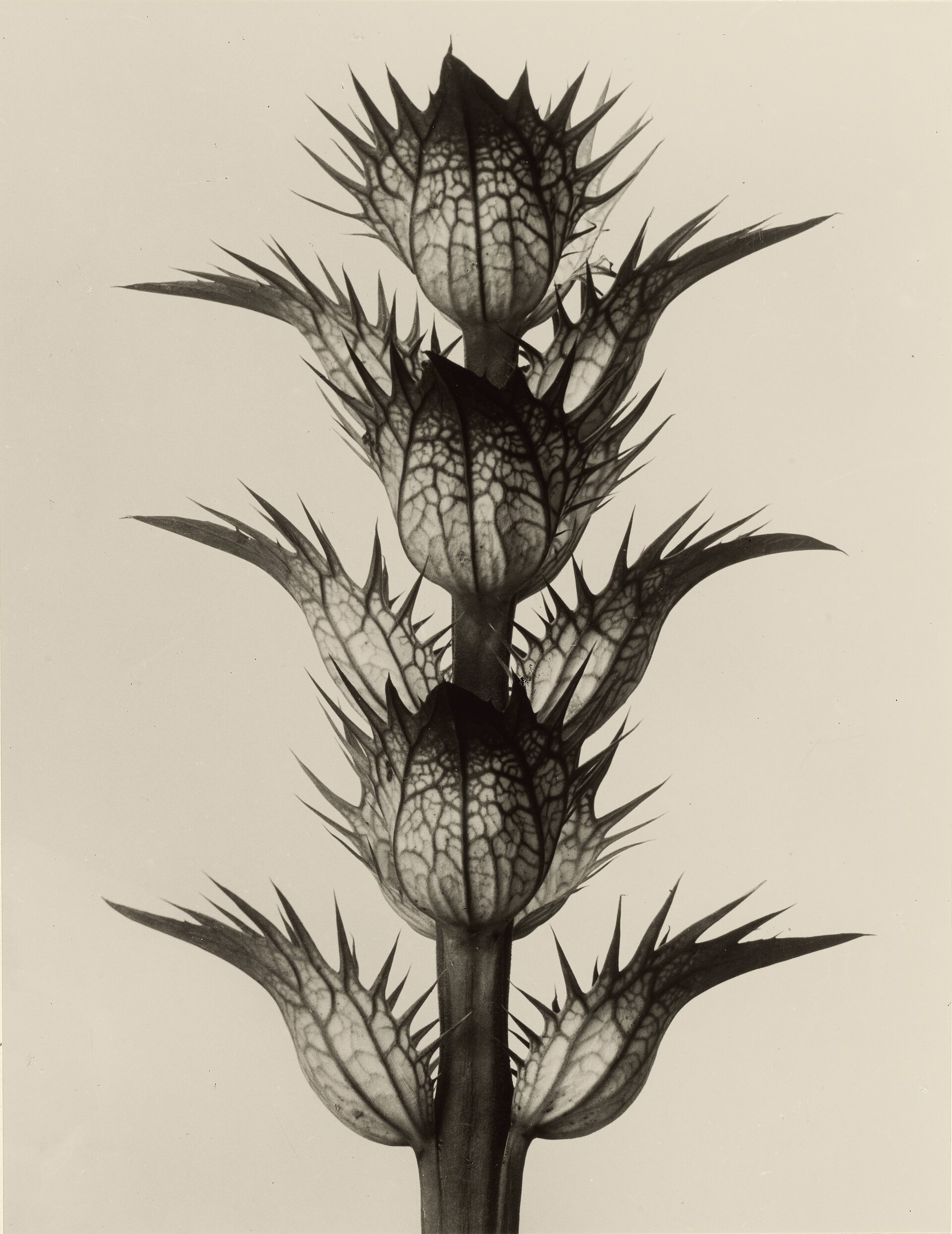
We explore this vision in more depth in our article on the New Vision. Thus, Film und Foto was the moment when that scattered movement became a visible, international event.
Who Built Film und Foto
Behind the exhibition, in fact, stood a small group of organizers, designers and jurors. Their mix of backgrounds therefore explains why the show combined photography, film, typography and architecture.
The Werkbund and Gustaf Stotz
Gustaf Stotz, who led the Württemberg section of the Werkbund, initiated the Stuttgart show. The Routledge Encyclopedia of Modernism, which spells his first name “Gustav,” describes the Werkbund as an open association that supported applied-arts training.3 In fact, the association had been promoting modern design for years, and the exhibition extended that mission to the camera.
A jury of modernists
Moreover, the same source names a selection committee of the art historian Hans Hildebrandt, the architect Bernhard Pankok and the typographer Jan Tschichold. In addition, it lists leaders for the national sections: László Moholy-Nagy for Germany, Siegfried Giedion for Switzerland, El Lissitzky for the Soviet Union, Edward Steichen and Edward Weston for the United States, and Piet Zwart for the Netherlands. Finally, Hans Richter organized a film program.
Inside Film und Foto: Thirteen Rooms
However, the show was not a single hall of framed prints. According to Olivier Lugon, it consisted of thirteen rooms. Nine of them left no visual trace, and only the first four offer a few views, which are very uneven. Three of those rooms were the work of artists who were also exhibitors, so they gave the installation a bold, experimental character.
Moholy-Nagy’s opening room
First, László Moholy-Nagy designed Room 1. Specifically, Lugon describes a large X-ray panel lit from behind, which placed a scientific image at the very start of the visit. In other words, the show announced that photography was not only art, but also a tool of knowledge.
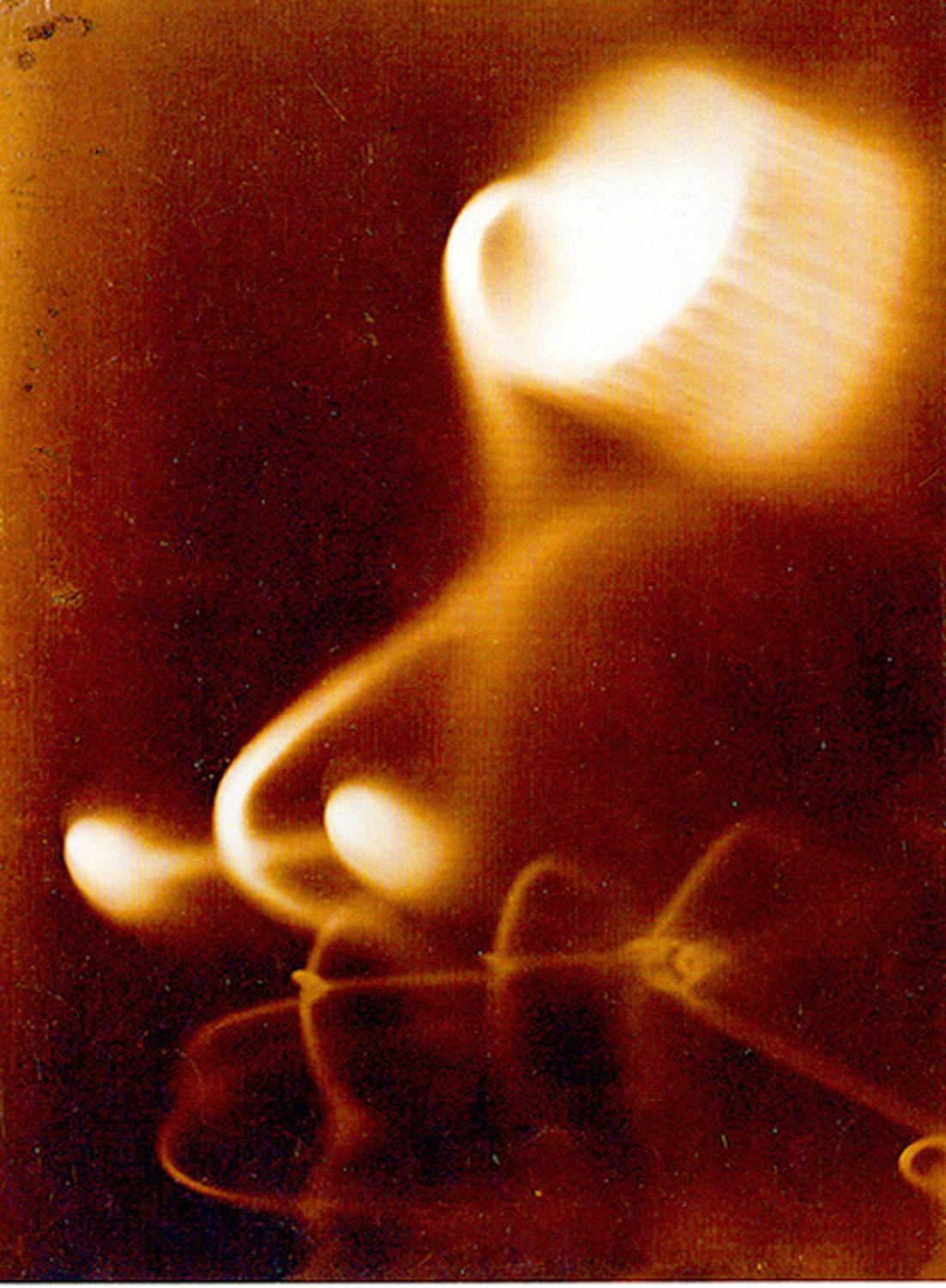
Indeed, photograms like this one, made without a camera, showed how far the new generation was willing to push the medium. Our article on photograms explains the technique.
Heartfield’s photomontage room
Next, John Heartfield, the master of political photomontage, designed Room 3. For this room, Lugon notes that twenty-two installation views by the photographer Arthur Ohler survive for this room. Andrés Mario Zervigón has used such evidence to study how visitors moved through the space, and he describes a “peripatetic viewer” who walked, turned and compared rather than standing before a single frame.4
Lissitzky’s Soviet room
Finally, Room 4 housed the Soviet section that El Lissitzky designed. Lugon explains that it used automatic Duoskop viewing devices and rear-projected strips of enlarged photograms, the show’s most serious attempt to combine photography and film in one space.
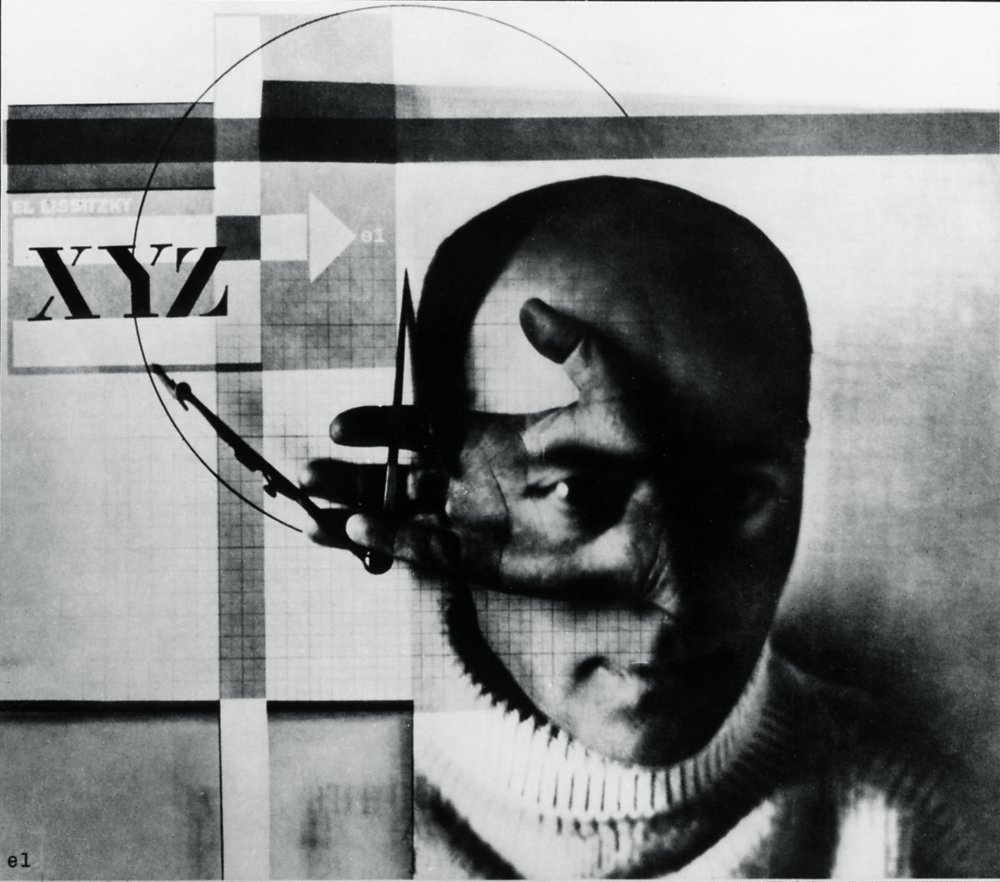
Notably, Lissitzky’s self-portrait, shown here, would later appear on the cover of a book that grew out of the exhibition.
The Photographers and the National Sections
Because each section had its own organizer, therefore, Film und Foto read like an international survey. Germany, Switzerland, the Soviet Union, the Netherlands and the United States each presented a distinct tradition, and a cinema program by Hans Richter showed avant-garde films alongside the prints.
An American voice
Next came the American section, which historians credit to Edward Steichen and Edward Weston. Meanwhile, Weston’s sharply focused studies of shells and vegetables, such as his Nautilus Shell of 1927, showed that American modernism was moving in a similar direction to the European New Vision.
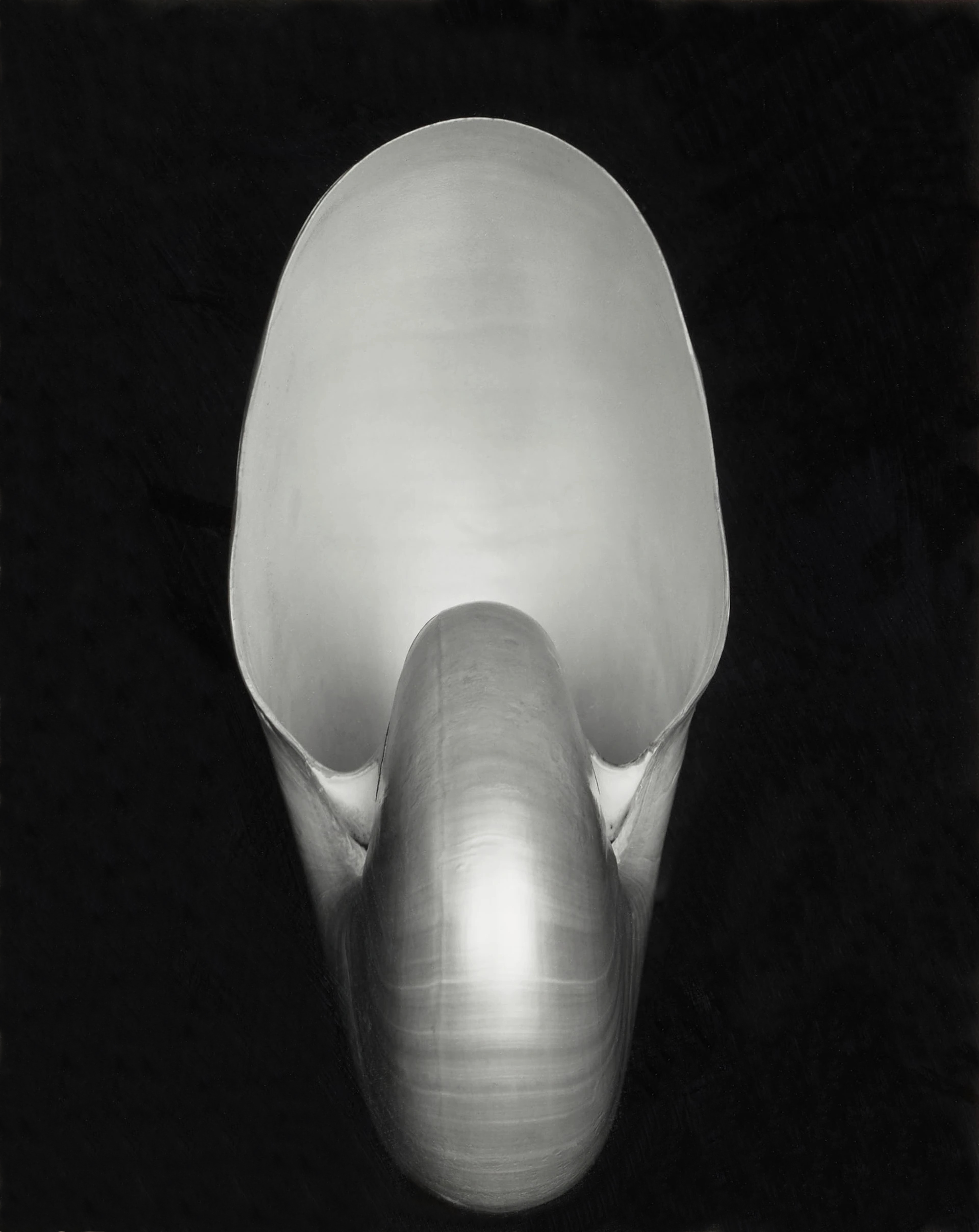
Steichen, for instance, had been a leading pictorialist at the time of Buffalo. His presence in Stuttgart thus shows how quickly photography’s ideas of itself were changing.
A democratic hanging
Additionally, the display was unusual. The Staatsgalerie describes works that curators mounted simply or even nailed to the walls, with anonymous pictures hanging next to famous ones and student work from schools such as the Bauhaus and the Folkwang School. As a result, the exhibition treated press photographs and scientific images as seriously as signed art.
Foto-Auge: The Book That Followed
Two members of the circle around the show turned its ideas into a publication. Franz Roh and Jan Tschichold produced Foto-Auge (Photo-Eye) in 1929, after noticing that the exhibition lacked an illustrated book on the new work.5 Altogether, the book reproduced 76 photographs and photomontages, and Tschichold used Lissitzky’s self-portrait on the cover.
Consequently, this pairing of exhibition and book became a model. Indeed, later shows would rely on catalogues and photobooks to extend their influence beyond the gallery walls.
The Film und Foto Tour, 1929–1931
However, Film und Foto did not end in Stuttgart. According to the Routledge Encyclopedia, it toured to Berlin and Wrocław, and under the title Das Lichtbild it appeared in Munich, Essen and Dessau. Between 1929 and 1931, versions had been shown in Zurich, Vienna, Gdańsk, Zagreb, Tokyo and Osaka.
Furthermore, Lugon draws an important conclusion from this tour. Each move reconsidered the core of the Stuttgart show, and prints and mounts were replaced along the way, so he argues that we should speak of “exhibitions” in the plural rather than one fixed event. A short account of the exhibition also appears in a theater-studies journal.6
Why Film und Foto Still Matters
Film und Foto matters, first of all, because it shifted the center of gravity. The ideal photograph was no longer a misty, handmade print but a precise, even mechanical image that could appear in a magazine, a poster or a gallery. That idea lies behind much of what we call photographic modernism.
Second, it left a lasting model of curating. Rooms designed by artists, mixed sources and a cinema program, for instance, all treated the exhibition itself as a creative medium. The show was later reconstructed in part in 1975 and again for a 1979 touring exhibition, as the Staatsgalerie notes, which shows how strongly it had entered the historical canon.
Meanwhile, the story did not stay in Germany. In the next chapter of this series, Photography 1839–1937 at the Museum of Modern Art would give the same medium a historical narrative for an American audience. You can follow the whole series in our exhibitions category.
Key Dates for Film und Foto
| Date | Event | Why it matters |
|---|---|---|
| 1928 | Blossfeldt’s Urformen der Kunst published | Close-up plant photography enters the avant-garde |
| 18 May–7 July 1929 | Film und Foto, Stuttgart | The international showcase of the New Vision |
| 1929 | Foto-Auge published | A book that carries the exhibition’s ideas forward |
| 1929–1931 | Exhibition tours European and Japanese cities | The New Vision becomes international |
| 1975 | Partial reconstruction in Stuttgart | Historians return to the show |
| 1979 | Touring reconstruction, Film und Foto der zwanziger Jahre | The exhibition enters the canon |
| 2009 | Staatsgalerie Stuttgart homage | The 80th anniversary |
Frequently Asked Questions
What was Film und Foto?
Film und Foto was an international exhibition of photography and film held in Stuttgart from May 18 to July 7, 1929. The German Werkbund organized it, and it gathered about 1,200 works by around 200 authors.
Who organized Film und Foto?
The Deutscher Werkbund organized it, on the initiative of Gustaf Stotz of its Württemberg section. A committee that included Hans Hildebrandt, Bernhard Pankok and Jan Tschichold selected the works.
Why was Film und Foto important?
In essence, it presented the New Vision, a modern approach to photography built on sharp focus, unusual angles and mechanical precision, to an international audience. In addition, it mixed art photography with press, advertising and scientific images.
Which artists designed its rooms?
László Moholy-Nagy designed Room 1, John Heartfield designed Room 3, and El Lissitzky designed the Soviet room, Room 4, according to Olivier Lugon’s essay for MoMA.
Did Film und Foto travel?
Yes, indeed. It was shown in cities across Europe and in Japan between 1929 and 1931, often in modified form.
Where can I read more?
Start with Olivier Lugon’s essay on MoMA’s Object:Photo site, the Routledge Encyclopedia of Modernism and Andrés Mario Zervigón’s article in October, all cited above.
- Olivier Lugon, “Prints from the Thomas Walther Collection and German Exhibitions around 1930,” in Object:Photo. Modern Photographs 1909–1949: The Thomas Walther Collection (New York: The Museum of Modern Art, 2014), essay available on MoMA’s Object:Photo website. The essay gives the dates, the number of rooms, the room designers and the touring history.
- Art Daily, “Staatsgalerie Stuttgart Marks the Eightieth Anniversary of the Exhibition ‘Film und Foto'”, reporting the museum’s description of the 1929 show and its 2009 homage.
- Routledge Encyclopedia of Modernism, “Film und Fotografie”. The entry covers the organizers, the selection committee, the national sections and the tour.
- Andrés Mario Zervigón, “The Peripatetic Viewer at Heartfield’s Film und Foto Exhibition Room,” October 150 (2014), pp. 27–48, doi:10.1162/octo_a_00199.
- Drawing Matter, “Jan Tschichold and El Lissitzky: Foto-Auge (Photo-eye)”. The article describes the book’s link to Film und Foto, its 76 photographs and Tschichold’s cover design.
- Martin Reinhart, “The Film and Photo Exhibition of 1929,” Maske und Kothurn 65, no. 1–2 (2019), pp. 126–129, doi:10.7767/mako.2019.65.1-2.126.

1 thought on “Film und Foto 1929: The Stuttgart Exhibition That Defined the New Vision”