Sebastião Salgado spent half a century turning gold mines, famine camps and rainforests into monumental black-and-white pictures. In the same years, he and his wife replanted a ruined cattle ranch in Brazil. He died in Paris on 23 May 2025, aged 811. In fact, few photographers have been praised so lavishly, and few have been argued over so hard.
This article follows his path in order. First comes the economist who left Brazil in 1969; then the agency photographer who became the author of long projects; next the forester at Aimorés; finally the last great cycles, Genesis and Amazônia. It also sets out, with named sources, the case made against his aesthetics and the answers his defenders give. Every date and figure carries a note, and the notes say where sources disagree.
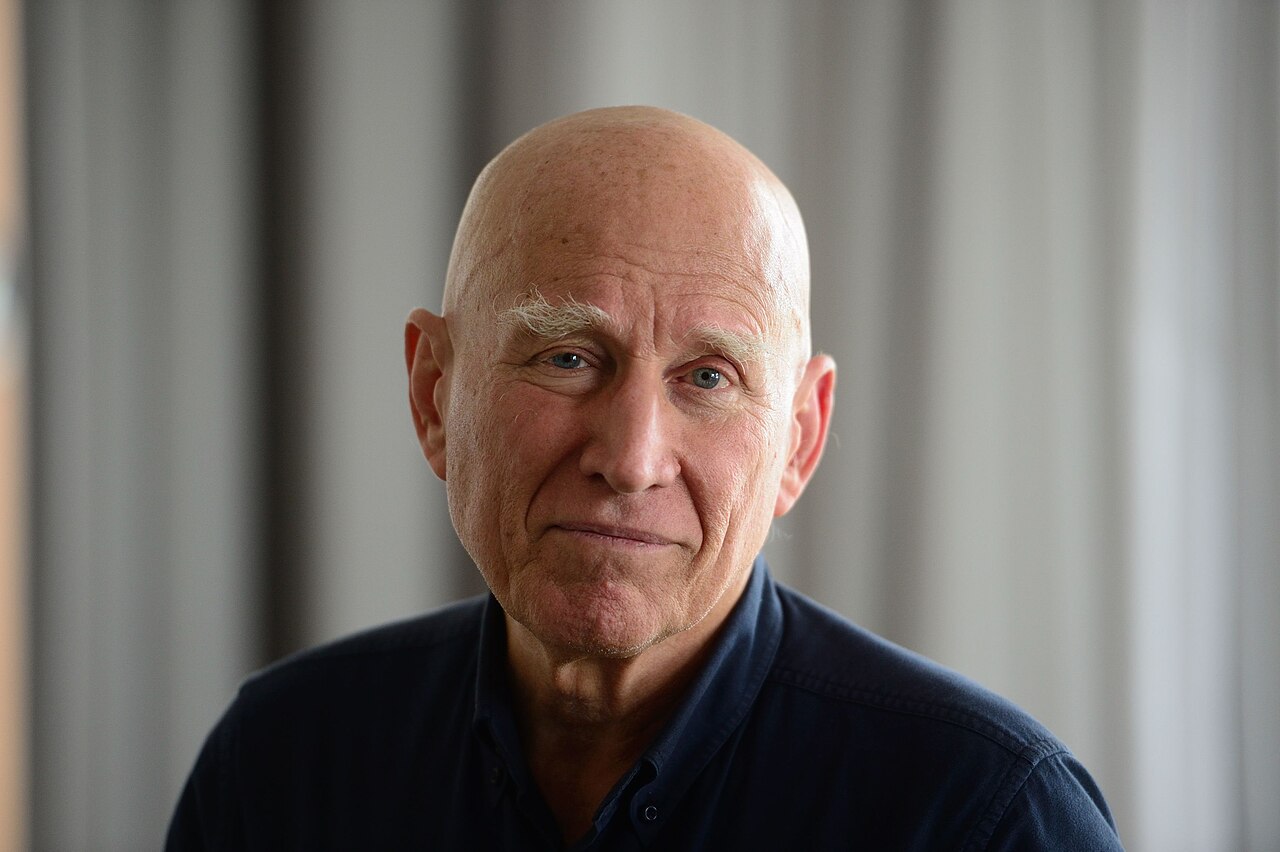
Sebastião Salgado at a glance
| Born | 1944, Aimorés, Minas Gerais, Brazil2. |
| Died | 23 May 2025, Paris, aged 813. |
| Trained as | Economist: master’s degree, University of São Paulo, 19684. |
| Photographer | Full time from 1973, in Paris5. |
| Agencies | Sygma and Gamma, then Magnum (1979–1994); Amazonas Images, founded in 1994 with his wife Lélia6. |
| Major projects | Sahel (1984–85), Workers (completed 1992, book 1993), Migrations (book 2000), Genesis (begun 2004), Amazônia (seven years; book May 2021)7. |
| Institute | Instituto Terra, founded in 1998 with Lélia8. |
| Honours | Peace Prize of the German Book Trade (2019), Praemium Imperiale, Académie des Beaux-Arts (2016)9. |
From economist to photographer
Salgado was born in 1944 in Aimorés and grew up on a cattle farm10. He studied economics and took a master’s degree at the University of São Paulo in 196811. Because he opposed Brazil’s military dictatorship, he and Lélia moved to France in 196912.
In Europe he kept working as an economist. According to The Art Newspaper, he was also chief economist of the International Coffee Organization13. His missions took him to Africa. There, according to his US publisher, he began photographing the people he met14. A profile by the American Society of Cinematographers adds that he first used Lélia’s small camera. In Africa, the profile says, he then came to see photography as a tool for social and economic change15.
In 1973 he became a full-time photographer in Paris16. He worked through the agencies Sygma and Gamma, then joined Magnum, where he stayed from 1979 to 199417. In 1994 he and Lélia founded Amazonas Images, an agency of their own in Paris. Once he had enough financial independence, the same profile notes, he pursued long photo essays that often took about a decade of travel, and Lélia edited the results into books18.
The long projects of Sebastião Salgado
In fact, his reputation rests on projects that took years and filled books. Each one chose a theme large enough to need a new continent every few months: famine, manual labour, displacement, and finally untouched nature.
Sahel, 1984–85: the method takes shape
The method first took shape in the Sahel. In 1984 he began a project of about fifteen months there. He worked with Médecins Sans Frontières in Chad, Ethiopia, Mali and Sudan, documenting famine and refugees19. In addition, MSF’s own page says roughly one million people died there from malnutrition and related causes20. Then a book, Sahel: The End of the Road, appeared in 198621. The University of California Press then issued a first US edition in October 2004. It has 152 pages and 88 duotone plates. Orville Schell and Fred Ritchin wrote forewords, Eduardo Galeano an afterword, and Lélia Wanick Salgado designed the book22.
Serra Pelada and Workers
In 1986 he photographed the Serra Pelada gold mine in Pará, Brazil. The critic Julian Stallabrass opens his 1997 essay with it. He describes about 50,000 workers carrying ore up ladders and mud slopes by hand, paid roughly twenty cents a climb, and some made sixty trips a day23. Decades later, The Art Newspaper notes, the miners returned in the book Gold (2019)24. Meanwhile Workers, a project on manual labour, was completed in 1992 and published as a book in 199325.
Stallabrass reads the mine pictures as a rebuke to “end of history” arguments, because they show pre-industrial labour and exploitation in a supposedly post-industrial world26.
Sebastião Salgado in Kuwait, 1991
In early 1991, as coalition forces pushed Iraqi troops out of Kuwait, retreating forces ignited some 700 oil wells. Salgado went to photograph the aftermath. His pictures first ran in the New York Times Magazine in June 1991 and later won the Oskar Barnack Award27. Taschen’s monograph, a 208-page hardcover edited by Lélia Wanick Salgado, appeared much later; his bibliography lists it as 2016.
Migrations, Rwanda and the turn to nature
Migrations, published in 2000, gathers photographs of displaced people made in 35 countries during the 1990s28. Together with the related book The Children, it raised money for UNICEF29. Yet the work cost him. In the mid-1990s he stepped back from photography, partly for health reasons and partly because of doubts after witnessing the Rwandan genocide, according to the Börsenverein30. He later said he had lost faith in the salvation of humanity, and decided that images of unspoiled nature could restore hope31.
In 2000 he also talked at length with the writer John Berger at Berger’s farm in Quincy, France. A 51-minute television film, The Spectre of Hope, records the conversation. It centres on the displacement shown in Migrations, and also on criticism of the World Bank and globalisation32.
The case against Sebastião Salgado’s beauty
The debate about Salgado is not a side issue, because it concerns a question every documentary photographer faces: can a picture of suffering be beautiful without anaesthetising the viewer? Three voices frame it, and then his defenders answer.
Ingrid Sischy and the aestheticisation charge
In 1991 the critic Ingrid Sischy argued in The New Yorker that Salgado concentrated too heavily on composition, searching for grace and beauty in suffering subjects. In her view, this aestheticising of tragedy leaves viewers passive rather than moved to act33.
Susan Sontag’s verdict and Salgado’s reply
Susan Sontag then took up the charge in Regarding the Pain of Others (2003). She described Salgado as a photographer who “specializes in world misery”34. His answer, reported in the same article, was that he should wear the label with pride, because it reflects the importance of his subject. He framed that subject as a global imbalance, because rich nations suffer from excess and poor ones from need35. Jeremy Harding’s review of Sontag’s book adds that she found the project too grand and too heady, reminding her of The Family of Man36.
Stallabrass on fine-art photojournalism
The most sustained academic critique, however, is Stallabrass’s essay of 1997 in New Left Review37. It first places Salgado in a shrinking world of photojournalism, squeezed by television and by concentrated media ownership. According to the opening section, Stallabrass credits him with reviving the formal rigour, compassion and black-and-white intensity of earlier photojournalism. However, he sees this as an individual, backward-looking style rather than a movement like the one around Cartier-Bresson, Capa and Rodger. He also warns that reading the Serra Pelada images only as a general metaphor for the quest for gold forgets the individuals and conditions they show38.
Earlier, in 1991, Susan Edwards had published “Photography and the representation of the other: a discussion inspired by the work of Sebastiao Salgado” in the journal Third Text39.
How defenders read Sebastião Salgado
Defenders do not deny that the pictures are beautiful. Instead they argue that the beauty is part of the ethics. Parvati Nair’s book A Different Light (Duke University Press, 2011) places the photo essays within debates on aesthetics, history and ethics. It also engages the critiques of Sontag and Sischy. A review in Leonardo reports that she defends the ambivalent beauty of the images as a reflection of the flux and plurality of modernity, and that she treats ethics as a responsibility to others that comes before language. However, the same reviewer finds that the theory-heavy approach keeps some distance from the emotional force of the photographs40.
A 2026 article in the journal Intercom analyses ten images from Sahel. It argues that they express what its author calls Critical Humanist Discourse41. For his part, Salgado rejected the charge: he said he never photographed misery, and that he looked instead for dignity and resilience42. The Art Newspaper’s obituary adds that opponents accused him of romanticising poverty and aestheticising Indigenous customs. It also cites the anthropologist João Paulo Barreto’s criticism of the romanticising optics of his work. Salgado replied that his images show the inherent value of human life43.
Recent critical readings of Sebastião Salgado
Newer scholarship extends the debate beyond aestheticisation. Christopher Ball reads Genesis as an exercise in what he calls photographic primitivism, concerned with the relationship between modern and premodern Indigenous people and with romantic nostalgia44. Meanwhile, S. Rushing argues that the Serra Pelada photographs reveal a system of racial coding in late twentieth-century Brazil45. These are interpretations, not settled facts, and they sit beside the defenders’ readings above.
Sebastião Salgado as forester: Instituto Terra
Then his second life began on his family’s land. In 1998, he and Lélia founded Instituto Terra in Aimorés, on the former cattle ranch, and the property became the Fazenda Bulcão private natural heritage reserve (RPPN), a status that was unusual because it was granted to a degraded area on condition that it be restored46. The first planting, of about 10,000 trees, took place in the summer of 1999/200047. According to The Art Newspaper, the land had only about 0.5% tree cover when the work began in 199948.
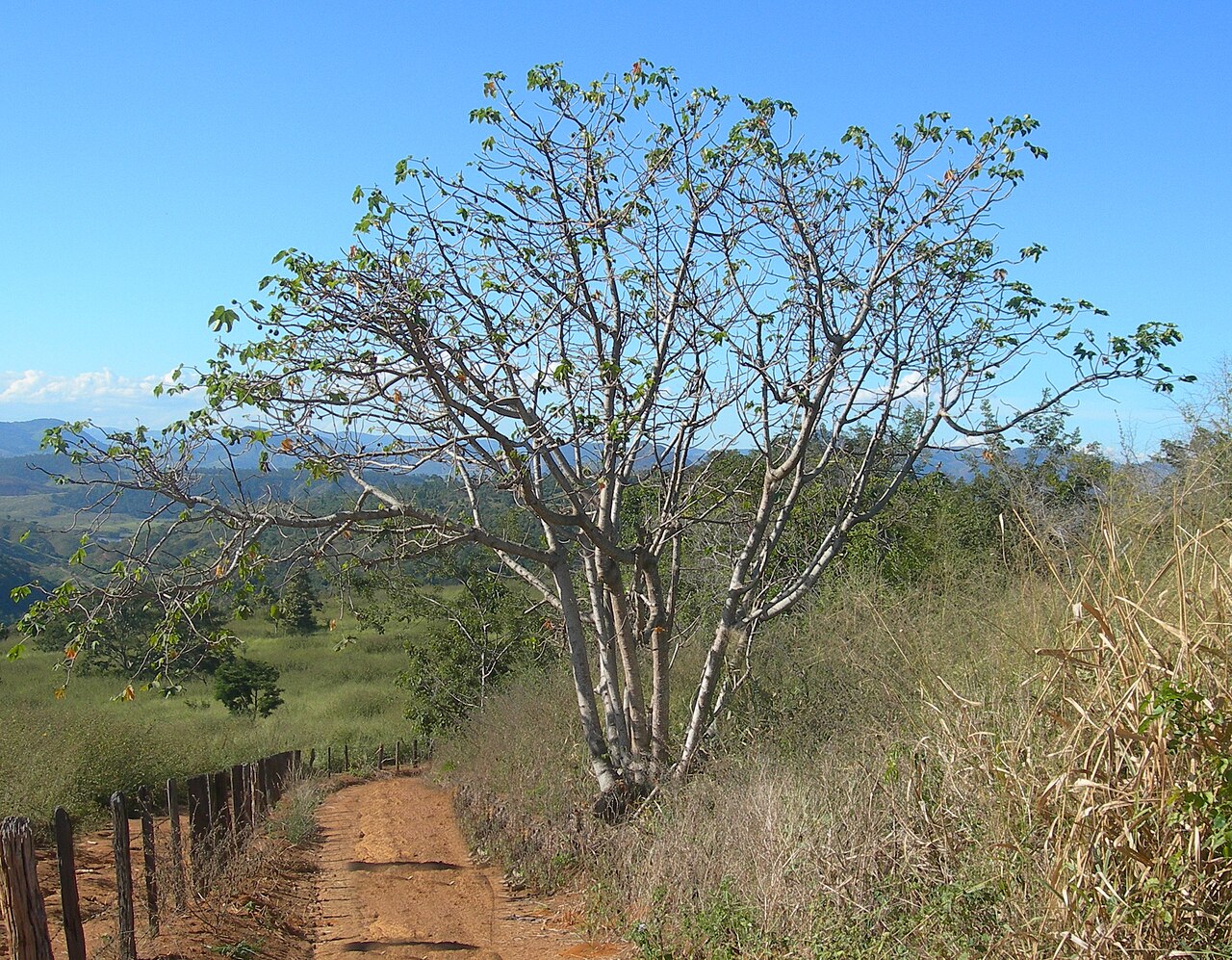
Counting trees and species
The numbers deserve care because sources disagree. The institute’s own history page gives about 2.3 million trees planted as of 202049. By contrast, the Börsenverein wrote of about 2.7 million in 2019, and The Art Newspaper repeats 2.7 million in 2025, adding that some 700 hectares of Atlantic Forest have been restored50. I therefore give both figures. The sources do not say how the counts were made.
Also, the institute reports results beyond tree counts. Its 2007 fauna monitoring found 172 bird species, 33 mammal species, 15 reptile species and 15 amphibian species. Besides, its nursery can raise up to 500,000 seedlings a year51. A spring-restoration programme, Olhos d’Água, began in 2010. Then a 2020 enrichment project plans one million more seedlings of at least 80 native species by 202752. In 2022, a “Tree of Life” NFT sold with Sotheby’s sent its proceeds to reforestation, The Art Newspaper reports. The institute is now led by the couple’s son Juliano, and Salgado’s ashes are to be scattered there53.
Genesis and Amazônia: the last great cycles
After Migrations, Salgado turned to places he considered still intact. As Time reports, the idea came from two experiences: replanting the ranch, and the discouragement left by his refugee work. He decided to show what should be protected rather than what had been destroyed54.
Genesis, 2004–2013
Genesis began in 200455. Time counts 32 trips over about nine years. They went to places including the Kalahari, the Galápagos, Madagascar, the Nenets herding grounds of Siberia and the sub-Antarctic island of South Georgia56. A museum notice for his 2026 Italian retrospective, however, says the project developed over more than seven years, so the duration depends on the source57. Salgado told Time that about 45% of the planet remains as it was at the beginning. He also said that balloons let him approach animals without scattering them, unlike planes or helicopters58.
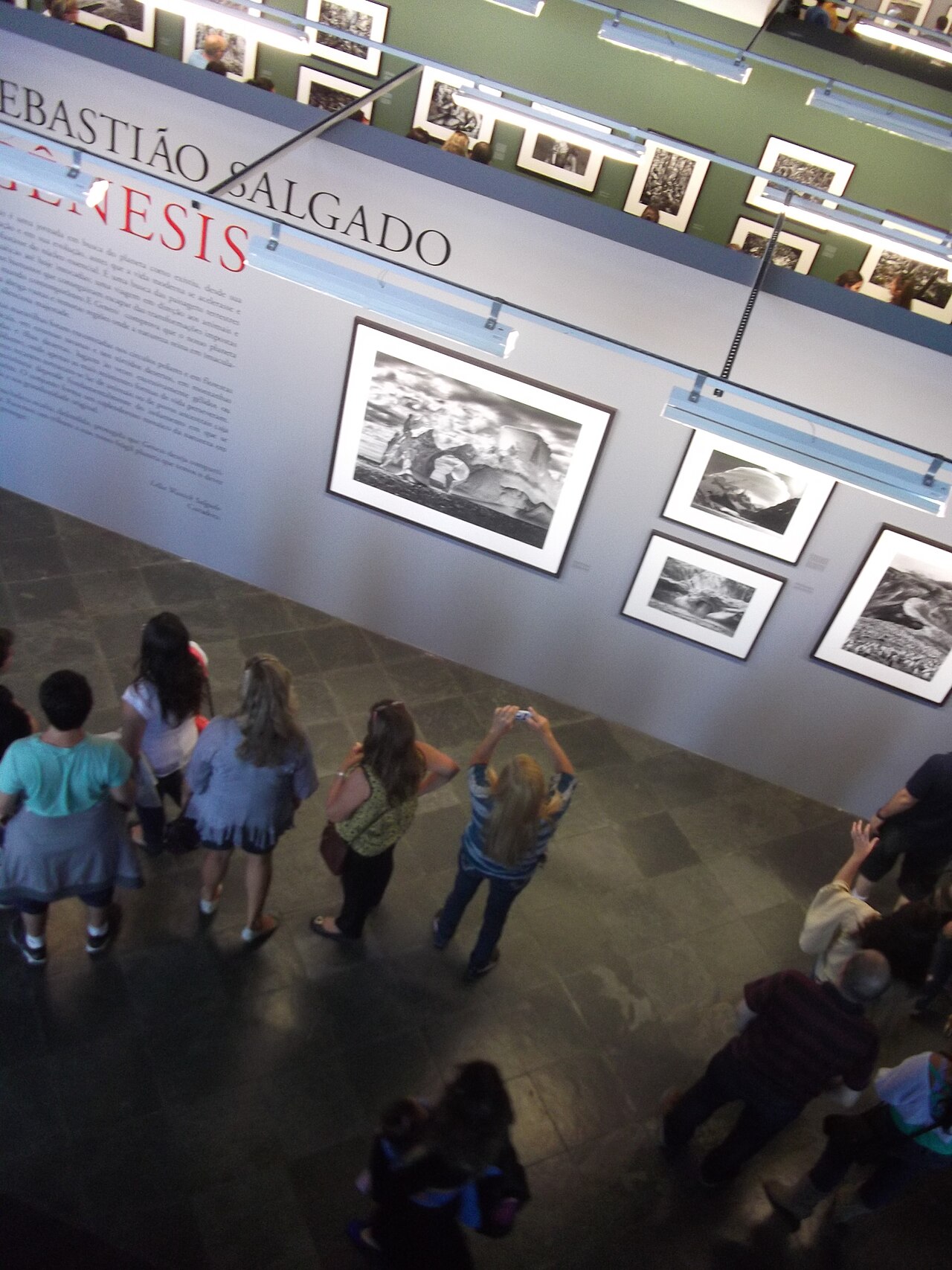
The exhibition shown at the International Center of Photography in New York held more than 200 black-and-white photographs. It ran from 19 September 2014 to 11 January 2015. Lélia curated and designed it. She also designed and edited the two Taschen publications59. The Praemium Imperiale page dates the Genesis book to 201360.
How Sebastião Salgado worked: film, digital and contact sheets
Salgado’s method changed during Genesis. According to an American Society of Cinematographers profile, he first worked on Kodak Tri-X film in 24×36 and 4.5×6 formats. Midway through the project he switched to digital capture, partly because airport X-ray security affected film61. The same profile says he still printed contact sheets on inkjet paper and examined them with a magnifying glass. It also reports 4×5 negatives made from the digital files after tests with Canon.
Amazônia, seen from the river
Amazônia took seven years of work in the Brazilian Amazon. The Philharmonie de Paris showed it from 20 May to 31 October 2021: 200 photographs, many shown for the first time, large-scale projections and an original soundtrack by Jean-Michel Jarre built from sounds recorded in the rainforest. Lélia Wanick Salgado was curator and scenographer. The show was also a collaboration with the Geneva Ethnography Museum62. The photographs document ten ethnic groups. Moreover, the exhibition gave Indigenous communities a voice through their own testimonies and documentary films, presenting them as the traditional protectors of their lands63. The book was published in May 202164. Whether this framing answers the critics quoted above is left to the reader.
Sebastião Salgado on screen and in the prize lists
In 2014 Wim Wenders and the photographer’s son, Juliano Ribeiro Salgado, co-directed The Salt of the Earth. The documentary follows Salgado across about four decades of work65. It won the Special Prize in the Un Certain Regard section at Cannes in 2014. It was then nominated for best documentary at the 87th Academy Awards, and it also won the César for best documentary66.
Then honours followed. The Börsenverein des Deutschen Buchhandels awarded him its Peace Prize in 2019. The ceremony took place on 20 October in Frankfurt, and the prize carries €25,000. The board praised an artist working for peace and social justice. The same page lists membership of the Académie des Beaux-Arts (2016) among his distinctions67. The Praemium Imperiale names him its 32nd laureate in the painting category68. Earlier, according to the sociologist Steven Gold, the American Sociological Association gave him its 2010 Award for Excellence in the Reporting of Social Issues69. In 1982 he received the W. Eugene Smith grant in humanistic photography70.
Where to see Sebastião Salgado’s work
At the time of writing (9 November 2026), one retrospective is open. The Civic Museum of Bassano del Grappa, in Italy, shows more than 160 photographs from the collection of the Maison Européenne de la Photographie in Paris. The show runs from 24 October 2026 to 4 April 2027. Curator Pascal Hoël divides the show in two: the first twenty-five years (Other Americas, Sahel, the Serra Pelada gold mine, Workers, Kuwait, Exodus, Children of the Exodus), then Genesis71.
However, two posthumous shows have closed. A free exhibition of about 200 photographs, curated by Lélia Wanick Salgado, ran at the Hôtel de Ville in Paris. It lasted from 21 February to 6 June 202672. Meanwhile, Galerie Bene Taschen in Cologne showed a retrospective from 25 October 2025 to 21 February 2026, with a companion Amazônia exhibition at the Rautenstrauch-Joest-Museum73. Dates change, so check each venue before travelling. The Instituto Terra describes its reserve and nursery on its own site74.
Why Sebastião Salgado still matters
Overall, his legacy is double. As a photographer he gave documentary work the scale of an epic. He committed years to each theme, and then shaped each into books and touring exhibitions, with Lélia as editor and designer75. As a campaigner he is credited with pairing photography with books, exhibitions, education and environmental funding, although the tribute that says so is not a neutral profile76.
To place him, a few pages on this site help. Henri Cartier-Bresson’s decisive moment is a useful comparison, since Stallabrass names that generation when he calls Salgado’s style backward-looking. The essay on post-documentary photography shows where artists went next, and the piece on photography and the Anthropocene covers the environmental frame that Genesis and Amazônia invite. For the emotional side of such pictures, see understanding emotional images; the wider list is in our guide to famous contemporary photographers.
Questions about Sebastião Salgado
Who was Sebastião Salgado?
Salgado was a Brazilian photographer (1944–2025). He trained as an economist, moved to France in 1969 and then became a full-time photographer in 1973. Today he is known for Sahel, Workers, Migrations, Genesis and Amazônia, and for founding Instituto Terra with his wife Lélia. The sources for each point are given above.
Why is his work controversial?
Critics such as Ingrid Sischy argued that his compositions aestheticise suffering, and Susan Sontag also objected to his focus on misery. However, defenders reply that the beauty carries an ethical purpose and shows dignity. The critics’ section above gives the sources and the replies.
Did Sebastião Salgado shoot digital?
Yes, for part of Genesis. He began on Tri-X film and switched to digital capture midway through the project.
What did Sebastião Salgado photograph in Kuwait?
He photographed the oil wells set alight in 1991 by retreating Iraqi forces. The pictures were later collected in a Taschen monograph.
Is Sebastião Salgado still alive?
No. He died in Paris on 23 May 2025, aged 81, according to The Art Newspaper’s obituary.
How many trees did Instituto Terra plant?
Sources differ. The institute’s own history page gives about 2.3 million as of 2020, but the 2019 and 2025 accounts quoted above give about 2.7 million.
Sebastião Salgado: sources and limits
I did not retrieve several sources, so this article does not cover them. They include a primary source for Other Americas, Exodus, The End of Slavery and Gold, the official Instituto Terra site beyond its history page, the Académie des Beaux-Arts notice, and a medical cause of death, which none of my sources gave. I also did not locate an official Amazonas Images page.
The Indigenous critiques come from two scholarly summaries and a quoted anthropologist, not from Indigenous-led sources I could read. The scholarly papers above rest on summaries, and the DOI checks confirm only that they exist. I did not inspect competing guides.
Further reading
These academic references are listed from their Crossref records. I read Stallabrass and the abstracts of Gold and Mendes in part. For Edwards, Soar, Hitchcock and the Foster review, however, I have only their bibliographic records.
- Stallabrass, Julian. 1997. “Sebastião Salgado and Fine Art Photojournalism.” New Left Review I/223: 131–160. Essay.
- Edwards, Susan E. 1991. “Photography and the Representation of the Other: A Discussion Inspired by the Work of Sebastiao Salgado.” Third Text 5(16–17): 157–172. DOI.
- Nair, Parvati. 2011. A Different Light: The Photography of Sebastião Salgado. Durham: Duke University Press. DOI.
- Gold, Steven J. 2011. “Sebastião Salgado and Visual Sociology.” Sociological Forum 26(2): 418–423. DOI.
- Soar, Matthew. 2010. “The Advertising Photography of Richard Avedon and Sebastião Salgado.” In Image Ethics in the Digital Age, 269–293. Minneapolis: University of Minnesota Press. DOI.
- Foster, D. W. 2013. Review of Nair, A Different Light. Luso-Brazilian Review 50(1): 288–289. DOI.
- Hitchcock, Peter. 2017. “A Gift: Workers to Sebastião Salgado.” In Labor in Culture, Or, Worker of the World(s), 133–190. Cham: Springer. DOI.
- Mendes, André Melo. 2026. “Sebastião Salgado in Sahel: Critical Discourse in Contemporary Photography.” Intercom 49. DOI.
Watch: The Silent Drama of Photography
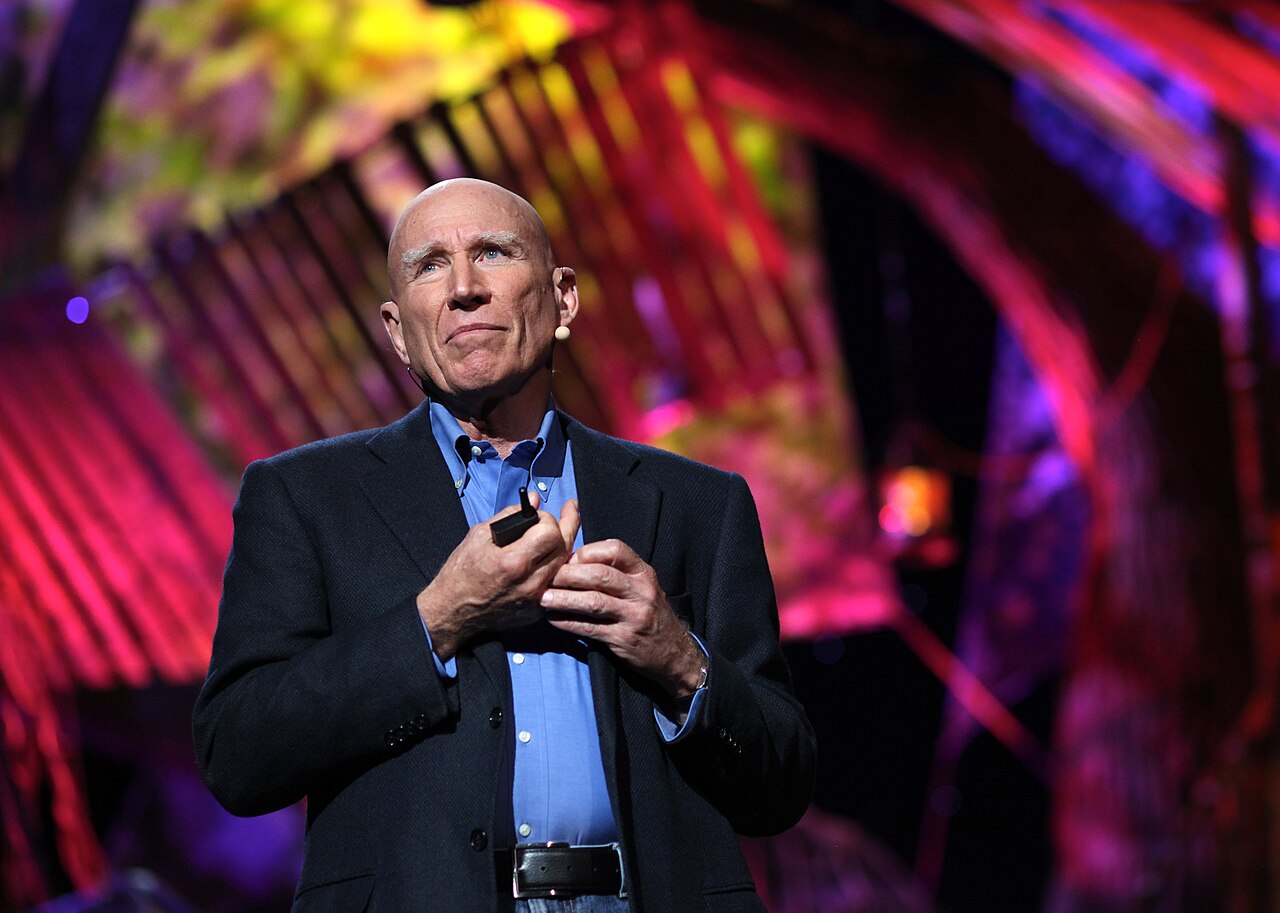
The TED talk embedded below carries the title The Silent Drama of Photography.
- The Art Newspaper, obituary of 27 May 2025 (source)
- Praemium Imperiale and the Börsenverein des Deutschen Buchhandels (laureate page; announcement)
- Art Newspaper obituary
- Praemium Imperiale
- Praemium Imperiale
- Art Newspaper obituary
- Dates from the publisher of the Sahel book, an encyclopedia entry, the ICP press release and the Philharmonie de Paris (Sahel; Workers and Migrations; Genesis; Amazônia)
- Praemium Imperiale
- Börsenverein announcement
- Börsenverein announcement
- Praemium Imperiale
- Börsenverein announcement
- Art Newspaper obituary
- University of California Press, author note on the Sahel book (publisher page)
- ASC profile
- Praemium Imperiale
- Art Newspaper obituary
- ASC profile
- UC Press
- MSF
- Mendes (2026), abstract, which dates the book to 1986 (DOI)
- UC Press
- Stallabrass, New Left Review I/223, opening pages available online (essay)
- Art Newspaper obituary
- Encyclopedia.com
- Stallabrass, New Left Review I/223, opening pages available online (essay)
- Taschen, publisher page for Kuwait: A Desert on Fire. The page gives 100 photographs in one place and 83 in a quoted review, so I give no count. (Taschen)
- Encyclopedia.com
- Börsenverein announcement
- Börsenverein announcement
- Art Newspaper tribute
- ASC profile
- Nieman Reports, article summarising Sischy’s 1991 essay. I have not read the original essay and rely on this account (article)
- Nieman Reports
- Nieman Reports
- London Review of Books, Jeremy Harding’s review. I read this review only in part (review)
- Stallabrass, New Left Review I/223 (1997) (essay)
- I read only the part of the essay available online; the later pages are behind a paywall and may develop the argument differently (essay)
- Crossref bibliographic record of the article, Third Text 5(16–17). I list it from this record without having read the article (DOI)
- Leonardo Reviews
- Mendes (2026), abstract (DOI)
- Art Newspaper tribute
- Art Newspaper obituary
- Ball, C. (2017). Let there be light: Wauja people and the practice of photographic primitivism in Sebastião Salgado’s Genesis. Visual Anthropology Review, 33(1), 28–37. DOI verified in Crossref; I read a summary only. (DOI)
- Rushing, S. (2024). Blackness in black and white: Serra Pelada and Sebastião Salgado. Athanor, 40. DOI verified in Crossref; I read a summary only. (DOI)
- Instituto Terra history
- Instituto Terra history
- Art Newspaper tribute
- Instituto Terra history
- Börsenverein des Deutschen Buchhandels and The Art Newspaper (2019 announcement; 2025 tribute)
- Instituto Terra history
- Instituto Terra history
- Art Newspaper tribute
- Time
- ICP press release
- Time
- Finestre sull’Arte
- Time
- ICP press release
- Praemium Imperiale
- American Society of Cinematographers, “Sebastião Salgado and the Spectre of Hope, Part 2: Genesis”. The profile does not name a camera model. (ASC)
- Philharmonie de Paris
- Philharmonie de Paris
- Praemium Imperiale
- Into Film
- Wikipedia, a secondary source; the festival and academy pages should be checked for the final word (film article)
- Börsenverein announcement
- Praemium Imperiale
- Gold (2011), abstract, Sociological Forum (DOI)
- Encyclopedia.com
- Finestre sull’Arte
- Sortiraparis
- Digital Camera World
- Instituto Terra history
- ASC profile
- The Art Newspaper, tribute of 4 July 2025, whose author discloses ties to a network she describes favourably (tribute)