AI image copyright law is moving, but a few points are now settled enough to state with sources. In the United States, courts and the Copyright Office require a human author, and prompts alone do not make you one. In the United Kingdom, a special rule for computer-generated works still exists, though the government now proposes to remove it. First, this article walks through the primary documents and rulings up to November 2026. We read each page on 10 November 2026, and nothing here is legal advice.
Ethics is a separate question from the law. For honesty, consent and credit, read our post on AI photography ethics. However, we do not repeat that material here, so this page stays with courts and statutes.

AI Image Copyright Law in Short
| Question | Where it stands | Source |
|---|---|---|
| Can an AI be the author of an image in the U.S.? | No. The D.C. Circuit affirmed this in 2025, and the Supreme Court denied review on 2 March 2026. | Holland & Knight summary of Thaler v. Perlmutter |
| Do prompts alone make you the author in the U.S.? | No, with current generally available technology, according to the Copyright Office. | Copyright Office, Part 2 report, 29 January 2025 |
| Can you protect what you add? | Yes: creative selection, arrangement and modification of AI output, and human works visible in the output. | Same report; Zarya of the Dawn decision |
| What does the UK say? | Section 9(3) names the person who makes the arrangements for a computer-generated work as its author. A 2026 government report proposes removing it. | CDPA 1988; report summary on Mondaq |
| Does training an image model infringe? | Open. The UK High Court did not decide it in Getty v Stability AI, because Getty dropped those claims. | Getty v Stability AI, [2025] EWHC 2863 (Ch) |
What the US Copyright Office Says
On 29 January 2025, the Copyright Office published Part 2 of its report on copyright and artificial intelligence. It concludes that protection reaches AI output only where a human author determined sufficient expressive elements, and that the mere provision of prompts does not qualify. In addition, the Office found no case for new legislation, because existing law can handle these questions.
The full report adds detail. It treats repeated prompt revision as re-rolling for a new output, not as gaining control, so time and effort do not create authorship. However, a human keeps copyright in a work that remains perceptible in the output, such as a drawing fed to the system. Moreover, a human can claim copyright in the creative selection, coordination or arrangement of AI material, and in creative modifications of it. Using AI to assist, not replace, human creativity does not affect protection, and each case gets its own assessment.
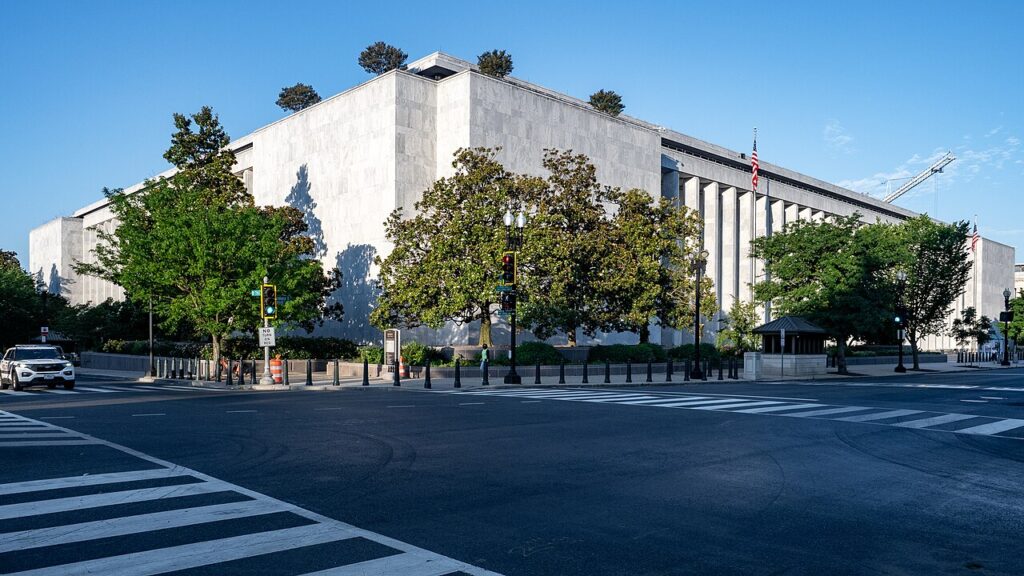

Two Registrations That Shaped AI Image Copyright Law
The first test came with a comic book. In a letter dated 21 February 2023, the Office kept the registration for Zarya of the Dawn but narrowed it. It protected Kristina Kashtanova's text, and her selection and arrangement of text and images. However, it did not protect the Midjourney images. Specifically, the Office reasoned that prompts influence the output without dictating it, so the user lacks the control of the master mind behind the image. Finally, it limited this reasoning to Midjourney on that record.
The letter also rejected effort as a basis. Hours of work and thousands of prompts did not establish authorship, because effort alone is not creativity. Furthermore, the Office cancelled the original registration because it had not excluded the AI material, and it issued a new one that does.
The second test was an award-winning image. On 5 September 2023, the Review Board affirmed the refusal to register Théâtre D'opéra Spatial by Jason Allen. He had entered more than 600 prompts, but the Board found that his contribution to the Midjourney image was the prompt. The image remained in substantial form in the final work, so the Office required him to disclaim it. He refused, and the Board refused registration as submitted.
Meanwhile, the Board did not decide whether his Photoshop changes qualify, for lack of information. Moreover, it said that human-authored modifications can be protected, and that he could file again with the AI material disclaimed. Allen also challenged the refusal in federal court in Colorado, but we did not verify where that case stands.
Thaler v. Perlmutter: An AI Cannot Be the Author
In that case, Stephen Thaler asked to register an artwork that he said his AI system made on its own. The D.C. Circuit affirmed the refusal in March 2025. According to Holland & Knight, the Supreme Court denied certiorari in case 25-449 on 2 March 2026. A denial means the Court declined to hear the case, and the firm notes that it does not necessarily foreclose all future litigation.
However, for photographers working under AI image copyright law, the point is narrow. Specifically, the case concerned a work with no claimed human author. It did not decide how much human input makes an AI-assisted image protectable, and the firm's own guidance on that comes from patent law, not copyright. Therefore, the Copyright Office report remains the closest U.S. guide.
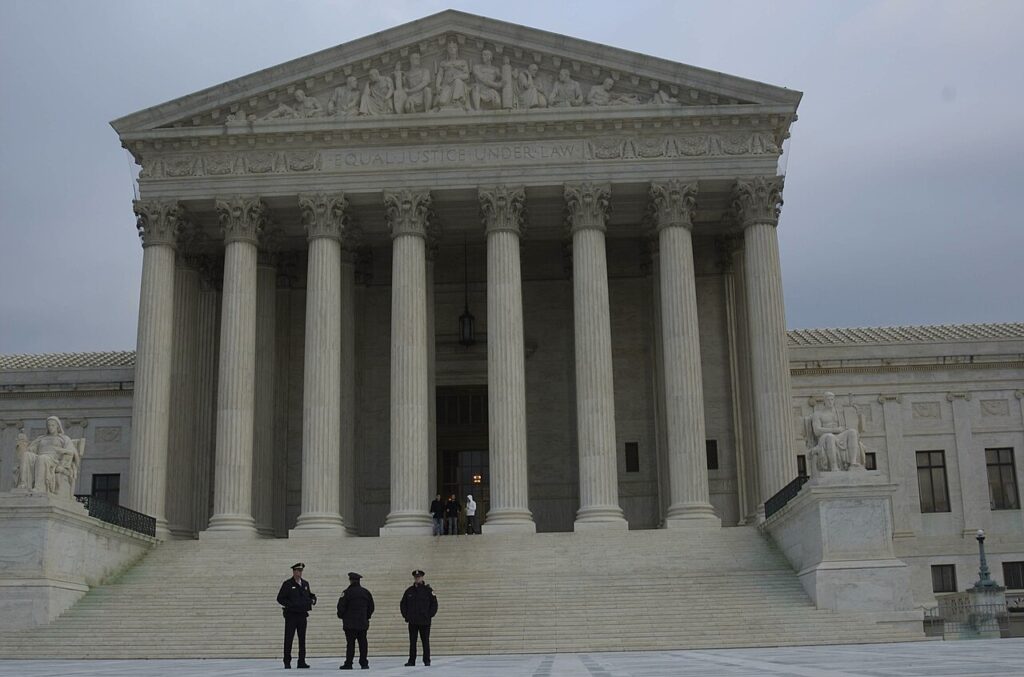

AI Image Copyright Law in the UK
In contrast, the UK has a rule the U.S. lacks. Under section 9(3) of the Copyright, Designs and Patents Act 1988, the author of a computer-generated literary, dramatic, musical or artistic work is the person who undertakes the arrangements necessary for its creation. We found no ruling that applies the section to an image generator, and no source that says how it treats a prompt.
Next, in March 2026, the government published a report on copyright and AI. According to a summary on Mondaq, it proposes removing section 9(3) in the absence of evidence of its ongoing value, while it keeps monitoring. Copyright would still protect works made with AI assistance. The same report says a broad text and data mining exception with an opt-out is no longer the government's preferred approach.

Training and Output: Getty v Stability AI
On 4 November 2025, Mrs Justice Joanna Smith gave judgment in Getty Images v Stability AI, citation [2025] EWHC 2863 (Ch). According to Bird & Bird, Getty abandoned its claims about how Stable Diffusion was trained after the evidence closed. Stability had argued that training took place outside the UK. As a result, the court did not decide whether training on copyright images infringes.
However, the court did decide a narrower point. Getty argued that the model weights, made available for download, were an infringing copy. Yet Getty accepted that the weights contain no copies of its works, and the judge held that an infringing copy must at some point have contained or stored a copy. The claim failed on that ground.
Finally, on trade marks, the judge found infringement in three examples involving Getty or iStock watermarks in outputs from earlier versions, which she described as extremely limited. She dismissed the other trade mark claims, including those for the newer versions. Moreover, the source says additional damages were refused. We did not check whether either side appealed after the judgment.

A Checklist for AI Image Copyright Law
This checklist follows from the sources above. It is not legal advice, so ask a lawyer about a real dispute.
- Treat a prompt-only image as unprotected in the U.S., because the Copyright Office says prompts alone do not give control.
- Protect your own contribution: keep your source files, edits and selections, because the Office protects creative modification and arrangement.
- Disclose AI material when you register. The Zarya registration was reissued, and Allen's was refused, over this point.
- Keep your own photographs and drawings protected: a human work that remains perceptible in the output keeps its copyright.
- If you work in the UK, remember that section 9(3) exists today but the government proposes to remove it.
- Do not assume an AI image is free of third-party rights: the training question is still open, and Getty shows trade mark risks from watermarks.
For related questions on AI tools, see our posts on generative fill rules and rights and on the philosophy of AI-generated images.
What We Removed From This Article
An earlier version of this post on AI image copyright law ran to about 7,000 words and covered many more topics. It described authorship theories, international comparisons, practical tips, future predictions, a list of landmark cases and an FAQ, and it cited few primary sources. As a result, we removed every claim that we could not tie to a document we read. We also removed links to the Getty Images France, Stability AI, Midjourney, DeviantArt and OpenAI homepages, because they supported no claim.

Sources and Limits
- U.S. Copyright Office, Part 2 report announcement (29 January 2025)
- Copyright and Artificial Intelligence, Part 2: Copyrightability (PDF copy hosted by BitLaw)
- Copyright Office, Zarya of the Dawn letter (21 February 2023)
- Copyright Office Review Board, Théâtre D'opéra Spatial (5 September 2023)
- Holland & Knight, on the Thaler cert denial (March 2026)
- Copyright, Designs and Patents Act 1988, section 9, as enacted
- Mondaq, UK government report on copyright and AI (23 March 2026)
- Getty Images v Stability AI, judiciary.uk (header only)
- Bird & Bird, on the Getty judgment
We read these pages through a summarising fetch tool, not as raw pages. For the Part 2 report, we read the first 100,000 of about 152,000 characters. The judiciary.uk page returned only the judgment header, so we took the holdings from Bird & Bird, a law firm. Furthermore, the Thaler details come from a law firm summary, and we did not read the D.C. Circuit opinion or the Supreme Court order. In addition, we read the section 9 text as enacted, not the current consolidated version, and we did not read the 2026 government report itself.
Overall, we cover only the United States and the United Kingdom. We did not research the EU, Japan, China or other countries, nor the U.S. training cases, such as Andersen v. Stability AI, nor fair use. Courts and agencies change positions, so check for later developments. Two photographs here come from Wikimedia Commons under CC BY-SA 2.0 and CC BY 2.0. The other five images are AI-generated illustrations.