AI photography ethics asks a different question from the law. The law asks what we may do, whereas ethics asks what we ought to do when no rule forces the answer. For the court side, read our post on AI image copyright law. Here we look at honesty, consent and credit, using the press codes, open letters and cases we read on 10 November 2026.
A note on the earlier version of this page. It cited academic sources that we could not trace, so we rewrote it from the start and removed every claim we could not check. The list of what we cut is near the end.
AI Photography Ethics: Law Versus Right
Legal and ethical questions overlap, but they split in practice. A practice can be legal and still mislead an audience. Likewise, a practice can be unsettled in court and still plainly wrong. Therefore, we sort the ethical questions into three. Is the image honest about how you made it? Did the creators of the training material agree? Does the credit go to the right people? Each section below takes one of them.
AI Photography Ethics Starts With Honesty
Press codes put honesty first. In the copy we read, the NPPA Code of Ethics asks photographers to report truthfully and calls credibility the profession's greatest asset. It also says that altering a photograph's content in ways that deceive the public is wrong. However, that copy does not mention generative AI. As a result, newsrooms and contests had to write the missing rules themselves.
What Newsrooms and Contests Decided
The Associated Press set its position in August 2023. According to Nieman Lab, the AP does not use generative AI to add or remove elements from its photos, video or audio. Moreover, it will not transmit AI images that it suspects, or has shown, to misrepresent real events. However, an AI illustration may run when it is the subject of a story, as long as the caption says it is AI-generated. Finally, staff must verify outside material with the usual checks, such as reverse image searches and tracing the original source.
World Press Photo reached a similar position for its contest. On 20 November 2023, it announced that Open Format entries may not use generative fill or fully generated images, and that its other categories already ban generative AI. It tied the rule to accuracy and trust. For the open letter that preceded this change, see our post on statements photographers wrote about AI.
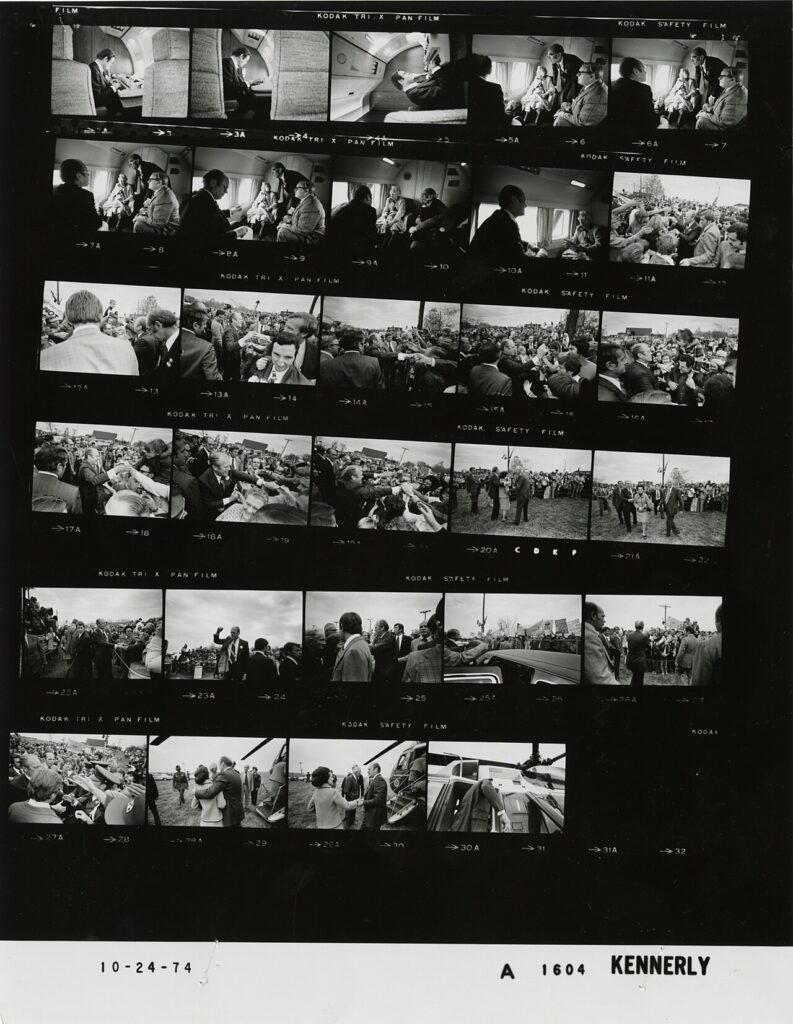
Both rules rest on one ethical point: a news photograph is a claim about what happened. Therefore, the label matters more than the tool. A generated image with an honest label misleads nobody, whereas the same image sold as a photograph does.
When Disclosure Fails: the Jos Avery Case
In February 2023, an Instagram account run under the name Jos Avery drew nearly 30,000 followers in about five months. According to PetaPixel, he presented the portraits as photographs shot with a Nikon D810 and a 24-70mm lens. In fact, he made them with Midjourney. He told Ars Technica that he first wanted to fool people to show what AI could do, and he estimated that about 95% of followers never noticed. Over roughly 180 posts, he generated about 14,000 images, and about one in 85 was usable.
Critics called the account disingenuous and a fraud, Hyperallergic reports. The photographer Silvia Catalán said that using AI to pose as a photographer is wrong, although she accepts AI as a resource. Avery replied that retouching AI output in Lightroom and Photoshop is a creative act, comparable to makeup in fashion work. Later, he added AI to his bio and began to disclose it in the comments. In our reading, the ethical problem was the false camera details and the evasive answers, not the software.
Consent and Credit in AI Photography Ethics
The second question concerns the images that train the models. On 11 August 2023, Getty Images, the AP, AFP, EPA and the NPPA signed an open letter. According to DIYPhotography, it asks for copyright protection against unlicensed training, transparency about training datasets, consent from rights holders, and a framework to negotiate terms. In addition, it asks that creators receive credit and payment, that developers reduce bias in training data and outputs, and that AI content carry a clear label.
In October 2024, the composer Ed Newton-Rex launched a one-sentence Statement on AI Training. Hyperallergic reports that about 10,000 people signed at first and more than 25,000 by 24 October, including the photographer Lynn Goldsmith. Meanwhile, the Magnum Board of Photographers said on 14 November 2024 that it reserves the Magnum archive for photographs taken by humans.
Consent and credit are ethical claims here, not legal ones. The letter and the statement ask for permission and pay, whatever courts later decide. Still, these are positions, and they carry interests: agencies sell licences, and AI companies sell tools. Moreover, we found no survey of what most working photographers think, so we do not claim a consensus.
Provenance Tools: What Content Credentials Can and Cannot Do
Content Credentials, which builds on the C2PA standard, lets a camera or editing tool attach signed information about how someone produced a file. In November 2023, Fstoppers noted that only the Leica M11-P, at about $10,000, had shipped with it, and that Canon, Nikon and Sony were members of the initiative but not yet shipping. By contrast, a Digital Camera World guide, which it last updated on 9 October 2026, lists many more models. They include Canon's EOS R1 and R5 Mark II, Fujifilm's GFX100S II and X-T50, further Leica bodies and several Sony models.
That guide also names limits. Canon's system needs paid activation, Sony's newsroom licence costs extra, some models need firmware updates, and editing software must keep the provenance chain intact. Above all, the credentials document how someone produced a file, but they cannot prove that a scene is truthful, and they cannot stop manipulation. In addition, readers of the Fstoppers piece raised spoofing risks, such as signing edited footage that someone feeds into a camera.
Therefore, we treat provenance as one aid beside captions and professional accountability. The NPPA's general counsel, Mickey Osterreicher, makes a similar point in a PetaPixel article of January 2026, as we read it.
A Practical Checklist for AI Photography Ethics
These six points come from the documents above. They are our own synthesis, not a code from any body.
- Label every image by method: photograph, edited photograph or AI-generated image.
- Never give false capture details, such as a camera and lens, for an image the camera did not make.
- Keep generated images out of news, evidence and documentary work unless the caption says otherwise.
- Keep your raw files or contact sheets, so that you can show how you made a picture.
- Ask before you use another person's work to train or prompt a system, and credit and pay where you can.
- Use provenance tools where your camera and workflow support them, and do not treat them as proof of truth.
In short, the same test runs through all six: would a viewer feel deceived if they knew how someone made the image? For the wider range of positions, see our post on the AI photography debate.
What We Removed From This Article
The earlier version was a long essay in seven parts. We removed author-date citations to academic works that we could not trace, and sections on global case studies, business models and ways to protect your work that cited no source. We also removed generic links to organisation homepages. Meanwhile, the legal material now lives in the post on copyright law, so we do not repeat it here.
Sources and Limits
- Nieman Lab, on the AP's generative AI standards (August 2023)
- World Press Photo, rules change on generative AI (20 November 2023)
- NPPA Code of Ethics, copy on the News Leaders Association site
- DIYPhotography, on the agencies' open letter (11 August 2023)
- Hyperallergic, on the Statement on AI Training (October 2024)
- Magnum Photos, A Message on A.I. (14 November 2024)
- PetaPixel, on the Jos Avery case (February 2023)
- Hyperallergic, on the Jos Avery case (February 2023)
- Fstoppers, on Content Credentials (3 November 2023)
- Digital Camera World, on C2PA cameras (update of 9 October 2026)
- PetaPixel, on photography and truth (29 January 2026)
We read these pages through a summarising fetch tool, not as raw pages. The AP page itself did not load as a standards page, so we relied on Nieman Lab's report. We read the NPPA code in a copy hosted by the News Leaders Association, so its wording may differ from the current version on nppa.org. Furthermore, World Press Photo's page promised updated rules but did not show them, and we did not read those rules.
We took the camera list from Digital Camera World and did not check it on the manufacturers' pages. The two reports on Jos Avery differ slightly on timing, and we used only the points on which they agree. In addition, we did not cover consent of the people shown in images, the environmental cost of AI, or codes written in other languages. One image here is public domain, from the Gerald R. Ford Presidential Library via Wikimedia Commons, and the other three are AI-generated.