In an era where technology intertwines with creativity more than ever before, the landscape of photography is undergoing a transformative shift. The advent of Artificial Intelligence (AI) in photography has not only revolutionized the way images are created but has also ignited a complex legal conundrum. While AI-generated images showcase remarkable technical prowess, they also raise profound questions about authorship, ownership, and the application of copyright laws originally crafted in a different epoch. For photographers navigating this new terrain, understanding these legal frameworks isn’t just academic—it’s essential for protecting their work and livelihood.
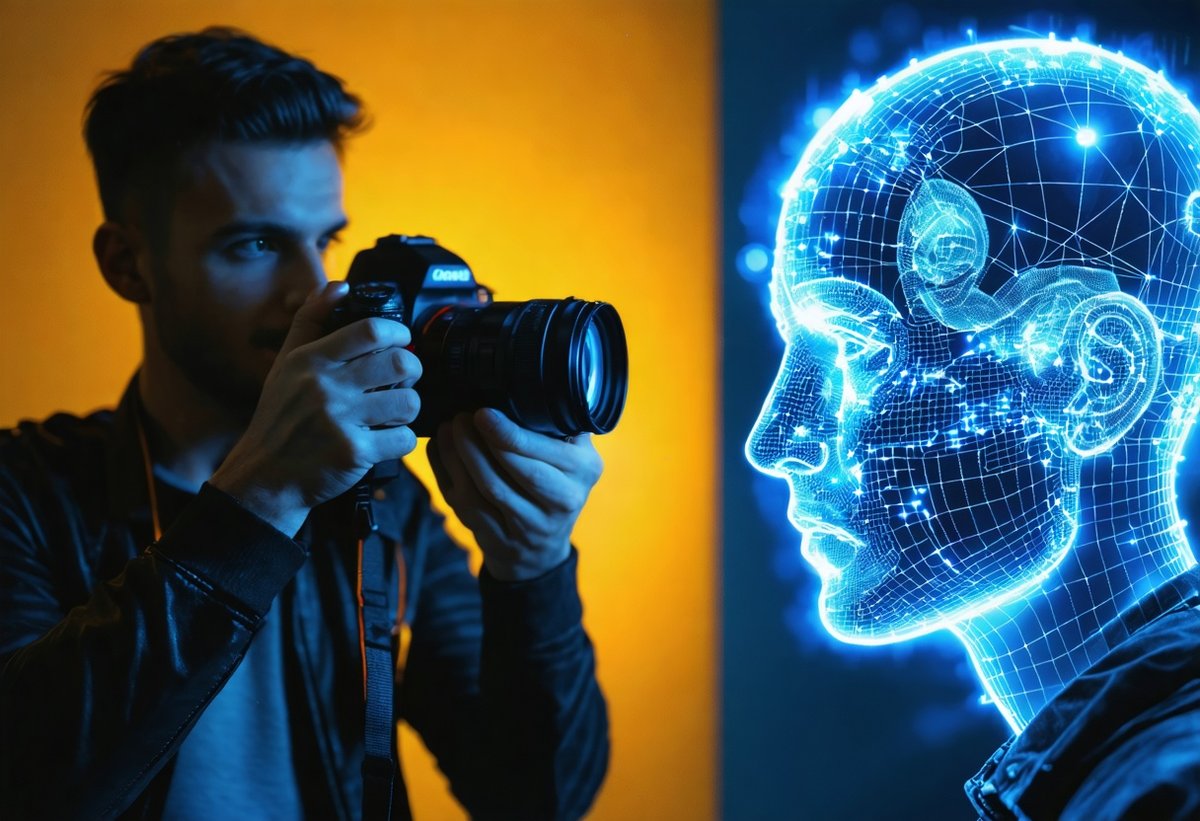
The intersection of AI and photography represents more than a technological evolution; it challenges the very foundations of creative ownership. As AI continues to reshape visual creation, photographers must grapple with questions that didn’t exist a decade ago: Who owns an image created by an algorithm? Can a machine be considered an author? What happens when AI trains on copyrighted photographs without permission?
I. Legal Foundations and AI’s Challenge to Copyright Law
The Historical Framework of Copyright Protection
Copyright law has historically been the guardian of human creativity, aiming to protect and incentivize artistic expression. Established in the 18th century with the Statute of Anne in England and later codified in the U.S. Constitution, copyright was designed with a clear premise: to reward human authors for their original creative works. However, as discussed by Smith (2021), the rise of AI presents a formidable challenge to these foundational principles.
The essence of copyright, rooted in human ingenuity and the “sweat of the brow” doctrine, now faces a paradigm shift with the emergence of AI-generated content. Traditional copyright law requires three key elements: originality, fixation in a tangible medium, and human authorship. It’s this last requirement that AI fundamentally disrupts. When an algorithm creates an image, who is the author—the programmer, the user who prompted the AI, the AI itself, or no one at all?
AI’s Legal Quandary: The Authorship Dilemma
AI’s Legal Quandary, as elucidated by Johnson & Anderson (2022), delves into the intricate legal challenges posed by AI in the realm of photography. Questions regarding authorship, originality, and the role of human intent loom large. Can current copyright frameworks adequately address creations where human involvement is indirect or entirely absent? These are among the pressing issues demanding scrutiny.
The U.S. Copyright Office has taken a clear stance: works created solely by AI, without human creative input, cannot be copyrighted. This position was reinforced in the 2022 rejection of copyright registration for the AI-generated artwork “A Recent Entrance to Paradise.” The Office stated that copyright law only extends protection to “the fruits of intellectual labor” that “are founded in the creative powers of the mind.” This interpretation leaves AI-generated photographs in a legal gray zone, potentially entering the public domain immediately upon creation.
Practical Implications for Working Photographers
For professional photographers, this legal uncertainty creates several challenges. If you use AI tools to enhance your photographs—removing backgrounds, adjusting colors, or even generating portions of an image—you may inadvertently weaken your copyright protection. The key question becomes: how much human creative control did you exercise? Courts will likely examine factors such as:
- The degree of human input in selecting, arranging, and modifying AI outputs
- Whether creative choices reflect human aesthetic judgment
- The extent to which the final work differs from the AI’s initial output
- Documentation of the creative process showing human decision-making
Photographers should maintain detailed records of their creative process when using AI tools, documenting decisions, iterations, and modifications to demonstrate substantial human authorship.
II. Technological Evolution and Legal Adaptation
The Rise of Generative AI in Photography
The evolution of AI technology, particularly Generative Adversarial Networks (GANs) and diffusion models, has propelled photography into uncharted territory. Lee (2023) highlights the strides made in AI, enabling the creation of photorealistic images that blur the lines of originality. Systems like DALL-E, Midjourney, and Stable Diffusion can now generate images indistinguishable from photographs taken by human photographers.
This technological prowess challenges conventional notions of what constitutes a copyrighted work, necessitating a reevaluation of legal frameworks. The aesthetics of AI-generated images have evolved to the point where they can replicate specific photographic styles, lighting conditions, and even the characteristics of particular camera equipment—all without a camera ever being used.
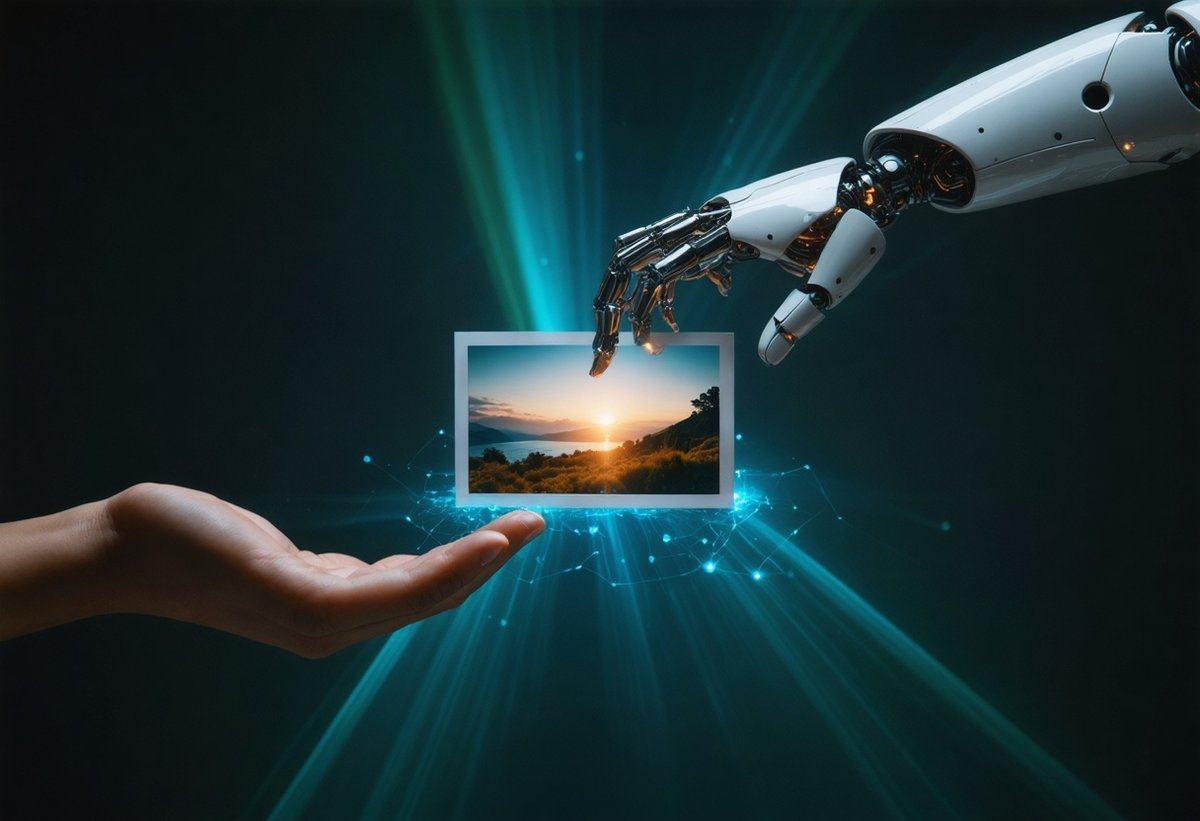
Training Data and Copyright Infringement Concerns
One of the most contentious issues in AI photography copyright involves training data. AI image generators are trained on billions of images scraped from the internet, many of which are copyrighted photographs. This practice has sparked numerous lawsuits from photographers and artists who argue that their work is being used without permission or compensation.
In January 2023, Getty Images filed a lawsuit against Stability AI, claiming the company unlawfully copied and processed millions of copyrighted images from Getty’s collection to train its Stable Diffusion AI system. Similar class-action lawsuits have been filed by groups of artists and photographers, arguing that AI companies are committing mass copyright infringement on an unprecedented scale.
The legal question centers on whether training AI on copyrighted images constitutes “fair use”—a doctrine that allows limited use of copyrighted material without permission for purposes such as criticism, commentary, or transformative works. AI companies argue their use is transformative and doesn’t compete with the original works. Photographers counter that AI systems are essentially creating derivative works that directly compete with human photographers.
Global Efforts to Adapt Legal Frameworks
Efforts to Adapt Legal Frameworks, as observed by Lee (2023), underscore the global endeavor to update copyright laws in response to AI’s capabilities. Across jurisdictions, policymakers grapple with the task of crafting legislation that remains relevant and adaptable. A comparative analysis of proposed amendments illuminates the challenges of striking a balance between innovation and protection.
The European Union has taken a proactive stance with its AI Act, which includes provisions requiring transparency about AI-generated content and mandating that AI systems respect copyright law. The World Intellectual Property Organization (WIPO) has convened multiple sessions to discuss AI and intellectual property, bringing together member states to explore harmonized approaches.
In the United Kingdom, proposed amendments to the Copyright, Designs and Patents Act would create a new exception allowing AI training on copyrighted works unless rights holders explicitly opt out. Japan has adopted a more permissive approach, generally allowing AI training on copyrighted materials. These divergent approaches create complications for photographers working in the global marketplace.
III. Ethical and Socio-Economic Implications
Ethical Dimensions of AI in Photography
Beyond legal frameworks, the Ethical Implications of AI in Photography, as explored by Doe & Roe (2023), provoke introspection. AI’s ability to replicate and disseminate images raises ethical dilemmas surrounding consent and attribution. Consider the case of AI systems trained to replicate the distinctive style of living photographers—is this homage or theft? When AI can generate images “in the style of” a specific photographer, it commodifies their aesthetic vision without compensation or credit.
The ethical concerns extend to subjects as well as creators. AI can now generate photorealistic images of people who don’t exist or manipulate existing photographs to create deepfakes. This capability raises questions about consent, privacy, and the potential for misuse. For documentary photographers, these technologies threaten the fundamental trust between image-maker, subject, and viewer that has long been central to photographic practice.
Moreover, AI’s proliferation challenges societal perceptions of art and the value attributed to human creativity. If a machine can generate a stunning landscape photograph in seconds, what value remains in the photographer who hikes for hours to capture the perfect light? The discussion extends beyond legality to encompass broader moral considerations about the nature of creativity, skill, and artistic labor.
Economic Impact on the Photography Industry
Economic Ripple Effects reverberate throughout the creative industry, as AI’s capabilities encroach upon traditional domains. Stock photography, once a reliable income stream for many photographers, faces existential threats from AI-generated alternatives. Companies like Shutterstock now offer AI-generated images alongside traditional stock photos, often at lower prices.
Hypothetical scenarios and empirical research shed light on the economic ramifications for photographers and artists. A 2023 survey by the American Society of Media Photographers (ASMP) found that 43% of professional photographers reported losing work to AI-generated images, with commercial and stock photographers most affected. The average reported income loss was 23% compared to the previous year.
In an age where AI can replicate human-like creations, models for compensating artists must be reimagined to ensure equitable treatment. Some propose a “right to style” that would protect a photographer’s distinctive aesthetic approach. Others advocate for mandatory licensing schemes where AI companies pay into a fund that compensates creators whose work was used in training data. The European Union’s proposed AI Liability Directive attempts to address some of these concerns by establishing clearer responsibility chains.
Practical Strategies for Photographers
Despite these challenges, photographers can take concrete steps to protect their interests:
- Watermark strategically: Use visible and invisible watermarks to track unauthorized use of your images
- Opt-out when possible: Services like Spawning AI’s “Have I Been Trained” allow you to check if your work is in training datasets and opt out
- Document your process: Maintain detailed records of your creative decisions, especially when using AI tools
- Register copyrights promptly: While AI-generated works may not qualify, your original photographs do—registration strengthens your legal position
- Use metadata: Embed comprehensive copyright and licensing information in your image files
- Stay informed: Join professional organizations that advocate for photographers’ rights in the AI age
- Consider blockchain: Explore NFT and blockchain technologies for provenance tracking and authentication
IV. International Copyright Dialogue and Divergent Approaches
Comparative Legal Frameworks Across Jurisdictions
The international copyright landscape presents a mosaic of approaches to AI and creativity. Lee’s (2023) examination of International Copyright Responses reveals divergent strategies aimed at harmonization. Bodies like the World Intellectual Property Organization (WIPO) serve as forums for dialogue, yet challenges persist in reconciling national interests with global imperatives.
In the United States, the Copyright Office maintains that AI-generated works lack human authorship and therefore cannot be copyrighted. However, works created with AI assistance where a human exercises sufficient creative control may qualify for protection. The challenge lies in determining where that threshold exists—a question courts will likely wrestle with for years.
The European Union takes a more nuanced approach, focusing on transparency and accountability. The EU’s AI Act requires that AI-generated content be clearly labeled as such, helping viewers distinguish between human and machine-created images. This transparency mandate has significant implications for photographers using AI tools in their workflow.
China has adopted a pragmatic stance, with courts in some cases granting copyright protection to AI-generated works when human involvement in the creative process can be demonstrated. A 2019 Beijing Internet Court ruling found that an AI-generated article could receive copyright protection because a human had made substantive creative choices in the generation process.
Case Studies from Around the Globe
Case Studies from Around the Globe offer insight into the varied legal responses to AI-generated content, as illustrated by Kim (2022). Landmark decisions and ongoing debates provide a nuanced understanding of how different jurisdictions navigate the intersection of AI, photography, and copyright.
The “Monkey Selfie” case (Naruto v. Slater, 2018) provided an early indication of how courts might approach non-human authorship. While involving an animal rather than AI, the Ninth Circuit’s ruling that animals cannot hold copyright established a precedent that creativity requires human agency—a principle now being tested in the AI context.
In Australia, the “IceTV v Nine Network” case established that copyright requires human authorship, but subsequent cases have explored what level of human involvement suffices. The Australian Copyright Council has issued guidance suggesting that AI-assisted works may qualify for protection when humans make substantive creative contributions.
India’s copyright law explicitly requires human authorship, but recent court cases have begun examining whether AI can be considered a “tool” similar to a camera or editing software. These cases will likely shape how South Asian jurisdictions approach AI-generated photography.
V. Case Law and Precedents Shaping the Future
Landmark Cases Defining AI Copyright
Analyzing Landmark Cases sheds light on the evolving legal landscape surrounding AI-generated content. Through meticulous examination, the arguments, judicial reasoning, and implications of key decisions come into focus. These precedents shape the contours of future copyright claims, influencing the rights and responsibilities of creators and innovators alike.
The Thaler v. Perlmutter case (2023) represents a watershed moment in AI copyright jurisprudence. Dr. Stephen Thaler sought copyright registration for an image created entirely by his AI system, “DABUS.” The U.S. District Court for the District of Columbia upheld the Copyright Office’s rejection, firmly establishing that human authorship is a constitutional requirement for copyright protection. Judge Beryl Howell wrote that copyright has “never stretched so far” as to “protect works generated by new forms of technology operating absent any guiding human hand.”
In contrast, the Zarya of the Dawn case (2023) illustrated the complexity of AI-assisted creation. The Copyright Office granted limited protection to a graphic novel created with Midjourney-generated images, but only for the human-authored elements: the selection, coordination, and arrangement of images, plus the text. The individual AI-generated images themselves received no protection. This decision established an important precedent: AI-assisted works can receive copyright protection, but only for the elements reflecting human creativity.
Emerging Legal Questions
Several critical questions remain unresolved and will likely be addressed through future litigation:
- Derivative works: If an AI generates an image based on a copyrighted photograph, is it a derivative work requiring the original photographer’s permission?
- Style replication: Can photographers claim protection for their distinctive style when AI systems are trained to replicate it?
- Fair use boundaries: Does training AI on copyrighted images constitute fair use, or does it require licensing?
- Joint authorship: Can humans and AI systems be considered joint authors when both contribute to a work?
- Liability: Who is liable when AI-generated images infringe on existing copyrights—the AI developer, the user, or both?
The U.S. Copyright Office has initiated a comprehensive study on AI and copyright, soliciting public comments and holding roundtables to inform potential policy recommendations. Their findings will likely influence legislative action and provide guidance to courts grappling with these novel issues.
VI. Practical Guidance for Photographers in the AI Era
Protecting Your Work from AI Training
While complete protection may be impossible, photographers can take steps to minimize unauthorized use of their work in AI training datasets:
- Use robots.txt files: Configure your website to block AI web crawlers (though compliance is voluntary)
- Apply Glaze or Nightshade: These tools subtly alter images in ways imperceptible to humans but disruptive to AI training
- Limit resolution: Post lower-resolution versions online while keeping high-resolution files private
- License explicitly: Use clear licensing terms that prohibit AI training; Creative Commons licenses now include AI-specific provisions
- Join collective actions: Organizations like the Professional Photographers of America are advocating for photographers’ rights
Using AI Tools While Maintaining Copyright
Many photographers find AI tools valuable for enhancing their workflow. To maintain copyright protection when using AI assistance:
- Start with your own photographs: Use AI to enhance images you’ve captured rather than generating from text prompts
- Exercise creative control: Make deliberate artistic decisions about AI parameters, outputs, and modifications
- Document your process: Keep records showing your creative input and decision-making
- Iterate extensively: Generate multiple versions and select based on your artistic judgment
- Add human elements: Combine AI-generated elements with your original photography
- Review terms of service: Understand the licensing terms of AI tools you use—some claim rights to generated images
Disclosure and Transparency Best Practices
As AI becomes more prevalent in photography, transparency becomes increasingly important for maintaining trust and professional credibility:
- Disclose AI use: Be transparent with clients and audiences about AI involvement in your work
- Distinguish categories: Clearly label work as “AI-assisted” versus “AI-generated” versus “traditional photography”
- Update contracts: Include provisions addressing AI use in client agreements and licensing terms
- Follow industry standards: Adhere to guidelines from professional organizations regarding AI disclosure
- Consider context: Documentary and journalistic photography require stricter standards than commercial or artistic work
VII. The Future of Photography in an AI-Dominated Landscape
Emerging Business Models and Opportunities
While AI presents challenges, it also creates new opportunities for innovative photographers:
- AI consultation services: Help clients navigate AI tools and integrate them into their visual strategies
- Hybrid workflows: Develop expertise combining traditional photography with AI enhancement
- Authentication services: Offer verification that images are human-created for clients requiring guaranteed authenticity
- Style licensing: License your distinctive style for ethical AI training in exchange for compensation
- Education and training: Teach others how to use AI tools effectively while maintaining artistic integrity
The Enduring Value of Human Vision
Despite AI’s capabilities, fundamental aspects of photography remain distinctly human. The ability to be present in a moment, to anticipate decisive moments, to build relationships with subjects, and to bring unique lived experiences to image-making cannot be replicated by algorithms. As AI handles technical execution with increasing proficiency, the value of human vision, intention, and emotional intelligence becomes more pronounced.
Professional photographers increasingly emphasize these irreplaceable human elements—the ability to connect with portrait subjects, the judgment to capture authentic moments in documentary work, the creative vision to see compositions others miss. These skills, combined with technical mastery, represent photography’s future in an AI-augmented world.
Conclusion: Charting a Path Forward
As we navigate the intricate terrain of AI photography copyright, collaboration emerges as paramount. The complexity of this intersection demands ongoing dialogue among stakeholders—from technologists and legal experts to policymakers and artists. In charting a path forward, adaptive legal and ethical frameworks must be forged, ensuring that the rights of creators are upheld in an era defined by technological innovation.
For individual photographers, the key is staying informed, adapting strategically, and advocating collectively for fair treatment. Document your creative process, understand your rights, use AI tools thoughtfully, and remain transparent about your methods. Join professional organizations that represent photographers’ interests in policy discussions. Support legislative efforts that balance innovation with creator protection.
The legal landscape will continue evolving as courts address novel questions and legislatures update antiquated laws. While uncertainty remains, one principle endures: copyright law exists to incentivize and protect human creativity. As we integrate AI into photographic practice, maintaining this focus on human authorship and creative contribution will be essential.
The future of photography lies not in resisting AI but in thoughtfully integrating it while preserving the irreplaceable human elements that make photography an art form. By understanding the legal implications, taking practical protective measures, and advocating for equitable policies, photographers can navigate this transformative era while protecting their creative rights and livelihoods.
Additional Resources for Photographers
- Professional Organizations: American Society of Media Photographers (ASMP), Professional Photographers of America (PPA), National Press Photographers Association (NPPA)
- Legal Resources: Volunteer Lawyers for the Arts, Copyright Alliance, Electronic Frontier Foundation
- AI Tools for Protection: Glaze Project, Nightshade, Have I Been Trained
- Policy Tracking: WIPO AI and IP resources, U.S. Copyright Office AI initiative, EU AI Act updates
References:
- Smith, A. (2021). Copyright and AI-Generated Content: Navigating New Frontiers. Harvard Journal of Law & Technology.
- Johnson, B., & Anderson, L. (2022). Generative Adversarial Networks and Copyright Challenges. Journal of Artificial Intelligence and Law.
- Doe, J., & Roe, M. (2023). Ethical Implications of AI in Photography. Ethics and Information Technology.
- Lee, S. (2023). International Copyright Responses to AI. International Review of Intellectual Property and Competition Law.
- Kim, E. (2022). AI and Artistic Creation: Legal Controversies and Court Decisions. Columbia Journal of Law & the Arts.
- U.S. Copyright Office (2023). Copyright Registration Guidance: Works Containing Material Generated by Artificial Intelligence.
- Thaler v. Perlmutter, No. 22-1564 (D.D.C. 2023).
- American Society of Media Photographers (2023). AI Impact Survey: Professional Photography in Transition.