Humans of New York is a portrait and interview project that Brandon Stanton began in the summer of 2010 as a “photographic census” of New York City, in his own words. It grew into a storytelling platform that Stanton says reaches thirty million followers, with five books to its name. This article sets out what the project is, how it developed, what Stanton and the public record say about it, and where critics and scholars question its methods.

Humans of New York at a Glance
| Item | What the sources say |
|---|---|
| Founder | Brandon Stanton, a former bond trader from Georgia |
| Start | Summer 2010, in New York City |
| First aim | A photographic census: about 10,000 New Yorkers, plotted on a map |
| Format | A portrait with a quote, later a longer interview |
| Reach | Thirty million followers across platforms (Stanton’s own figure) |
| Books | Humans of New York (2013), Stories (2015), Humans (2020), Tanqueray (2022), Dear New York (2025) |
How Humans of New York Began
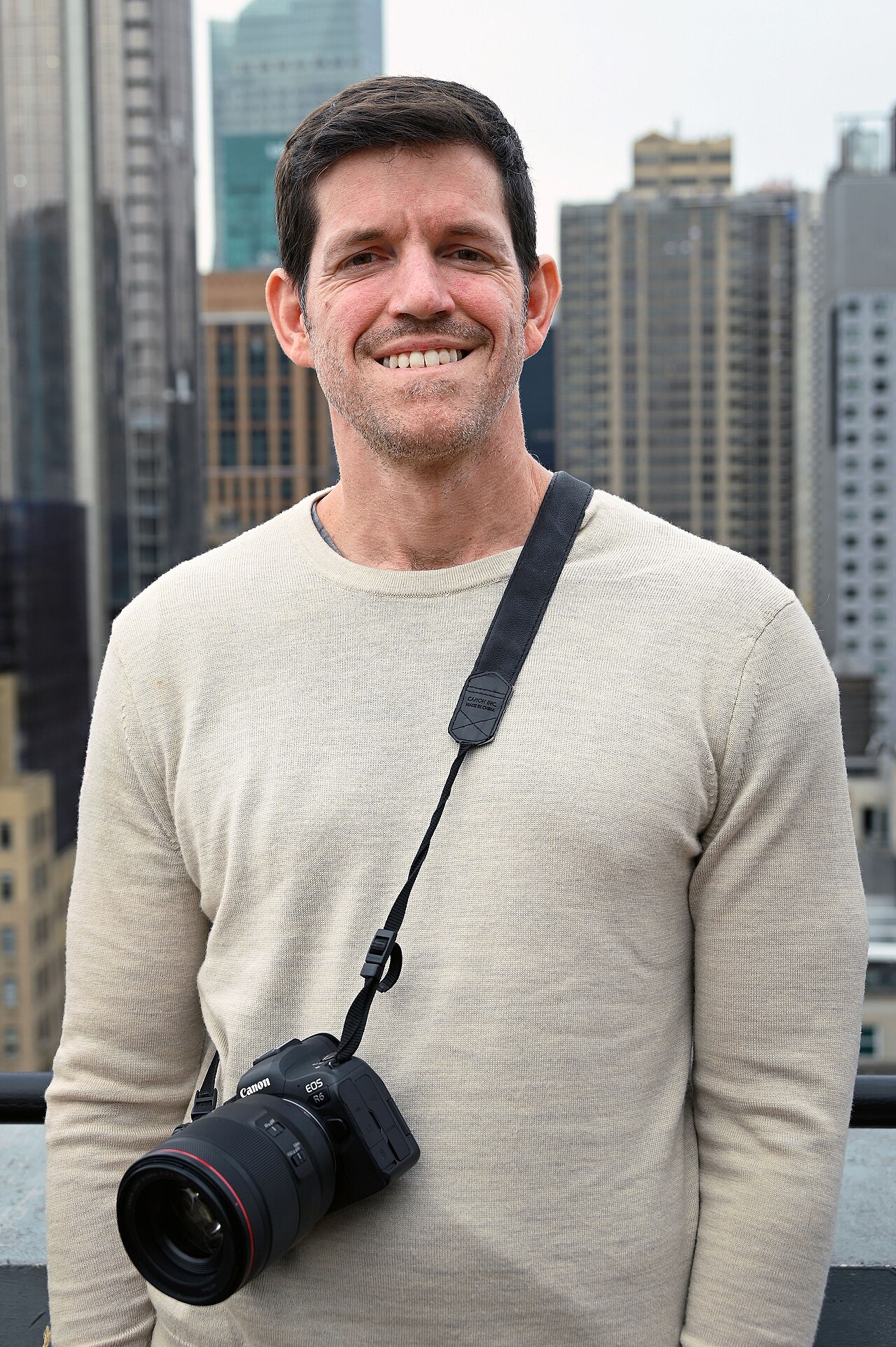
According to Time, his employer laid Stanton off from his Chicago bond-trading job in 2010, and he then turned to photography full time. His plan was to photograph 10,000 New Yorkers and map the portraits like a census of the city. Wikipedia adds that he lived on unemployment checks and loans from friends and family, but I treat that detail as secondary.
Stanton’s own website describes the early blog as photos featured alongside quotes and anecdotes. Over time, however, the captions grew into full interviews. As a result, the project moved from a visual census toward a form of short documentary storytelling.

How Humans of New York Works in Practice
The method is simple on the surface: Stanton stops a stranger, takes a portrait and asks questions. Time reported, in an undated piece from the early years, that he posted five or six portraits a day. Today the project publishes on Instagram and Facebook, and Stanton’s site reports that he has interviewed more than ten thousand people in forty countries.
What the sources do not show is how the published text relates to the full conversation. In 2015, Allen Murabayashi of PhotoShelter wrote that a colleague who appeared on the project said the printed quote left out several earlier questions. This is one account, not a general finding, but it points to the editing step that readers cannot see.
From Blog to Books: Five Titles
Stanton’s website describes five books. First, Humans of New York (2013) holds four hundred colour photographs and the site calls it an instant number-one New York Times bestseller. Wikipedia dates it to St. Martin’s Press in October 2013 and records its first week at number one in early November. Second, Humans of New York: Stories (2015) has more than 500 photographs and draws on five years of work.
Third, Humans (2020) collects portraits from more than forty countries. Fourth, Tanqueray (2022) tells the life of Stephanie Johnson, a former burlesque dancer whom the project featured in 2019. Finally, Dear New York (2025) accompanies the Grand Central installation, with nearly five hundred pages of portraits and stories. The site states that all but the last were number-one bestsellers, which is the author’s own claim.
Humans of New York Beyond the City
From 2014 Stanton took the format abroad. Wikipedia reports a 50-day trip through ten Middle Eastern countries in August 2014 under United Nations auspices, and a trip to Pakistan and Iran in July 2015. I could not confirm these dates on a primary source, so I mark them as secondary.
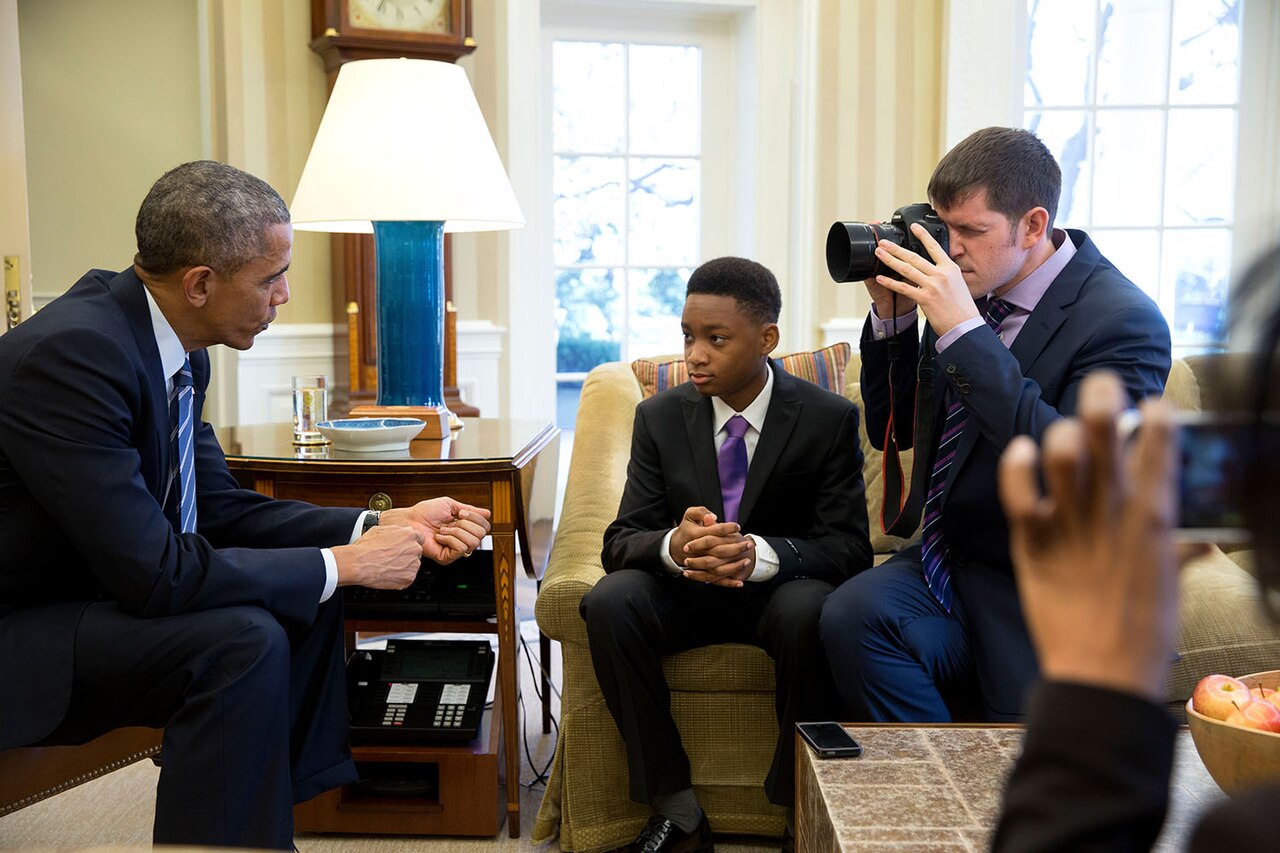
One event is well documented. On 5 February 2015, Stanton photographed President Barack Obama in the Oval Office during a blog interview with Vidal Chastanet, a 13-year-old student, according to the White House photo caption. The principal of his school, Nadia Lopez, also took pictures, as the caption shows.

Dear New York at Grand Central Terminal
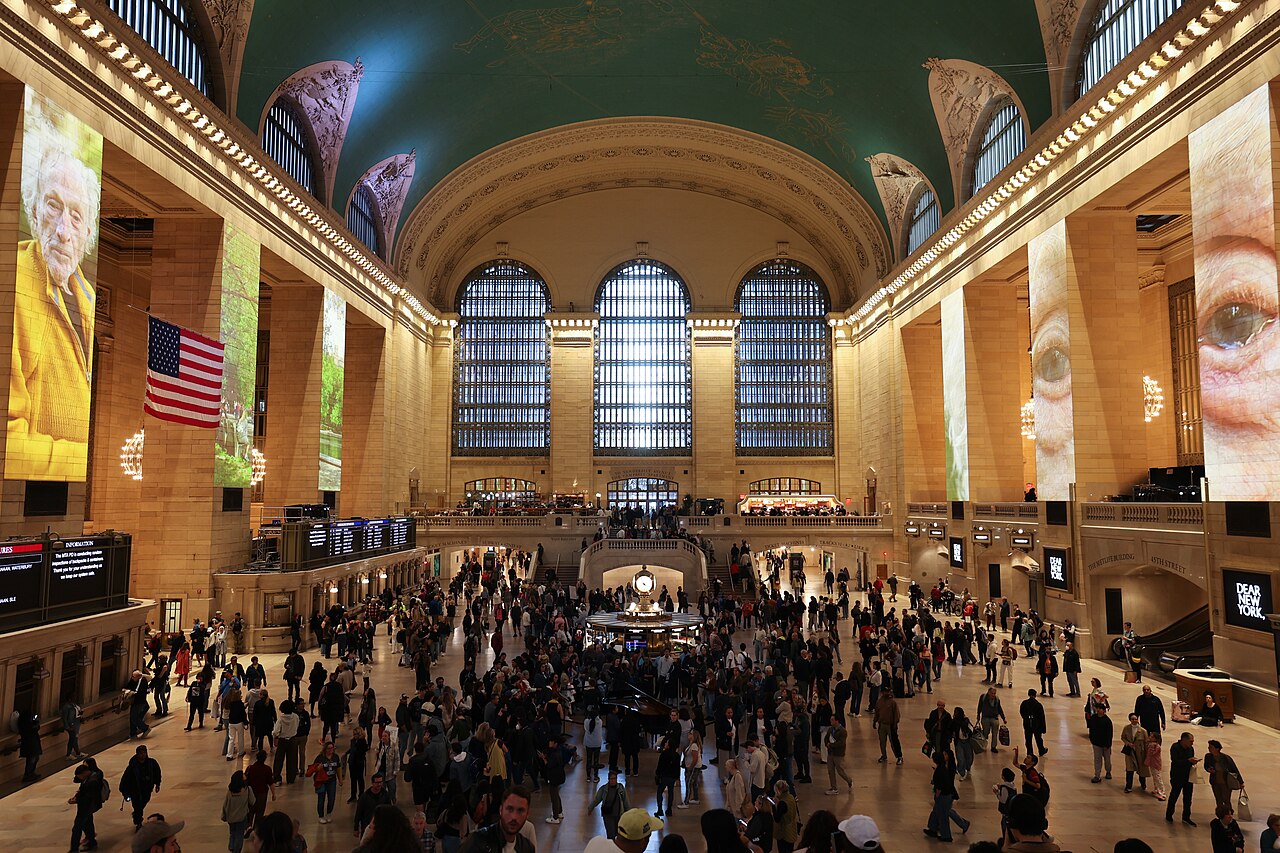
In October 2025 Stanton replaced the advertising at Grand Central Terminal with portraits and stories for two weeks, through 19 October. The Smithsonian reports 50-foot projections in the main concourse, portraits on the terminal’s 150 screens and on subway walls, and live piano by Juilliard students and faculty. Vanderbilt Hall also showed work by local artists and more than 600 public school students.
The sources disagree on the funding. The Smithsonian says book proceeds paid for the installation, while Hyperallergic reports that it cost Stanton most of his savings from the past 15 years. Both statements may be partly true, so this article simply records the difference.

The Debates Around Humans of New York
Admiration is the most common reaction, yet the project has serious critics. Their points fall into three groups.
- Consent and compensation. Emily Jenab, then a master’s student in ethics at Fordham, asks in HuffPost whether people whose stories are shared, especially marginalised people, should be paid. She also asks whether the project speaks for people who have already been failed by institutions.
- Context and captions. Murabayashi argues that a quote is not a caption. In his view, a viral portrait of a young boy lacked basic information about who, what, where and when, and he warns that labelling a child in public can have consequences.
- Is it journalism? Jessica Roberts analysed the posts against the public-service ideals of modern journalism in Journalism (2017). I read the abstract only, so I do not report her conclusions.
In addition, Meenakshi Srihari wrote on the project’s war stories in Life Writing (2024), and I confirmed only the metadata. In short, the project is widely praised for empathy, and the open questions concern consent, editing and context. Defenders point to its fundraising and its transparency, while critics reply that a good outcome does not settle the ethical question.
Frequently Asked Questions About Humans of New York
Who created the project?
Brandon Stanton, who began it in 2010 after leaving his job as a bond trader.
Is it journalism?
Scholars and critics disagree. Jenab notes that Stanton does not present the project as unbiased news, and Roberts analysed it against journalistic standards.
Where can I see the portraits?
On the project’s Instagram account and on Facebook, and in the books listed above.
Further Reading on Portraits and Street Photography
On this site, see The Aesthetics of Portrait Photography and the guide to street photography in Manhattan. For an earlier tradition of photographing a city, read about Eugène Atget, and for a photographer whose archive surfaced after her death, Vivian Maier.
Sources and Limits
This article draws on brandonstanton.com (about and books pages), Time, the White House photograph caption, the Smithsonian and Hyperallergic (8 October 2025) on Dear New York, Emily Jenab’s HuffPost piece (undated), and Allen Murabayashi’s PhotoShelter essay of 9 July 2015. Wikipedia served only as a pointer. I could not confirm the Pakistan and Iran trips, the Middle East trip or the amounts raised in campaigns, so I leave them out or mark them as secondary. The follower and fundraising figures on Stanton’s site are his own claims. Consensus was unavailable, so the academic literature was checked through Crossref metadata and the Roberts abstract only. The older text of this article contained invented example stories, and I removed them. The Instagram screenshot at the top was already on this page, and its photographs belong to the project.