Cinematic street photography borrows three things from the movies: a wide frame, a night-time palette and the texture of film. This article checks what we can document about each one, namely the history of the wide screen, two film stocks that photographers use for this look, and one survey on film use today.
The earlier version of this page opened with a statistic attributed to “Sony’s imaging division” about saves on Instagram. We could not find that figure anywhere, so we removed it, along with the percentages for grain and the “30-day challenge.” As a result, this version is shorter, but every claim has a source.
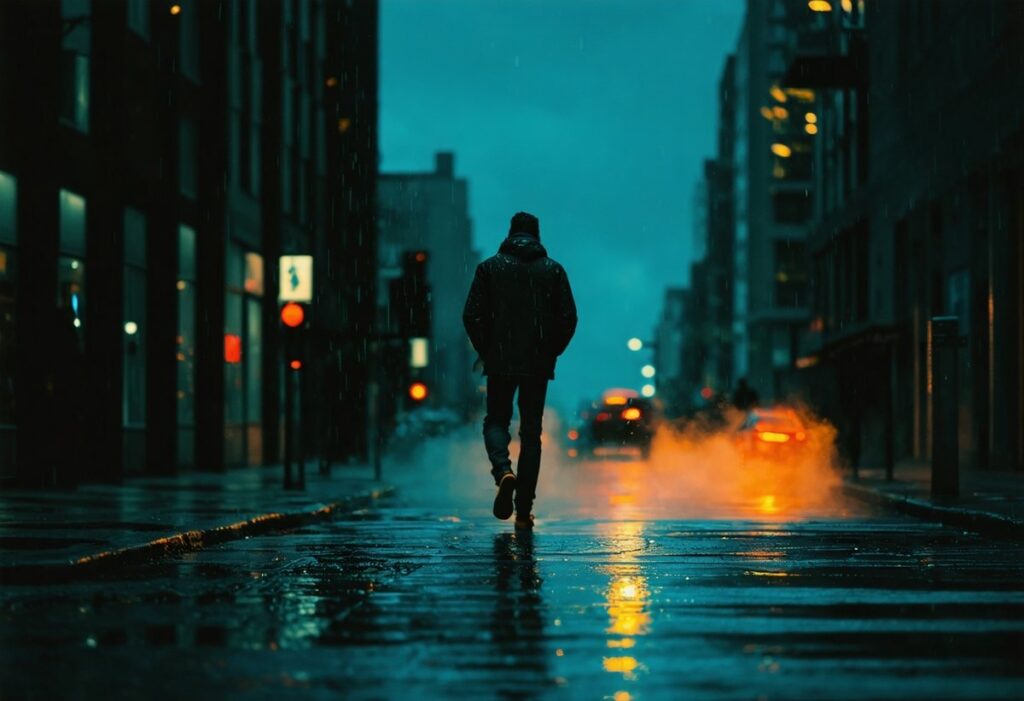
Cinematic street photography at a glance
| Topic | What the source reports | Source |
|---|---|---|
| Wide frame | CinemaScope pictures ran from 1953 to 1967; the ratio settled at 2.35:1, later 2.39:1 | Wikipedia |
| CineStill 800T | Based on Kodak Vision3 500T 5219, released in 2013, without the rem-jet backing | Wikipedia |
| Halation | Removing the rem-jet can cause a red glow around bright lights | Wikipedia |
| Portra 400 | Rated ISO 400; Kodak calls it its finest-grain high-speed colour negative film | Kodak |
| Film use | 28% of 1,337 respondents shot film more; 26% shot less (Japan-focused) | FilmFocus survey, via Digital Camera World |
Where the wide frame comes from
According to Wikipedia, CinemaScope used an anamorphic lens that squeezed the image by 2:1 when shooting and expanded it in projection. The lens descends from Henri Chrétien’s Anamorphoscope, patented in 1926, and Bausch & Lomb won a 1954 Oscar for the production lens. CinemaScope pictures ran from 1953 to 1967, and less often after.
The ratio changed with the soundtrack. Magnetic stripes cut the original 2.66:1 to 2.55:1, and an optical soundtrack cut it to 2.35:1. Others later moved to 2.39:1, partly to hide negative splices. Wikipedia adds that 2.35, 2.39 and 2.40 are hard-matted versions of other ratios rather than separate capture formats. Therefore, when a photographer crops a street picture to “2.35:1,” the crop only imitates a projection format.
The film stocks behind cinematic street photography
CineStill was founded in 2012 in Los Angeles by Brian and Brandon Wright, and it became known for adapting motion-picture film for still cameras. Its 800T is based on Kodak Vision3 500T 5219, a motion-picture stock, and reached the market in 2013. Kodak rates the original at EI 500 under 3200 K tungsten light, while CineStill recommends EI 800.
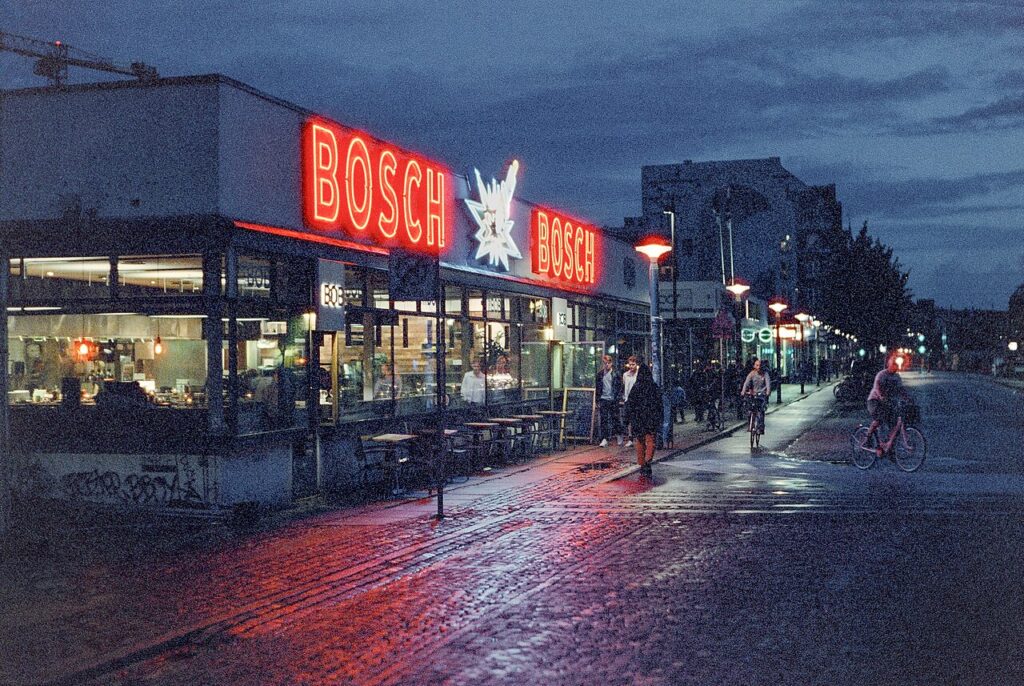
Kodak’s Vision3 films normally carry a black rem-jet backing. CineStill’s 800T does not, which lets ordinary labs develop it in C-41. However, Wikipedia says the missing layer can cause halation, a red glow around bright or overexposed lights. That glow is what many people mean by the “cinematic” night look.
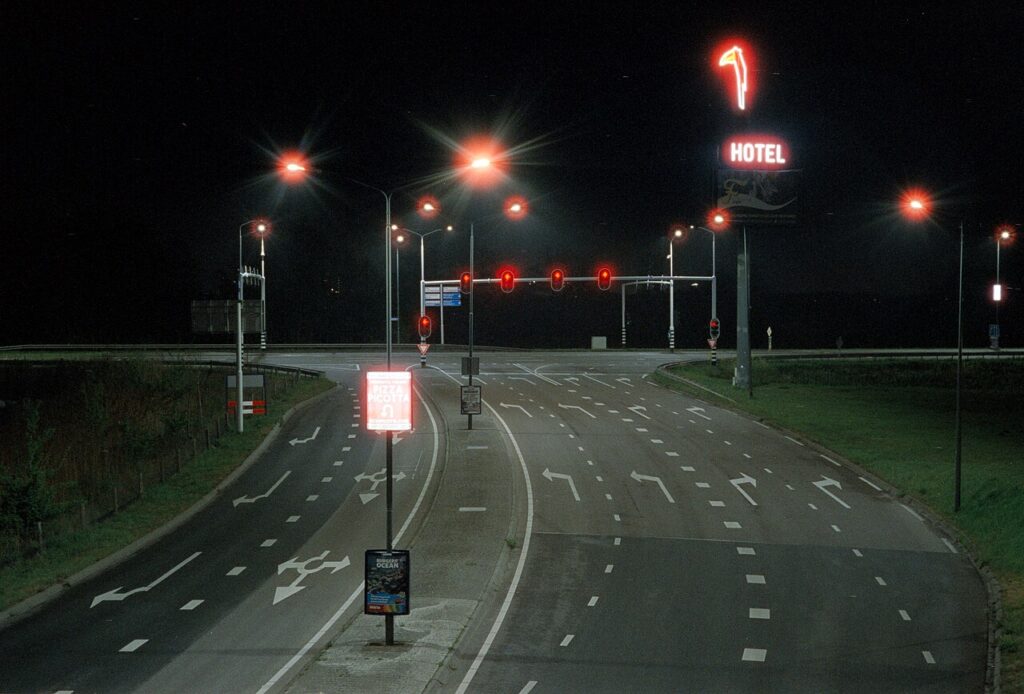
Portra 400 is a different case. Kodak’s page rates it at ISO 400, calls it the world’s finest grain high-speed colour negative film, and lists portrait, fashion, nature and travel use. The page does not describe colour rendering, so we make no claim about it.
Saul Leiter and colour on the street
Colour street work predates the Instagram film look by decades. Saul Leiter (1923–2013) began shooting colour photographs in New York in 1948, after starting with black and white on a 35 mm Leica in the mid-1940s, according to Wikipedia. His colour work reached a wide audience through Early Color (Steidl, 2006). Martin Harrison describes him as working in a more reflective, less confrontational mode than his New York School peers.
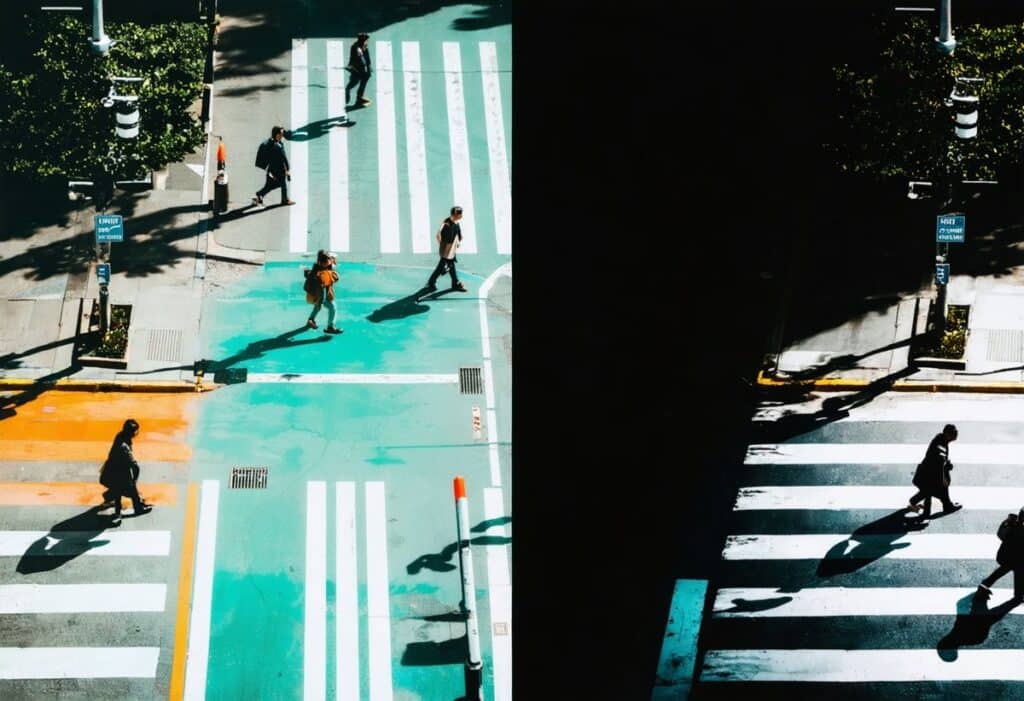
We did not reproduce Leiter’s photographs, because they remain in copyright. Our guide to moody photography covers related ideas on shadow and mood.
Is film coming back? What one survey shows
The 2025 Survey on the Current State of Film Photography, run by FilmFocus and described as Japan-focused, collected 1,337 valid responses between 30 November and 31 December 2025. In it, 71% had used Kodak in the past year and 68% Fujifilm. Meanwhile, 28% shot film more often and 26% shot less, and 62% of those shooting less cited cost.
This is one self-selected survey from one country, so it says little about worldwide sales. Nevertheless, it shows that film users are active and price-sensitive.
Cinematic street photography: our own habits
The following points are our judgment, not claims from the sources:
- Say whether a picture was shot on film or edited to look like film, because viewers care about the difference.
- Crop to a wide ratio only when the composition supports it.
- Expect red halos around bright lights if you shoot a stock without a rem-jet layer.
- Look at older colour work, such as Leiter’s, before you copy a modern preset.
For related reading, see our article on documentary photography.
What we removed
We removed the Sony engagement statistic, the percentages for grain opacity, the lists of apps and presets, the case studies of viral accounts, the claims about psychology and algorithms, and the 30-day challenge. We could not verify them, and the links pointed to company home pages.
Sources and limits
- Wikipedia: CinemaScope
- Wikipedia: CineStill
- Kodak: Professional Portra 400 film
- Wikipedia: Saul Leiter
- Digital Camera World: 2025 survey on film photography
We rewrote this article on 10 November 2026. Our research tools return summaries, and several sources are Wikipedia pages, so check the details against primary sources. We did not shoot or test the stocks ourselves. The three AI-generated illustrations are marked in their captions, and the two film photographs come from Wikimedia Commons.