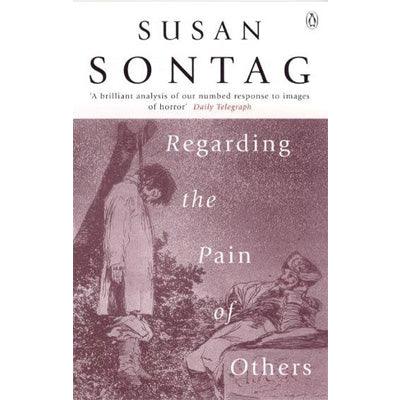
When Susan Sontag published Regarding the Pain of Others in 2003, she fundamentally challenged her own earlier positions on photography. This wasn't just another essay collection—it was a reckoning. Written in the shadow of 9/11 and published just a year before her death, the book represents Sontag's most mature thinking on regarding pain of others sontag war photography ethics. Can images of suffering actually create meaningful political change, or do they merely satisfy our voyeuristic impulses? Sontag spent over a hundred pages wrestling with this question, and her answers remain unsettling today.
The book emerged from a specific historical moment. Americans were confronting unprecedented media coverage of violence—from the collapse of the Twin Towers to the wars in Afghanistan and Iraq. Sontag recognized that our relationship with images of atrocity had fundamentally shifted since she wrote On Photography in 1977. Where she once argued that photographs inevitably numbed viewers to suffering, she now questioned whether that conclusion was too simple, too absolute.1
Sontag's Departure from On Photography
In 1977, Sontag famously declared that photographs ultimately diminish our capacity for moral response. She worried that constant exposure to images of suffering would create what we now call "compassion fatigue"—a numbing effect that transforms horror into mere spectacle.2 By 2003, she'd reconsidered. Regarding the Pain of Others doesn't exactly retract those earlier arguments, but it complicates them considerably.
The shift matters because Sontag had become one of photography's most influential critics. Her earlier work shaped how academics, photographers, and the general public understood the medium's ethical dimensions. When she questioned her own conclusions, it sent ripples through documentary photography practice and theory.3
What changed? Sontag realized she'd been too categorical. She writes: "Photographs of an atrocity may give rise to opposing responses. A call for peace. A cry for revenge. Or simply the bemused awareness, continually restocked by photographic information, that terrible things happen."4 The same image can mobilize different viewers in entirely different directions. Context matters. Captioning matters. The viewer's existing beliefs and political commitments matter enormously.
Virginia Woolf and the Question of Universal Response
Sontag structures much of her argument around a sustained engagement with Virginia Woolf's 1938 book Three Guineas. Woolf had claimed that anyone—regardless of gender, class, or nationality—would respond to photographs of war's devastation with identical horror. Show people images of bombed buildings and mangled bodies, Woolf suggested, and they'll naturally become pacifists.5
Sontag demolishes this assumption. She points out that Woolf's "we" was actually quite narrow—educated, privileged women in England who already shared pacifist inclinations. The same photographs that might horrify a British intellectual could inspire nationalist fervor in a soldier, or vengeful rage in someone whose family was killed by the depicted enemy.6
This critique extends to contemporary assumptions about war photography's effects. We often hear claims that "if people just saw what was really happening," they'd demand change. But Sontag insists that seeing isn't enough. Images require interpretation, and interpretation depends on who's looking, from where, and with what preconceptions. The regarding pain of others sontag war photography ethics framework demands we ask not just "what does this image show?" but "who benefits from this particular way of showing?"7
The Politics of Sympathy
Sontag argues that sympathy itself can be a political problem. When privileged viewers consume images of distant suffering, they often experience a pleasurable sense of moral superiority—"How terrible! Thank goodness we're not like that!" This response doesn't necessarily lead to action. It might actually impede action by allowing viewers to feel they've already done their moral duty simply by feeling bad.8
She writes with characteristic bluntness: "So far as we feel sympathy, we feel we are not accomplices to what caused the suffering. Our sympathy proclaims our innocence as well as our impotence." It's a devastating observation. The very act of viewing atrocity images from a safe distance can reinforce our sense of separation from the depicted violence—even when our own government or economic system might be implicated in creating that violence.9
Goya, Photography, and the Representation of Atrocity
Sontag begins her analysis not with photography but with Francisco Goya's etchings The Disasters of War, created between 1810 and 1820. Why start with pre-photographic art? Because Goya established visual conventions for depicting atrocity that photography would later inherit and transform.10 His images showed specific, individualized suffering—not heroic battle scenes but the mundane horror of execution, rape, and starvation.
Photography changed the stakes. A drawing or etching is obviously mediated—someone chose to represent this scene in this way. But photographs carry what Roland Barthes called the "having-been-there" of the referent. They seem to offer direct access to reality, even though they're just as constructed and selective as any other image.11 This apparent authenticity makes war photographs particularly powerful and particularly dangerous.
Sontag traces how war photography evolved from the staged tableaux of Roger Fenton's Crimean War images (1855) to the visceral immediacy of Vietnam War photography. Each technological advance—faster film, smaller cameras, color reproduction—changed what could be shown and how viewers responded. By the time of the Vietnam War, Americans were seeing images of dead and wounded soldiers in their morning newspapers, a development that many credit with turning public opinion against the conflict.12
The Problem of Aesthetic Beauty
One of Sontag's most provocative arguments concerns the tension between aesthetic beauty and ethical representation. Many powerful war photographs are formally beautiful—carefully composed, dramatically lit, visually striking. Is this a problem? Does making atrocity "beautiful" somehow betray the suffering depicted?13
Sontag doesn't offer easy answers. She acknowledges that aesthetic power can make images more memorable and therefore more politically effective. A poorly composed, visually confusing photograph might document atrocity but fail to move anyone. Yet there's something troubling about transforming human suffering into an art object to be admired in galleries or collected in coffee table books. The regarding pain of others sontag war photography ethics framework requires photographers to navigate this tension without clear guidelines.14
She's particularly critical of photography that aestheticizes suffering to the point where the formal qualities overwhelm the documentary content. When we admire the composition of an image showing a dying child, what exactly are we doing? Are we engaging with the political reality that produced this death, or are we consuming it as visual entertainment? These questions don't have comfortable answers, which is precisely why they matter for anyone working in photographic practice.15
Spectacle Versus Evidence: Photography's Dual Nature
Sontag identifies a fundamental contradiction in how we use war photographs. On one hand, they function as evidence—legal, historical, journalistic proof that specific events occurred. The photographs from Abu Ghraib prison, which emerged just after Sontag's book was published, would exemplify this evidentiary function. They documented crimes that could be prosecuted.16
On the other hand, these same images circulate as spectacle—shocking, attention-grabbing content that media outlets use to attract viewers. They're cropped, captioned, contextualized (or decontextualized) in ways that serve narrative purposes beyond simple documentation. A photograph that serves as evidence in a war crimes trial might also appear on a magazine cover designed to boost newsstand sales. Which function takes priority? Can an image serve both purposes simultaneously?17
Sontag argues that the spectacle function often undermines the evidentiary one. When photographs become part of the endless stream of media content—sandwiched between advertisements, competing with entertainment programming—their specific historical and political meanings get diluted. We see so many images of suffering that individual photographs lose their power to shock or mobilize. This is the compassion fatigue argument, but with a crucial addition: it's not photography itself that numbs us, but the media systems through which photographs circulate.18
Context and Captioning
No photograph speaks for itself. Sontag emphasizes that context and captioning fundamentally shape how we interpret images. The same photograph can tell completely different stories depending on where it appears and what text accompanies it. A picture of a destroyed building could illustrate "terrorist attack" or "collateral damage" or "resistance struggle" depending on who's doing the captioning and for what audience.19
This isn't just about bias or manipulation—it's inherent to how photography works. Images are mute. They show surfaces, appearances, moments frozen in time. They can't explain causation, historical background, or political context. All of that must be added through language. The regarding pain of others sontag war photography ethics framework therefore requires attention not just to what's photographed but to how images are framed, both literally and figuratively.20
Sontag discusses specific examples where captioning changed an image's meaning. During the Bosnian War, photographs of emaciated prisoners behind barbed wire evoked Holocaust imagery and helped mobilize international intervention. But those same images were later contested—were the men actually imprisoned, or were the photographers on the inside looking out? The factual question mattered enormously for the images' political effects.21
Who Has the Right to Look?
Perhaps Sontag's most ethically challenging question concerns spectatorship itself. Who has the right to look at images of others' suffering? And what obligations come with that looking? These questions had particular urgency in 2003, as images from Afghanistan and Iraq flooded American media. What did it mean for comfortable Americans to consume images of violence their government was inflicting?22
Sontag argues that privileged viewers can never fully understand the suffering depicted in war photographs. We might feel sympathy, horror, or outrage, but we're fundamentally separated from the experience itself. This doesn't mean we shouldn't look—but it does mean we should be humble about what looking can accomplish. She writes: "We don't get it. We truly can't imagine what it was like. We can't imagine how dreadful, how terrifying war is; and how normal it becomes."23
There's also the question of who benefits from these images. War photography has made careers and won prizes for photographers who documented others' suffering. Is this exploitative? Sontag doesn't condemn war photographers wholesale—she recognizes that documentation matters and that someone needs to create these images. But she insists we acknowledge the power dynamics involved. The photographer can leave. The subjects usually can't.24
The Photographer's Responsibility
What ethical obligations do war photographers have? Sontag explores this through discussions of specific photographers and their choices. Should photographers intervene when they witness atrocity, or does their role as documentarians require maintaining distance? The famous case of Kevin Carter's photograph of a starving Sudanese child being stalked by a vulture crystallizes the dilemma. Carter won a Pulitzer Prize for the image but was criticized for not helping the child. He later committed suicide, citing the trauma of what he'd witnessed.25
Sontag doesn't offer simple rules, but she emphasizes that photographers must grapple with these questions consciously. The regarding pain of others sontag war photography ethics framework requires ongoing ethical reflection, not just technical skill. It means thinking about framing choices, about which moments to capture and which to leave unphotographed, about how images will circulate and be used.26
She also discusses the physical and psychological risks photographers face. War photographers have been killed, kidnapped, and traumatized. Their commitment to documentation comes at real cost. This doesn't automatically make their work ethical, but it does complicate simplistic critiques of war photography as voyeurism. Many photographers genuinely believe their work serves important political purposes—bearing witness, creating historical records, mobilizing opposition to violence. Whether these beliefs are justified depends on specific contexts and outcomes.27
Historical Contexts: From Spanish Civil War to 9/11
Sontag grounds her theoretical arguments in specific historical examples, tracing how war photography evolved across the 20th century. The Spanish Civil War (1936-1939) was crucial because it was the first conflict extensively documented by photojournalists working for mass-circulation magazines. Robert Capa's famous image of a falling Republican soldier became iconic, though its authenticity has been debated for decades.28
Vietnam represented another watershed. For the first time, Americans saw graphic images of their own soldiers dead and wounded. Nick Ut's photograph of Kim Phúc running naked after a napalm attack became one of the war's defining images. Eddie Adams's photo of a Viet Cong prisoner being executed at point-blank range shocked viewers worldwide. These images are often credited with turning American public opinion against the war, though Sontag questions whether the relationship between images and political change is that straightforward.29
The Bosnian War (1992-1995) raised new questions about international intervention and the role of images in mobilizing it. Photographs of concentration camps and mass graves evoked Holocaust parallels and helped generate pressure for NATO involvement. But Sontag notes that similar atrocities in Rwanda received far less photographic coverage and generated minimal international response. Why? The answer involves complex factors including geopolitics, media access, and racial attitudes—not just the availability of images.30
Post-9/11 Context
Sontag wrote Regarding the Pain of Others in the immediate aftermath of September 11, 2001, and the book is saturated with that moment's anxieties. Americans had experienced mass-casualty terrorism on their own soil, documented in real-time by countless cameras. The images of planes hitting towers, of people falling from buildings, of the towers' collapse—these became seared into collective memory.31
The book also anticipates debates that would intensify after its publication, particularly around the Abu Ghraib photographs that emerged in 2004. These images of American soldiers torturing Iraqi prisoners forced Americans to confront their own capacity for atrocity. The photographs functioned as evidence in military trials, but they also circulated as political symbols—proof of American hypocrisy for critics, isolated incidents for defenders of the war.32
Sontag's timing was prescient. She was writing just as digital technology and the internet were transforming how war images circulated. The regarding pain of others sontag war photography ethics framework she developed would become even more relevant as social media made everyone a potential war photographer and distributor of conflict imagery.33
Theoretical Frameworks: Benjamin, Barthes, and Beyond
Sontag's arguments build on and respond to earlier theorists of photography and visual culture. Walter Benjamin's 1936 essay "The Work of Art in the Age of Mechanical Reproduction" established key concepts about how photography changes our relationship to images. Benjamin argued that photographic reproduction destroys the "aura" of original artworks—their unique presence in time and space. For Sontag, this loss of aura has particular implications for war photography.34
Roland Barthes's Camera Lucida (1980) provided another crucial reference point. Barthes distinguished between the studium (the general cultural interest of a photograph) and the punctum (the detail that pierces or wounds the viewer). Sontag engages with this framework while questioning whether Barthes's focus on individual subjective response adequately addresses photography's political dimensions.35
But Sontag isn't just synthesizing existing theory—she's pushing beyond it. Her engagement with these thinkers is critical and selective. She takes what's useful while rejecting aspects that don't account for photography's specific role in documenting violence. This synthetic approach makes the book valuable not just for its conclusions but for its methodology. Sontag shows how to think with and against theoretical traditions, using philosophy and art history to illuminate contemporary political questions.36
Relevance to Digital Age and Social Media
Though Sontag wrote before social media's dominance, her arguments have become more relevant, not less. Instagram, Twitter, and TikTok have transformed everyone with a smartphone into a potential war photographer. Conflicts in Syria, Ukraine, Gaza, and elsewhere are documented not just by professional photojournalists but by civilians living through the violence. What does this mean for the regarding pain of others sontag war photography ethics framework?37
On one hand, this proliferation of images makes it harder to deny atrocities. Governments can't control the visual narrative as easily when thousands of people are documenting events. The Syrian Civil War has been called the most documented conflict in history, with citizens uploading footage even as they fled bombardment. This documentation has been used by human rights organizations and international courts as evidence of war crimes.38
On the other hand, the sheer volume of images can create the numbing effect Sontag worried about. When our social media feeds are saturated with violence—often with minimal context or verification—do we become desensitized? Do algorithms that prioritize engagement incentivize the most shocking imagery regardless of its political usefulness? These questions extend Sontag's concerns into new technological territory.39
The Problem of Verification
Digital technology has also complicated questions of authenticity that were central to Sontag's analysis. Photoshop and AI-generated images mean we can no longer assume photographs show actual events. Deepfakes and manipulated imagery circulate alongside authentic documentation, making it harder to separate truth from propaganda. This erosion of photography's indexical relationship to reality—its "having-been-there"—undermines the evidentiary function Sontag discussed.40
Yet Sontag's arguments remain useful precisely because she never assumed photographs simply showed truth. She always emphasized that images require interpretation, context, and critical analysis. In an age of manipulated imagery, these skills are more necessary than ever. We need to ask not just "Is this image real?" but "Who created it? For what purpose? In what context? Who benefits from its circulation?"41
Critical Reception and Scholarly Debate
Regarding the Pain of Others received widespread critical attention upon publication in 2003. The book was nominated for a National Book Critics Circle Award and praised for its intellectual rigor and moral seriousness. But it also generated significant debate among scholars, photographers, and cultural critics who questioned Sontag's conclusions.42
Some critics argued that Sontag was too pessimistic about photography's political potential. They pointed to specific cases where images demonstrably contributed to policy changes or social movements. The photographs of lynchings that circulated in the early 20th century helped mobilize the anti-lynching movement. Images from the Civil Rights era shaped public opinion about segregation. Couldn't war photography work similarly?43
Others criticized Sontag for being too distant from actual photographic practice. War photographers themselves sometimes bristled at her characterizations of their work. They argued that she didn't adequately account for the practical and ethical decisions photographers make in the field—decisions shaped by immediate circumstances rather than abstract philosophical principles. The regarding pain of others sontag war photography ethics framework, these critics suggested, was more useful for academics than for practitioners.44
Feminist Critiques
Some feminist scholars questioned Sontag's treatment of gender in the book. While she engages extensively with Virginia Woolf and notes that war is a gendered phenomenon (mostly men fighting, women and children disproportionately among civilian casualties), critics argued she could have pushed this analysis further. How does gender shape who gets photographed in conflicts, and how those images are interpreted? What about sexual violence in war, which is systematically underdocumented photographically?45
Sontag also faced criticism for her Eurocentric focus. While she discusses conflicts in Bosnia and Rwanda, the bulk of her historical analysis centers on European and American photographers documenting European conflicts. Critics noted that this perspective reproduces certain assumptions about whose suffering matters and whose images count as significant. A more global approach might have examined different visual traditions and ethical frameworks for representing violence.46
Practical Applications for Contemporary Photographers
How can photographers actually use Sontag's ethical framework? Despite the book's theoretical density, it offers practical guidance for anyone working with images of suffering—whether in conflict zones or documenting poverty, disaster, or social injustice closer to home. The regarding pain of others sontag war photography ethics approach demands constant ethical reflection.47
First, consider your position and privilege. Are you documenting suffering from outside the community affected? What power dynamics shape your access and your subjects' willingness to be photographed? Sontag insists we acknowledge these inequalities rather than pretending the camera makes everyone equal. This doesn't mean privileged photographers shouldn't document suffering, but it does mean being honest about the relationship.48
Second, think carefully about aesthetics. Are you making suffering "beautiful" in ways that aestheticize rather than illuminate? This doesn't mean your images should be formally ugly—composition and visual clarity matter for communication. But it does mean questioning whether formal beauty is serving documentary purposes or undermining them. When in doubt, err toward clarity over artistry.49
Third, take context and captioning seriously. Your images will be interpreted through the text that accompanies them. Work with editors and writers to ensure captions provide necessary context without dictating interpretation. Be specific about what's actually shown rather than making assumptions about what people are thinking or feeling. Acknowledge what you don't know.50
Questions to Ask Before Publishing
Before releasing images of suffering, consider:
- Who benefits from this image's circulation? Does it serve the depicted subjects' interests or primarily the photographer's?
- What political work might this image do? Could it be used in ways you didn't intend?
- Have you provided enough context for viewers to understand what they're seeing?
- Does the image respect subjects' dignity, or does it reduce them to victims?
- What alternatives to showing graphic violence might convey the situation's reality?
- Are you documenting something that needs documentation, or satisfying voyeuristic impulses?
These questions don't have universal answers, but asking them is itself ethically important. The regarding pain of others sontag war photography ethics framework isn't a rulebook—it's an invitation to ongoing ethical reflection.51
Sontag's Final Statement on Photography
Regarding the Pain of Others was Sontag's last major work on photography before her death from leukemia in December 2004. In this sense, it represents her final, most mature thinking on questions she'd grappled with for decades. The book doesn't offer easy answers or optimistic conclusions. Instead, it insists on complexity, ambiguity, and the need for constant ethical vigilance.52
What's striking is how much Sontag revised her earlier positions without simply abandoning them. She maintains skepticism about photography's political effects while acknowledging that images can matter under certain circumstances. She criticizes aestheticization of suffering while recognizing that aesthetic power can serve documentary purposes. She questions privileged viewers' capacity to truly understand depicted suffering while insisting we have obligations to look and bear witness anyway.53
The book also reflects Sontag's characteristic intellectual range. She moves easily between art history, philosophy, literature, and contemporary politics. She discusses Goya and Instagram, Plato and photojournalism, Virginia Woolf and Abu Ghraib. This interdisciplinary approach models how to think seriously about photography—not as a technical practice isolated from other cultural forms, but as deeply embedded in broader questions about representation, ethics, and political life.54
Conclusion: Living with Ambiguity
Susan Sontag's Regarding the Pain of Others doesn't resolve the ethical dilemmas surrounding war photography—it deepens them. That's precisely its value. In an age of social media war imagery and citizen journalism, when everyone with a smartphone can document atrocity, Sontag's questions have become more urgent, not less. Can images of suffering create meaningful political change, or do they merely satisfy voyeuristic impulses? The answer, frustratingly and importantly, is: it depends.55
The regarding pain of others sontag war photography ethics framework demands we ask hard questions about power, privilege, and representation. Who gets photographed? Who does the photographing? Who views the images, and in what contexts? Who benefits? These questions don't have universal answers, but asking them is essential for anyone working with images of suffering. Whether you're a professional photojournalist, a documentary filmmaker, or someone sharing conflict imagery on social media, you're implicated in these ethical dynamics.56
Sontag also reminds us that images never speak for themselves. They require context, interpretation, and critical analysis. In our current moment of information overload and manipulated imagery, this reminder is crucial. We can't simply consume images of suffering and assume we've done our moral duty. We need to ask what these images show, what they hide, and what political work they're doing in the world.57
Perhaps most importantly, Sontag insists on humility. Privileged viewers looking at images of distant suffering can never fully understand what's depicted. This doesn't mean we shouldn't look—but it does mean we should be modest about what looking accomplishes. Seeing images of atrocity doesn't automatically make us better people or more effective political actors. It might just make us feel we've done something when we haven't.
Twenty years after its publication, Regarding the Pain of Others remains essential reading for anyone thinking seriously about photography's relationship to violence, suffering, and political life. The book challenges us to think harder, question more, and resist easy conclusions. That's uncomfortable work. It's also necessary work, especially now.
What images of suffering have you encountered recently? What did they make you think or feel? And more importantly—what did you do after seeing them? These are Sontag's questions, and they're worth sitting with. Share your thoughts in the comments below, and explore more resources on photography theory and aesthetics to deepen your understanding of how images shape our world.
Frequently Asked Questions
What is the main argument of Regarding the Pain of Others?
Sontag's central argument is that images of suffering don't automatically produce predictable political or emotional responses. The same photograph can inspire peace activism in one viewer and vengeful nationalism in another, depending on context, captioning, and the viewer's existing beliefs. She challenges both naive optimism about photography's power to create change and simple pessimism about compassion fatigue, arguing instead for a nuanced understanding of how images work politically.58
How does Regarding the Pain of Others differ from Sontag's earlier On Photography?
In On Photography (1977), Sontag argued that photographic images inevitably numb viewers to suffering through constant exposure. By 2003, she'd reconsidered this position, recognizing it was too absolute. Regarding the Pain of Others acknowledges that images can sometimes mobilize political action, though it remains skeptical about easy claims for photography's transformative power. The later book is more nuanced about context, more attentive to how different viewers interpret images differently, and more willing to acknowledge photography's evidentiary value alongside its aesthetic dimensions.59
What does Sontag say about compassion fatigue and war photography?
Sontag complicates the concept of compassion fatigue—the idea that constant exposure to images of suffering makes us numb. She argues that it's not photography itself that numbs us, but rather the media systems through which photographs circulate. When images appear sandwiched between advertisements and entertainment content, stripped of context and competing for attention, they lose their power to mobilize. But this is a problem of circulation and framing, not an inherent property of photographic images. She also notes that claims about compassion fatigue often come from privileged viewers who were never going to take political action anyway.62
Is Regarding the Pain of Others still relevant in the age of social media?
Absolutely. In fact, Sontag's arguments have become more relevant as social media has transformed everyone with a smartphone into a potential war photographer. The questions she raises about who has the right to look at suffering, who benefits from images' circulation, and how context shapes interpretation are even more urgent when conflict imagery floods our social media feeds. Digital technology has also complicated questions of authenticity and verification that were central to Sontag's analysis. Her emphasis on critical viewing skills and ethical reflection is essential for navigating contemporary visual culture, where manipulated images circulate alongside authentic documentation and algorithms prioritize engagement over context.63
What ethical guidelines does Sontag offer for war photographers?
Sontag doesn't offer a simple rulebook, but she emphasizes several key principles: acknowledge your privilege and power as someone who can leave while subjects usually can't; be conscious of how aesthetic choices might aestheticize suffering inappropriately; recognize that context and captioning fundamentally shape how images are interpreted; understand that the same image can be used for opposing political purposes; and maintain humility about what photography can accomplish politically. She insists that ethical war photography requires constant reflection rather than following fixed rules, since circumstances vary enormously. The regarding pain of others sontag war photography ethics framework is about asking hard questions rather than applying universal answers.64
- Sontag's shift in thinking reflected broader changes in media consumption and the proliferation of war imagery through cable news and early internet platforms.
- The term "compassion fatigue" gained widespread use in media studies following Sontag's initial critiques of photographic representation.
- Sontag's evolving position on photography's effects influenced a generation of photojournalists who were already grappling with digital technology's impact on their profession.
- This quote appears early in the text and establishes Sontag's more nuanced approach to photography's effects on viewers.
- Woolf's argument reflected the optimistic internationalism of some interwar intellectuals who believed visual evidence could transcend political divisions.
- Sontag's critique of Woolf reveals how assumptions about universal human response often mask particular class and cultural positions.
- This question became increasingly urgent with the rise of citizen journalism and social media documentation of conflicts.
- The distinction between sympathy and solidarity became central to debates about humanitarian photography in the 2000s and 2010s.
- This critique resonated particularly strongly in the context of American military interventions in Afghanistan and Iraq during the early 2000s.
- Goya's etchings weren't published until 1863, decades after his death, due to their graphic content and political implications.
- Barthes's concept of photography's indexical relationship to reality deeply influenced Sontag's thinking about the medium's unique truth claims.
- The relationship between Vietnam War photography and anti-war sentiment remains contested among historians and media scholars.
- This debate intensified with the rise of conflict photography that emphasized artistic vision alongside documentary purpose.
- Contemporary photographers like James Nachtwey and Sebastião Salgado have faced criticism for making war "too beautiful," a charge that echoes Sontag's concerns.
- The tension between aesthetic and ethical demands remains one of the most challenging aspects of documentary and war photography.
- The Abu Ghraib photographs became central to debates about military accountability and the role of photography in documenting human rights abuses.
- This dual nature of war photography became increasingly complex with digital manipulation and the rise of fake news discourse.
- This distinction became increasingly important as social media platforms became primary distribution channels for war imagery.
- Studies of news photography have consistently shown that captions can completely reverse viewers' interpretations of identical images.
- The rise of AI-generated images has made questions of context and authenticity even more urgent.
- The controversy over ITN's footage from Trnopolje camp illustrated how technical details of framing could become sites of political contestation.
- The question of complicity in viewing became central to debates about embedded journalism and military control of war imagery.
- This acknowledgment of the limits of photographic understanding challenged more optimistic accounts of photography's capacity to create empathy.
- Debates about extractive photography practices have intensified with increased attention to representation and power in documentary work.
- Carter's story became emblematic of the psychological costs of war photography and the ethical burdens photographers carry.
- Professional organizations like the National Press Photographers Association have developed ethical guidelines that reflect many of Sontag's concerns.
- Studies of war photographers have documented high rates of PTSD and other trauma-related conditions among those who regularly document conflict.
- The controversy over whether Capa staged the falling soldier photograph illustrates ongoing tensions between photographic truth claims and artistic construction.
- Historical research suggests that multiple factors beyond photography contributed to declining support for the Vietnam War.
- The differential response to Bosnian versus Rwandan atrocities revealed how factors beyond photographic documentation shape international intervention decisions.
- The decision by many American media outlets not to show images of people jumping from the towers reflected ongoing debates about what war imagery is appropriate for public consumption.
- The Abu Ghraib photographs became central to debates about military accountability and the role of photography in documenting human rights abuses committed by democratic governments.
- The rise of citizen journalism and smartphone documentation of conflicts has democratized war photography while raising new ethical questions about verification and consent.
- Benjamin's concept of the aura influenced generations of photography theorists, though its applicability to documentary photography remains contested.
- Barthes's phenomenological approach to photography emphasized personal response over political analysis, a limitation Sontag sought to address.
- Sontag's interdisciplinary approach influenced subsequent scholarship on photography, particularly in combining aesthetic analysis with political critique.
- The democratization of war photography through smartphones and social media has created unprecedented documentation of conflicts while raising new questions about verification and context.
- Organizations like the Syrian Archive have developed methodologies for preserving and verifying citizen-generated war footage for use as legal evidence.
- Studies of social media content moderation have documented how platforms struggle to balance free expression, user protection, and the evidentiary value of graphic conflict imagery.
- The rise of AI-generated images has created unprecedented challenges for photographic truth claims and verification practices.
- Digital forensics techniques and reverse image search tools have become essential for journalists and researchers working with conflict imagery.
- The book's reception reflected broader debates within photography studies about the medium's political effects and ethical obligations.
- Historical studies have documented specific cases where photographs contributed to political change, though the causal mechanisms remain complex and contested.
- Interviews with war photographers have revealed complex ethical reasoning that doesn't always align with theoretical frameworks developed by critics and scholars.
- Feminist media scholars have expanded on Sontag's work to analyze how gender shapes both the production and reception of war imagery.
- Postcolonial scholars have critiqued how Western photographic conventions shape global visual culture around conflict and suffering.
- Professional development programs for photojournalists increasingly incorporate ethical frameworks derived from theorists like Sontag.
- Documentary photographers working in communities different from their own have developed various practices for negotiating power dynamics and building trust.
- This principle has influenced editing decisions at major publications, which increasingly question whether certain aesthetic treatments of suffering are appropriate.
- Caption-writing guidelines developed by organizations like Reuters and the Associated Press reflect increasing attention to these issues.
- Ethics workshops for photojournalists often use case studies to explore how these principles apply in specific situations with competing ethical demands.
- Sontag's death shortly after the book's publication gave it additional weight as a kind of intellectual testament.
- This both/and approach frustrated some readers who wanted clearer prescriptions but reflected Sontag's intellectual honesty about photography's complexities.
- Sontag's interdisciplinary methodology influenced subsequent scholarship on photography theory and visual culture studies.
- The book's refusal of easy answers has made it a lasting reference point for debates about photography ethics that continue to evolve with technological change.
- The democratization of image-making through digital technology has made Sontag's ethical questions relevant to far more people than just professional photographers.
- Media literacy education increasingly emphasizes these critical viewing skills as essential for navigating contemporary visual culture.
- This argument represented a significant evolution from Sontag's more categorical claims in her 1977 On Photography.
- Scholars have debated whether this represents a genuine shift in Sontag's thinking or a refinement of her earlier position.
- This distinction between photography's inherent properties and its institutional contexts influenced subsequent media studies research.60
Why does Sontag discuss Virginia Woolf's Three Guineas?
Sontag engages extensively with Virginia Woolf's 1938 book Three Guineas because Woolf made an influential argument about universal response to war imagery. Woolf claimed that anyone—regardless of gender, class, or nationality—would respond to photographs of war's devastation with identical horror and become pacifists. Sontag systematically dismantles this assumption, showing that Woolf's "universal" viewer was actually quite specific (educated, privileged, already-pacifist British women). The same images that horrify some viewers might inspire nationalist fervor or vengeful rage in others. This critique establishes Sontag's broader argument about the importance of context and viewer position in determining images' effects.61Woolf's argument reflected optimistic interwar internationalism that Sontag, writing after decades of continued warfare, found naive.
- Media scholars have extended Sontag's framework to analyze social media platforms' role in circulating and contextualizing war imagery.
- Professional photojournalism organizations have incorporated many of these principles into their ethical guidelines and training programs.