Alright, look. Forget the sterile, textbook definition for a second.
Street photography isn't about your camera's specs or nailing the perfect exposure. It's about catching life on the fly. It's that split-second, unscripted moment on a crowded subway platform or a quiet interaction on a sun-drenched stoop that tells a whole story without a single word. It's the art of finding the profound in the plain.
For decades, the legends of the lens—folks like Henri Cartier-Bresson and Walker Evans—have been dropping knowledge bombs about this craft. They didn't just take pictures; they had a philosophy.
So let's cut the fluff and break down their most iconic quotes. Think of this as your guide to not just taking pictures, but seeing like a street photographer.
Spontaneity & Gut Feelings: Your Camera as a Sketchbook
Out here, you don't have time to overthink. The best shots are born from instinct, a gut reaction to the world unfolding right in front of you.
"For me, the camera is a sketchbook, an instrument of intuition and spontaneity."
— Henri Cartier-Bresson
Cartier-Bresson wasn't carrying around a delicate, precious object. He was carrying a tool, like a journalist's notepad. It's for quick, raw impressions. The goal isn't a perfect, polished painting from the get-go; it's to capture the feeling, the energy, the moment.
Your Takeaway: Stop treating your camera like a Fabergé egg. Keep it ready. Shoot fast, embrace the "happy accidents," and collect moments like sketches.
"Photography is an immediate reaction, drawing is a meditation."
— Henri Cartier-Bresson
He’s drawing a clear line here. While a painter can sit and contemplate for hours, a street photographer has a fraction of a second. You see it, you feel it, you click. Blink, and it's gone.
Your Takeaway: Train yourself to react. Hesitation is your biggest enemy. Trust that gut punch that says, "This is it."
"To me, photography is the simultaneous recognition, in a fraction of a second, of the significance of an event."
— Henri Cartier-Bresson
This is the real magic. It’s not just seeing something; it's understanding that what you're seeing matters. It's spotting the perfect alignment of a person, a shadow, and a gesture that turns chaos into poetry.
Your Takeaway: Sharpen your eye. Watch people, study light, and learn to anticipate how a scene might unfold. It’s like being a visual fortune-teller.
The Art of Really Seeing: More Than Just Looking
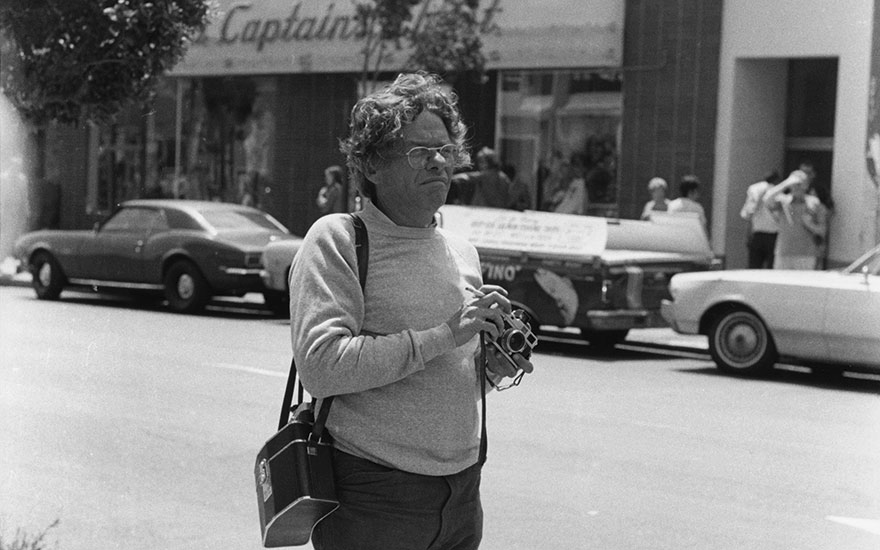
Anyone can look. A street photographer sees. It's about developing a radar for the tiny, beautiful, or absurd details that everyone else walks right past.
"The eye should learn to listen before it looks."
— Robert Frank
This one’s deep. Before you even raise your camera, just be there. Absorb the sounds, the mood, the tension, the joy. A great street photo has a soundtrack you can feel.
Your Takeaway: Don't just march in and start blasting away. Loiter. Linger. Let the environment talk to you first.
"Stare. It is the way to educate your eye, and more. Stare, pry, listen, eavesdrop. Die knowing something. You are not here long."
— Walker Evans
Walker Evans is giving you a mandate to be nosy. Be curious. Lean in. Eavesdrop on life. The best stories are happening all around you if you just slow down enough to notice.
Your Takeaway: Get comfortable with observation. Be patient and relentlessly curious. The good stuff reveals itself to those who wait.
The "Decisive Moment": That Split-Second of Magic
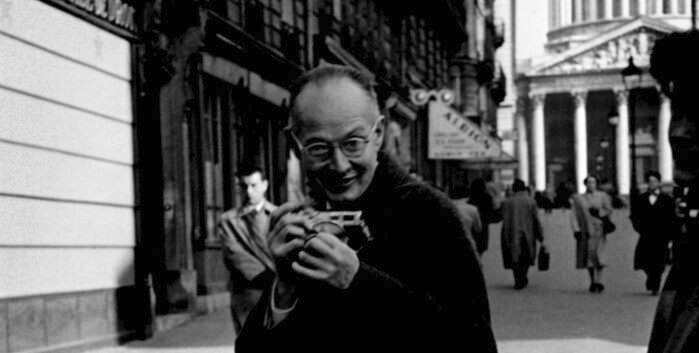
You've heard the term. This is the holy grail. It’s that perfect instant where everything—the action, the composition, the emotion—clicks into place to create a singular, unforgettable image.
"Photography, to me, is catching a moment which is passing, and which is true."
— Jacques-Henri Lartigue
It's not just any moment; it's a true one. An authentic laugh, a fleeting glance, a perfectly timed jump. It's the opposite of something staged.
Your Takeaway: Anticipate. Watch for patterns in movement and behavior. Position yourself where the action is likely to happen.
"A photograph is a moral decision taken in one-eighth of a second."
— Salman Rushdie
Boom. This quote hits different. Every time you press the shutter, you're making a choice. It's about respect, dignity, and your own personal line. Are you capturing a scene or exploiting a person?
Your Takeaway: Develop your own ethical code. Shoot with empathy. The most powerful photos often come from a place of connection, not theft.
Framing & Storytelling: You're the Director
Where you stand is everything. You're not just a passive observer; you're a storyteller using your frame to direct the viewer's eye.
"A good photograph is knowing where to stand."
— Ansel Adams
It sounds simple, but it's everything. A step to the left can introduce a telling shadow. A step back can include a crucial piece of context. Your feet are your most important zoom lens.
Your Takeaway: Don't just shoot from where you're standing. Move your feet. Crouch down, climb up, find a new angle. The best perspective is rarely the most obvious one.
The Soul of the Shot: It's Not About the Tech
At the end of the day, people connect with feeling, not pixel-perfect sharpness.
"Sharpness is a bourgeois concept."
— Henri Cartier-Bresson
The master himself said it. A technically perfect but emotionally dead photo is worthless. A slightly blurry, grainy image that crackles with life and energy? That's gold.
Your Takeaway: Don't get bogged down in technical perfection. If the moment is powerful, the "flaws" won't matter.
"It is more important to click with people than to click the shutter."
— Alfred Eisenstaedt
Connection over capture. Sometimes, a smile, a nod, or a quick chat can transform an awkward shot into a collaborative portrait filled with humanity.
Your Takeaway: See your subjects as people, not just subjects. A little humanity goes a long way.
So there you have it. The streets are talking. Are you listening?
Grab your camera, hit the pavement, and remember: you're not just taking photos. You're collecting fragments of time, and there's poetry in that. Now go get it.