The Photographer’s Mind argues that a strong photograph depends less on the camera or the scene than on the thinking behind it. Michael Freeman wrote it as a companion to The Photographer’s Eye, and it asks a different question. Where the first book teaches composition, this one asks why a photographer frames, waits or edits as they do. This guide explains how the book is built, what it covers and how to put its ideas to work.
A note on method: we describe the book from the publisher’s description, library catalogues and published reviews. We have not quoted its pages. In short, this is a reader’s guide, not a page-by-page summary.

The Photographer’s Mind at a glance
| Detail | Information |
|---|---|
| Author | Michael Freeman (born 1945), British photographer and author |
| Full title | The Photographer’s Mind: Creative Thinking for Better Digital Photos |
| Publisher | Focal Press (US) and Ilex Press (UK) |
| First print edition | Paperback, 28 September 2010, about 192–194 pages depending on the catalogue |
| Later editions | E-books dated 2011 and 2018; a “Remastered” paperback dated 5 April 2018 |
| Structure | Three parts: intent, style and process |
Sources disagree slightly on dates and page counts. Amazon lists the paperback on 28 September 2010 with 194 pages, while Open Library and a publisher listing give 192 pages and 2011 for the e-book. We therefore give a range rather than a single figure.
Who is Michael Freeman?
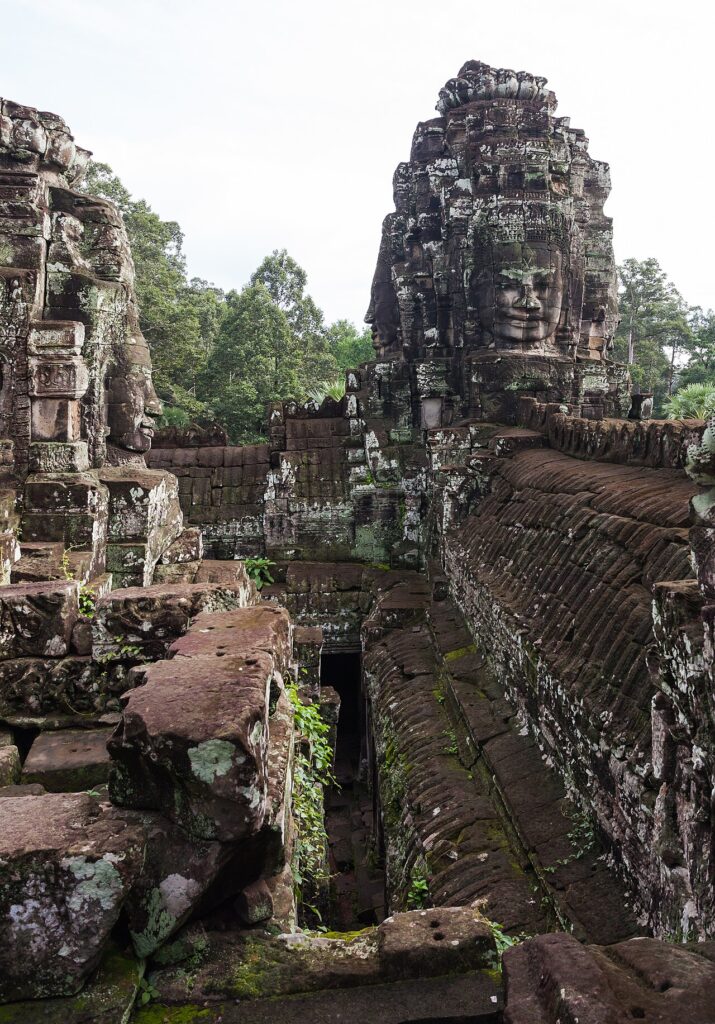
Freeman was born in 1945 and works as a British photographer, author and journalist. According to Wikipedia, his first book as a photographer was Athens (1978) for Time-Life, and he photographed about forty stories for Smithsonian magazine between 1978 and 2008. Asian culture, architecture and archaeology run through his work, including five books on Angkor. He has also written more than forty books on photography.
The Photographer’s Mind belongs to a trilogy. The Photographer’s Eye appeared in 2007, The Photographer’s Mind in 2010, and The Photographer’s Vision in 2011. Together, they move from composition to thinking to the appreciation of great photographs.
Intent, style and process: how the book is built
The publisher organises the book in three parts. First, intent covers what the photographer wants from a picture before pressing the shutter. Then style looks at the choices that make one photographer’s work recognisable. Finally, process follows the workflow, and a closing section considers how digital tools can transform an image.
According to the publisher’s description, Freeman separates the picture into subject, lighting and composition. In addition, the blurb lists the themes the book addresses: creating images that evoke emotion, avoiding clichés, how photographic trends recur, style and composition, the use of light, and responding to unexpected situations. Photography Blog, as quoted on the retailer’s page, counts more than 400 images with diagrams.
Reviewers agree on the book’s angle. Library Journal presents it as a follow-up to The Photographer’s Eye that covers both practical and abstract aspects of photography. Similarly, DPReview credits Freeman with a strong grasp of the mental processes involved in viewing images. Both remarks, again, reach us only through the retailer’s page.
What The Photographer’s Mind says about clichés and trends
The blurb singles out two ideas worth a closer look. First, it promises advice on avoiding clichés. Second, it says photographic trends recur. Together, they suggest a modest but useful lesson: before you copy a successful look, ask whether everyone else already did.
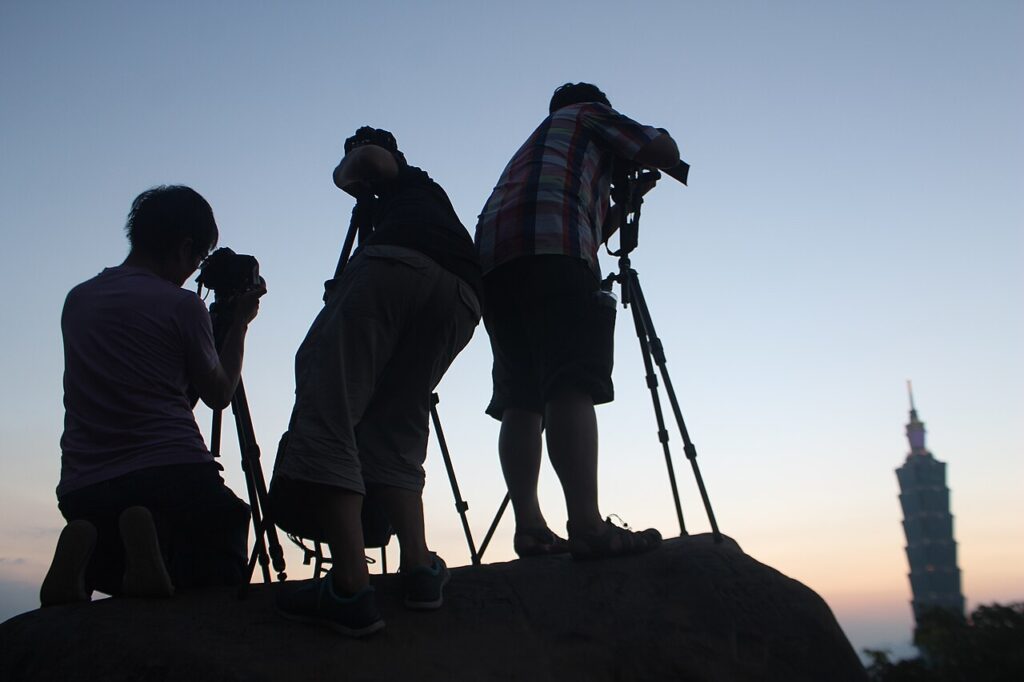
The photograph above illustrates the problem. Dozens of people can stand on the same rooftop and record nearly the same sunset. The example is ours, not Freeman’s. However, it shows why a book about intention matters: the camera makes the picture easy, and the thinking makes it yours.
How to use The Photographer’s Mind in practice
The following exercises are our suggestions, inspired by the book’s three parts. They do not come from its pages.
- Write your intent first. Before a shoot, write one sentence on the feeling or idea you want. Then check each frame against it.
- Audit your style. Pick twenty of your own pictures and note what repeats: light, distance, subject, mood. In short, find the habits you already have.
- Log your process. Record what you changed between the first frame and the final edit. Over time, you see which steps improve the picture and which only add noise.
- Break one cliché. Choose a view everyone shoots, then find an angle, time or subject that fits your intent instead.
For the deeper background on why such questions matter, see our essays on what photography is and on the photographic non-act.
Strengths and limits
The book’s strength is its question. Most photography books explain tools, whereas this one explains decisions. Moreover, its trilogy structure lets readers start with composition and move toward thinking.
Its limits matter as well. The book dates from 2010, before smartphone photography and AI image tools changed daily practice. Readers who want that context should pair it with our pieces on the collapse of photographic truth in the age of AI. Also, because we describe the book through secondary sources, we cannot judge how well individual chapters work.
Sources and limits
- Library catalogue record with the three parts: Intent, Style, Process (Elsevier, 2011)
- Amazon listing: publisher description, 28 September 2010, editorial review excerpts
- Open Library: ISBN 9780240815176, 192 pages
- Hachette NZ: publisher blurb and e-book dates
- Hachette India: Remastered edition, 5 April 2018
- Wikipedia: Michael Freeman (photographer)
We rewrote this article on 10 November 2026. Our research tools return summaries of web pages, so check any detail you plan to cite against the originals. The review quotes from Library Journal, DPReview and Photography Blog reach us through the Amazon listing, because the Library Journal page itself did not load. The earlier version of this post praised the book in general terms and made claims about Freeman’s “artistic journey” that we could not verify, so we removed them.