Candid street photography records unposed people in public places. It rests on two skills: seeing a moment and respecting the person in it. This guide covers the decisive moment, a practical focusing method, consent and the courts, and what research says about being photographed.
Street photographers work in the open, among strangers, with no second take. For that reason the craft is half technique and half judgement. Moreover, each factual point below comes from a primary source, and the notes follow the text. Where I give a personal rule, I say so.

The decisive moment: where candid street photography took shape
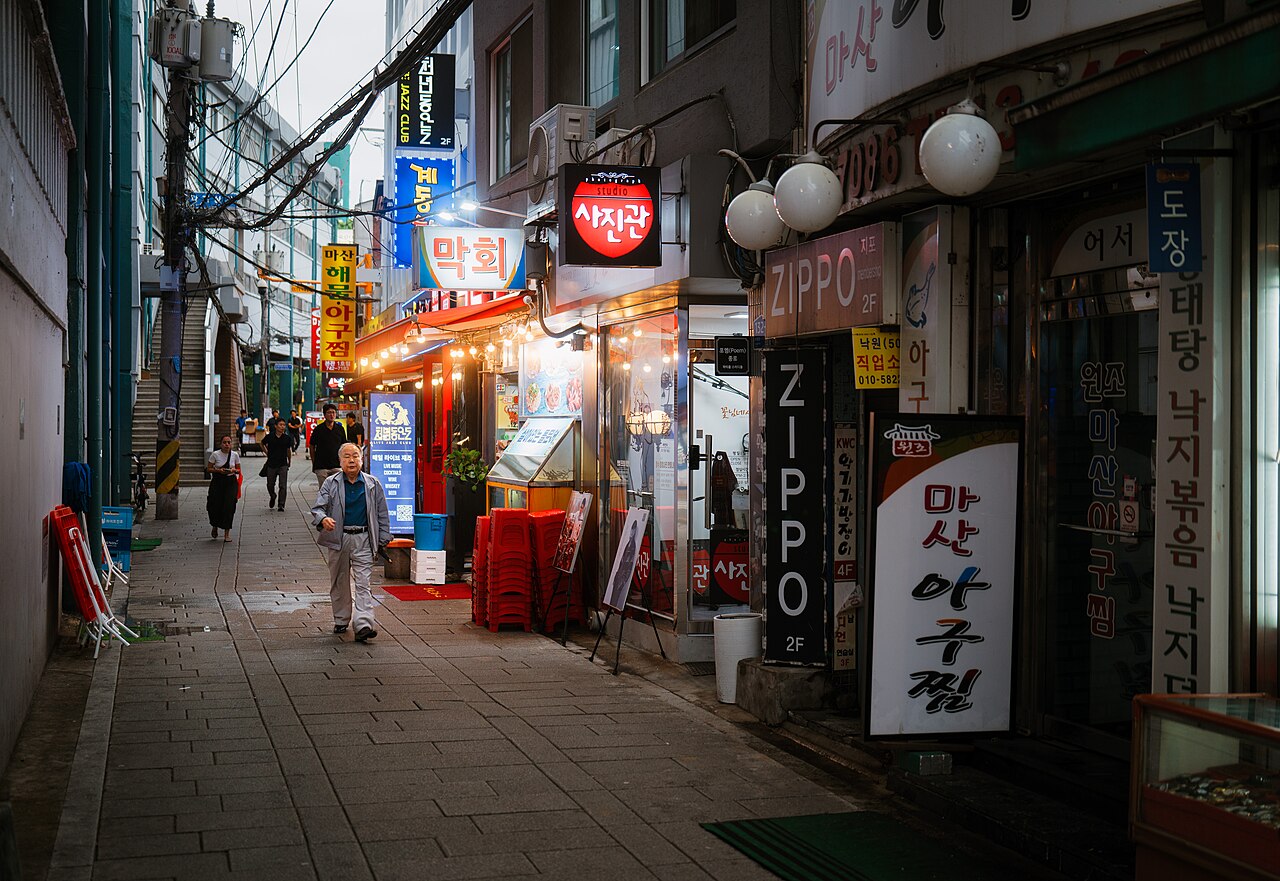
Henri Cartier-Bresson's book was completed in October 1952 as a French-American co-edition. It was published by Verve, with Simon & Schuster as the American publisher, and Matisse designed the cover.1 The French title, Images à la sauvette, refers to street vendors who grab their goods and run at the first sign of an inspector. Cartier-Bresson also saw a parallel with his own way of taking pictures.2
The phrase "decisive moment" comes from the memoirs of Cardinal de Retz, first published in 1717. Tériade suggested it as the epigraph to Cartier-Bresson's introduction, which reads, "There is nothing in this world which does not have its decisive moment."3
Cartier-Bresson defined photography as the near-instant recognition of an event's meaning, together with a precise arrangement of forms that gives the event its expression.4 Indeed, this definition still works as a checklist. First, read what is happening. Second, wait until the forms line up. Third, press the shutter.

A short history of candid street photography beyond the decisive moment
The decisive moment is one model of the genre, not its definition. Indeed, three other careers show how far the practice stretches.
Robert Frank and The Americans
The National Gallery of Art describes Frank’s The Americans as 83 photographs made in 1955 and 1956, while he travelled the United States on a Guggenheim fellowship. It notes the loose, casual compositions, with rough, blurred, out-of-focus foregrounds and tilted horizons, that proved controversial and influential5. In other words, a street book can be an ode or a poem rather than a literal document, as the gallery puts it.
Winogrand, Maier and the unseen archive
Garry Winogrand (1928–1984) left about 6,600 rolls of film, roughly 250,000 images, that he had never seen. Moreover, more than a third of those rolls were never developed. The Metropolitan Museum says he exposed about 20,000 rolls in his lifetime, and that he found taking pictures more fulfilling than printing or editing6. Meanwhile, Vivian Maier (1926–2009) worked as a nanny from 1951. Her negatives, about 150,000 of them, were auctioned in 2007, and the collector John Maloof, who acquired them, published the photographs online. Foam describes her as a street photographer whose oeuvre was discovered only at the end of her life7.
Moriyama and the blur
Daido Moriyama, born in 1938 in Ikeda, Osaka, contributed to the second issue of the magazine Provoke in 1969. The magazine had been launched in 1968 by Kōji Taki, Takahiko Okada, Takuma Nakahira and Yutaka Takanashi. Moreover, his signature style, are, bure, boke, means grainy, blurry and out of focus. Also, he often photographed without looking through the viewfinder, and in 1971 he used a half-frame camera in New York, which gave twice as many exposures per roll8. Consequently, his work answers Cartier-Bresson with volume, grain and doubt about photographic realism.
Zone focusing for candid street photography: a worked example
In short, zone focusing removes the autofocus delay. Instead, you set the focus distance and aperture in advance, then shoot anything that falls inside the sharp zone. Canon's guide to hyperfocal focusing gives the formula: the hyperfocal distance equals the focal length squared, divided by the circle of confusion times the f-number. It uses 0.030 mm as the circle of confusion for full-frame cameras and 0.019 mm for APS-C.9
Here is a worked example, with my own arithmetic. Take a 28 mm lens at f/8 on a full-frame camera. First, 28 × 28 = 784, and 0.030 × 8 = 0.24. So the hyperfocal distance is about 3.3 metres. Then focus there, and the standard approximation puts the near limit of acceptable sharpness at about half that distance, around 1.6 metres. Likewise, everything beyond it is acceptable. Canon's own example, a 28 mm lens at f/16, gives about 1.63 metres.10
Still, acceptable sharpness is a convention, not a guarantee. However, if you enlarge heavily, the zone shrinks. Also, a small aperture needs light, so raise the ISO rather than slow the shutter, because a moving subject blurs first. My own starting point is 1/250 s. That is a habit, not a measured rule.
Reading the street: layers, timing and patience
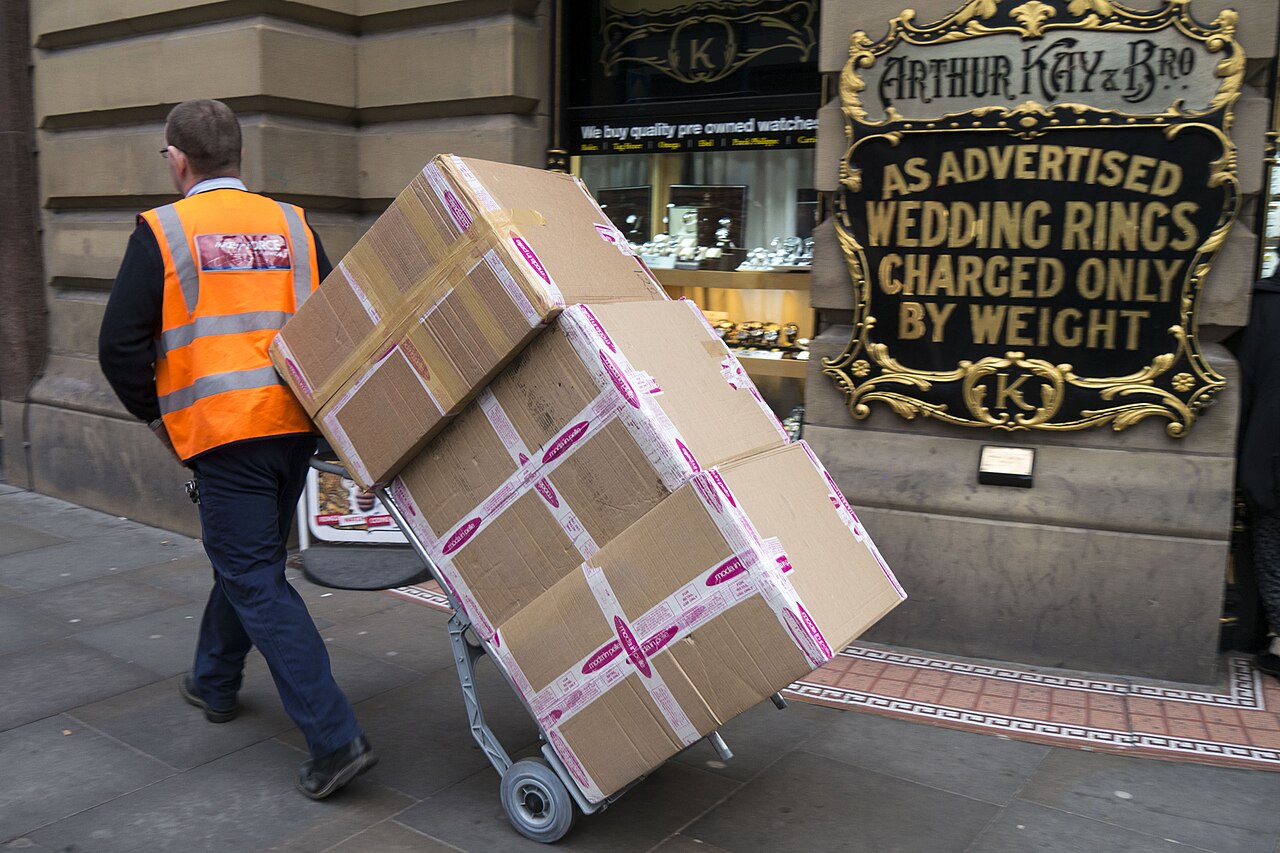
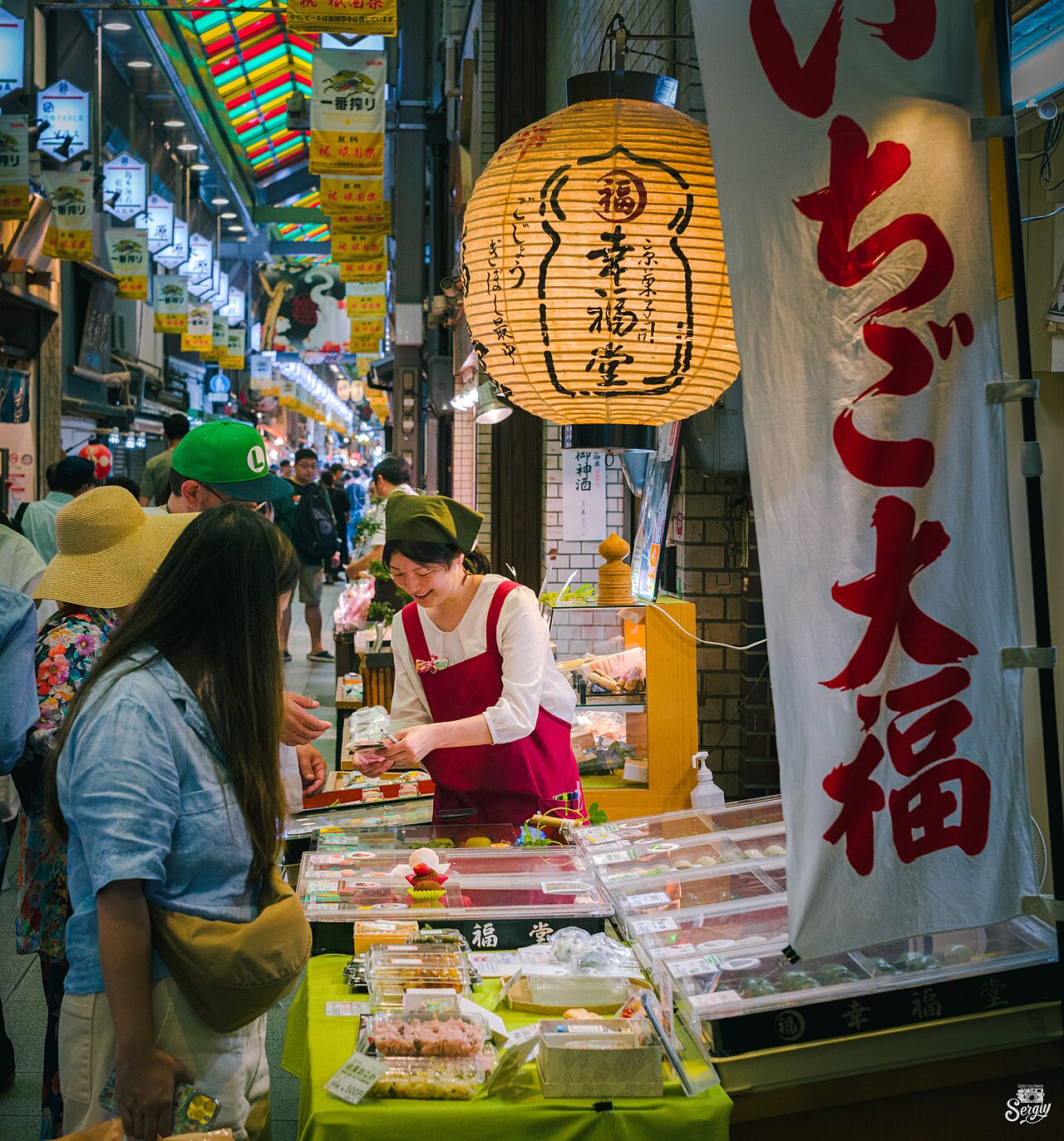
Generally, good candid frames hold more than one layer. A worker pushes boxes, a window shows a shop, and a passer-by closes the gap. For example, in the photograph below, two layers share one frame.

Timing then does the rest. First, pick a background, such as a doorway, a mural or a patch of light. Next, wait for a subject to enter it. In my experience, people stop noticing you if you stay in one place longer than feels natural. For flattering light, see our notes on golden hour, and for after dark, read about shooting at night on holiday.

Candid street photography law at a glance
Indeed, law is where candid street photography varies most. Two questions must stay apart: taking the picture and publishing it. Therefore, the table below lists what each primary source says. It covers six jurisdictions only, it is information and not legal advice, and laws change.
The table: six jurisdictions
| Jurisdiction | What the source says | Source |
|---|---|---|
| France | Code civil article 9: “Chacun a droit au respect de sa vie privée.” Judges may order measures to stop or prevent an intrusion into private life. The article’s text does not mention images. | Légifrance |
| Germany | KUG §22: portraits may be distributed or displayed only with the depicted person’s consent. §23 lists exceptions, such as contemporary history, people who appear only as accessories to a place, assemblies and processions, and unordered portraits serving a higher interest of art. The exceptions do not apply where the person’s legitimate interest is violated. | §22 · §23 |
| European Union | Buivids (C-345/17, 14 February 2019): recording people and posting the video online fell within the scope of the data protection directive. The household exemption is read strictly. The journalistic exemption applies only if the sole object is to disclose information, opinions or ideas to the public, which the national court decides. | FRA case-law summary |
| United Kingdom | Murray v Big Pictures [2008] EWCA Civ 446: the claim of a child photographed covertly in an Edinburgh street was arguable. The question is whether he had a reasonable expectation of privacy, judged case by case. | Columbia GFoE summary |
| Council of Europe | Von Hannover v. Germany (no. 1), 24 June 2004: photographs of private life taken without the person’s knowledge violated Article 8. Dupate v. Latvia (2020) shows that a public location alone does not decide the matter. | ECtHR factsheet |
| United States (New York) | Nussenzweig v. DiCorcia: see the next section. New York Civil Rights Law sections 50 and 51 cover the use of a likeness for advertising or trade. | NY Supreme Court |
Limits of the table
Two limits apply. First, the German statute concerns distribution and display, not the act of taking a photograph. Second, I did not review how data protection law has interacted with the KUG since 2018, or the French case law that applies article 9 to images. Check a local lawyer or the cited source before you publish identifiable people.
Candid street photography and consent: what the courts decided
Rules vary by country, so one case never settles them. For example, Nussenzweig v. DiCorcia is well known. The photographer Philip-Lorca DiCorcia took a candid picture of Erno Nussenzweig, an Orthodox Jewish man, in Times Square for his HEADS series. A gallery exhibited the series in 2001 and sold prints. Nussenzweig sued under New York Civil Rights Law sections 50 and 51, which cover the use of a person's likeness for advertising or trade.11
What the New York courts decided
On 8 February 2006, the New York County Supreme Court dismissed the case as time-barred. It also ruled on the merits. It found the photograph to be art, which New York courts treat as protected speech, and held that sales and catalogue use did not make it a trade use.12 However, the Court of Appeals affirmed on 15 November 2007 on limitations grounds only. It did not reach the merits of the privacy claim.13
So the case offers limited comfort. Moreover, it concerns New York statutes and a gallery context, not a general right to photograph anyone anywhere. I am not a lawyer, and this is information, not legal advice. For a wider overview, read our guide to law and ethics in public places. In practice, ethics asks more than law does. For instance, skip humiliating pictures, and withdraw a frame if a subject objects and the picture serves no public interest.

What research says about being photographed
Research on reactions is thin and old. In a field experiment published in 1980, Guile, Shapiro and Boice found that people photographed by an unfamiliar photographer tended to experience it as an intrusion on their personal space. They often responded with submissive or appeasing behaviour.14 That is one small study from one university, so it cannot tell us how people react today. Still, it supports a simple habit: stay visible, smile and nod when someone notices you.
Many guides also claim that audiences now prefer unedited pictures, often with precise percentages. I could not find a reliable source for those figures, so I do not repeat them.
What scholars say about candid street photography ethics
Hadley’s 2022 article in Ethical Theory and Moral Practice treats street photography ethics as a question of subjects’ wellbeing and autonomy. According to the Consensus summary, it argues that photographers should respect subjects’ privacy and editorial control15. Meanwhile, Clark traces a history of commercial street photographers in France between 1945 and 1955, in which the right to photograph, copyright, privacy and dissemination were contested16. Therefore, that history helps explain why French law protects people so strongly today.
Earlier, Coleman asked in 1987 how photographers should handle private lives in public places17. In short, the scholarly debate is older than smartphones, and it has not produced a rule that settles every case.
Editing candid frames honestly
Street pictures carry an implied promise: this happened. World Press Photo's rules for the 2027 contest prohibit adding, rearranging, reversing, distorting or removing people or objects within the frame.18 Of course, those rules govern a press contest, not your portfolio. Even so, they give a useful baseline. If you remove a bin or a passer-by, say so in the caption. Our guide to the rules, rights and disclosure for AI edits explains why.
Frequently asked questions
Is candid street photography legal?
In short, it depends on the country and on whether you only take the picture or also publish it. The table above shows that France protects private life under article 9, that Germany requires consent for distribution subject to exceptions, and that English law asks whether there was a reasonable expectation of privacy. Always check local law19.
Do I need permission to publish a street photograph?
For example, in Germany §22 KUG requires consent to distribute a portrait, but §23 lists exceptions, including a higher interest of art for portraits not made on commission20. However, other countries differ, and I did not review every rule.
Is candid the same as covert?
No, although the line matters in court. In Dupate v. Latvia (2020) the European Court of Human Rights found a violation where a woman was photographed covertly around a maternity ward and could not practically have avoided the situation21.
Sources and limits
However, I found no source I could read on camera and lens choice, approach and etiquette, photographing children or homeless people, or facial recognition and generative AI, so this guide does not cover them. Also, the scholarly items marked as summaries were read only at that level. Moreover, the legal table covers six jurisdictions, and I did not read the French case law, the full CJEU judgment or the full Murray judgment. The summary page I read for Murray calls the court the Supreme Court, but the citation EWCA Civ denotes the Court of Appeal, which is what the table states.
Related reading: the film look many photographers chase.
- Fondation Henri Cartier-Bresson, press kit for the exhibition "Images à la Sauvette".
- Fondation Henri Cartier-Bresson, press kit, "Images à la Sauvette".
- Fondation Henri Cartier-Bresson, press kit, "Images à la Sauvette".
- Fondation Henri Cartier-Bresson, press kit, "Images à la Sauvette".
- National Gallery of Art press release for the exhibition, archived by the University of North Texas. The page gives the publication date only as 1958/1959. (NGA)
- Metropolitan Museum of Art, page for the exhibition “Garry Winogrand”, 27 June to 21 September 2014. (Met Museum)
- Foam, page for the Vivian Maier exhibition, 7 November 2014 to 1 February 2015. (Foam)
- Photo Elysée, exhibition texts on Daido Moriyama (PDF, 2024). (Photo Elysée)
- Canon Europe, Hyperfocal focusing. The page gives the formula, the circle-of-confusion values (0.030 mm full frame, 0.019 mm APS-C) and the 28 mm, f/16 example (about 1.63 m). The near limit of about half the hyperfocal distance is the standard approximation, not a statement from this page.
- Canon Europe, Hyperfocal focusing.
- Nussenzweig v. DiCorcia, Supreme Court of New York, New York County, decision of 8 February 2006 (2006 NY Slip Op 50171).
- Nussenzweig v. DiCorcia, New York County Supreme Court, 8 February 2006.
- Nussenzweig v. DiCorcia, New York Court of Appeals, decision of 15 November 2007.
- Guile, M. N., Shapiro, N. R., and Boice, R. (1980). Reactivity to being photographed: An invasion of personal space. Bulletin of the Psychonomic Society, 16(2), 113-114.
- Hadley, Ethical Theory and Moral Practice 25(4), 2022, pp. 529–540; DOI verified in Crossref; I read only a summary of the abstract. (DOI)
- Clark, Journal of Visual Culture 16(2), 2017, pp. 225–252; DOI verified in Crossref; summary read only. (DOI)
- Coleman, “Private lives, public places: Street photography ethics”, Journal of Mass Media Ethics 2(2), 1987, pp. 60–66; DOI verified in Crossref; title and record only. (DOI)
- World Press Photo, Entry rules. The page checked in November 2026 describes the 2027 contest.
- See the law table above and the cited sources. (Légifrance)
- KUG §§22–23. (gesetze-im-internet)
- ECtHR factsheet “Protection of one’s image”. (ECtHR factsheet)