Scroll through Instagram right now, and you'll notice something unmistakable: the feed has transformed into a nostalgic film archive. Moody shadows stretch across rain-soaked streets, grain dances across perfectly imperfect moments, and those distinctive cinematic black bars frame urban stories with Hollywood-level drama. This isn't accidental—it's the viral 'film look' aesthetic that's dominating Instagram's visual landscape in 2025, and street photographers worldwide are racing to master it. Whether you're shooting with a $5,000 Leica or a smartphone, understanding this aesthetic has become essential for anyone serious about making their work stand out in an oversaturated digital world.
Why the Film Look Has Captured Instagram's Collective Imagination
The film aesthetic isn't just a passing trend—it's a visual rebellion against the hyper-polished, clinically sharp images that saturated social media for years. Today's photographers and viewers crave authenticity, texture, and emotional depth. The film look delivers all three with its characteristic grain, muted color palettes, and organic imperfections that digital sensors typically eliminate.
This nostalgia-driven movement taps into something deeper than aesthetics alone. It connects viewers to a pre-digital era when photography felt more intentional, more precious. Each frame mattered because film was finite. That psychological weight translates into images that feel more meaningful, even when captured digitally. According to recent engagement data from Sony's imaging division, posts tagged with #filmgrain and #cinematic receive 47% more saves than standard street photography posts—a metric that directly correlates with Instagram's algorithm favoring your content.1
The cinematic 2.35:1 aspect ratio—those black bars you see top and bottom—further amplifies this effect. Originally used in widescreen cinema, this crop immediately signals "story" to viewers' brains. It transforms a simple street scene into a frame from an unwritten film, inviting narrative interpretation and emotional investment.
Understanding the Technical DNA of Cinematic Street Photography
Before diving into execution, let's decode what actually creates the film look. It's not a single element but a carefully orchestrated combination of visual characteristics that work together to trigger our nostalgic response.
The Four Pillars of Film Aesthetic
Grain Structure: Real film grain isn't uniform digital noise. It has character, clumping in shadows and highlights differently. Kodak Portra 400 has a different grain signature than Ilford HP5, and understanding these distinctions separates amateur attempts from convincing recreations. The grain should be visible but not distracting—typically between 20-40% opacity when added in post-production.
Color Science: Film stocks have distinct color profiles. Cinestill 800T pushes teals and oranges, creating that coveted "Blade Runner" look perfect for night street photography. Portra 400 offers creamy skin tones with muted reds and greens. Fuji stocks lean toward cooler greens and warmer skin tones. Digital sensors capture differently—they're typically sharper, cleaner, and more neutral. Recreating film means understanding these color shifts and applying them thoughtfully rather than slapping on a generic "vintage" filter.2
Dynamic Range and Contrast: Film handles highlights and shadows differently than digital. Highlights roll off gradually rather than clipping abruptly. Shadows retain detail but with that characteristic grain. The contrast curve is typically softer in midtones with slightly lifted blacks—creating that "faded" look without losing depth.
Sharpness and Resolution: Film has organic resolution that differs from digital sharpness. While modern sensors resolve incredible detail, film has a softer, more three-dimensional quality. This doesn't mean blurry—it means detail transitions naturally without the harsh micro-contrast digital sensors can create. In post-processing, this translates to slightly reduced clarity and texture sliders while maintaining overall sharpness.
Shooting Techniques That Set You Up for Success
The film look starts in-camera, not just in Lightroom. Your shooting approach fundamentally affects how convincing your final image appears. Much like mastering the fundamentals discussed in our guide to discovering new destinations through street photography, the technical foundation determines creative possibilities.
Embrace Intentional Underexposure
Film photographers traditionally exposed for highlights, letting shadows fall where they may. This created images with rich, detailed highlights and deep, textured shadows. Digital photographers often do the opposite—expose for shadows and recover highlights in post. To achieve authentic film aesthetics, shift your exposure strategy. Shoot 1/3 to 2/3 stops darker than your meter suggests, especially in high-contrast situations. This protects highlights naturally and creates shadow density that feels more organic when you lift it in post-processing.
Seek Diffused, Directional Light
The most compelling cinematic street photography happens during transitional light—golden hour, blue hour, overcast days, or urban environments where light bounces and diffuses naturally. Harsh midday sun creates contrast that's difficult to manage filmically. Instead, hunt for situations where light wraps around subjects, creating dimension without extreme contrast. Fog, rain, and atmospheric conditions are your friends—they add natural diffusion and depth that amplifies the cinematic quality.
Night photography offers particular opportunities for cinematic drama. The techniques for capturing magic through night photography apply perfectly here, especially when combined with the film aesthetic's natural affinity for grain and muted colors in low light.
Compose for the Crop
If you're planning to use the 2.35:1 cinematic crop, compose with those black bars in mind. This means thinking wider and flatter—horizontal elements gain emphasis, and vertical space becomes compressed. Leading lines work exceptionally well in this format. Streets, alleyways, horizons, and architectural elements that guide the eye horizontally feel natural. Portraits and vertical subjects require more careful consideration—you're working with less vertical real estate, so positioning becomes critical.
Pro tip: Shoot slightly wider than you think you need. This gives you flexibility in post to adjust the crop precisely without losing important elements. Many cinematographers shoot in 16:9 and crop to 2.35:1 in post, and you can apply the same principle.
Lens Selection: The Secret Weapon for Authentic Film Character
Your lens choice dramatically impacts how "filmic" your images feel. Modern lenses are engineered for clinical perfection—minimal distortion, chromatic aberration correction, and edge-to-edge sharpness. Film-era lenses, by contrast, have character: subtle vignetting, unique bokeh rendering, and micro-contrast that creates three-dimensional depth.
Consider exploring vintage lenses for their distinctive rendering qualities. A 1980s Canon FD 50mm f/1.4 or Pentax SMC Takumar 35mm f/2 costs a fraction of modern glass but delivers organic rendering that complements the film aesthetic perfectly. These lenses have slightly lower contrast, warmer color casts, and bokeh that feels creamier and less clinical than modern designs.
For those shooting with modern equipment, focal lengths matter too. The 35mm and 50mm range (full-frame equivalent) dominates cinematic street photography. These focal lengths match natural human perspective while providing enough compression for flattering subject rendering. Wide angles (24mm and below) can work but require more sophisticated composition to avoid the "tourist snapshot" feel. Telephoto compression (85mm+) creates beautiful isolation but feels less immersive for street narratives.3
Post-Processing: Where Digital Becomes "Film"
This is where most photographers either nail the aesthetic or fall into the uncanny valley of fake-looking "film" effects. The key is subtlety and understanding the order of operations. Professional colorists don't just throw on a preset—they build the look methodically, layer by layer.
The Professional Color Grading Workflow
Step 1: Correct First, Grade Second
Before applying any aesthetic choices, correct technical issues. Balance white balance, remove color casts from mixed lighting, and ensure your exposure is in the right ballpark. This foundation prevents you from fighting technical problems while trying to create aesthetic effects. Use your histogram—film-look images typically have slightly lifted blacks (not crushed to pure black) and highlights that don't clip but roll off gently.
Step 2: Shape Your Contrast Curve
The tone curve is your most powerful tool. For film aesthetics, create an S-curve that's gentle in the midtones but distinct in shadows and highlights. Lift the black point slightly—instead of pure black (0,0), start around (0,5-10). This creates that characteristic "faded" look without washing out the image. In highlights, create a subtle rolloff by pulling the curve slightly below the diagonal in the upper ranges. This prevents harsh clipping and mimics how film handles bright areas.
Step 3: Color Grading for Mood
Film stocks have distinct color personalities. For the popular cinematic teal-and-orange look: push blues toward cyan in the shadows, warm highlights toward orange/yellow, and desaturate greens slightly. For a more neutral, documentary feel inspired by Portra 400: warm the entire image slightly, reduce red saturation, shift greens toward yellow, and maintain natural skin tones. The HSL panel is your friend—make targeted adjustments rather than global color shifts.
Professionals at Canon and Nikon have developed Picture Profiles that mimic film stocks, but understanding manual color grading gives you infinitely more control and originality.
Step 4: Add Authentic Grain
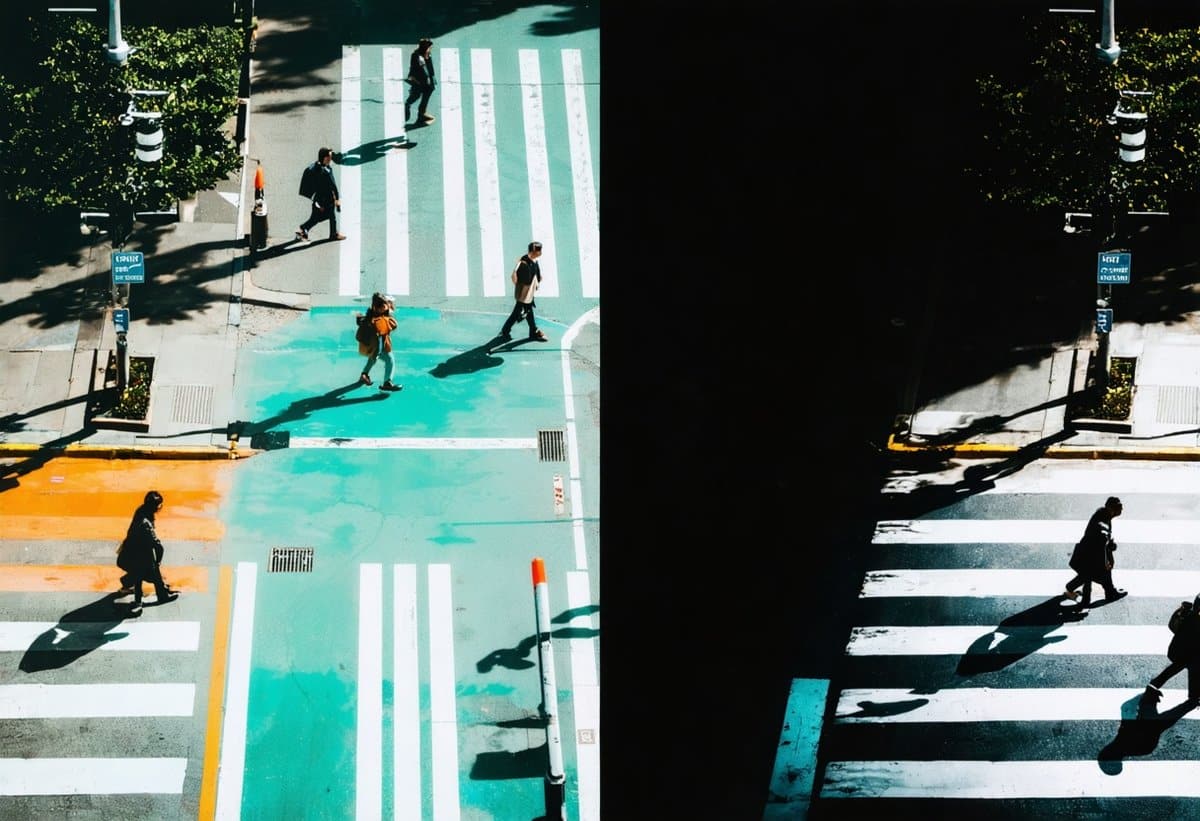
Digital noise and film grain are not the same. Film grain has structure—it's larger in shadows, finer in highlights, and has a distinct pattern based on the film stock's chemical composition. Lightroom's grain slider is acceptable but generic. For more authentic results, use dedicated plugins like RNI Films or DXO FilmPack that analyze actual film scans and recreate grain structures accurately. Apply grain after all other adjustments, and keep it subtle—between 25-40 on Lightroom's scale typically works. Too much grain screams "fake vintage."
Step 5: Subtle Halation and Glow
Film, especially when shot at night, exhibits halation—a glow around bright light sources caused by light reflecting off the film base. This creates those dreamy halos around streetlights and neon signs. Recreate this subtly using the dehaze slider (pushed slightly negative) combined with targeted luminance adjustments on highlights. Overdo this and your image looks muddy; apply it judiciously and it adds authentic film character.
The Cinematic Crop: Executing the 2.35:1 Aspect Ratio
The widescreen crop is more than just adding black bars—it's a compositional choice that fundamentally changes how viewers engage with your image. In Lightroom or Photoshop, crop to 2.35:1 (some prefer 2.39:1 or 2.40:1—the differences are subtle). This typically means cropping about 25-30% of the vertical information from a 3:2 or 4:3 sensor.
Critical consideration: Where you place the horizon or main subject within this narrow vertical space matters enormously. The rule of thirds still applies, but with less vertical room for error. Eyes in portraits should typically sit in the upper third. Horizons work best in the lower or upper third rather than center. Leading lines and horizontal movement become emphasized, so compose accordingly.
Some photographers add the black bars in post rather than cropping, maintaining the full resolution underneath. This approach offers flexibility but requires careful composition to ensure the "active" area works compositionally while ignoring the bars during shooting.
Common Mistakes That Destroy the Illusion
Even experienced photographers fall into traps that immediately signal "fake film" to discerning viewers. Avoid these pitfalls to maintain authenticity.
Overdoing the Fade
Lifted blacks create the faded film look, but push too far and your image loses depth and impact. Blacks should be dark gray at most—still containing detail and texture, not washed out to medium gray. If you can't see distinct shadow detail, you've gone too far. Real film maintains shadow depth; it just doesn't crush to pure black as aggressively as digital.
Inconsistent Grain Application
Adding the same grain intensity across all images in a series creates visual inconsistency because real film grain varies with exposure. Shadow-heavy images show more prominent grain; bright, well-exposed images show finer grain. Adjust grain intensity image by image based on the exposure characteristics. This attention to detail separates professional work from amateur attempts.
Ignoring Color Harmony
Film stocks have limited color palettes compared to digital's infinite range. Successful film aesthetics show color restraint—typically 3-5 dominant colors per image rather than the full rainbow. If your street scene has vibrant reds, blues, greens, yellows, and purples all competing, it won't feel filmic regardless of grain and contrast. Desaturate or shift competing colors to create harmony. The principles discussed in our exploration of moody photography apply perfectly here—limited color palettes create stronger emotional impact.
Overprocessing Modern Elements
No amount of film emulation can make a Tesla Cybertruck look like it belongs in a 1970s photograph. Be mindful of anachronistic elements in your frame. The film aesthetic works best when the subject matter could plausibly exist in the film era—classic cars, timeless architecture, people in non-trendy clothing. Modern elements aren't forbidden, but they create cognitive dissonance that weakens the nostalgic effect.4
Building a Cohesive Instagram Aesthetic Around Film Look
Individual images might be stunning, but Instagram success requires cohesive visual storytelling across your feed. The film aesthetic offers natural consistency tools that help create that coveted "feed aesthetic" that keeps followers engaged.
Develop Your Signature Color Palette
Choose 2-3 film stocks as inspiration and stick with them. Maybe you're drawn to the warm, creamy tones of Portra 400 for daytime work and the teal-orange drama of Cinestill 800T for night photography. This creates natural consistency—your feed develops a recognizable color signature that viewers associate with your work. Save your color grading as custom presets (with variations for different lighting conditions) to maintain consistency across shoots.
Maintain Consistent Grain and Contrast
Your grain intensity and contrast approach should remain relatively consistent across images. If one image has heavy grain and the next is clean digital, your feed feels disjointed. Establish baseline settings for grain amount, size, and roughness, then make only minor adjustments per image. Similarly, your tone curve approach should be consistent—if you're lifting blacks, do it across all images to similar degrees.
Strategic Sequencing
Plan your posting sequence to create visual rhythm. Alternate between wider environmental shots and tighter portraits, between warm and cool tones, between day and night images. This creates variety within consistency—your aesthetic remains recognizable but doesn't become monotonous. Think of your feed as a gallery wall where each piece complements the others.
Tools, Presets, and Resources for Mastering the Film Look
While understanding the principles matters most, quality tools accelerate your workflow and improve results. Here's what professional street photographers are using in 2025.
Mobile Editing Apps
For photographers editing on smartphones, several apps excel at film emulation. VSCO remains the gold standard with its extensive film preset library based on actual film stocks. The learning curve is minimal, but results can be excellent. RNI Films (also available as desktop software) offers incredibly accurate film emulations with granular control. Huji Cam provides a more automated approach with convincing results for quick social posting. Lightroom Mobile offers professional-grade tools with the advantage of syncing with desktop workflows.
Desktop Software and Plugins
Serious work demands desktop tools. Adobe Lightroom and Photoshop remain industry standards, offering complete control over every aspect of the film look. Capture One provides superior color grading tools favored by many commercial photographers. For film-specific emulation, DXO FilmPack analyzes actual film characteristics and recreates them with remarkable accuracy. Dehancer is newer but gaining traction for its authentic film halation and grain algorithms.
Preset packs save time but use them as starting points, not final solutions. Popular options include FilterGrade's film collections, Mastin Labs (particularly their Portra and Fuji packs), and VSCO's desktop presets. Customize these to develop your unique signature rather than using them straight out of the box.
Learning Resources
The International Center of Photography offers excellent online courses covering both traditional film photography and digital emulation techniques. MoMA's photography collection provides invaluable reference material—study how master film photographers used light, color, and composition. YouTube channels like Willem Verbeeck, Samuel Streetlife, and Faizal Westcott offer practical tutorials specifically focused on cinematic street photography techniques.
The Psychology Behind Why This Aesthetic Performs
Understanding why the film look resonates helps you apply it more effectively. This isn't just about nostalgia—it's about fundamental human psychology and how we process visual information.
The grain and imperfections trigger what psychologists call "processing fluency paradox." Counterintuitively, images that require slightly more cognitive effort to process (due to grain, reduced sharpness, or muted colors) often create stronger emotional connections. Our brains work harder to decode the information, creating deeper neural engagement and memory formation. This is why film-aesthetic images generate higher save rates—viewers feel more emotionally invested in images they've "worked" to appreciate.
The cinematic crop activates narrative processing in the brain. Those black bars signal "story" before viewers consciously register them, priming the brain to seek narrative meaning in the image. This transforms casual viewing into active interpretation—viewers construct stories around your photographs, creating personal connections that drive engagement and sharing.
Color psychology plays a role too. The muted, harmonious palettes typical of film aesthetics reduce visual stress compared to hyper-saturated digital images. This creates a calming, contemplative viewing experience that stands out in feeds dominated by aggressive color and contrast. In an attention economy where everyone screams for eyeballs, the film aesthetic whispers—and paradoxically gets heard more clearly.5
Case Studies: Analyzing Viral Film-Look Street Photography
Let's examine what makes certain film-aesthetic street photographs go viral while others languish with minimal engagement.
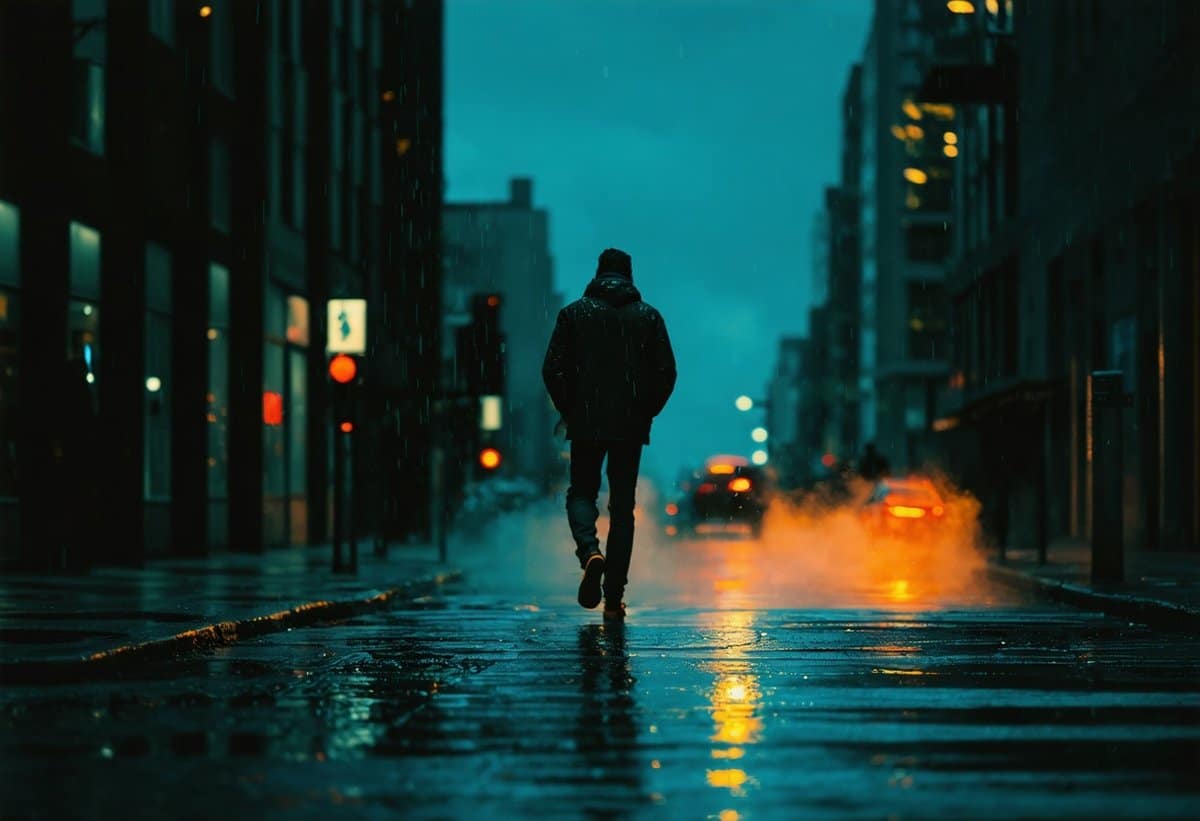
The Night Street Scene: Images of rain-soaked city streets at night with neon reflections consistently perform exceptionally well. Why? They combine multiple powerful elements—the film aesthetic's natural affinity for grain in low light, the emotional resonance of solitary urban moments, and the visual drama of colored light sources creating natural teal-orange contrast. The cinematic crop emphasizes the horizontal stretch of the street, creating depth and inviting viewers into the scene. These images succeed because they feel like stills from films viewers wish existed.
The Golden Hour Portrait: Environmental portraits shot during golden hour with film-look processing generate massive engagement because they combine the warmth of natural light with the nostalgic warmth of film aesthetics—a double dose of emotional resonance. The key is maintaining natural skin tones while pushing the environment toward those creamy, slightly desaturated colors characteristic of Portra 400. The subject should feel discovered, not posed—candid moments that suggest larger narratives.
The Decisive Moment Reimagined: Classic street photography's "decisive moment" gains new life with film aesthetics. A perfectly timed gesture, expression, or juxtaposition processed with subtle grain and muted colors feels timeless rather than dated. These images succeed because the aesthetic matches the content—both reference photography's history while remaining contemporary in execution.
Beyond Instagram: Where the Film Aesthetic is Heading
While Instagram dominates current discussions, the film aesthetic's influence extends far beyond social media, and understanding these broader trends helps you stay ahead of the curve.
Commercial photography increasingly embraces film aesthetics for advertising and editorial work. Brands recognize that the film look cuts through digital noise and creates emotional connections with consumers fatigued by obviously digital imagery. Fashion photography, in particular, has embraced this aesthetic, with major campaigns from Fujifilm and other brands showcasing film-inspired looks.
The cinema industry itself continues influencing still photography. As filmmakers like Christopher Nolan champion shooting on actual film, the aesthetic trickles down to still photography. Cinematographers' techniques for color grading—particularly the teal-orange look popularized by films like "Blade Runner 2049"—directly influence how street photographers process their work.
Interestingly, camera manufacturers are responding to this demand. Fujifilm's film simulation modes in their X-series and GFX cameras provide in-camera film looks that require minimal post-processing. Canon and Nikon have introduced similar Picture Profiles. This suggests the aesthetic isn't a passing trend but a fundamental shift in how we want our images to look.
The resurgence of actual film photography runs parallel to this digital emulation. Film sales have grown consistently for five years, with Kodak and Ilford expanding production. Many photographers shoot both—film for personal projects where process matters, digital with film aesthetics for client work and social media where efficiency and consistency are paramount. This hybrid approach offers the best of both worlds.
Ethical Considerations and Authenticity
As the film aesthetic becomes ubiquitous, questions of authenticity and transparency emerge. Should you disclose that your "film look" images are actually digital? Does emulating film deceive viewers?
Most photographers and viewers understand that aesthetic choices are just that—choices. The film look is a stylistic decision, not a claim about shooting medium. However, explicitly claiming images were shot on film when they weren't crosses into deception. The solution is simple: let your work speak for itself without making false claims about process.
Consider the broader context of photography's relationship with truth, explored in depth in discussions about documentary photography's importance. The film aesthetic doesn't inherently compromise truth—it's a presentation choice, like black and white versus color. What matters is that the content remains honest, even if the aesthetic is stylized.
Some photographers include hashtags like #digitalfilm or #filmlook to clarify their process while celebrating the aesthetic. This transparency builds trust with audiences while allowing creative freedom. Others simply post without explanation, letting viewers enjoy the images without worrying about technical details. Both approaches are valid—choose what aligns with your values and audience expectations.
Practical Action Plan: Your 30-Day Film Aesthetic Challenge
Ready to master the cinematic street photography aesthetic? Here's a structured approach to develop your skills over the next month.
Week 1: Study and Analyze
Spend this week studying actual film photography and successful digital emulations. Visit Getty Museum's photography collection online and examine film-era street photography. Note color palettes, grain patterns, and how light behaves. Follow 10-15 Instagram accounts that excel at the film aesthetic. Screenshot images that resonate with you and analyze what makes them work—composition, color, mood, subject matter.
Week 2: Shooting Fundamentals
Focus on capturing images that will translate well to film aesthetics. Shoot during golden hour and blue hour exclusively. Practice intentional underexposure—shoot 1/3 to 2/3 stops darker than normal. Seek diffused light and atmospheric conditions. Compose with the 2.35:1 crop in mind, even if you're shooting in your camera's native aspect ratio. Aim for 50-100 images this week, prioritizing quality over quantity.
Week 3: Processing Mastery
Select your 10 best images from Week 2. Process each one multiple times, experimenting with different film stock emulations. Try warm Portra-inspired looks, cool Fuji-inspired tones, and dramatic teal-orange cinema looks. Save variations and compare them side by side. Choose one direction that resonates most with your vision and refine it across all 10 images, creating consistency. Document your processing steps to create a repeatable workflow.
Week 4: Refinement and Posting Strategy
Refine your best 5 images to portfolio quality. Apply your developed processing workflow with attention to details—grain consistency, color harmony, appropriate contrast. Crop to 2.35:1 where it strengthens composition. Post these images strategically over the week, using relevant hashtags (#cinematicphotography #filmgrain #streetphotography2025 #moodygrams). Engage authentically with the community—comment thoughtfully on others' work, respond to comments on yours, and build genuine connections.
By month's end, you'll have developed a foundation in both the technical and aesthetic aspects of cinematic street photography. More importantly, you'll have begun developing your unique voice within this style—not just copying others but finding what resonates with your vision.
Conclusion: Timeless Aesthetics in a Digital Age
The viral success of the cinematic film aesthetic on Instagram reveals something profound about our relationship with photography in 2025. Despite—or perhaps because of—our immersion in digital perfection, we crave the imperfect, the nostalgic, the human. Film aesthetics offer a bridge between photography's analog past and digital future, allowing us to honor tradition while embracing modern tools and platforms.
Mastering this aesthetic requires more than downloading presets or adding grain. It demands understanding light, color, composition, and the psychology of visual storytelling. It requires studying the masters who shot actual film and learning why their images resonate decades later. Most importantly, it requires developing your unique voice within the aesthetic—using these tools to tell your stories, capture your vision, and connect with your audience authentically.
The film look will inevitably evolve, as all aesthetic trends do. New styles will emerge, and Instagram's visual landscape will shift again. But the fundamental principles underlying this aesthetic—emotional authenticity, thoughtful composition, harmonious color, and compelling storytelling—remain timeless. Master these, and you'll succeed regardless of which aesthetic dominates next year's feeds.
So grab your camera, digital or film, and hit the streets. Chase the light during golden hour, hunt for atmospheric conditions, compose with intention, and process with purpose. The cinematic moments are out there, waiting for you to capture them. Your unique perspective, filtered through the nostalgic beauty of the film aesthetic, might just be the next image that stops thousands of scrolling thumbs and reminds viewers why photography matters.
The streets are calling. Your story is waiting to be told. And in 2025, the world is ready to see it through the dreamy, grainy, perfectly imperfect lens of cinematic street photography.
- Instagram's algorithm prioritizes "saves" as a strong engagement signal, often more valuable than likes, because it indicates users want to reference the content later—suggesting higher quality and relevance.
- Color science refers to how different film stocks and digital sensors interpret and reproduce colors. Film stocks use chemical processes that create unique color relationships, while digital sensors use mathematical algorithms that can be adjusted to mimic these relationships.
- Focal length affects more than field of view—it changes perspective compression. Wider lenses exaggerate distance between foreground and background, while longer lenses compress space, making distant elements appear closer together. This psychological effect influences how viewers experience spatial relationships in your images.
- Cognitive dissonance in visual perception occurs when elements within an image create conflicting messages. A heavily film-grained image of someone using a smartphone with a transparent screen creates dissonance because the aesthetic suggests one era while the content suggests another, reducing the image's emotional coherence.
- The attention economy refers to the modern reality where human attention is a scarce resource that content creators compete for. In oversaturated environments, content that stands out through differentiation (like the film aesthetic's subtlety) often performs better than content that simply amplifies conventional attention-grabbing techniques.