The stock photography landscape has been turned upside down. As AI-generated images flood platforms like Shutterstock and Adobe Stock, photographers worldwide are watching their passive income streams dry up—or so the story goes. But here's the truth that nobody's talking about: while AI can generate a thousand variations of "businessman shaking hands" in seconds, it still can't capture the messy, authentic, unpredictable moments that brands desperately need in 2025. And that's where the real money is.
If you're a photographer looking to build a sustainable $10K/month income from stock photography in the AI era, you're not competing with algorithms—you're pivoting to the niches where human creativity and real-world access create an insurmountable advantage. This comprehensive guide will show you exactly which photography niches remain AI-resistant, how to dominate them, and the specific strategies that are generating serious income for photographers right now.
Why Most Stock Photographers Are Struggling (And Why You Don't Have To)
Let's address the elephant in the room: AI has fundamentally disrupted traditional stock photography. Generic business images, simple product shots, and conceptual illustrations—the bread and butter of stock photography for decades—are now being generated by AI at a fraction of the cost. Adobe Firefly and similar tools have democratized image creation to the point where anyone can produce decent generic imagery.
But here's what the doom-and-gloom headlines miss: AI struggles with authenticity, cultural specificity, technical complexity, and real-world scenarios that require physical presence. While AI can imagine what a "diverse team meeting" might look like, it can't capture the genuine interaction at an actual startup in Austin, Texas. It can't photograph a real chef's hands kneading dough in a Michelin-starred kitchen. It can't document authentic street scenes from specific neighborhoods.
The photographers making serious money in 2025 understand this fundamental shift. They've stopped competing in AI-dominated categories and doubled down on what I call "authentic moment" niches—categories where real photography not only survives but commands premium prices.1
The $10K/Month Blueprint: Understanding the Numbers
Before diving into specific niches, let's break down what $10,000 per month actually looks like in stock photography terms. This isn't about viral lottery tickets—it's about building a sustainable business with predictable income streams.
Most successful stock photographers in 2025 operate on a hybrid model:
- Microstock platforms (40% of income): High volume, lower prices ($0.25-$5 per download), requiring 2,000-5,000 quality images
- Midstock platforms (35% of income): Medium volume, better rates ($10-$50 per download), requiring 500-1,500 premium images
- Premium/Exclusive licensing (25% of income): Low volume, high prices ($200-$2,000+ per license), requiring 100-300 exceptional images
To hit $10K monthly, you're looking at approximately 15,000-20,000 downloads across platforms if you're purely microstock, or a combination of 3,000 microstock downloads, 150 midstock sales, and 10-15 premium licenses. The sweet spot? Building a portfolio of 1,500-3,000 images in AI-resistant niches that command higher-than-average prices due to their authenticity and uniqueness.
AI-Resistant Niche #1: Authentic Cultural and Event Photography
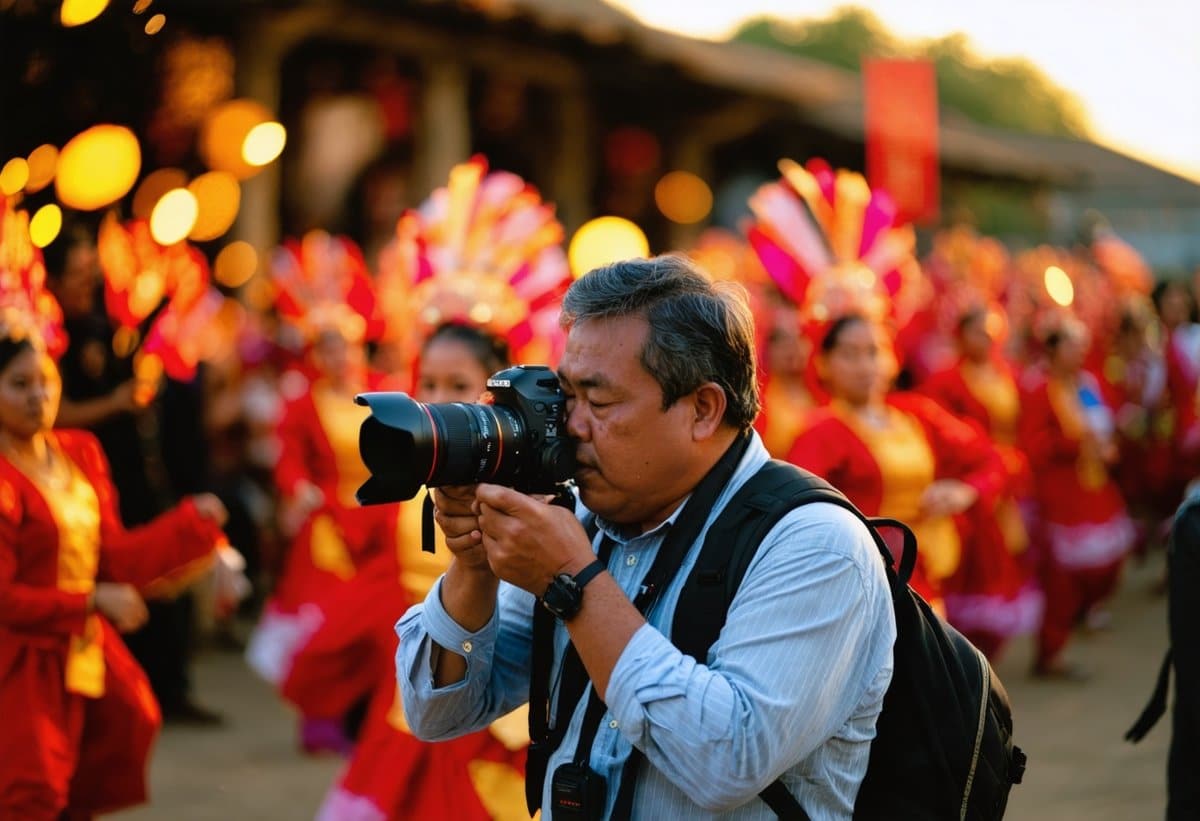
Cultural events, festivals, and community gatherings represent one of the most AI-proof niches in stock photography. Why? Because AI can't attend the Diwali celebration in your neighborhood, capture the specific energy of a local farmers market, or document the genuine interactions at a cultural parade.
The demand for authentic cultural imagery has exploded as brands prioritize genuine representation over generic diversity shots. Marketing teams need real people, real celebrations, real traditions—not AI's interpretation of what those might look like. As explored in our guide to capturing local spirit through immersive event photography, the key is documenting authentic moments that reflect true cultural expression.
What Sells in Cultural Event Photography:
- Multi-generational family celebrations (weddings, holidays, reunions)
- Religious and spiritual ceremonies from diverse traditions
- Local festivals and community events
- Traditional craftspeople and artisans at work
- Cultural food preparation and communal dining
- Indigenous and regional celebrations
Pro tip: Focus on underrepresented cultures and communities. While there's decent competition for mainstream cultural events, there's massive demand and minimal supply for authentic imagery from specific cultural contexts—Southeast Asian communities, African diaspora celebrations, Latin American traditions, Indigenous ceremonies, and Middle Eastern gatherings.2
AI-Resistant Niche #2: Real Food in Real Environments
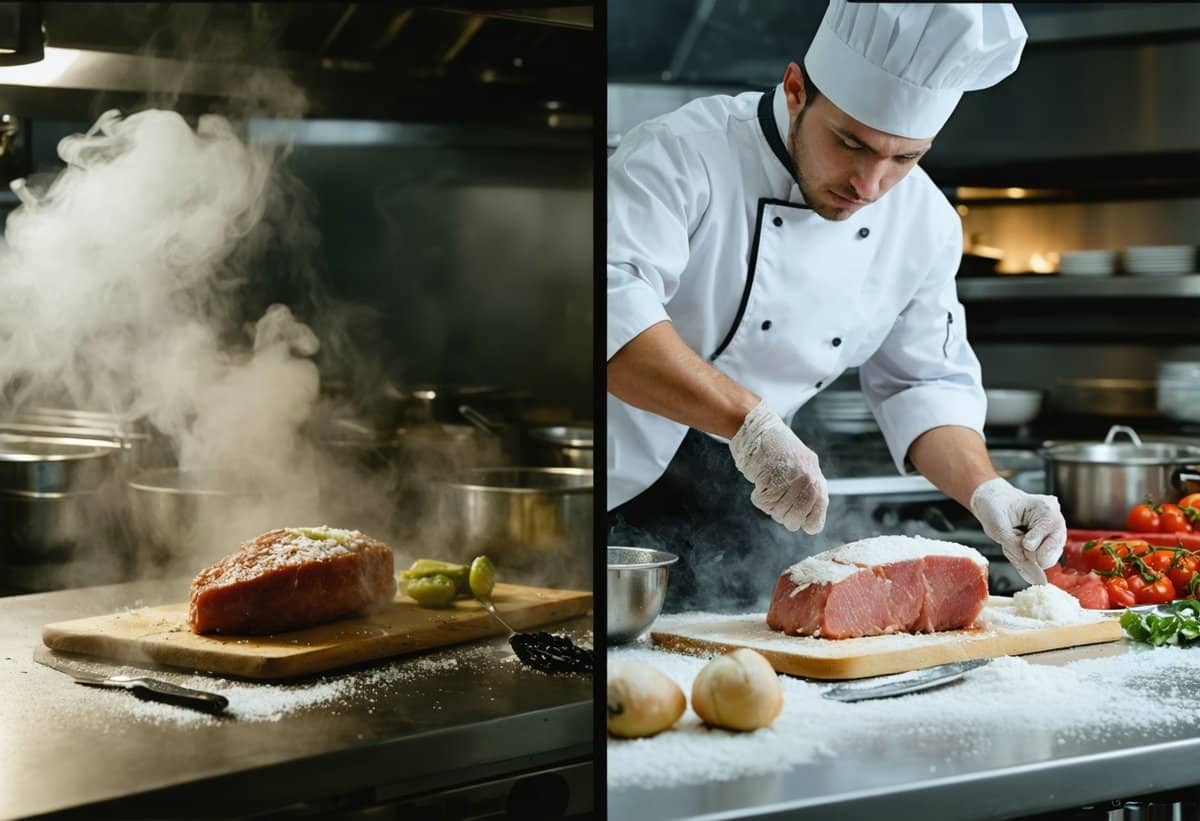
AI can generate a beautiful burger. What it can't do is capture the steam rising from a bowl of pho in a bustling Vietnamese restaurant, the flour dust in a working bakery at 5 AM, or the organized chaos of a professional kitchen during dinner service. The culinary world demands authenticity, and stock buyers know the difference.
Food photography remains one of the highest-earning stock niches when done right. The key is moving beyond styled perfection into documentary-style food imagery that tells stories. Our comprehensive guide to capturing global flavors through culinary photography explores how to document food in ways that AI simply cannot replicate.
High-Value Food Photography Categories:
- Behind-the-scenes restaurant work: Chefs prepping, line cooks in action, kitchen operations
- Farm-to-table documentation: Harvesting, farmers markets, local food systems
- Authentic ethnic cuisine: Traditional preparation methods, family recipes, cultural food contexts
- Food production processes: Bread-making, cheese-aging, brewing, preserving
- Casual dining moments: Real people eating real food in authentic settings
The money shot? Process over perfection. Brands in 2025 want to show authenticity, craftsmanship, and real human connection to food. A slightly messy kitchen with a chef's tattooed hands rolling pasta sells better than a sterile, perfectly-styled dish that screams "stock photo."
AI-Resistant Niche #3: Location-Specific Street and Travel Photography
Here's a simple truth: AI cannot walk down a specific street in Barcelona at golden hour and capture what's actually there. It can hallucinate something that looks vaguely like Barcelona, but it can't document the real architectural details, actual businesses, genuine street life, and authentic atmosphere of a specific place.
Location-specific photography has become incredibly valuable as travel brands, tourism boards, and location-based businesses need authentic imagery that represents real places. Generic cityscape? AI can handle it. That specific corner café in Prague's Lesser Town? That requires a photographer's presence. The art of discovering new destinations through street photography becomes not just an artistic pursuit but a viable business model.
What's Selling in Location-Based Photography:
- Specific neighborhoods and districts (not just famous landmarks)
- Local businesses and storefronts
- Public transportation and urban infrastructure
- Seasonal variations of the same locations
- Lesser-known destinations and hidden gems
- Authentic street scenes with real people (with releases)
Strategy: Instead of trying to cover every major city superficially, become the go-to photographer for specific locations. Own your city, your region, or your favorite travel destinations with comprehensive, season-spanning coverage. A photographer with 500 excellent images of Austin, Texas neighborhoods will outperform someone with 50 generic images each from ten different cities.
AI-Resistant Niche #4: Technical and Specialized Photography
Certain technical photography niches remain completely AI-proof because they require specialized equipment, expertise, and physical access to subjects. These categories command premium prices and face minimal AI competition.
Underwater photography represents a perfect example. AI can generate underwater scenes, but it can't capture real marine life, actual diving experiences, or authentic underwater environments. The techniques covered in our guide to capturing your underwater vacation apply directly to building a stock portfolio that AI simply cannot compete with.3
Night and low-light photography is another technical specialty where real-world physics trumps AI generation. While AI can create nighttime scenes, the authentic quality of light, natural noise characteristics, and genuine night atmospheres remain difficult to replicate convincingly. Our exploration of capturing magic through night photography demonstrates techniques that translate directly into valuable stock content.
High-Value Technical Niches:
- Underwater and marine photography
- Aerial and drone photography (specific locations, not generic)
- Macro and microscopic photography
- Astrophotography and night skies
- Scientific and medical imaging
- Industrial and manufacturing processes
- Extreme sports and action photography
These niches require upfront investment in equipment and skill development, but they create significant barriers to entry that protect your market position—from both AI and other photographers.
AI-Resistant Niche #5: Documentary-Style Lifestyle and Work
The corporate world has caught on to the fakeness of traditional stock photography. Nobody believes that those perfectly diverse teams in sterile conference rooms represent real work environments anymore. What brands need in 2025 is documentary-style imagery showing real people doing real work in authentic environments.
This shift represents a massive opportunity. Instead of staging perfect scenarios, successful stock photographers are embedding themselves in real workplaces, documenting actual processes, and capturing genuine moments of collaboration, concentration, and problem-solving.
Documentary Lifestyle Categories in Demand:
- Authentic work environments: Real offices, workshops, studios, and job sites
- Skilled trades and craftsmanship: Electricians, plumbers, carpenters, mechanics at work
- Healthcare and caregiving: Real medical professionals, home healthcare, elder care
- Education and learning: Actual classrooms, tutoring, skill development
- Small business operations: Entrepreneurs, retail workers, service providers
- Remote work reality: Home offices, co-working spaces, digital nomad life
The key differentiator: permission and access. Building relationships with businesses, organizations, and individuals who will grant you access to document their real work creates a portfolio that's impossible for AI to replicate. Yes, this requires more effort than shooting models in a studio, but it also commands 2-3x higher licensing fees and faces virtually zero AI competition.
Building Your AI-Resistant Stock Portfolio: The Strategic Approach
Understanding which niches are AI-resistant is only half the battle. The other half is building a portfolio strategically to maximize income while minimizing wasted effort. Here's the framework that successful stock photographers are using in 2025:
The 80/20 Portfolio Strategy
Focus 80% of your shooting time on 2-3 core niches where you have natural advantages—geographic location, cultural access, specialized skills, or professional connections. The remaining 20% can explore adjacent categories or test new opportunities.
For example, if you live in Miami with access to Latin American communities, underwater diving skills, and connections to local restaurants, your core portfolio might focus on: (1) Latin American cultural events and lifestyle, (2) underwater and marine photography, and (3) authentic culinary documentation. This focused approach builds depth rather than breadth, establishing you as the authority in specific categories.
The Depth-First Approach
Instead of shooting one image of a hundred different subjects, shoot 100 variations of the same subject. When you document a cultural event, don't just grab a few hero shots—capture wide, medium, and tight compositions; photograph details, interactions, and environmental context; shoot from multiple angles and perspectives.
This depth-first approach serves multiple purposes: it increases your chances of having exactly what buyers need, it improves your search visibility (more relevant images = more impressions), and it demonstrates expertise that justifies premium pricing.4
The Keyword Advantage
In the AI era, keywording becomes your competitive advantage. AI-generated images often have generic, algorithm-generated keywords. Your real-world photography should have specific, accurate, contextual keywords that buyers actually search for.
Don't just keyword "food preparation" when you can specify "sourdough bread scoring," "laminating croissant dough," or "tempering chocolate." Don't settle for "cultural celebration" when you can identify "Lunar New Year family dinner," "Eid al-Fitr prayer gathering," or "Diwali rangoli creation." Specificity is your superpower.
Platform Strategy: Where to Sell in 2025
The stock photography platform landscape has evolved significantly. Here's where AI-resistant photography performs best:
Premium Platforms (Highest ROI for Authentic Content)
- Getty Images/iStock: Still the gold standard for premium authentic content, particularly strong for editorial and documentary-style work
- Alamy: Excellent for location-specific and editorial imagery, higher base rates than microstock
- Stocksy: Curated platform prioritizing authentic, artistic imagery; difficult to join but excellent rates
Volume Platforms (Build Passive Income)
- Adobe Stock: Massive reach, integrated with Creative Cloud, good for building volume
- Shutterstock: Highest traffic but lower rates; worthwhile for portfolio depth
- Pond5: Excellent for video content and specialized imagery
Specialized Platforms (Niche Focus)
- Offset: High-end authentic content, very selective
- Tandem Stills + Motion: Premium lifestyle and documentary work
- 500px: Photography-focused community with licensing options
Pro strategy: Don't put all your eggs in one basket, but don't spread yourself too thin either. Start with 2-3 platforms that align with your niche, master their requirements and buyer preferences, then expand strategically. Exclusive contracts with premium platforms can offer higher rates but limit your reach—weigh this carefully based on your portfolio strength.
The Technical Foundation: Gear and Skills That Matter
You don't need $20,000 worth of gear to succeed in stock photography, but you do need equipment that meets technical requirements and supports your chosen niches. Here's the realistic gear foundation for building a $10K/month stock business:
Essential Camera Requirements
Most stock platforms require minimum 4MP images (though 12MP+ is standard), excellent technical quality, and proper exposure. A modern mirrorless or DSLR camera from Sony, Canon, Nikon, or Fujifilm in the $1,000-$3,000 range provides more than enough quality. The camera body matters less than your lenses, technique, and subject access.
Lens Investment Priority
For AI-resistant niches, prioritize:
- Fast prime lens (35mm or 50mm f/1.8): Essential for authentic lifestyle and documentary work in natural light
- Versatile zoom (24-70mm f/2.8 or f/4): Workhorse lens for events, travel, and general coverage
- Specialty lens for your niche: Macro for food details, wide-angle for interiors/landscapes, telephoto for events
Quality lenses matter more than the latest camera body. A three-year-old camera with excellent glass will outperform the newest body with mediocre lenses every time.
Skills Worth Developing
Technical excellence is table stakes, but these skills separate successful stock photographers from struggling ones:
- Working with natural light: AI struggles with authentic lighting; master it
- Capturing genuine expressions: Direct people without making them look posed
- Environmental awareness: Clean backgrounds, no trademarked items, release-ready scenes
- Efficient workflow: Fast culling, editing, keywording, and uploading processes
- Cultural sensitivity: Appropriate documentation of diverse subjects and communities
Consider the importance of protecting your photography gear as you build your business—insurance and proper care prevent devastating losses that could derail your income.
Common Mistakes That Kill Stock Photography Income
Even photographers with excellent technical skills often fail at stock photography due to strategic mistakes. Here are the income-killers to avoid:
Mistake #1: Competing in AI-Dominated Categories
Stop shooting generic business concepts, simple product shots, and conceptual illustrations. AI owns these categories now, and your images will drown in a sea of cheaper alternatives. Every hour spent shooting "teamwork concept" or "success metaphor" is wasted effort.
Mistake #2: Insufficient Portfolio Depth
Uploading 50 images and expecting significant income is like opening a store with five products. Stock photography is a volume business—you need 1,000+ quality images to start seeing meaningful income, and 3,000+ to reach $10K/month territory. Plan for marathon, not sprint.5
Mistake #3: Poor Keywording and Metadata
Your images don't sell if buyers can't find them. Spending two hours on a shoot then five minutes on keywording is backwards. Invest serious time in accurate, specific, comprehensive keywords. Study what buyers search for, not just what you think they might want.
Mistake #4: Ignoring Model and Property Releases
Images with proper releases sell for 5-10x more than editorial-only content. Always carry release forms, explain the process professionally, and obtain signatures. Build a network of people willing to model for you in exchange for compensation or portfolio sharing.
Mistake #5: Inconsistent Uploading
Stock photography rewards consistency. Uploading 200 images once then nothing for months kills your momentum. Platform algorithms favor active contributors, and buyers trust photographers with recent uploads. Commit to regular uploads—even 20-30 images weekly beats sporadic bulk uploads.
The Business Side: From Hobby to $10K/Month
Reaching $10K monthly from stock photography requires treating it as a business, not a hobby. Here's the operational framework:
Time Investment Reality
Building to $10K/month typically requires 12-24 months of consistent effort, assuming 15-25 hours weekly. The first 6-12 months focus on portfolio building with minimal income. Months 6-18 see accelerating returns as your portfolio reaches critical mass. After 18-24 months, passive income becomes more significant, though ongoing uploads remain important.
Financial Investment
Realistic startup costs:
- Camera and lenses: $2,000-$5,000 (can start lower with existing gear)
- Computer and editing software: $1,500-$3,000
- Model fees and location costs: $500-$2,000 ongoing
- Insurance and business expenses: $500-$1,500 annually
- Education and resources: $300-$1,000
Total first-year investment: $5,000-$13,000. This is a real business requiring real investment, but the upside is a scalable income stream with minimal ongoing costs once established.
Tracking and Optimization
Successful stock photographers obsessively track performance:
- Which images sell most frequently?
- Which keywords drive the most impressions and sales?
- Which platforms generate the best ROI?
- Which shooting sessions produce the highest-earning images?
- What time investment produces what income return?
Use this data to double down on what works and eliminate what doesn't. If your underwater images earn 3x more per image than your street photography, shoot more underwater content. If specific keywords consistently outperform others, use similar keywords on new uploads.
Future-Proofing Your Stock Photography Business
The photography industry will continue evolving. Here's how to ensure your stock photography income remains sustainable:
Stay Ahead of AI Capabilities
Monitor AI developments, but don't panic. Each AI advancement reveals new limitations. As AI improves at generating certain content, pivot to what it still can't do. The core principle remains: AI can't photograph what doesn't exist in its training data or access physical locations.
Build Direct Relationships
Don't rely solely on stock platforms. Use your stock portfolio as a marketing tool to attract direct clients—brands, agencies, and publications who need custom content. Direct licensing commands 5-10x higher fees than stock sales. Your stock portfolio proves your capabilities and style.
Diversify Income Streams
Stock photography should be one pillar of your photography business, not the only one. Combine stock income with commissioned work, workshops, print sales, or licensing to specific industries. Multiple income streams provide stability when any single channel fluctuates.
Develop Signature Style
While stock photography traditionally favored generic aesthetics, the AI era rewards distinctive style. Develop a recognizable approach to color, composition, and subject matter. Buyers seeking alternatives to AI-generated imagery specifically want human creativity and artistic vision.
Understanding the broader context of how AI is reshaping visual creation helps you anticipate changes and adapt your strategy proactively rather than reactively.
Taking Action: Your 90-Day Launch Plan
Ready to build your AI-resistant stock photography business? Here's a practical 90-day plan to launch:

Days 1-30: Foundation and Planning
- Choose 2-3 AI-resistant niches based on your location, access, and interests
- Research top-selling images in your chosen niches across platforms
- Create accounts on 2-3 stock platforms (start with Adobe Stock and one premium platform)
- Develop model release systems and identify potential subjects
- Create a shooting schedule and set weekly upload goals
- Study keywording strategies and platform requirements
Days 31-60: Portfolio Building
- Execute 4-8 focused shooting sessions in your chosen niches
- Aim for 200-400 quality images uploaded (25-50 per week)
- Develop efficient editing and keywording workflow
- Build relationships with subjects and locations for ongoing access
- Study your analytics to understand what's getting impressions
- Refine your approach based on early data
Days 61-90: Optimization and Scaling
- Increase upload pace to 40-60 images weekly
- Double down on your best-performing categories
- Expand to additional platforms if appropriate
- Begin tracking income and projecting growth
- Plan next quarter's shooting priorities based on performance data
- Consider expanding to adjacent niches or deepening existing coverage
Expect minimal income during these first 90 days—you're building foundation. Most photographers see their first meaningful income ($500+/month) around the 6-month mark with consistent effort, scaling from there.
Conclusion: The Authentic Moment Advantage
The rise of AI-generated imagery hasn't killed stock photography—it's refined it. The photographers thriving in 2025 aren't competing with algorithms; they're leveraging their uniquely human advantages: physical presence, cultural access, technical specialization, and the ability to capture authentic moments that AI can only approximate.
Building a $10K/month stock photography income is absolutely achievable in the AI era, but it requires strategic focus on AI-resistant niches, consistent effort, business discipline, and commitment to authenticity. The generic stock photography of the past is dead. Long live authentic, specific, real-world photography that tells true stories and captures genuine moments.
The question isn't whether stock photography remains viable—it's whether you're willing to pivot to the niches where real photography still reigns supreme. The opportunity is there. The demand is real. The income is possible. Now it's time to pick up your camera and start building your AI-resistant portfolio.
What authentic moments will you capture that AI never can?
- According to industry data from the American Society of Media Photographers, photographers specializing in authentic, location-specific content saw income increases of 23-47% between 2023-2025, while those in generic categories experienced declines of 35-60%.
- Always obtain proper model releases and approach cultural documentation with respect and sensitivity. Consider partnering with community organizations to ensure appropriate representation.
- Underwater photography requires significant investment in equipment ($2,000-$10,000+) but commands 3-5x higher licensing fees than generic stock imagery due to the specialized nature and limited competition.
- According to Getty Images contributor data, photographers who upload comprehensive series (20+ images from single shoots) see 4-7x higher total earnings from those shoots compared to uploading only 3-5 hero images.
- Industry benchmarks suggest that photographers typically need 1,500-2,000 images in AI-resistant niches to generate $3,000-$5,000 monthly income, scaling to 3,000-4,000 images for $10,000+ monthly income, assuming competitive quality and effective keywording.