Shadow Play: Crafting Magic with Lens-Free Photograms
Photography often seems like an art form demanding high-end gear and technical know-how. Yet, what if you could weave stunning visual tales using just light, shadow, and everyday items? Welcome to the captivating world of lens-free photograms, where shadow play transforms the ordinary into the extraordinary. This technique harnesses the raw beauty of silhouettes, crafting images that are both haunting and mesmerizing—no camera required.
Unveiling the Mystique of Shadow Play
Imagine a realm where light and shadow dance together, capturing the essence of objects without revealing their full form. This enchanting world of shadow play invites creativity to flourish without the need for a lens. The photogram technique, originating in the early days of photography, was championed by avant-garde artists like Man Ray and László Moholy-Nagy during the 1920s. These pioneers explored the interplay of light and darkness, producing dreamlike images that challenged conventional photography and pushed the boundaries of what the medium could achieve.
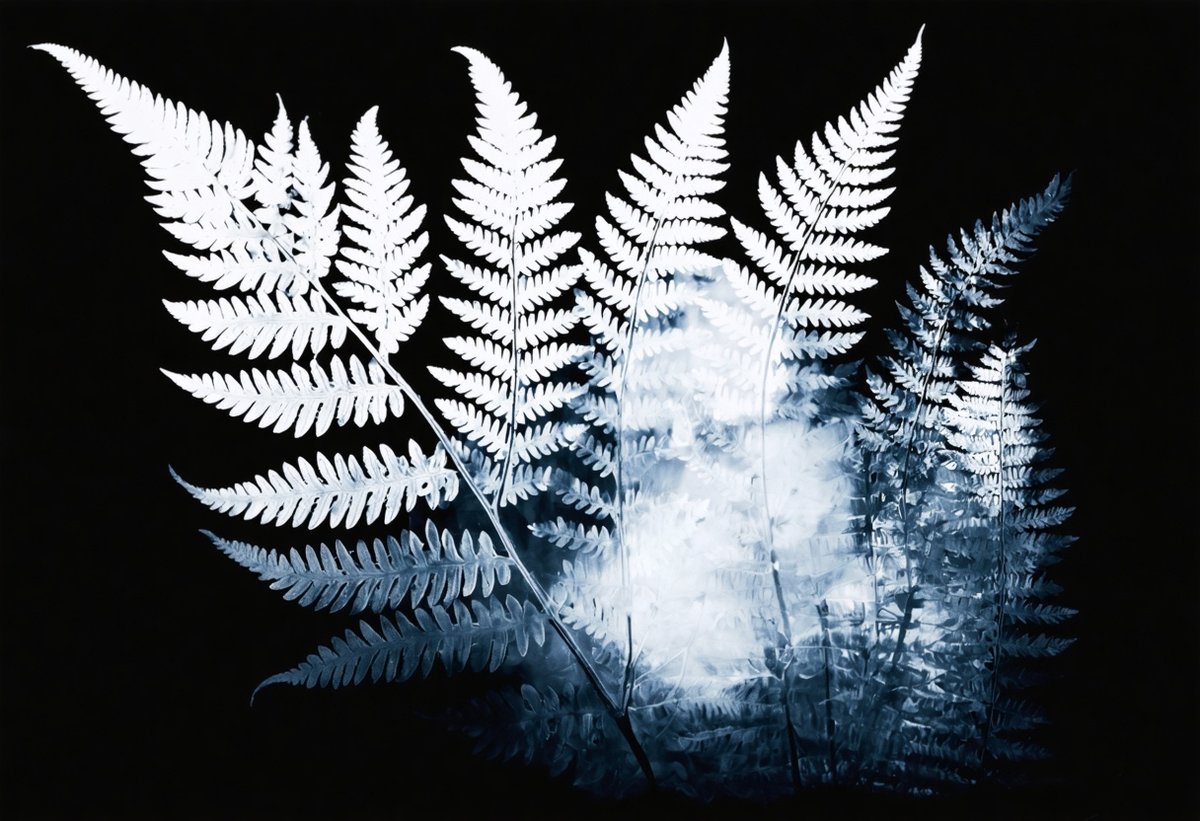
At its core, shadow play strips photography to its basics: light, shadow, and subject. No need for a high-end camera or knowledge of aperture and shutter speed. All it takes is a light source, objects, and a photosensitive surface. This simplicity makes lens-free photograms accessible and exciting, encouraging experimentation and a fresh perspective on the familiar. It’s a technique that democratizes image-making, allowing anyone with curiosity and creativity to produce compelling visual art.
The Getty Museum’s photography collection houses numerous historical photograms that demonstrate the enduring appeal of this technique. From Anna Atkins’ botanical cyanotypes to contemporary experimental work, photograms have maintained their relevance across nearly two centuries of photographic history.
Crafting Magic with Lens-Free Photograms
Creating a lens-free photogram is akin to casting a spell. Start by choosing your ingredients—everyday items that cast intriguing shadows. Consider lace doilies, leaves, feathers, pressed flowers, coins, keys, or even kitchen utensils. The beauty lies in the unexpected: translucent materials create graduated tones, while opaque objects produce stark silhouettes. Textured items like mesh, fabric, or natural materials reveal intricate details that might otherwise go unnoticed.
Arrange these objects on a photosensitive surface, such as traditional photographic paper or light-sensitive fabric. Then, expose the setup to a light source, whether the sun’s natural rays or an artificial lamp. As light passes through or around the objects, it leaves ghostly impressions, capturing their essence in stark contrast. The areas blocked by objects remain light (or white), while exposed areas darken, creating a negative image that reveals form through absence.
The beauty of photograms lies in their unpredictability. Each exposure is a unique creation, a moment frozen in time, never to be exactly replicated. This process is both scientific and magical, blending light exposure principles with the artistry of composition. Developing the photosensitive surface reveals a piece of art that’s part photograph, part shadow, and wholly captivating. This method encourages you to see the world differently and appreciate the interplay of light and dark in everyday life.

Essential Materials for Getting Started
To begin your photogram journey, you’ll need just a few basic supplies. Photographic paper is the most common choice—black and white paper works beautifully and is relatively inexpensive. You’ll also need access to a darkroom or a light-tight space where you can safely handle light-sensitive materials. A red safelight allows you to see while working without exposing your paper prematurely.
For exposure, a simple desk lamp, flashlight, or even your smartphone’s light can work. More advanced practitioners might use enlargers or timed exposure units for precise control. Development requires standard photographic chemicals: developer, stop bath, and fixer, along with trays for processing. If traditional darkroom work seems daunting, consider starting with cyanotype printing, which can be done in daylight and produces stunning blue-toned images.
Dive In: Transforming Everyday Objects into Art
One of the most thrilling aspects of making photograms is transforming ordinary objects into extraordinary art. A simple key chain becomes a mysterious silhouette; a piece of fabric reveals intricate patterns otherwise invisible. Under light and shadow’s scrutiny, these everyday items take on new forms and meanings. This process is akin to alchemy, turning base materials into artistic gold.
For those eager to dive into this captivating art form, begin by exploring your home for potential subjects. Look beyond the obvious, considering the textures and shapes of different objects. Experiment with layering and overlapping to create depth and complexity in your images. Play with exposure times to see how different light durations affect the final outcome. The magic of photograms lies in the details, with every experiment bringing you closer to mastering the art of shadow play.
Advanced Techniques for Stunning Results
Once you’ve mastered basic photograms, explore advanced techniques to elevate your work. Try moving objects during exposure to create motion blur and ethereal effects. Use multiple exposures with different objects to build complex, layered compositions. Experiment with colored filters or gels over your light source to introduce subtle tints to your images.
Distance matters significantly in photogram creation. Objects placed directly on the paper produce sharp, defined edges, while those held above the surface create softer, more diffused shadows with penumbra effects. This principle allows you to create images with varying degrees of focus and atmospheric depth within a single composition. The interplay between sharp and soft elements adds visual interest and guides the viewer’s eye through your work.
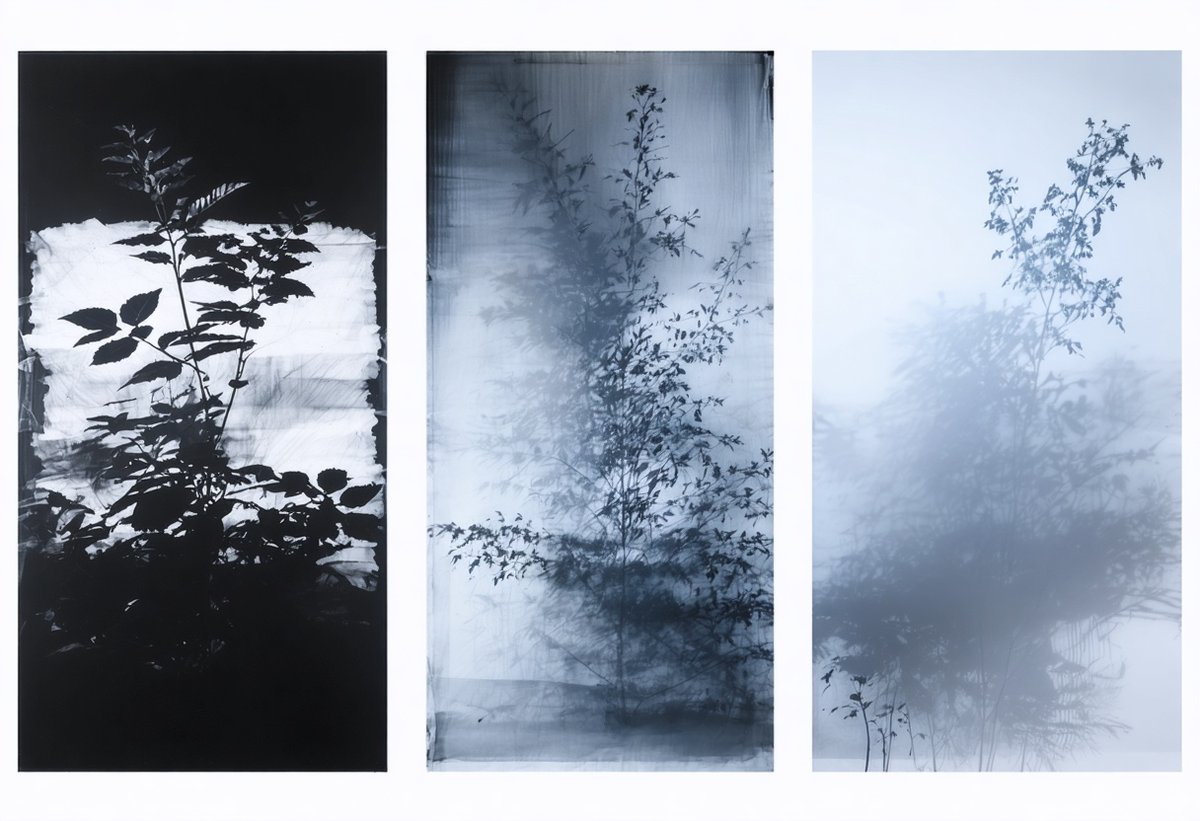
Consider combining photograms with other alternative photography processes for truly unique results. Some artists incorporate chemigram techniques, selectively applying or resisting chemicals to create painterly effects alongside their shadow imagery.
The Historical Context: From Talbot to Contemporary Practice
Photograms represent one of photography’s oldest techniques, predating even the camera itself. William Henry Fox Talbot created “photogenic drawings” in the 1830s by placing objects on light-sensitive paper and exposing them to sunlight. Anna Atkins followed in the 1840s with her groundbreaking botanical photograms using the cyanotype process, creating what many consider the first photographic book.
The technique experienced a renaissance during the modernist movement of the 1920s. Man Ray’s “Rayographs” brought surrealist sensibilities to the medium, creating dreamlike compositions that challenged viewers’ perceptions. László Moholy-Nagy approached photograms from a Bauhaus perspective, exploring light as a sculptural medium and emphasizing the technique’s potential for abstract expression.
The Royal Photographic Society maintains an extensive collection of historical photograms, documenting the evolution of this technique from scientific tool to fine art medium. Their archives reveal how each generation of artists has reimagined the possibilities of camera-less photography.
Today, contemporary artists continue to push photogram boundaries. Some incorporate digital elements, scanning their photograms and manipulating them digitally. Others combine photograms with installation art, creating room-sized light-sensitive surfaces or projecting shadows onto architectural spaces. This evolution demonstrates that even the simplest photographic techniques remain relevant and ripe for innovation.
Practical Workshop: Creating Your First Photogram
Ready to create your first photogram? Follow this step-by-step guide to achieve successful results. First, set up your workspace in a darkroom or light-tight area with your safelight illuminated. Lay out your materials: photographic paper (still in its light-tight bag), collected objects, light source, and development trays with chemicals mixed according to manufacturer instructions.
Step-by-Step Process
Under safelight conditions, remove one sheet of photographic paper and place it emulsion-side up on a flat surface. The emulsion side is typically shinier and more sensitive. Arrange your chosen objects on the paper, experimenting with composition until you’re satisfied. Remember, overlapping objects create interesting tonal variations.
Position your light source 12-24 inches above your arrangement. For your first attempt, try a 10-second exposure with a standard desk lamp. Switch on the light for the predetermined time, then turn it off. Carefully remove the objects—your image is now latent on the paper, invisible until developed.
Slide the exposed paper into the developer tray, gently agitating it. Watch as your image emerges, typically within 60-90 seconds. Once the desired density is achieved, transfer the paper to the stop bath for 30 seconds to halt development. Finally, place it in the fixer for the recommended time (usually 3-5 minutes) to make the image permanent. Wash thoroughly in running water for at least 10 minutes, then hang to dry.
Troubleshooting Common Issues
If your first photogram appears too dark, reduce exposure time or move your light source farther away. Conversely, if it’s too light with weak shadows, increase exposure time or bring the light closer. Gray, muddy tones often indicate either exhausted chemicals or insufficient fixing time. Always use fresh chemistry for best results.
Objects that shift during exposure create blurred edges. While this can be an artistic choice, ensure objects remain stationary if you want crisp silhouettes. Consider using a piece of glass to hold lightweight materials flat against the paper. This technique is particularly useful for botanical specimens or delicate items that might curl or shift.
Creative Applications and Artistic Possibilities
Photograms offer endless creative possibilities beyond simple object documentation. Many artists use the technique to explore themes of presence and absence, memory and trace. The shadow-image becomes a meditation on what’s no longer there, capturing the essence of objects that may have been discarded, lost, or transformed.
Consider creating narrative series that tell stories through sequential photograms. Document the changing seasons by collecting and photographing natural materials throughout the year. Create self-portraits using only your hands, hair, or silhouette. The limitations of the camera-less process often spark unexpected creativity, forcing you to think differently about representation and abstraction.
Some contemporary photographers combine photograms with traditional camera work, creating hybrid images that blur boundaries between techniques. Others use photograms as preliminary studies for larger projects, exploring composition and form before committing to camera-based work. This approach connects to broader conversations about post-documentary photography and experimental image-making practices.
Connecting Photograms to Contemporary Photography
In our digital age, photograms offer a refreshing return to analog processes and haptic engagement with materials. While much contemporary photography focuses on documentation and representation, photograms embrace abstraction and the index—the direct physical trace of objects on light-sensitive surfaces. This quality gives photograms a unique relationship to reality, neither purely representational nor entirely abstract.
The technique also provides valuable lessons applicable to all photography. Working with photograms teaches you to see light as a tangible medium, to understand exposure intuitively, and to appreciate the importance of composition stripped of color and context. These fundamental skills translate directly to camera-based work, making photograms an excellent educational tool for beginning photographers.
Educational institutions like the International Center of Photography regularly include photogram workshops in their curriculum, recognizing the technique’s pedagogical value. By removing the camera from the equation, students focus purely on light, composition, and the chemical processes underlying all analog photography.
Embracing the Art of Lens-Free Photograms
Shadow play and lens-free photograms offer a refreshing break from the digital bombardment of modern times. They invite us to slow down, observe, and appreciate the simple beauty of light and shadow. Whether you’re an experienced photographer seeking new challenges or a novice exploring photography, photograms offer a perfect blend of simplicity and creativity.
The meditative quality of creating photograms cannot be overstated. In the darkroom’s quiet darkness, illuminated only by a safelight’s gentle glow, you enter a space removed from the constant stimulation of screens and notifications. The process demands presence and attention—you cannot multitask while watching an image emerge in the developer. This mindfulness connects to broader themes of intentional creative practice and finding meaning in slower, more deliberate artistic processes.
Gather your objects, find your light source, and dive into the enchanting world of lens-free photograms. Let the magic of shadow play inspire you to see the familiar through a new lens—or, in this case, the lack thereof. Discover the simplicity of capturing an object’s essence by merely casting a shadow. In doing so, you’ll connect with photography’s earliest practitioners while creating images entirely your own, bridging historical technique with contemporary vision.
The beauty of photograms lies not just in the final images, but in the process itself—the experimentation, the happy accidents, the gradual mastery of light and shadow. Each photogram you create adds to your visual vocabulary and deepens your understanding of photography’s fundamental principles. Start simple, experiment boldly, and let the shadows guide you toward unexpected discoveries.