Solargraphy: Capturing Time with the Sun’s Journey
Ever wondered how to capture the passage of time in a single photograph? Welcome to the enchanting world of solargraphy! This unique form of photography uses the sun’s journey across the sky to create mesmerizing images, capturing months in mere moments. With just a pinhole camera and some photographic paper, solargraphy transforms the mundane act of tracking time into a vibrant dance of light and shadow.
Unlike conventional photography that freezes a fraction of a second, solargraphy embraces extended exposure periods—sometimes spanning six months or more. This patient approach to image-making connects us to celestial rhythms and seasonal changes in ways that modern digital photography rarely allows. It’s a meditative practice that rewards those willing to surrender control and let nature become the primary artist.
Discover the Magic of Solargraphy: Sun Trails in Photos
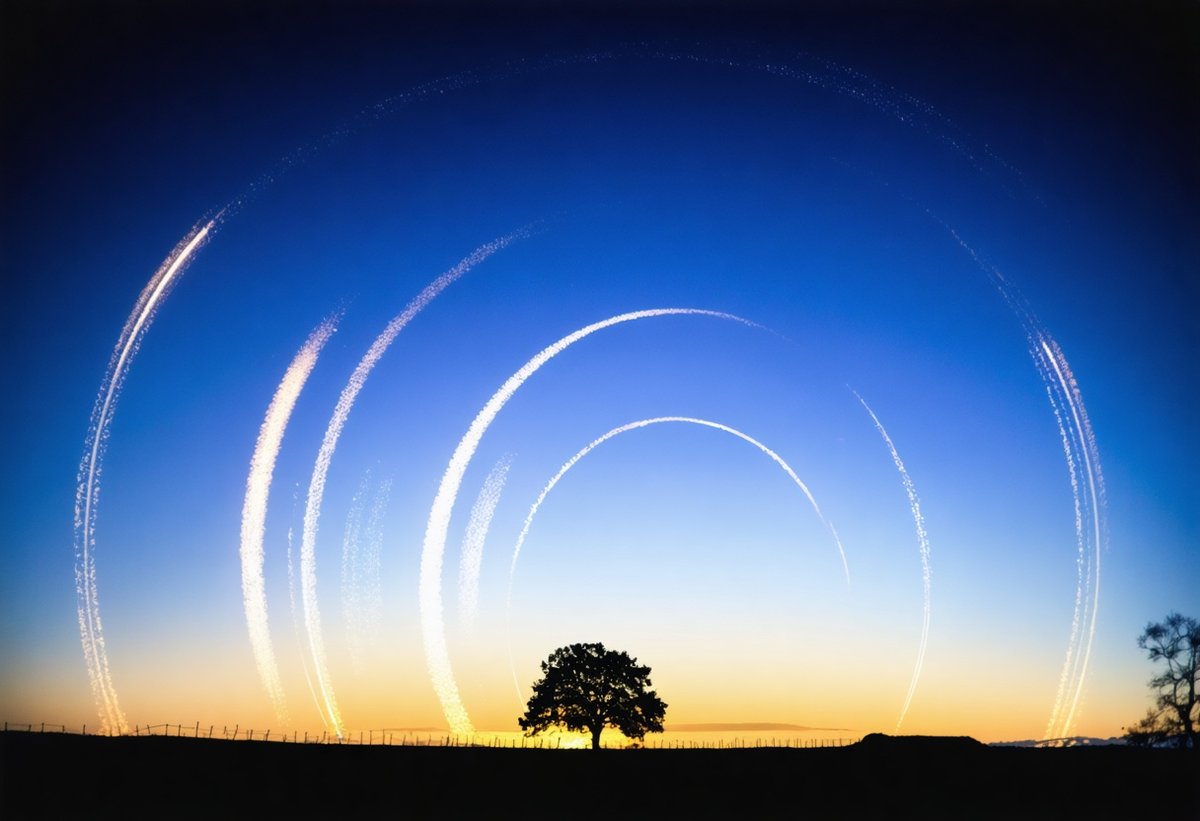
Solargraphy is like magic, grounded in the daily journey of our sun. Imagine a photograph revealing the sun’s path over several months, tracing arcs across the sky in continuous, fluid lines. These sun trails are not just artistic; they are a diary written in light, showcasing subtle changes in the sun’s trajectory with the changing seasons. The result? Hypnotic images that are as scientifically intriguing as they are visually stunning.
What makes solargraphy even more enchanting is its simplicity. You don’t need high-tech gadgets or complex setups. A homemade pinhole camera, crafted from materials as humble as an empty can or a small box, can do the trick. Once placed in position, this camera patiently collects light onto a piece of photographic paper, which, over time, records the sun’s journey. The outcome is a surreal blend of streaks and shadows, telling a story that is both cosmic and personal.
Each arc you see in a solargraph represents a single day’s solar path. On cloudless days, the lines appear bold and continuous. When clouds interrupt the sun’s journey, you’ll notice breaks or faded sections in the trails. This creates a visual weather diary—a record not just of time passing, but of the atmospheric conditions that characterized each day. Some solargraphers have captured dramatic weather events, from tropical storms to volcanic ash clouds, all documented in the interrupted patterns of their sun trails.
How to Capture Months in a Single Photo with Solargraphy
Creating a solargraph is both an art and a science. First, construct your pinhole camera by making a tiny hole in a lightproof container and inserting a piece of photographic paper inside. The placement of your camera is crucial; it should face the sun’s path for the duration you wish to capture. Once set, patience becomes your greatest tool. Leave the camera undisturbed for weeks or even months, allowing it to drink in the sunlight daily.
Building Your Pinhole Camera for Solargraphy
The beauty of solargraphy lies in its accessibility. You can create a functional pinhole camera from everyday materials. A cylindrical container like a drink can works wonderfully—its curved interior helps reduce internal reflections. Make your pinhole approximately 0.3mm in diameter using a needle or pin. Too large, and your image will lack sharpness; too small, and diffraction will blur your sun trails.

Cut your photographic paper to fit inside the container, with the emulsion side facing the pinhole. Black and white photographic paper works best, though color paper can produce interesting results. Secure the paper with tape, ensuring it curves along the interior wall. Seal the container completely with black tape—any light leaks will fog your image and ruin months of patient exposure. Much like traditional pinhole photography, the process requires careful attention to light-tight construction.
Choosing the Perfect Location and Timing
Location selection can make or break your solargraph. Position your camera to face the sun’s path—south-facing in the Northern Hemisphere, north-facing in the Southern Hemisphere. The camera should have an unobstructed view of the sky, though interesting foreground elements like trees, buildings, or landscapes add compelling context to your celestial trails.
Consider the seasonal timing of your project. Starting on a solstice (June 21 or December 21) and ending on the opposite solstice six months later will capture the maximum variation in the sun’s path. The difference between summer and winter solar arcs becomes dramatically visible in these long-exposure images. Alternatively, capturing from equinox to equinox (March 20 to September 22, or vice versa) provides a balanced view of seasonal transitions.
Mount your camera securely—it must remain absolutely still for the entire exposure period. Even slight movement will create disjointed or blurred sun trails. Use strong tape, zip ties, or dedicated mounting brackets. Choose locations where your camera won’t be disturbed by people, animals, or maintenance activities. Many solargraphers have lost months of work to curious passersby or overzealous groundskeepers.
Processing and Revealing Your Solargraph
When the exposure time is finally up, the magic unfolds in the darkroom. Carefully remove the photographic paper, now containing a ghostly, inverted image of the sun’s trails. To bring your solargraph to life, scan the paper and invert the colors digitally. The final image reveals the topsy-turvy arcs of the sun, each line representing a day’s journey from dawn to dusk. It’s a captivating blend of art and nature, captured in a single frame.
Here’s where solargraphy diverges from conventional darkroom practice: you don’t develop the paper. The photographic paper has been “solarized” by the extreme overexposure, creating a direct positive image rather than a negative. This solarization effect is what gives solargraphs their distinctive, dreamlike quality. Simply scan the paper as-is, then use image editing software to invert the colors and adjust contrast. The result transforms the faded, often sepia-toned original into a vibrant image with brilliant blue skies and golden sun trails.
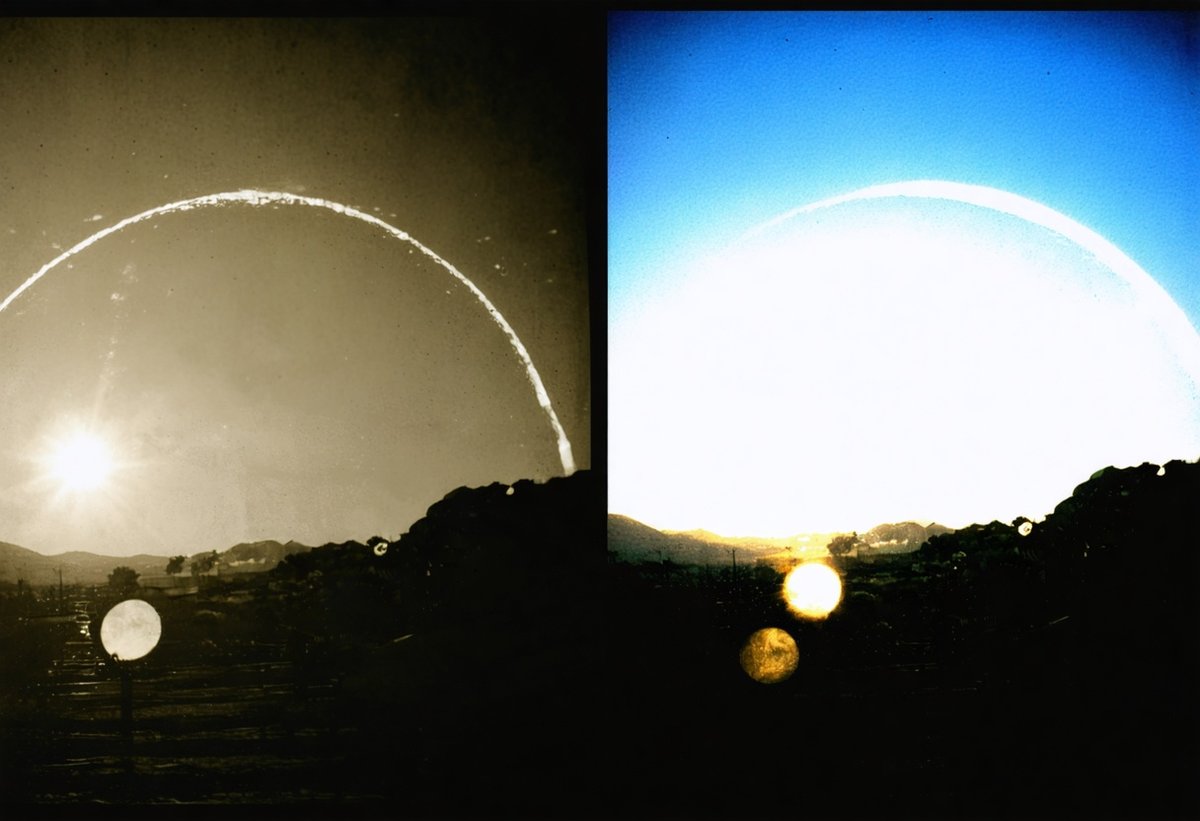
Some practitioners experiment with leaving the image uninverted, appreciating the ethereal, almost otherworldly appearance of the raw solargraph. Others enhance their scans with careful color grading, bringing out subtle hues that hint at atmospheric conditions or seasonal changes. There’s no “correct” way to process a solargraph—the final aesthetic choices remain yours to make.
Sun-Powered Art: The Science Behind Solargraphy
At the heart of solargraphy lies fascinating science. The sun emits light of varying intensities throughout the day, and as it moves across the sky, this light interacts with the photographic paper inside your pinhole camera. The paper, sensitive to light, records these interactions over extended periods. The resulting image is a direct imprint of the sun’s daily path and its seasonal shifts, providing a unique visual representation of time itself.
The physics of solargraphy involves the reciprocity failure of photographic materials. Under normal circumstances, photographic emulsions follow the reciprocity law: exposure equals intensity multiplied by time. However, at extremely long or extremely short exposures, this relationship breaks down. In solargraphy’s case, the months-long exposure causes the silver halide crystals in the photographic paper to behave unpredictably, creating the characteristic solarized appearance rather than simply turning completely black.
But solargraphy does more than just capture the sun’s journey; it also documents the environment around the camera. Trees, buildings, and other stationary objects appear as ghostly silhouettes, offering context and grounding the celestial trails in earthly reality. This interplay between the solar and the terrestrial creates a layered narrative, transforming a simple photograph into a rich tapestry of time, space, and light.
Reading the Sun’s Story in Your Solargraph
Every solargraph tells multiple stories simultaneously. The spacing between sun trails reveals the rate of seasonal change—trails are closer together near the solstices when the sun’s declination changes slowly, and more widely spaced near the equinoxes when daily changes are most dramatic. The height of the trails in your frame indicates your latitude; locations closer to the equator show sun paths that arc nearly overhead, while higher latitudes display lower, more elongated arcs.
Gaps and interruptions in the sun trails document weather patterns and atmospheric events. A series of broken trails might indicate a particularly stormy week, while consistently bold lines suggest clear, stable weather. Some solargraphers have captured evidence of wildfires, with smoke-induced haziness visible as faded sections across multiple days of trails. This intersection of documentary photography and artistic expression makes solargraphy a powerful tool for environmental observation.
Solargraphy’s Place in Alternative Photographic Processes
Solargraphy belongs to a family of alternative photographic techniques that emphasize process, patience, and collaboration with natural forces. Like cyanotype printing and lumen prints, solargraphy harnesses the sun’s energy directly, making the sun both subject and co-creator. These analog processes offer a counterpoint to the instant gratification of digital photography, inviting practitioners to slow down and engage with photography as a temporal art form.
The Royal Photographic Society has recognized solargraphy as a legitimate artistic medium, featuring solargraphs in exhibitions exploring time-based photography. Museums like the Victoria and Albert Museum have acquired solargraphs for their permanent collections, acknowledging the technique’s unique contribution to photographic art and its documentation of environmental phenomena.
What distinguishes solargraphy from other alternative processes is its extreme duration and its focus on celestial movement. While a cyanotype might expose for minutes and a lumen print for hours, a solargraph unfolds over months. This extended timeframe transforms the photographer’s role from active creator to patient collaborator, setting conditions and then stepping back to let time and light do their work.
Creative Variations and Advanced Techniques
Once you’ve mastered basic solargraphy, numerous creative variations await exploration. Multiple pinhole cameras can be deployed simultaneously to capture different perspectives or orientations. Some artists create panoramic solargraphs by positioning several cameras side-by-side, then stitching the resulting images into a sweeping view of the sun’s journey across a wide landscape.
Analemma Photography: Capturing the Sun’s Figure-Eight
A fascinating variation involves capturing the analemma—the figure-eight pattern the sun traces in the sky when photographed at the same time each day throughout the year. This requires a different approach than standard solargraphy: instead of continuous exposure, you open your pinhole for just a few minutes at precisely the same time daily. The resulting image shows individual sun positions rather than continuous trails, revealing the complex dance between Earth’s axial tilt and its elliptical orbit.
Color Solargraphs and Experimental Papers
While black and white photographic paper is traditional, color paper produces unexpected and often stunning results. The different color-sensitive layers respond unpredictably to extreme overexposure, creating surreal color palettes that shift from reality into dreamscape. Some solargraphers have experimented with expired photographic papers, finding that age-related chemical changes produce unique color shifts and tonal qualities.
Other experimental approaches include using alternative light-sensitive materials like blueprint paper, sun-print paper, or even certain types of construction paper that fade in sunlight. While these materials won’t capture the fine detail of photographic paper, they can produce interesting artistic effects and make solargraphy even more accessible to beginners.
Troubleshooting Common Solargraphy Challenges
Even with careful preparation, solargraphy presents unique challenges. Light leaks are the most common problem—even tiny gaps in your camera’s seal can fog the paper and obscure your sun trails. Test your camera by placing it in a dark room with a bright light source for several hours before deploying it. If you see any light inside when you check, seal those areas with additional black tape.
Condensation inside the camera can damage the photographic paper, especially in humid climates or during seasonal temperature changes. Include a small silica gel packet inside your camera to absorb moisture. Replace it periodically if your exposure spans multiple months through different seasons.
Camera displacement is another frequent issue. Wind, curious animals, or human interference can shift your camera’s position, creating disjointed sun trails. Choose sheltered locations and use robust mounting methods. Some solargraphers camouflage their cameras to make them less noticeable, reducing the likelihood of tampering.
The Community and Culture of Solargraphy
Solargraphy has developed a dedicated global community of practitioners who share their work and techniques online. The Solargraph Collective and various social media groups provide platforms for solargraphers to display their images, discuss technical challenges, and coordinate worldwide projects. Annual events like the Summer Solstice Solargraph Project invite participants to deploy cameras simultaneously around the world, creating a global snapshot of the sun’s journey from multiple perspectives.
Educational institutions have embraced solargraphy as a teaching tool. The technique offers hands-on lessons in astronomy, geography, and climate science while teaching photographic principles. Students can directly observe how Earth’s axial tilt affects seasonal changes, how latitude influences solar elevation, and how weather patterns impact daily sunshine—all captured in a single image they created themselves.
The J. Paul Getty Museum has featured solargraphs in exhibitions exploring contemporary photographic practices, positioning the technique within broader conversations about time, observation, and our relationship with natural cycles. This institutional recognition has helped elevate solargraphy from novelty to respected artistic practice.
Environmental and Philosophical Dimensions
Beyond its aesthetic appeal, solargraphy offers a unique perspective on environmental awareness and climate observation. Long-term solargraphers have documented changes in local weather patterns, captured evidence of increasing atmospheric haze from pollution, and created visual records of seasonal shifts that may be affected by climate change. These images serve as both art and data, beautiful and scientifically relevant.
Philosophically, solargraphy challenges our contemporary relationship with time and image-making. In an era of instant digital photography where we capture thousands of images without thought, solargraphy demands patience, planning, and acceptance of uncertainty. You cannot review your image immediately, adjust settings, or take another shot if you’re unsatisfied. This surrender of control can be liberating, shifting photography from an act of mastery to one of collaboration with natural forces.
The technique also prompts reflection on photography’s fundamental nature—its relationship to time, light, and reality. A solargraph is simultaneously the most “true” photograph imaginable (a direct, unmanipulated recording of light over time) and utterly unlike our visual experience of reality. It captures something we can never see with our eyes: the accumulated path of months of sunrises and sunsets compressed into a single frame.
Getting Started: Your First Solargraph Project
Ready to create your first solargraph? Start with a modest timeline—perhaps one month rather than six. This shorter duration increases your chances of success while you learn the technique. Choose a location you can easily monitor without disturbing the camera. Your backyard, a balcony, or a cooperative friend’s property works better than remote locations where you can’t periodically check that your camera remains secure.
Gather your materials: a cylindrical metal can (drink cans work perfectly), black photographic paper (grade 2 or 3 works well), a pin or needle for creating your pinhole, black electrical tape, and scissors. The entire setup costs just a few dollars, making solargraphy one of the most affordable photographic techniques available.
Document your process with notes and regular photographs of your camera setup. Record the date you deploy your camera, its exact orientation, and any relevant environmental factors. When you retrieve your solargraph, these notes will help you interpret the results and plan improvements for your next project. Some solargraphers maintain detailed journals, creating a parallel narrative to accompany their images.
Conclusion: Embracing Slow Photography
Solargraphy offers a poetic way to observe and appreciate the passage of time. With just a bit of patience and a touch of creativity, you can capture the sun’s journey and turn it into a breathtaking piece of art. It’s a reminder that even the most everyday occurrences, like the sun rising and setting, can be transformed into something extraordinary.
In our fast-paced digital world, solargraphy stands as a beautiful counterpoint—a practice that cannot be rushed, automated, or perfected through immediate iteration. It teaches patience, acceptance of imperfection, and appreciation for processes that unfold on nature’s timeline rather than ours. Each solargraph becomes a meditation on time itself, a visual koan that asks us to contemplate our place in the cosmic dance of planetary motion and seasonal change.
So, why not try your hand at solargraphy? Let the sun be your paintbrush and the sky your canvas. Whether you’re a seasoned photographer or a curious novice, this fascinating technique invites you to see the world—and time itself—through a different lens. Deploy your camera on the next solstice or equinox, mark your calendar for retrieval day, and prepare to be amazed by what patient observation can reveal. Happy shooting!