The photography industry is experiencing a profound shift as creators worldwide embrace sustainable photography practices to reduce their environmental impact. From choosing eco-friendly camera gear to implementing carbon-neutral business operations, photographers are discovering that environmental responsibility and creative excellence aren't mutually exclusive—they're complementary forces shaping the future of visual storytelling. This comprehensive guide explores how modern photographers can build thriving, environmentally conscious businesses while maintaining artistic integrity and meeting the expectations of today's values-driven clients.

Why Sustainable Photography Practices Matter in 2025
The photography industry's environmental footprint extends far beyond what most creators realize. From manufacturing camera bodies and lenses to printing portfolios and traveling to shoots, every aspect of professional photography carries environmental consequences. Recent studies indicate that the average professional photographer generates approximately 2.5 tons of carbon emissions annually through equipment production, transportation, and energy consumption alone.1
Millennial and Gen Z clients—who now represent over 60% of the photography market—increasingly prioritize working with businesses that demonstrate environmental responsibility. Wedding photographers, commercial creators, and portrait specialists who implement eco-friendly photography strategies report not only reduced operational costs but also enhanced brand reputation and client loyalty. The shift toward sustainable practices isn't just ethically sound; it's becoming a competitive advantage in an increasingly conscious marketplace.
Organizations like the American Society of Media Photographers have begun developing sustainability guidelines, recognizing that environmental stewardship represents the next frontier in professional photography standards. Understanding and implementing these practices positions photographers as industry leaders while contributing meaningfully to global environmental goals.
Building a Green Photography Business: Foundation and Philosophy
Transitioning to sustainable photography practices begins with a fundamental shift in business philosophy. Rather than viewing environmental considerations as constraints, successful eco-conscious photographers recognize them as opportunities for innovation and differentiation. This mindset transformation affects every business decision, from equipment purchases to client communication strategies.
Defining Your Environmental Mission
Start by conducting an environmental audit of your current operations. Document your equipment inventory, travel patterns, energy consumption, printing habits, and waste generation. This baseline assessment reveals specific areas where sustainable interventions will yield the greatest impact. Many photographers discover that 70-80% of their environmental footprint stems from just two or three operational areas, making targeted improvements highly effective.
Develop a clear sustainability statement that articulates your environmental commitments to clients. This transparency builds trust and attracts like-minded customers who value ethical business practices. Your statement should address specific actions you're taking—not vague promises—and acknowledge that sustainability is an ongoing journey rather than a destination.
Communicating Your Sustainable Approach
Integrate your environmental values throughout your marketing materials, website, and client interactions. Share behind-the-scenes content showing your sustainable practices in action, from digital-only delivery systems to eco-friendly packaging. This storytelling approach resonates particularly well with conscious consumers who want to understand the full impact of their purchasing decisions.
Consider creating content that educates clients about sustainable photography choices, similar to how photographers might share insights about using AI tools thoughtfully in their creative process. When clients understand the reasoning behind your eco-friendly practices, they become advocates for sustainable photography themselves.
Sustainable Camera Gear: Making Informed Equipment Decisions
Equipment choices represent one of the most significant environmental decisions photographers make. The production of a single professional camera body generates approximately 75-100 kg of carbon emissions, while lens manufacturing adds another 30-50 kg per unit.2 Understanding the lifecycle impact of camera gear enables more responsible purchasing decisions.
Extending Equipment Lifespan
The most sustainable camera is the one you already own. Resist the upgrade cycle driven by marketing rather than genuine professional needs. Modern camera bodies typically remain professionally viable for 5-7 years, while quality lenses can serve photographers for decades. Implementing proper equipment protection and maintenance practices significantly extends gear lifespan, reducing the frequency of replacements and their associated environmental costs.
When equipment does require replacement, consider the used market first. The secondary camera market offers professional-grade gear at reduced prices while eliminating the environmental impact of new manufacturing. Reputable retailers like KEH Camera and MPB provide quality guarantees on pre-owned equipment, making this approach both environmentally and financially sound.
Choosing Environmentally Responsible Manufacturers
When purchasing new equipment becomes necessary, research manufacturers' environmental commitments. Canon, Sony, and Nikon have published comprehensive sustainability reports detailing their carbon reduction initiatives, recycling programs, and manufacturing practices. While no manufacturer is perfect, supporting companies actively working toward environmental improvements encourages industry-wide change.
Prioritize equipment built for longevity rather than planned obsolescence. Weather-sealed bodies, metal construction, and modular designs that allow component replacement rather than complete unit disposal represent more sustainable choices. These durability features often correlate with professional-grade equipment, making quality investment an environmental strategy.
Sustainable Accessories and Support Equipment
Beyond cameras and lenses, photographers rely on numerous accessories that collectively generate significant environmental impact. Choose rechargeable battery systems over disposables, reducing both waste and long-term costs. Invest in solar-powered charging solutions for location work, particularly useful for photographers specializing in landscape photography or extended outdoor shoots.
Select camera bags and cases made from recycled or sustainably sourced materials. Brands like Think Tank Photo and Peak Design have introduced product lines using recycled fabrics and carbon-neutral manufacturing processes. These products typically offer comparable durability to conventional options while significantly reducing environmental impact.
Digital Workflow Optimization for Sustainability
The digital revolution transformed photography's environmental profile, eliminating chemical processing and physical film waste. However, digital workflows carry their own environmental considerations, from energy consumption during editing to cloud storage's carbon footprint. Optimizing your digital workflow represents a crucial component of sustainable photography practices.
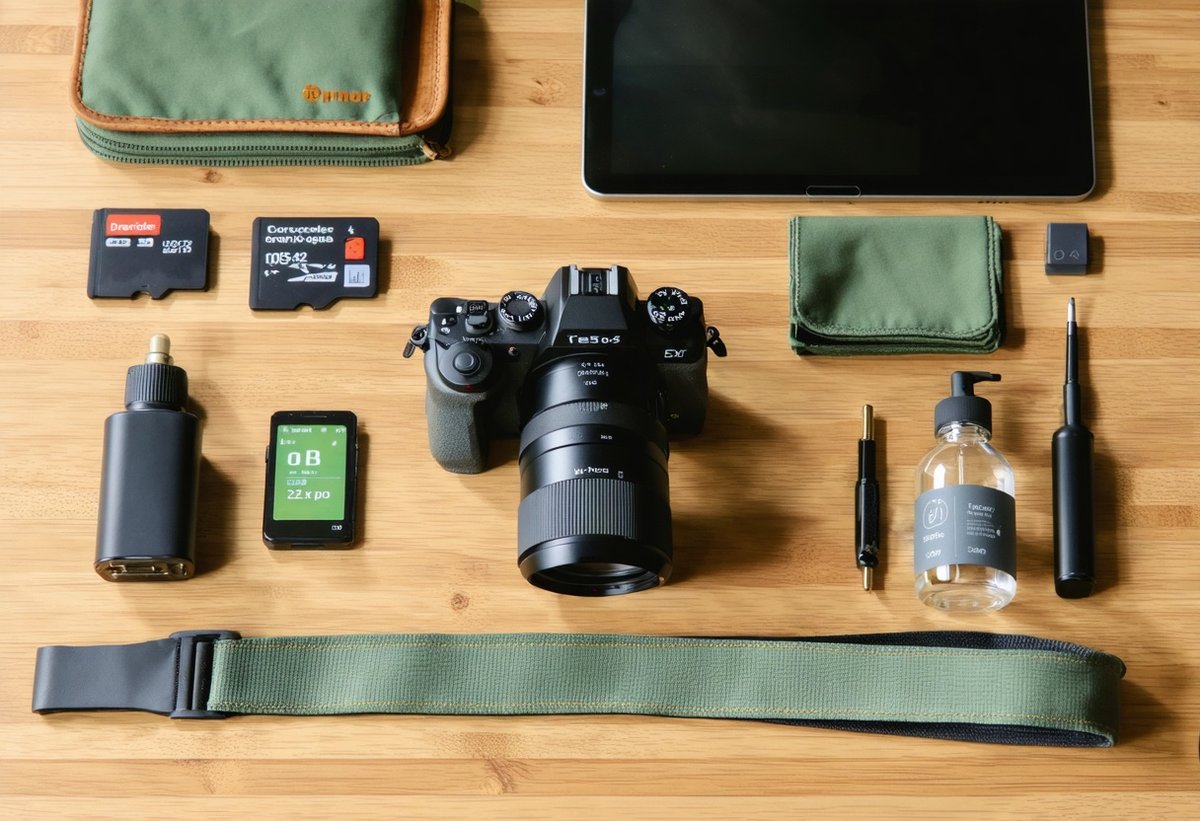
Energy-Efficient Editing Practices
Photo editing consumes substantial electricity, particularly when processing high-resolution images or using resource-intensive software. Configure your computer for maximum energy efficiency by enabling power-saving modes, using energy-efficient monitors, and scheduling processor-intensive tasks during off-peak electricity hours when renewable energy sources typically contribute more to the grid.3
Consider the environmental implications when incorporating AI photography tools into your workflow. While AI can streamline editing processes, cloud-based AI processing consumes significant energy in data centers. When possible, use locally-run AI tools or batch process images to maximize efficiency.
Sustainable Data Storage Solutions
Data storage represents a hidden environmental cost in digital photography. Cloud storage facilities consume enormous amounts of electricity for servers and cooling systems. While cloud backup remains essential for business continuity, implement a tiered storage strategy that balances accessibility with environmental impact.
Store actively used projects on local drives, archive completed work on external hard drives, and use cloud storage selectively for critical backups rather than comprehensive duplication. This approach can reduce your cloud storage needs—and associated energy consumption—by 60-70% while maintaining adequate data security. Choose cloud providers committed to renewable energy, such as Google Cloud or Microsoft Azure, which have made significant investments in carbon-neutral data centers.
Digital-First Delivery Systems
Transitioning to digital-only delivery eliminates the environmental impact of physical products while often improving client experience through instant access. Create beautiful digital galleries using platforms like Pixieset or ShootProof that allow clients to view, share, and download images without requiring physical delivery.
For clients who do request prints, partner with eco-friendly printing services rather than maintaining in-house printing capabilities. This consolidation improves efficiency while ensuring professional-quality results. Many modern print labs use sustainable papers, vegetable-based inks, and carbon-offset shipping programs.
Eco-Friendly Printing and Physical Products
Despite the digital revolution, physical photography products remain important for many clients and applications. Wedding albums, portfolio books, and fine art prints continue generating significant demand. Sustainable photography practices extend to these physical products through careful material selection and production partnerships.
Sustainable Paper and Material Choices
When printing becomes necessary, specify FSC-certified papers sourced from responsibly managed forests. These papers deliver professional quality while ensuring forest regeneration and biodiversity protection. Bamboo-based papers offer an even more sustainable alternative, as bamboo grows rapidly without requiring replanting and absorbs more carbon dioxide than equivalent tree species.
For album covers and premium products, explore alternatives to traditional leather, such as cork, recycled fabrics, or plant-based leather substitutes. These materials increasingly match conventional options in durability and aesthetic appeal while significantly reducing environmental impact. Companies like Miller's Professional Imaging now offer extensive sustainable product lines specifically designed for professional photographers.
Ink and Chemical Considerations
Traditional photography inks often contain petroleum-based solvents and heavy metals. Eco-solvent and latex inks provide environmentally friendlier alternatives without compromising color accuracy or longevity. When selecting printing partners, inquire about their ink formulations and waste management practices.4
For photographers still working with traditional darkroom processes, implement proper chemical disposal procedures and explore less toxic alternatives. Silver recovery systems can reclaim valuable materials from fixer solutions while preventing environmental contamination.
Packaging and Shipping Solutions
Product packaging generates substantial waste in photography businesses. Replace plastic mailers and bubble wrap with recycled cardboard, biodegradable packing peanuts, or mushroom-based packaging materials. These alternatives provide adequate protection while decomposing naturally rather than persisting in landfills for centuries.
Design packaging to be minimal yet protective, eliminating unnecessary materials while ensuring products arrive safely. Include messaging on packaging encouraging clients to recycle or reuse materials, extending your environmental commitment throughout the client experience. Some photographers have successfully branded their sustainable packaging as a premium feature, enhancing perceived value while reducing environmental impact.
Carbon Neutral Photography: Transportation and Travel
Transportation represents the largest single environmental impact for many photography businesses, particularly those serving destination weddings, travel photography, or geographically dispersed commercial clients. Achieving carbon neutral photography requires strategic planning around travel and transportation.
Local-First Business Strategies
Prioritize local clients and projects when possible, reducing travel distances and associated emissions. Many successful photographers have built thriving businesses by becoming the premier choice in their immediate geographic area rather than pursuing distant opportunities. This approach not only reduces environmental impact but also decreases travel time and expenses, improving work-life balance.
When geographic expansion makes business sense, consider establishing satellite operations or partnering with photographers in target markets rather than traveling repeatedly to the same locations. This collaborative approach builds professional networks while distributing environmental impact across multiple businesses.
Efficient Travel Planning
When travel becomes necessary, maximize efficiency through strategic scheduling. Cluster shoots in the same geographic area, combine client meetings with photography sessions, and plan routes that minimize backtracking. These logistical optimizations can reduce travel-related emissions by 30-40% compared to ad-hoc scheduling.
For photographers specializing in street photography or location-based work, consider public transportation, cycling, or walking as primary transportation methods. Beyond environmental benefits, these approaches often provide better access to interesting locations and create opportunities for spontaneous photography that vehicle travel misses.
Carbon Offset Programs
For unavoidable travel, particularly air travel for destination assignments, carbon offset programs provide a mechanism to counterbalance environmental impact. These programs fund renewable energy projects, reforestation initiatives, or carbon capture technologies that remove equivalent amounts of carbon dioxide from the atmosphere.
Choose reputable offset programs certified by organizations like the Gold Standard or Verified Carbon Standard, which ensure funds support genuine, measurable environmental projects. Some photographers build offset costs into their pricing structure, making carbon neutrality a standard business practice rather than an optional add-on. Transparently communicating this practice to clients reinforces your environmental commitment and can justify premium pricing.
Studio Operations and Energy Management
For photographers operating dedicated studio spaces, facility management presents significant opportunities for environmental improvement. Studio operations encompass lighting, climate control, equipment charging, and general electricity consumption—all areas where sustainable photography practices yield measurable results.

LED Lighting Conversion
Traditional tungsten and fluorescent studio lighting consumes enormous electricity while generating excessive heat that requires additional cooling. LED lighting systems reduce electricity consumption by 75-80% while producing minimal heat, creating a double efficiency benefit. Modern LED panels offer excellent color accuracy, dimming capabilities, and light quality that rivals traditional systems.5
While LED conversion requires upfront investment, reduced electricity costs typically provide payback within 18-24 months, after which the savings represent pure profit. Additionally, LED systems' longer lifespan (50,000+ hours versus 2,000-5,000 for traditional bulbs) reduces replacement frequency and associated waste.
Renewable Energy Integration
Solar panel installation transforms studio spaces into energy-positive facilities that generate more electricity than they consume. While initial costs remain significant, federal and state incentives often cover 30-50% of installation expenses, and electricity savings provide ongoing returns. For photographers unable to install solar panels due to rental situations or unsuitable buildings, community solar programs allow participation in shared renewable energy projects.
Alternatively, switch to electricity providers offering renewable energy plans. Many utility companies now provide options to source electricity exclusively from wind, solar, or hydroelectric generation, often at competitive rates with conventional power. This simple administrative change can immediately reduce your studio's carbon footprint to near-zero for electricity consumption.
Climate Control Optimization
Heating and cooling represent major energy expenses in studio operations. Implement smart thermostat systems that automatically adjust temperatures based on occupancy and time of day. Proper insulation, weather stripping, and window treatments significantly reduce energy requirements while improving comfort.
Consider the orientation and design of studio spaces when selecting or building facilities. Natural light reduces artificial lighting needs, while proper window placement can facilitate passive heating and cooling. These architectural considerations create long-term efficiency benefits that compound over years of operation.
Ethical Photography and Sustainable Subject Matter
Sustainable photography practices extend beyond technical and operational considerations to encompass ethical dimensions of subject matter and creative approach. Ethical photography respects both environmental and social sustainability, recognizing that true sustainability requires holistic consideration of impact.
Environmental Storytelling
Use your platform and skills to document environmental issues, conservation efforts, and sustainable practices. Environmental photography raises awareness about critical issues while demonstrating photography's potential as a force for positive change. Organizations like the International League of Conservation Photographers connect photographers with conservation projects worldwide, creating opportunities to contribute meaningfully to environmental protection.
This storytelling approach aligns naturally with documentary photography's importance in contemporary culture, where visual narratives shape public understanding of complex issues. By focusing creative energy on environmental subjects, photographers can build portfolios that attract conscious clients while advancing important causes.
Leave No Trace Photography
When photographing natural environments, adhere strictly to Leave No Trace principles. Stay on established trails, avoid disturbing wildlife, and never alter environments for photographic purposes. The temptation to move rocks, bend branches, or otherwise manipulate scenes for better compositions must be resisted in favor of working within natural conditions.
For photographers working in sensitive ecosystems, educate yourself about local regulations and ecological considerations. Some locations restrict access during breeding seasons or require permits to minimize cumulative impact from multiple visitors. Respecting these restrictions demonstrates environmental stewardship and sets positive examples for other photographers and the public.
Social Sustainability in Photography
True sustainability encompasses social dimensions alongside environmental considerations. Practice ethical photography by obtaining proper permissions, compensating subjects fairly, and representing people and cultures respectfully. Avoid exploitative imagery that objectifies subjects or perpetuates stereotypes, particularly when photographing vulnerable populations.
Build sustainable business relationships with collaborators, assistants, and service providers by offering fair compensation and respectful working conditions. The photography industry's sustainability extends beyond environmental metrics to include how we treat the people who contribute to our creative work.
Marketing Your Green Photography Business
Environmental commitment represents a powerful differentiator in competitive photography markets. However, effectively communicating sustainable photography practices requires authenticity and specificity to avoid greenwashing accusations while resonating with conscious consumers.
Authentic Environmental Messaging
Develop marketing messages that emphasize specific actions rather than vague environmental claims. Instead of stating "we're eco-friendly," explain "we use 100% renewable energy in our studio, deliver all images digitally to eliminate shipping emissions, and offset carbon from necessary travel through certified programs." This specificity builds credibility while educating potential clients about meaningful sustainability practices.
Share behind-the-scenes content showing your sustainable practices in action. Document your solar panel installation, demonstrate your digital workflow, or explain your partnership with eco-friendly print labs. This transparency transforms abstract environmental claims into tangible, verifiable actions that conscious consumers value.
Targeting Conscious Consumers
Identify market segments that prioritize environmental values and tailor marketing efforts accordingly. Eco-conscious wedding couples, sustainable brands seeking commercial photography, and environmentally focused nonprofits represent prime targets for green photography businesses. Understanding the principles of photography in marketing helps position sustainability as a core value proposition rather than a secondary consideration.
Partner with complementary sustainable businesses—eco-friendly venues, organic caterers, sustainable fashion brands—to cross-promote services and reach aligned audiences. These partnerships create referral networks while reinforcing your environmental commitment through association with like-minded businesses.
Certification and Third-Party Validation
Consider pursuing environmental certifications that provide third-party validation of your sustainable practices. B Corporation certification, while rigorous, offers powerful credibility for businesses committed to social and environmental responsibility. Industry-specific certifications or memberships in environmental photography organizations add additional legitimacy to sustainability claims.
Document and share measurable environmental metrics when possible. Calculate and publicize your annual carbon footprint reduction, percentage of renewable energy use, or amount of waste diverted from landfills. These concrete numbers resonate more effectively than qualitative statements while demonstrating genuine commitment to continuous improvement.
Common Mistakes in Sustainable Photography Practices
As photographers transition toward more sustainable operations, several common pitfalls can undermine environmental goals or create unintended consequences. Awareness of these mistakes helps develop more effective sustainability strategies.
Greenwashing and Superficial Changes
The most significant mistake involves making superficial environmental gestures while ignoring major impact areas. Using recycled business cards while maintaining energy-intensive studio operations or driving gas-guzzling vehicles represents greenwashing that savvy consumers recognize and reject. Prioritize changes that address your largest environmental impacts first, even if they're less visible than symbolic gestures.
Avoid making environmental claims you can't substantiate. If you offset carbon emissions, be prepared to show documentation. If you use eco-friendly materials, know their specific environmental advantages. Authenticity requires backing claims with evidence and acknowledging areas where you're still working toward improvement.
Perfection Paralysis
Conversely, some photographers become paralyzed by the impossibility of perfect sustainability, concluding that imperfect efforts aren't worthwhile. This all-or-nothing thinking prevents meaningful progress. Sustainable photography practices represent a journey of continuous improvement rather than an absolute destination. Implement changes incrementally, celebrating progress while acknowledging remaining challenges.
Remember that collective action by many photographers making moderate improvements generates far greater impact than a few individuals achieving perfect sustainability while others do nothing. Your visible commitment to environmental responsibility encourages others to follow, creating ripple effects that extend beyond your individual business.
Ignoring Economic Sustainability
Environmental sustainability must align with economic sustainability for long-term viability. Implementing expensive environmental measures that threaten business profitability creates unsustainable situations where financial pressures eventually force abandonment of environmental commitments. Prioritize changes offering both environmental and economic benefits, then gradually expand to measures requiring longer payback periods as financial stability allows.
Price services appropriately to reflect the true cost of sustainable operations. Conscious consumers increasingly recognize that premium pricing often reflects higher quality and ethical practices rather than excessive profit margins. Communicate the value of your sustainable approach to justify pricing that supports both environmental responsibility and business viability.
Future Trends in Eco-Friendly Photography
The intersection of photography and sustainability continues evolving rapidly as technology advances and environmental awareness deepens. Understanding emerging trends positions photographers to stay ahead of industry shifts while maximizing environmental benefits.
Circular Economy Equipment Models
Camera manufacturers increasingly explore circular economy models where equipment is designed for disassembly, repair, and component reuse rather than disposal. Leasing programs and manufacturer buy-back initiatives reduce waste while making professional equipment more accessible. These models align with broader sustainability goals while potentially reducing photographers' capital requirements.6
Subscription-based equipment access services allow photographers to use gear without ownership, optimizing utilization rates across multiple users. This shared economy approach dramatically reduces the total number of cameras and lenses manufactured while ensuring photographers access the specific tools each project requires.
AI and Computational Photography
Advanced computational photography and AI tools enable impressive results with less specialized equipment, potentially reducing gear proliferation. Smartphone cameras increasingly rival dedicated cameras for many applications, while AI enhancement can improve images captured with modest equipment. This democratization could shift emphasis from equipment accumulation toward creative vision and technical skill.
However, as discussed in explorations of AI's impact on photography, these technologies carry their own environmental considerations through data center energy consumption. The net environmental impact remains uncertain and will depend on how these technologies develop and are deployed.
Blockchain and Digital Ownership
Blockchain technologies and NFTs create new possibilities for digital photography ownership and value, potentially reducing demand for physical prints while creating new revenue streams. While current blockchain implementations carry significant energy costs, emerging proof-of-stake protocols dramatically reduce environmental impact. These technologies may eventually enable sustainable digital art markets that preserve photography's economic value without physical production.
Regenerative Business Practices
The sustainability conversation is evolving beyond "doing less harm" toward regenerative practices that actively improve environmental conditions. Forward-thinking photographers are exploring how their businesses can contribute positively to environmental restoration—funding reforestation beyond carbon offsets, supporting wildlife conservation through percentage-of-revenue donations, or using their platform to drive meaningful environmental action.
This regenerative approach represents the next frontier in sustainable photography practices, where creative businesses become forces for environmental healing rather than simply minimizing damage. As this mindset spreads, photography's relationship with the natural world may fundamentally transform from extractive to restorative.
Frequently Asked Questions About Sustainable Photography Practices
How much does it cost to transition to sustainable photography practices?
The cost of implementing sustainable photography practices varies dramatically based on your current operations and chosen strategies. Many impactful changes—optimizing digital workflows, choosing digital-only delivery, or improving travel efficiency—require minimal investment beyond time and planning. Equipment-related changes like LED lighting conversion or solar panel installation involve significant upfront costs ($2,000-$20,000+) but typically pay for themselves through reduced operating expenses within 2-5 years. Start with low-cost improvements while planning for larger investments as budget allows, and remember that many sustainable choices actually reduce long-term costs despite higher initial expenses.
Will clients pay more for eco-friendly photography services?
Research consistently shows that conscious consumers—particularly Millennials and Gen Z—willingly pay premium prices for products and services aligned with their values, including environmental responsibility. However, this premium depends on effective communication of your sustainable practices and the overall value proposition you offer. Rather than simply charging more for being "green," position sustainability as one component of a premium service package that includes exceptional quality, professional expertise, and ethical business practices. Many photographers report that environmental commitment attracts higher-quality clients who value professionalism across all dimensions, not just those willing to pay specifically for sustainability.
What are the most impactful sustainable changes photographers can make?
For most photographers, the highest-impact sustainable changes address transportation, energy consumption, and equipment lifecycle management. Reducing travel through local-first business strategies, efficient route planning, and carbon offsetting can eliminate 40-60% of your environmental footprint. Converting to LED lighting and renewable energy for studio operations addresses another 20-30%. Extending equipment lifespan, purchasing used gear when possible, and properly disposing of electronics prevents the substantial environmental costs of manufacturing new equipment. Together, these three areas typically account for 80-90% of a photography business's environmental impact, making them the logical starting points for sustainability initiatives.
How can photographers offset unavoidable environmental impacts?
Carbon offset programs provide mechanisms to counterbalance unavoidable environmental impacts, particularly from air travel and other transportation. Choose certified offset programs through organizations like Gold Standard, Verified Carbon Standard, or Climate Neutral that fund verified projects removing equivalent carbon from the atmosphere. Calculate your annual carbon footprint using online calculators specific to photography businesses, then purchase offsets to achieve carbon neutrality. Many photographers build offset costs into their pricing structure (typically $50-$200 annually for average photography businesses) rather than treating them as optional expenses. Beyond carbon offsets, consider supporting environmental organizations through percentage-of-revenue donations or pro-bono photography services for conservation projects, creating positive impact beyond simply neutralizing harm.
Are digital-only workflows truly more sustainable than printing?
Digital workflows generally carry significantly lower environmental impact than printing, though the comparison isn't absolute. Digital delivery eliminates paper production, ink consumption, and shipping emissions associated with physical products. However, digital photography requires electricity for editing, storage, and display, plus the environmental costs of manufacturing computers, hard drives, and servers. Research suggests digital workflows generate 60-80% less environmental impact than equivalent print workflows when considering full lifecycle costs. The sustainability advantage increases when using renewable energy for digital operations and choosing energy-efficient equipment. For clients who do require prints, selective printing of carefully chosen images rather than comprehensive print delivery represents a reasonable compromise between client preferences and environmental responsibility.
How can wedding photographers implement sustainable practices?
Wedding photographers can implement numerous sustainable practices while maintaining the quality and service expectations of this demanding market. Offer digital-only packages as your standard option, with sustainable print products available as premium add-ons through eco-friendly labs. Choose local weddings when possible and optimize travel for destination events through efficient scheduling and carbon offsets. Use LED lighting for receptions and portraits, which also reduces heat in already-warm venues. Partner with other sustainable wedding vendors—venues, planners, caterers—for cross-referrals to environmentally conscious couples. Create beautiful digital galleries and slideshow presentations that provide the emotional impact of physical albums without environmental costs. Many wedding photographers report that conscious couples specifically seek out eco-friendly photographers, making sustainability a competitive advantage in this lucrative market segment.
Building Your Sustainable Photography Future
The transition toward sustainable photography practices represents more than environmental responsibility—it's a strategic business decision that positions photographers for long-term success in an increasingly conscious marketplace. As environmental awareness continues growing among consumers, particularly younger generations who will dominate the market for decades to come, photographers who have already integrated eco-friendly practices into their operations will enjoy significant competitive advantages.
Implementing sustainable photography practices requires honest assessment of current operations, strategic planning for improvements, and ongoing commitment to environmental responsibility. Start by addressing your largest impact areas—typically transportation, energy consumption, and equipment lifecycle—where changes yield the greatest environmental and often economic benefits. Expand gradually to encompass printing, packaging, and other operational aspects as you refine your approach and resources allow.
Remember that perfect sustainability remains impossible; what matters is continuous improvement and genuine commitment to reducing environmental impact. Share your journey transparently with clients and fellow photographers, acknowledging both successes and ongoing challenges. This authenticity builds trust while encouraging broader industry adoption of sustainable practices.
The photography industry's environmental impact is significant, but so is its potential for positive change. Through thoughtful equipment choices, optimized workflows, sustainable business practices, and ethical creative approaches, photographers can build thriving businesses that honor both artistic vision and environmental responsibility. The future of photography isn't just about capturing beautiful images—it's about creating those images in ways that preserve the beautiful world we're photographing.
Whether you're just beginning to explore eco-friendly photography or you're already well along the sustainability journey, every step toward reduced environmental impact matters. The collective action of thousands of photographers making conscious choices creates industry-wide transformation that extends far beyond individual businesses. By embracing sustainable photography practices today, you're not just building a better business—you're contributing to a more sustainable future for the art form we all love and the planet we all share.
- Environmental impact calculations based on data from the Carbon Trust's photography industry assessment, 2024. This figure excludes printing and physical product creation, which can add an additional 1-3 tons annually depending on business model.
- Manufacturing impact data compiled from environmental reports by Canon, Nikon, and Sony, averaged across mirrorless and DSLR production lines, 2023-2024.
- Many electricity grids show higher renewable energy percentages during midday hours when solar generation peaks, and overnight when wind generation is often strongest. Timing energy-intensive tasks accordingly reduces fossil fuel dependency.
- Eco-solvent inks reduce volatile organic compound (VOC) emissions by up to 90% compared to traditional solvent inks, while latex inks are water-based and contain no hazardous air pollutants, according to HP's environmental impact studies.
- Professional LED panels now achieve CRI (Color Rendering Index) values of 95-98, matching or exceeding traditional tungsten sources, while consuming 1/10th the power per lumen output, according to lighting manufacturer specifications from Aputure and Godox.
- Canon's recent "Circular Economy" initiative aims to achieve 100% recyclability for new products by 2030, with component reuse programs already operational in Japan and expanding globally, according to their 2024 sustainability report.