The Americans by Robert Frank is a book of 83 black-and-white photographs made on road trips across the United States in 1955 and 1956 with a Guggenheim fellowship. It first appeared in Paris in November 1958 as Les Américains. Grove Press then published the American edition, with an introduction by Jack Kerouac, and released it on January 15, 1960.1 Critics were largely hostile at first. Since then, the National Gallery of Art has given the book a major exhibition, and MoMA has displayed it in its collection galleries.
This article follows how Frank made, edited, published and defended the book, and it says plainly what the sources can and cannot confirm.
The Americans by Robert Frank at a Glance
| Item | What the sources say |
|---|---|
| Photographer | Robert Frank, born in Zurich on November 9, 1924 |
| Funding | John Simon Guggenheim fellowship, $3,600, awarded April 15, 1955 and renewed on April 12, 1956 |
| Main road trips | Late June 1955 to May 1956, in several journeys |
| Film shot | 767 rolls, developed and contact-printed in 1956 |
| Edit | About 1,000 work prints, a 92-photograph sequence, 85 photographs in June 1957, 83 in the final book |
| French edition | Les Américains, Robert Delpire, Paris, November 1958 |
| American edition | Grove Press, released January 15, 1960, with an introduction by Jack Kerouac |
| Landmark reissues | Aperture (1968, 1969, 1978) and Steidl with the National Gallery of Art (2008) |
Who Was Robert Frank Before The Americans?
Zurich, New York and a Leica
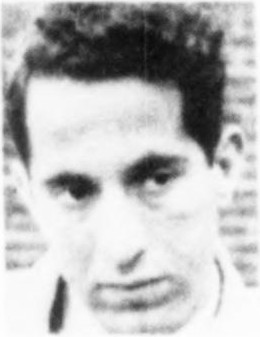
Frank became a Swiss citizen in April 1945 after apprenticeships with photographers and graphic designers in Zurich and Geneva. Next, in 1947, he sailed to New York and arrived on March 14. Soon afterwards, Alexey Brodovitch hired him as an assistant photographer at Harper’s Bazaar. In addition, that spring he saw Henri Cartier-Bresson’s exhibition at MoMA (see our article on Henri Cartier-Bresson). Later that year, he bought a Leica, after working with a Rolleiflex.2

Peru, Paris and Steichen
Afterwards, Frank worked in Peru in 1948, lived in Paris from 1949, and returned to New York in February 1950. In New York, he then met Walker Evans and Edward Steichen. Steichen bought at least two Frank photographs for MoMA in 1951 and judged the Life contest in which Frank won second prize for individual pictures. In late August 1952, Frank also met the Paris publisher Robert Delpire, who would later publish Les Américains. After a stay in Europe, he came back to New York on March 16, 1953.3
Photographs Made Before the Road Trips
Some pictures in the book therefore predate the journey. According to the chronology, the earliest photograph later included in the book dates from July 1954, at Jay, New York. Frank also made the Yom Kippur picture on the East River on September 16, 1954, and photographed commuters on a train for Fortune at Evans’s suggestion in the winter of 1954 to 1955.4 In other words, the book grew out of several years of work, not only out of the road.
How the Guggenheim Fellowship Made The Americans by Robert Frank Possible
Frank applied for the fellowship on October 21, 1954, with editorial help from Evans. In addition, his referees were Brodovitch, Evans, Alexander Liberman, Meyer Schapiro and Steichen. The application already stated that Delpire would publish the results in France. Then, on April 15, 1955, the foundation awarded him $3,600 for the year from May 1955. In March 1956, he applied for a renewal, again with Evans’s support and with help from his wife Mary, and the foundation renewed the fellowship on April 12, 1956.5 Consequently, the fellowship paid for two years of travel and printing.
The Road Trips Behind The Americans by Robert Frank
Frank bought a 1950 Ford Business Coupe from Ben Schultz and set out in late June 1955. First, the chronology divides the work into several journeys. The table summarizes them.6
| Period | Route and main stops |
|---|---|
| Late June to mid-July 1955 | New York to Pittsburgh, Cleveland and Detroit; Ann Arbor; the Ford River Rouge plant in Dearborn |
| Summer 1955 | Southeast coast with Mary: North Carolina, South Carolina (Columbia, Georgetown, Charleston, Beaufort, St. Helena) and Savannah |
| October 1955 | Miami Beach, St. Petersburg, Atlanta, Chattanooga, northern Alabama and Mississippi, Memphis |
| November to December 1955 | South along the Mississippi through Arkansas; Baton Rouge, New Orleans, Houston; Texas on U.S. 90 to Del Rio; Santa Fe, Albuquerque, Gallup, northern Arizona, Hoover Dam and Las Vegas |
| Christmas 1955 to spring 1956 | About two months in Hollywood and Los Angeles, then a stay near San Francisco in Orinda with Wayne Miller’s family |
| May 1956 | Reno, Elko, Salt Lake City, Blackfoot (Idaho), Butte, Wyoming, Nebraska, Iowa, Chicago, Indianapolis, Ohio and Pennsylvania, then home to New York by early June |
Two Arrests on the Road
However, Frank did not travel unnoticed. For example, in early July 1955, police arrested him for carrying two license plates, and he spent a night in jail. More seriously, on November 7, 1955, he was arrested in McGehee, Arkansas, on U.S. 65, then fingerprinted and jailed. State police and a local officer with counterintelligence experience questioned him for hours. He was released around midnight, and he continued to Baton Rouge and New Orleans.7
Hollywood, Orinda and the Return
In Los Angeles, Frank mostly failed to win commercial work, so he turned to the city itself. For example, he photographed the premiere of The Man with the Golden Arm on December 26, 1955, the opening night of Helen of Troy on January 26, 1956, and the General Motors Motorama in March 1956. Later, in Orinda, he used Wayne Miller’s darkroom. After he returned to New York, he photographed the Yale graduation in New Haven on June 11, 1956, and the Democratic National Convention in Chicago in August 1956.
How Robert Frank Edited The Americans: 767 Rolls to 83 Photographs
In fact, the editing took as long as the travel. During the summer of 1956, Frank developed and contact-printed the 767 rolls he had shot for the project. He then made about 1,000 working prints of eight by ten inches. He grouped them by subject and pinned or spread them across his apartment.8
Next, in winter and spring 1957, he refined the selection, built a preliminary sequence of 92 photographs and made a maquette of eight by nine and five-eighths inches. By early June 1957, therefore, the book held 85 images. Finally, during a week in Paris with Delpire between June 20 and July 26, 1957, he fixed it at 83.9
In fact, Frank made the last photograph in the book on January 21, 1957, at the Eisenhower–Nixon inauguration in Washington. In addition, Evans agreed in April 1957 to write an introduction, and in May Frank sent twelve photographs to MoMA, which bought them in 1959.
Key Photographs in The Americans by Robert Frank
The chronology links many pictures to a time and place. The table below lists only the ones whose title and plate number it gives or whose title another source confirms. Titles follow the museums’ usage.
| Plate | Title | Where and when, according to the chronology |
|---|---|---|
| 1 | Parade—Hoboken, New Jersey | Hoboken centennial parade, March 27, 1955 |
| 16 | Yom Kippur—East River, New York City | East River, September 16, 1954 |
| 41 | Luncheonette—Butte, Montana | Butte, by May 15, 1956 |
| 50 | Assembly line—Detroit | Ford River Rouge plant, Dearborn, summer 1955 |
| 81 | City Hall—Reno, Nevada | Reno, early May 1956 |
| 83 | U.S. 90, en route to Del Rio, Texas | Southern Texas, late 1955 |
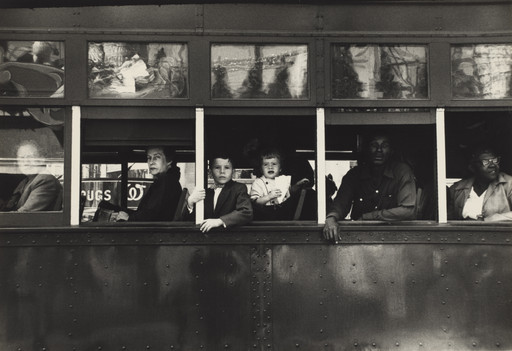
For example, the cover of the Grove edition uses Trolley—New Orleans, which Frank made in New Orleans in November 1955.10 MoMA’s gallery label describes the book as a portrait of a postwar society at odds with itself, full of American flags yet divided by segregation and politics.
Les Américains: The French First Edition
Delpire released Les Américains in November 1958 as number five in his Encyclopédie essentielle series. First, it held 83 photographs, printed as sheet-fed gravures by Draeger Frères, and it carried texts chosen by the poet Alain Bosquet. In addition, these texts were mostly critical of the United States and ran on the facing pages. Before the release, Draeger Frères printed the book on May 15, 1958. Later, an Italian edition, Gli Americani, followed in 1959 from Il Saggiatore, edited by Raffaele Crovi and Bosquet, with the same plates and added Italian texts.11
How Grove Press and Kerouac Shaped the American Edition
First, Frank met Jack Kerouac in New York in early September 1957, showed him the maquette and asked for an introduction. Kerouac finished a first draft in early October. Then Frank asked for a longer text, and Kerouac reluctantly wrote two more versions. After that, in late fall 1958, Barney Rosset of Grove Press agreed to publish the book in the United States using the Draeger Frères reproductions. However, Frank won two conditions: each photograph would face a blank page, and Kerouac’s introduction would replace the French texts.12

Kerouac’s introduction contains one often-quoted line, in which he says that after seeing the pictures you no longer know whether “a jukebox is sadder than a coffin.” The Grove edition also used Trolley—New Orleans on the cover and a back-cover design by the painter Alfred Leslie. Meanwhile, Frank was already turning to film, as the next sections show.
Early Reception of The Americans by Robert Frank
However, reviews of the Grove edition were mostly negative. According to the chronology, the May issue of Popular Photography ran seven reviews, and only one admired the book without reservation.13 By contrast, reviews of the 1969 Aperture printing were nearly all positive.
Before the book appeared, Frank had already shown the work in magazines: U.S. Camera Annual 1958, published in December 1957, ran 38 of his Guggenheim photographs, fifteen of them not in the book, with texts by Evans and Frank, and Pageant ran 21 in April 1958.14
Editions of Robert Frank’s The Americans, 1958 to 2008
Frank changed the book more than once. The table lists the main editions, drawing on the chronology.15
| Year | Publisher | What changed |
|---|---|---|
| 1958 | Delpire, Paris | 83 photographs; Draeger Frères gravure; texts chosen by Bosquet |
| 1959 | Il Saggiatore, Italy | Same plates; Italian texts added |
| 1959 to 1960 | Grove Press, New York | Kerouac’s introduction; each photograph faces a blank page |
| 1968 | Aperture and MoMA | Expanded second edition; many images recropped with printer Sid Kaplan; a different negative for Luncheonette—Butte, Montana; a “Continuation” section from Frank’s first four films; lighter reproductions; text by John Szarkowski on the back cover |
| 1969 | Aperture and Grossman | Hardcover and softcover; cropping similar but not identical; duotones with more contrast |
| December 1978 | Aperture (England: Gordon Fraser Gallery) | Variant of Assembly line—Detroit; “Continuation” dropped; three frames added after plate 83 |
| 1985 | Delpire | Michel Deguy’s French translation of Kerouac’s introduction; variants for plates 27 and 50; original negative for plate 41 |
| 2008 | Steidl and National Gallery of Art | Fiftieth-anniversary edition with the 1958 and 1959 trim, ending at plate 83 |
In fact, Frank complained about the printing and binding of the 1968 edition. John Szarkowski, who wrote the back-cover text, later curated Mirrors and Windows at MoMA in 1978.
Pull My Daisy: Robert Frank Moves From The Americans to Film
Frank started filming in the summer of 1958 and photographed from New York bus windows, calling it his last personal project in still photography. Then, from January to April 1959, he worked with Alfred Leslie on Pull My Daisy, a 28-minute film based on Kerouac’s The Beat Generation. In addition, Kerouac narrated it, and Allen Ginsberg, Gregory Corso, Peter Orlovsky, Delphine Seyrig and Larry Rivers appear in it. The film was released on November 11, 1959, and entered the National Film Registry in 1996.16 As a result, Frank’s attention moved from the still image to moving pictures just as the book reached readers.
Looking In: The 2009 Exhibition on The Americans by Robert Frank
The National Gallery of Art in Washington marked the fiftieth anniversary of the American edition with Looking In: Robert Frank’s The Americans. The show ran from January 18 to April 26, 2009, under the curator Sarah Greenough. Overall, it presented some 150 photographs, 28 contact sheets, 17 books and 15 documents. In addition, original prints of all 83 photographs were on view, and collages of Frank’s work prints, designed by the curators with his consent, showed his method. Finally, a last section, Destroying Americans, included a short film by Frank about the physical destruction of the book.
The gallery reports an attendance of 114,564, and the show then went to the San Francisco Museum of Modern Art and the Metropolitan Museum of Art in New York.17

The catalogue, written by Greenough with Stuart Alexander and others, appeared with Steidl in 2009 as an expanded edition.
What Scholars Have Written About Robert Frank’s The Americans
Writing on the book is vast, so we list only items whose records we checked in Crossref, and we read most of them at the abstract level only. First, David Harris reviewed the Looking In exhibition and its publications in Photography and Culture in 2011. Second, Weena Perry discussed the Metropolitan Museum presentation in Afterimage in 2010. Third, Dietschy studied remakes, variations and acts of iconoclasm that followed the book, including Mishka Henner’s version, in photographies in 2020. Finally, Mutlu read Frank’s America through the concept of heterotopia in 2025.18
Frequently Asked Questions About The Americans by Robert Frank
How many photographs are in The Americans by Robert Frank?
The first French and American editions contain 83. The 1968 edition added a “Continuation” section, which Frank dropped in 1978; the 1978 edition adds three frames after plate 83.
When was The Americans published?
Delpire published Les Américains in Paris in November 1958. Grove then released the American edition on January 15, 1960, although MoMA dates it to 1959.
How long did Frank travel for the book?
He traveled in stages from late June 1955 until May 1956 and was back in New York by early June 1956. In addition, the Guggenheim fellowship ran for two years.
Who wrote the introduction?
Kerouac wrote the introduction to the American edition. The French edition carried texts chosen by Bosquet instead.
Where can I see the original prints?
The National Gallery of Art holds the Robert Frank Collection, including negatives, contact sheets and work prints. In addition, MoMA holds Trolley—New Orleans and lists it as not on view at the time of writing.
Further Reading
- Sarah Greenough, Looking In: Robert Frank’s The Americans, Washington: National Gallery of Art and Steidl, 2009.
- National Gallery of Art, chronology of Robert Frank (archived).
- National Gallery of Art, Looking In exhibition page.
- MoMA, Trolley—New Orleans, with the museum’s gallery label.
- For the exhibition culture of the same decade, see our article on The Family of Man.
Sources and Limits for The Americans by Robert Frank
Sources used for The Americans by Robert Frank
Almost all dates, counts and routes come from the National Gallery of Art’s chronology of Robert Frank, in an archived copy of May 2009 that runs from 1924 to 2008. In addition, the exhibition facts come from the gallery’s page for Looking In, and the details of Trolley—New Orleans from MoMA. Furthermore, we found the scholarly items through database searches and checked each record in Crossref. Finally, the portrait and the scroll photograph come from Wikimedia Commons under the licences stated in their captions.
Limits of what we could verify
First, the chronology is an institutional text, and we did not check it against Frank’s own letters or the Guggenheim file. We could not find the year of the Popular Photography May issue or the origin of the famous “blur” line, so we leave the line out. We also could not confirm the page of Kerouac’s sentence, the authors in Bosquet’s French texts, the print runs of the Delpire and Grove editions, or the camera and film Frank used on the trip. The chronology names a Leica from 1947 but does not say which camera made these pictures. In addition, MoMA gives 1959 for the American edition while the chronology gives January 1960. Furthermore, we have not analyzed the sequence plate by plate. Most scholarly items were read at the abstract level or by title only, and the Harris and Perry articles by title only.
- Dates and publishers: National Gallery of Art, chronology of Robert Frank (archived copy of May 2009). MoMA’s label for Trolley—New Orleans dates the American edition to 1959; we follow the chronology (late 1959, released January 1960).
- Birth, citizenship, arrival in New York, Brodovitch, the Cartier-Bresson exhibition and the Leica: NGA chronology (archived copy), entries for 1924 to 1947.
- Peru, Paris, Evans, Steichen, the 1951 Life contest and Delpire: NGA chronology (archived copy), entries for 1948 to 1953. The same source lists Steichen among the judges of the 1953 Popular Photography contest, where three Frank photographs won prizes.
- Jay, East River and Fortune commission: NGA chronology (archived copy), entries for July 1954, September 1954 and December 1954/January 1955.
- Application, referees, award and renewal: NGA chronology (archived copy), entries for October 1954, April 1955, March 1956 and April 1956.
- All routes, places and dates in this section: NGA chronology (archived copy), entries for 1955 and 1956. The chronology gives plate numbers for most places; we use them only in the table of key photographs.
- Both arrests: NGA chronology (archived copy), entries for summer and November 1955.
- Rolls, work prints and grouping by subject: NGA chronology (archived copy), entry for summer 1956. MoMA’s label for Trolley—New Orleans speaks of almost eight hundred rolls, which agrees with 767 to within rounding.
- Edit from 92 to 85 to 83 photographs: NGA chronology (archived copy), entries for 1957.
- Cover of the Grove edition: NGA chronology (archived copy), entry for late 1959. Date, medium, size and credit line: MoMA collection page. The chronology lists plates 18 and 19 as the New Orleans pictures, but it does not say which number the trolley picture carries, so we give no plate number.
- Les Américains and Gli Americani: NGA chronology (archived copy), entries for May 1958, November 1958 and 1959. The chronology does not list the authors Bosquet chose, so we do not name any.
- Meeting, drafts, Grove and the two conditions: NGA chronology (archived copy), entries for September and October 1957 and late fall 1958.
- Reviews: NGA chronology (archived copy), entry for late 1959. The chronology does not give the year of that May issue. A famous line about “blur” and “sloppiness” is often attributed to Popular Photography, but we could not trace its author, date or exact wording, so we do not quote it.
- U.S. Camera Annual 1958 and Pageant: NGA chronology (archived copy), entries for December 1957 and April 1958.
- All entries in the table: NGA chronology (archived copy), entries for 1958 to 2008. The chronology also lists later reprints (Cornerhouse and Scalo in 1993, for example) that we omit.
- Pull My Daisy, the bus-window photographs and the Registry: NGA chronology (archived copy), entries for 1958, 1959 and 1996.
- National Gallery of Art, Looking In exhibition page for dates, contents, curator, attendance and venues. The gallery lists the San Francisco dates as May 16 to August 23, 2009, and the Metropolitan Museum dates as September 22 to December 27, 2009. The Robert Frank Collection, including negatives, contact sheets and work prints for the book, entered the gallery in April 1990 (NGA chronology (archived copy)).
- Harris, Photography and Culture 4(1), 93–101, 2011, doi:10.2752/175145211x12899905861555 (title and record only). Perry, “Robert Frank and Two Babies,” Afterimage 37(5), 2–5, 2010, doi:10.1525/aft.2010.37.5.2 (title and record only). Dietschy, photographies 13(3), 297–322, 2020, doi:10.1080/17540763.2020.1774919 (abstract). Mutlu, European Journal of Media, Art & Photography 13(1), 74–83, 2025, doi:10.34135/ejmap-25-01-03 (abstract). All DOIs resolve in Crossref.