In the summer of 1978, the Museum of Modern Art unveiled an exhibition that would fundamentally reshape how we think about photographic intent. Mirrors and Windows: American Photography since 1960, curated by John Szarkowski, didn't just hang 200 photographs on gallery walls—it proposed a radical framework for understanding the medium itself. Was photography an instrument for exploring the external world, or was it primarily a tool for self-expression? The Mirrors and Windows 1978 exhibition argued that every photograph falls somewhere along this spectrum, from documentary objectivity to romantic subjectivity. And forty-five years later, we're still arguing about where to draw the line.
Running from July 26 to October 2, 1978, the exhibition arrived at a pivotal moment for American photography. The medium had finally secured its place in museum collections and art markets, but its identity remained contested.1 Documentary photographers claimed allegiance to truth and social engagement. Art photographers pursued personal vision and formal experimentation. Szarkowski's genius—or his folly, depending on whom you ask—was to suggest these weren't opposing camps but points on a continuum.
Szarkowski's Framework: Photography's Binary Spectrum
The central thesis of the Mirrors and Windows 1978 exhibition emerged from Szarkowski's catalogue essay, which opened with a deceptively simple proposition: "In the past decade a new generation of photographers has directed the documentary approach toward more personal ends. Their aim has been not to reform life, but to know it."2 He identified two fundamental impulses driving photographers since 1960: the desire to see the world as it is (windows) and the need to express one's interior life (mirrors).
But Szarkowski was too sophisticated to propose a simple dichotomy. He explicitly described these categories as "poles of an axis," acknowledging that "most of this work is not rigorously classifiable."3 A photograph could function as both mirror and window simultaneously—revealing the photographer's psyche while documenting external reality. The spectrum concept was crucial, yet it's often forgotten in subsequent discussions that reduce the theory to binary opposition.
Consider how Szarkowski positioned this framework within photography's evolving relationship to truth. By 1978, the documentary tradition that produced iconic Depression-era images had fractured into multiple approaches. The exhibition acknowledged this fragmentation while attempting to map its contours. Photographers weren't abandoning documentary's tools—they were redirecting them toward different ends.4
Inside the Exhibition: Structure, Selection, and Display
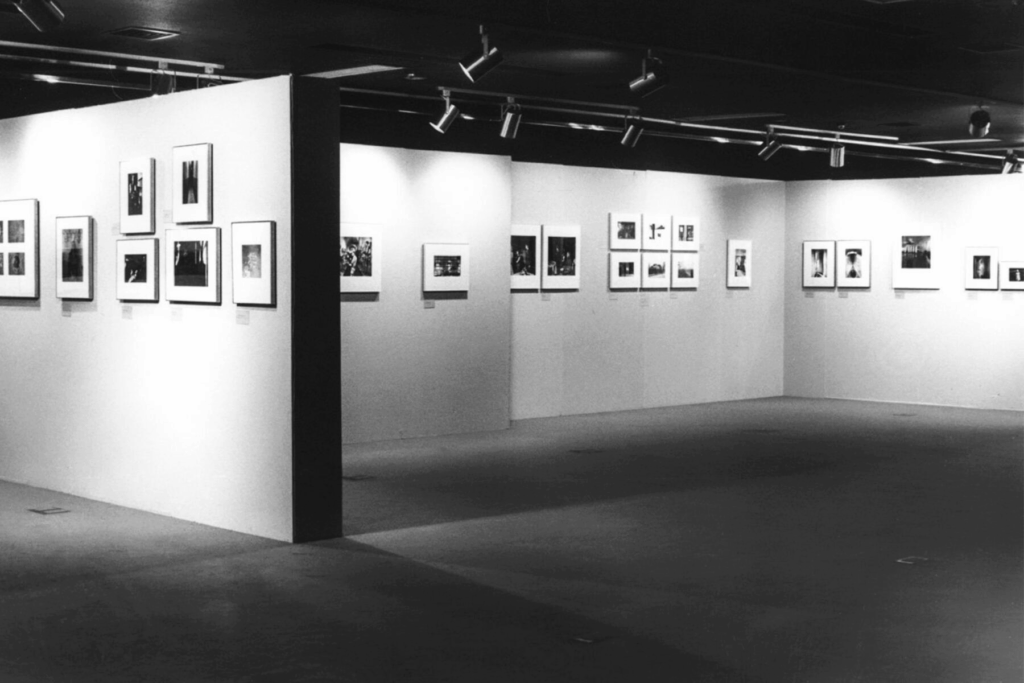
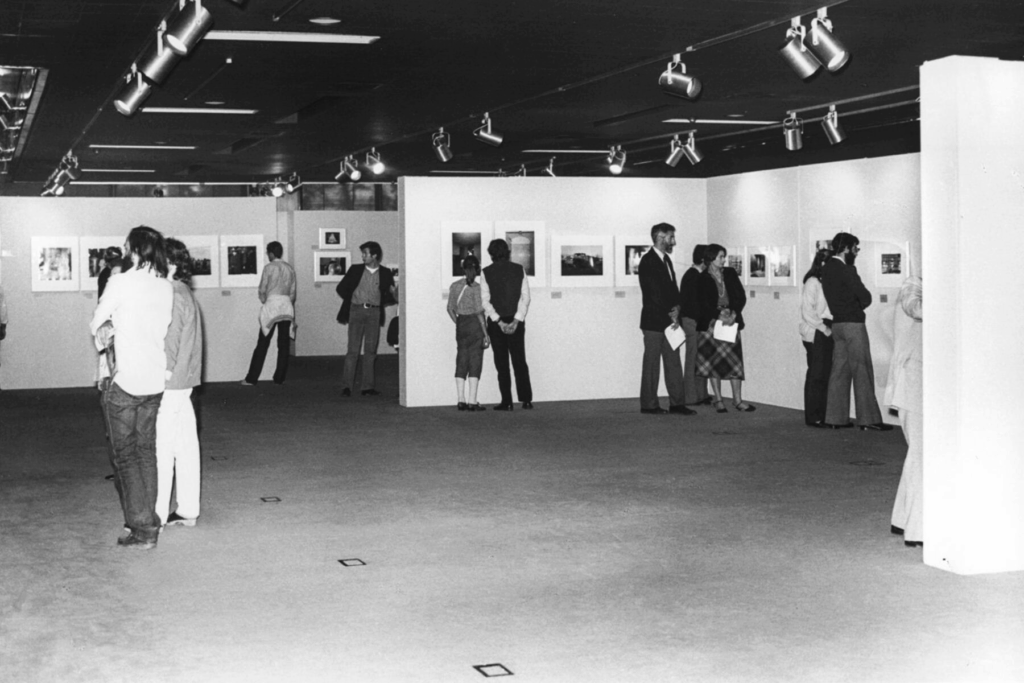
The physical exhibition at MoMA featured approximately 200 photographs by over 100 photographers, spanning from 1960 to 1978.5 Szarkowski organized the work not chronologically but according to his mirrors-windows spectrum, creating a visual argument through juxtaposition and sequence. The gallery layout itself performed the curatorial thesis—you could literally walk from windows to mirrors, experiencing the shift from outward observation to inward reflection.
The Windows: Documentary's New Directions
On the "windows" end of the spectrum, Szarkowski included photographers who maintained faith in the camera's capacity to reveal external truth, even as they complicated what that truth might look like. Robert Adams's stark landscapes of suburban sprawl documented environmental transformation with minimal editorializing. Lewis Baltz photographed the new industrial parks of Southern California with forensic detachment. These weren't the socially engaged documentarians of the 1930s—they weren't arguing for reform. They were simply looking, hard, at what America had become.6
Nicholas Nixon's intimate portraits and Emmet Gowin's family photographs occupied a middle position. They documented real people and places, but the photographer's relationship to his subjects—his subjective position—became inseparable from the image's meaning. Were these windows onto other lives or mirrors reflecting the photographer's emotional landscape? Szarkowski's answer: yes.
The Mirrors: Romantic Self-Expression
At the mirrors extreme, photographers like Jerry Uelsmann created surreal composites in the darkroom, abandoning any pretense of documentary truth. Ralph Eugene Meatyard's masked figures in abandoned houses operated as psychological allegories rather than social documents. These photographers used the camera not to record what was there but to manifest what they imagined or felt.7
But the most fascinating photographers in the exhibition were those who troubled the categories. Lee Friedlander's street photographs documented real places and moments, yet they're so distinctively Friedlander—with their complex layering, reflections, and self-referential inclusion of the photographer's shadow—that they function as much as self-portraits as urban documents. Garry Winogrand's chaotic street scenes captured authentic moments but revealed more about Winogrand's restless, anxious vision of American life than about any objective reality.8
Szarkowski's Curatorial Vision: Context and Methodology
By 1978, John Szarkowski had spent sixteen years building MoMA's photography program into the most influential in the world. His curatorial approach combined formalist analysis—attention to composition, tone, and visual structure—with historical contextualization. The Mirrors and Windows 1978 exhibition represented the culmination of his thinking about contemporary American photography, following landmark shows like The Photographer's Eye (1964), which established a modernist vocabulary for discussing photographs, and New Documents (1967), which introduced Diane Arbus, Lee Friedlander, and Garry Winogrand to wider audiences.9
What distinguished Szarkowski's methodology was his insistence on looking closely at individual photographs rather than privileging photographers' stated intentions or social contexts. He believed the photograph itself—its formal properties and visual intelligence—should guide interpretation. This formalist approach had advantages: it elevated photography to the status of other visual arts, which were similarly analyzed for compositional sophistication. But it also had blind spots, particularly regarding the social and political dimensions of photographic practice.10
The selection criteria for Mirrors and Windows reflected Szarkowski's particular vision of photographic excellence. He favored work that demonstrated visual intelligence, formal sophistication, and what he called "photographic seeing"—an understanding of the medium's specific properties and possibilities. This meant certain types of photography were systematically excluded or marginalized: overtly political work, commercial photography, and much work by women and photographers of color.11
Critical Reception: Debates and Controversies
The critical response to the Mirrors and Windows 1978 exhibition was immediate and divided. Some reviewers praised Szarkowski's ambitious attempt to map contemporary photography's terrain. Others attacked the framework as reductive, ahistorical, or ideologically suspect. The debate played out most visibly in Aperture magazine, which published a critical response titled "Mirrors and Windows: Messages From MoMA" that questioned both the exhibition's premises and its exclusions.12
One major criticism centered on the framework's implied hierarchy. By positioning "mirrors" as representing a "new generation" pursuing "more personal ends," Szarkowski seemed to suggest that subjective, artistic photography represented an evolution beyond traditional documentary. Critics argued this devalued socially engaged photography precisely when political documentary work—covering civil rights, Vietnam, environmental destruction—remained urgently necessary.13
Others questioned whether the binary itself—even conceived as a spectrum—could adequately describe photographic practice. Don't all photographs simultaneously reflect their makers and depict external reality? Isn't the distinction between subjective and objective vision philosophically naïve? These critiques pointed toward postmodern theories that would soon dominate photography criticism, emphasizing how all images are constructed, all seeing is positioned, and claims to objectivity mask particular viewpoints.14
Yet some photographers appreciated the framework's flexibility. It acknowledged that documentary and artistic impulses could coexist, that a photograph could reveal both world and self. For practitioners trying to navigate between art photography's increasing market value and documentary's social commitments, the spectrum offered conceptual breathing room.15
The Catalogue: A Seminal Text
The exhibition catalogue, published by the Museum of Modern Art in association with New York Graphic Society, has arguably had more lasting influence than the exhibition itself. The book features Szarkowski's extended essay explaining the mirrors-windows framework, along with reproductions of all 200 photographs from the exhibition.16 The essay's clarity and the book's comprehensive scope made it a standard text in photography programs, where it continues to be assigned decades later.
What makes the catalogue enduringly valuable isn't just the theoretical framework but Szarkowski's close readings of individual photographs. He demonstrates how to look at photographic work with attention to visual structure, tonal relationships, and the specific ways cameras see differently than human vision. This pedagogical dimension—teaching viewers how to look—may be the book's most significant contribution.17
The book's organization mirrors the exhibition's structure, moving from windows to mirrors with careful transitions marking the spectrum's middle ground. This allows readers to experience Szarkowski's argument visually, seeing how photographs shift from external observation to internal expression. The sequencing itself makes a case for the framework's validity—or reveals its limitations, depending on your perspective.18
Featured Photographers: A Selective Canon
The roster of photographers in Mirrors and Windows reads like a who's who of 1960s and 1970s American photography, though with notable gaps. Diane Arbus, who had died in 1971, was represented by her unsettling portraits of social outsiders—work that complicated easy categorization as either mirror or window. Were her photographs of people with disabilities, circus performers, and suburban oddballs windows onto marginalized lives or mirrors reflecting Arbus's own sense of alienation?19
William Eggleston's color photographs of the American South represented a crucial inclusion. Eggleston had been controversial when MoMA gave him a solo exhibition in 1976—color photography was still considered aesthetically suspect by many critics. His inclusion in Mirrors and Windows helped legitimize color as a serious artistic medium.20 His work occupied an interesting position on the spectrum: ostensibly documentary (he photographed real places and things) but so distinctively stylized through color and composition that it revealed his particular way of seeing.
Other significant inclusions: Danny Lyon's intimate documentation of motorcycle clubs and prisons; Bruce Davidson's social landscapes; Tod Papageorge's street photography; and William Christenberry's Southern vernacular studies. The exhibition also featured lesser-known photographers who have since faded from the canon, a reminder that Szarkowski was attempting to survey a moment rather than anoint permanent masters.21
Legacy and Influence: How the Framework Endures
Nearly five decades after the Mirrors and Windows 1978 exhibition, Szarkowski's framework remains ubiquitous in photography education. Browse any photography program's curriculum and you'll likely find assignments asking students to create "mirror" and "window" photographs. The terminology has become so embedded that many photographers use it without knowing its origin.22
Why has this particular framework proven so durable? Partly because it's simple enough to grasp quickly but complex enough to reward deeper consideration. It provides a useful starting point for discussing photographic intention without being prescriptive about aesthetics or subject matter. Students can apply it to any photograph, from historical documentary work to contemporary smartphone photography.23
The exhibition's influence extended beyond education into curatorial practice and criticism. Subsequent photography exhibitions often implicitly or explicitly referenced Szarkowski's framework, either building on it or reacting against it. The vocabulary of mirrors and windows became part of how curators and critics discussed photographic work, providing a shared language for describing different approaches to the medium.24
However, the framework's limitations have become increasingly apparent. Its emphasis on individual authorship and artistic intention doesn't account well for collaborative practices, appropriation art, or algorithmic image-making. Its binary structure—even as a spectrum—struggles to describe work that deliberately refuses categorization. And its formalist approach can't adequately address questions about representation, power, and politics that have become central to contemporary photography discourse.25
Challenges and Critiques: What the Framework Obscures
The most serious critiques of Mirrors and Windows focus on what the framework excludes or obscures. By emphasizing individual vision and aesthetic sophistication, it depoliticizes photography—treating images primarily as art objects rather than as social documents with political implications. This was particularly problematic given the historical moment: 1978 was just three years after the end of the Vietnam War, in the midst of ongoing struggles for civil rights, women's liberation, and environmental protection. Yet the exhibition largely ignored photography's role in these movements.26
The framework also reinforces a problematic distinction between objective and subjective vision that philosophical and scientific research has thoroughly complicated. We now understand that all observation is positioned, all seeing is constructed through cultural frameworks and biological limitations. The idea that some photographs function as transparent windows onto reality while others reflect their makers' subjectivity ignores how all photographs do both simultaneously.27
Additionally, the mirrors-windows spectrum doesn't account for photographs' changing meanings across different contexts. A photograph might function as a window in one setting (a newspaper, a courtroom) and a mirror in another (a gallery, an artist's book). The framework treats photographs as having fixed, inherent meanings determined by authorial intent, ignoring how viewers and contexts actively produce meaning.28
Perhaps most significantly, the framework's emphasis on American photography from 1960-1978 reflected and reinforced cultural nationalism during the Cold War. By focusing exclusively on American work, Szarkowski implicitly positioned American photography as the center of photographic innovation, ignoring vibrant photographic practices in Europe, Latin America, Asia, and Africa.29 The exhibition participated in constructing a canon that privileged certain types of work and certain makers while marginalizing others.
Contemporary Relevance: Mirrors, Windows, and Digital Photography
How does Szarkowski's framework hold up in the age of digital photography, social media, and AI-generated images? In some ways, the mirrors-windows distinction has become more relevant. Instagram and other platforms are simultaneously windows onto billions of lives and mirrors reflecting users' carefully curated self-presentations. Every selfie is both document and performance, both window and mirror.30
Yet digital technologies also challenge the framework in fundamental ways. When photographs can be seamlessly manipulated, when AI can generate photorealistic images that document nothing, when computational photography combines multiple exposures automatically, the distinction between recording reality and creating fiction becomes meaningless. The window no longer opens onto an external world—it's a screen displaying algorithmically processed data.31
Contemporary photography practices often deliberately blur or reject the mirrors-windows distinction. Photographers working with appropriation, collage, or conceptual strategies aren't interested in either documenting external reality or expressing personal vision—they're investigating how images circulate, how meaning is constructed, how photography itself functions as a system. The framework simply doesn't have vocabulary for this work.32
Still, for teaching basic photographic literacy—helping people understand different approaches to making images—the framework retains pedagogical value. It provides beginners with a conceptual tool for thinking about intention and approach. The problem arises when it's treated as comprehensive theory rather than useful simplification.33
Conclusion: A Framework's Enduring Questions
The Mirrors and Windows 1978 exhibition crystallized questions about photographic practice that remain unresolved: What is photography for? Should it document external reality or express internal vision? Can it do both simultaneously? These questions don't have definitive answers—they're productive tensions that generate creative work. Szarkowski's achievement wasn't solving these questions but articulating them clearly and providing a framework for ongoing discussion.
The exhibition's limitations are real and significant. Its formalism, its American-centrism, its gender and racial blind spots, its depoliticization of documentary practice—these aren't minor flaws but fundamental problems that reflect the institutional and ideological context of its creation. Yet acknowledging these limitations doesn't negate the framework's usefulness as one tool among many for thinking about photographic practice.
What's most valuable about Mirrors and Windows may be what it teaches about looking closely at photographs. Szarkowski's insistence on careful visual analysis, his attention to how photographs work as images rather than just as evidence or illustration, remains a crucial skill. Whether you're examining portrait photography, cultural documentation, or atmospheric imagery, the practice of sustained looking that Szarkowski modeled remains essential.
The exhibition reminds us that curatorial frameworks aren't neutral—they actively shape how we see and understand photographic work. Every exhibition makes arguments about what matters, what counts as significant, whose vision deserves attention. Being conscious of these frameworks, questioning their assumptions, recognizing their limitations—that's the critical awareness Mirrors and Windows ultimately demands. Not acceptance of its categories, but engagement with the questions it raises about how we make and interpret photographs.
Frequently Asked Questions
What was the main concept behind the Mirrors and Windows 1978 exhibition?
The exhibition proposed that photographs fall along a spectrum between two poles: "mirrors" (subjective, romantic, self-expressive) and "windows" (objective, realist, documentary). John Szarkowski argued that while most photographs contain elements of both, understanding this spectrum helps clarify different photographic intentions and approaches. The framework wasn't meant as a rigid binary but as a way to map the diverse territory of contemporary American photography.34
Which photographers were featured in Mirrors and Windows?
The exhibition included approximately 200 photographs by over 100 photographers. Major figures included Diane Arbus, Lee Friedlander, Garry Winogrand, William Eggleston, Robert Adams, Lewis Baltz, Danny Lyon, Nicholas Nixon, Emmet Gowin, Jerry Uelsmann, and Ralph Eugene Meatyard. The selection represented a cross-section of American photography from 1960-1978, though it was criticized for underrepresenting women and photographers of color.35
How was the Mirrors and Windows exhibition received by critics?
Critical reception was mixed. Some praised Szarkowski's ambitious attempt to map contemporary photography's terrain and appreciated the framework's flexibility. Others attacked it as reductive, ahistorical, or ideologically problematic. Critics particularly questioned whether the framework depoliticized documentary practice and whether any binary (even conceived as a spectrum) could adequately describe photographic work. The debate played out prominently in photography journals like Aperture, which published critical responses challenging the exhibition's premises.36
Is the Mirrors and Windows catalogue still relevant today?
Yes, the catalogue remains widely used in photography education, though its relevance is contested. It provides a useful introduction to thinking about photographic intention and offers excellent examples of close visual analysis. However, contemporary photography practice has evolved beyond what the framework can adequately describe, particularly regarding digital photography, appropriation art, and politically engaged work. The catalogue is best understood as a historical document and pedagogical tool rather than comprehensive theory.37
How did Mirrors and Windows influence subsequent photography exhibitions?
The exhibition established a vocabulary and framework that subsequent curators and critics either built upon or reacted against. It influenced how photography exhibitions were organized, how photographic work was discussed in criticism, and what counted as significant in photography. The mirrors-windows terminology became embedded in photography discourse, appearing in exhibition catalogues, critical essays, and educational materials for decades afterward. However, later exhibitions also challenged its limitations, particularly its formalism and its failure to address political dimensions of photographic practice.38
What are the main criticisms of the mirrors-windows framework?
Critics argue that the framework: (1) creates an artificial binary that doesn't reflect how photographs actually function; (2) depoliticizes photography by emphasizing individual vision over social context; (3) reinforces a naïve distinction between objective and subjective vision; (4) underrepresents women and photographers of color; (5) treats photographs as having fixed meanings rather than acknowledging how contexts shape interpretation; and (6) reflects Cold War-era American cultural nationalism. These critiques don't necessarily invalidate the framework's pedagogical usefulness but highlight its significant limitations as comprehensive theory.39
- John Szarkowski had served as Director of Photography at MoMA since 1962, systematically building the case for photography as fine art through exhibitions like The Photographer's Eye (1964) and New Documents (1967).
- From the original exhibition catalogue published by the Museum of Modern Art and New York Graphic Society.
- Szarkowski's careful framing anticipated criticism that the framework was reductive, though critics would attack it on precisely these grounds anyway.
- This shift reflected broader cultural movements in the 1970s toward subjectivity, introspection, and questioning institutional narratives—a post-Vietnam, post-Watergate skepticism about objective truth claims.
- According to MoMA's press release for the exhibition.
- This shift from advocacy to observation marked a crucial transition in documentary practice, one that would define much conceptual photography of the following decades.
- The inclusion of manipulated photographs was significant—Szarkowski was acknowledging that "straight" photography wasn't the only legitimate approach, a position that marked a shift from his earlier orthodoxy.
- Winogrand famously said he photographed "to see what things look like photographed," a statement that collapses the mirror-window distinction entirely.
- Szarkowski's influence on photography cannot be overstated—he essentially defined what "art photography" meant for a generation, through both his exhibitions and his writing. His book Looking at Photographs remains a foundational text.
- Critics like Allan Sekula and Martha Rosler would soon challenge this formalist approach, arguing it depoliticized photography and obscured issues of power, representation, and ideology.
- The exhibition's demographics reflected MoMA's institutional biases—predominantly white, predominantly male, with a few token exceptions. This limitation would become increasingly controversial as feminist and postcolonial critiques gained traction in the 1980s.
- The Aperture critique focused particularly on the framework's apparent depoliticization of documentary practice and its failure to address photography's relationship to social power.
- This tension between aesthetic and political values in photography continues to this day, visible in debates about documentary photography's contemporary relevance.
- The rise of postmodern photography theory in the 1980s, particularly work influenced by Roland Barthes and Michel Foucault, would largely supersede Szarkowski's formalist approach.
- Photographers like Robert Adams explicitly embraced this middle position, producing work that was simultaneously formally rigorous and socially concerned.
- The catalogue was published in both hardcover and paperback editions, making it accessible to students and practitioners. It has been reprinted multiple times and remains in print today.
- Szarkowski's writing style combined accessible language with sophisticated visual analysis, making complex ideas about photography comprehensible to general audiences.
- Some critics noted that the sequencing imposed artificial distinctions on work that resisted such categorization, essentially creating the binary it claimed to describe.
- Arbus's work has generated endless debate about exploitation, empathy, and the ethics of representation—questions that the mirrors-windows framework couldn't adequately address.
- Eggleston's democratic vision—finding visual interest in mundane subjects like shopping carts and suburban interiors—influenced generations of subsequent photographers.
- Some photographers featured prominently in 1978 are now nearly forgotten, while others Szarkowski overlooked—particularly women and photographers of color—have been recovered by subsequent scholarship.
- As one photography education resource notes, the mirrors-windows distinction remains "one of the most useful frameworks for understanding photographic intent."
- The framework's flexibility is both its strength and weakness—it can be applied to almost anything, which raises questions about whether it actually explains much.
- Major photography exhibitions in the 1980s and 1990s frequently positioned themselves in relation to Szarkowski's ideas, whether embracing or challenging them.
- Contemporary approaches to post-documentary photography often explicitly reject the mirrors-windows framework as inadequate for describing hybrid practices.
- Feminist critics noted the exhibition's gender imbalance and its failure to address how photography participates in constructing gender, race, and class identities.
- Postmodern theory, particularly work by scholars like Roland Barthes, Susan Sontag, and John Tagg, fundamentally challenged the possibility of objective photographic representation.
- Reception theory and reader-response criticism, influential in literary studies, suggested that meaning is produced through the interaction between text and reader—a perspective that complicated Szarkowski's author-centered approach.
- This American-centrism was typical of MoMA's programming during this period, reflecting broader assumptions about American cultural leadership during the Cold War era.
- Social media has complicated traditional distinctions between public and private, documentary and artistic, authentic and performed—collapsing many of the categories Szarkowski's framework depends on.
- Computational photography in smartphones doesn't capture a moment but synthesizes multiple images and data points into a single frame, fundamentally changing what "taking a photograph" means.
- Artists like Sherrie Levine, Richard Prince, and more recently, those working with machine learning and datasets, require entirely different critical frameworks than mirrors and windows can provide.
- As with many pedagogical tools, mirrors and windows works well as an introduction but becomes limiting if it's the only framework students learn.
- Szarkowski explicitly stated in his catalogue essay that most work couldn't be "rigorously classified" into one category or the other, acknowledging the framework's limitations.
- The exhibition's demographics reflected institutional biases common in major museums during the 1970s, a limitation that subsequent scholarship and exhibitions have worked to address.
- These debates reflected broader tensions in 1970s photography between formalist and political approaches, between treating photography as fine art versus as social practice.
- Many photography programs still assign the text while also introducing students to more recent theoretical frameworks that address the mirrors-windows concept's limitations.
- Major exhibitions in the 1980s and 1990s often positioned themselves explicitly in relation to Szarkowski's ideas, either extending or critiquing his approach.
- Postmodern photography criticism, feminist theory, and postcolonial approaches have all challenged various aspects of Szarkowski's framework, leading to more nuanced understandings of photographic practice.