The AI photography debate produces plenty of quotable lines, but many of them circulate without a source. An earlier version of this page listed twelve “expert perspectives” that were really anonymous paraphrases, which the page attributed to “the photography community.” We removed them. Instead, this article presents six positions that we could trace to a named person or institution, and we give the date and the source for each.
In short, it replaces invented voices with documented ones. It also keeps direct quotations to a minimum, so that you can read the originals yourself.
The AI photography debate at a glance
| Who | Position | Date | Source |
|---|---|---|---|
| Fred Ritchin | AI threatens the photograph’s credibility as evidence | 1 March 2023 | Columbia Journalism Review |
| Boris Eldagsen | AI images and photography should not compete for the same prize | 18 April 2023 | ITV News report |
| Content Authenticity Initiative | Sign images at capture so their history can be checked | 26 October 2023 | CAI blog |
| World Press Photo | Generative AI is excluded from every contest category | 20 November 2023 | World Press Photo |
| Jonas Bendiksen | Easy manipulation tools fooled the profession | December 2021 (report) | Nieman Lab |
| US Copyright Office | Prompts alone do not earn copyright; human authorship does | 29 January 2025 | Law-firm summary (Sidley) |
Fred Ritchin: the credibility of the photograph
Fred Ritchin is a former New York Times photo editor and dean emeritus of the International Center of Photography School. In a March 2023 Q&A with the Columbia Journalism Review, he argued that AI can now generate realistic images of events that never happened. He warned, “We’re very close to destroying the credibility of the photograph.”
In addition, Ritchin raised the use of journalists’ photographs as training data without permission, and he feared that synthetic images could distort the historical record. Specifically, his proposed answers include clear labels for synthetic or manipulated images, added context such as captions, and stronger media literacy. Nevertheless, he saw limited value in clearly labelled AI imagery, for example to visualise future climate impacts.
Boris Eldagsen: an AI image wins a photography prize
In April 2023, Boris Eldagsen refused a Sony World Photography Awards prize after he revealed that AI had generated his winning picture, “Pseudomnesia: The Electrician.” According to the ITV report, he called himself a “cheeky monkey” who wanted to test whether competitions were ready for AI, and he concluded that they were not. He argued that AI images and photographs are different things and should not compete for the same award.
However, the organisers told a different story. The World Photography Organisation said Eldagsen had described the work beforehand as a “co-creation” with AI, and that it had judged the entry eligible for the creative category on that basis. Then, after his refusal, it removed him from the competition and said his statement revealed deliberate attempts to mislead it. Therefore, because the two accounts conflict, we cannot settle the dispute from the sources we read.
Content Credentials: provenance at capture
Santiago Lyon, head of advocacy and education at the Content Authenticity Initiative (CAI), described the response on the hardware side. On 26 October 2023, Leica launched the M11-P, which signs each photo with a digital signature at capture. The file stores metadata such as the camera model, the photographer’s identity and when and how the shot was taken, following the C2PA standard.
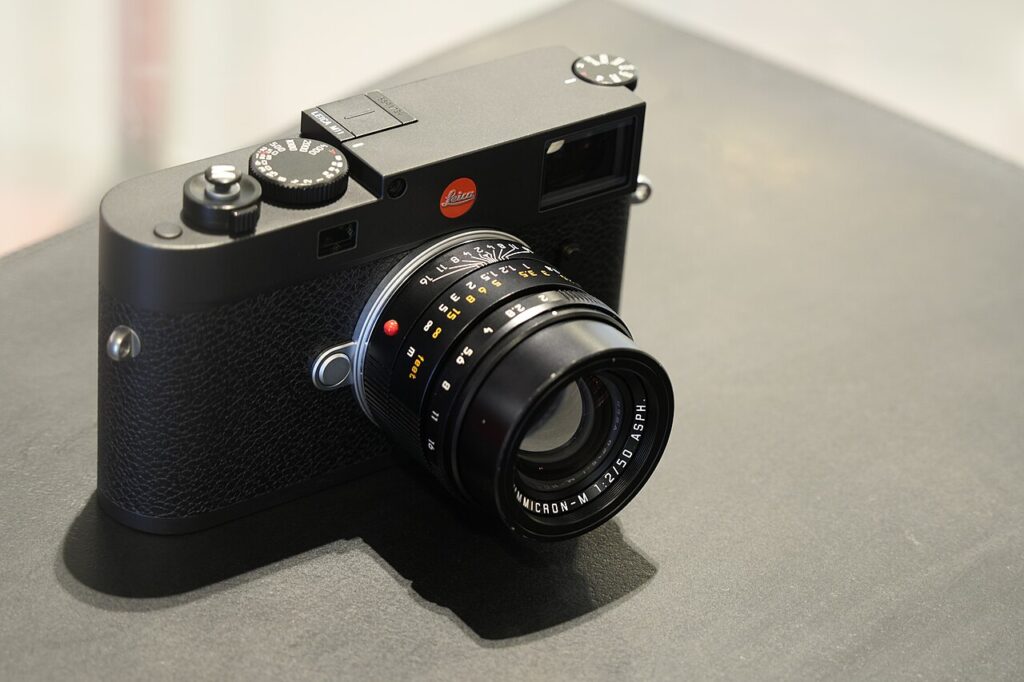
Edits in tools such as Adobe Photoshop add to the credentials. For example, a sky replacement would show up when someone inspects the file. Lyon’s own post presents the chain as strongest at capture. Moreover, verification only shows what the metadata records. It does not prove that a scene was accurately depicted, and its value depends on platforms and people checking it. That last point is our inference. The CAI, co-founded by Adobe in 2019, also has an interest in promoting the standard.
World Press Photo: rules in the AI photography debate
World Press Photo changed its contest rules in November 2023 after public feedback. The contest now prohibits generative fill and fully generated images in the Open Format category, and it had already banned generative AI in the Singles, Stories and Long-Term Projects categories. Moreover, the organisation tied the decision to its long-standing commitment to “accuracy and trustworthiness.”
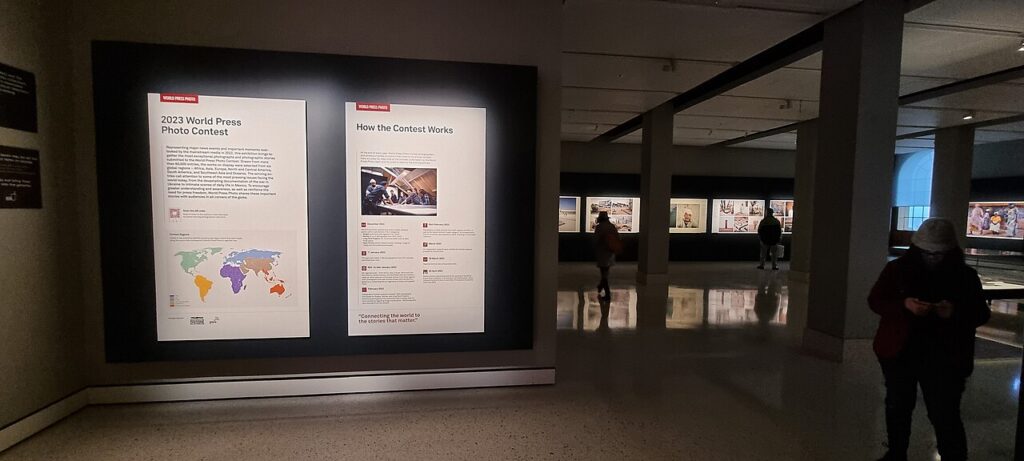
This case shows how institutions can answer the AI photography debate with rules. For a related story about a trusted image that failed newsroom standards, see our article on the Kate Photoshop fail.
Jonas Bendiksen: a warning before the AI boom
Jonas Bendiksen’s The Book of Veles (2021) looked like a documentary about disinformation in Veles, North Macedonia. According to Nieman Lab, the photographs used 3D software and an AI tool wrote all the text. The project won acclaim and a screening at the Visa pour l’Image festival. Then a fake social media account exposed it. Bendiksen said that if an average photographer could do this from tutorials, “then we are in trouble.” Consequently, the lesson, as the author puts it, is that scrutiny of images must become routine.
The US Copyright Office: authorship and prompts
On 29 January 2025, the US Copyright Office published the second part of its AI report, on copyrightability. According to a Sidley law-firm summary, the Office said that using AI as a tool does not by itself remove copyright. However, output that text prompts alone produce generally does not earn copyright under current law, because prompts give users too little control over the result.
Furthermore, the law still protects a person’s own creative input where it shows in the output, and a creative selection or arrangement of AI output can qualify. In addition, the Office said each case needs individual review, and it did not back new legislation for purely AI-generated content. This summary covers the United States only. See also our article on AI image copyright law. For the ethical side, see our article on AI photography ethics.
What the AI photography debate means for your practice
Finally, the following points are our reading of these sources, not claims by the people quoted.
- Label your work. Ritchin, Eldagsen and World Press Photo all point to clear labelling as the minimum.
- Keep records. Original files, edit histories and Content Credentials help prove how a picture was made.
- Know the contest rules. They differ, and World Press Photo bans generative AI outright.
- Document your human choices. In the US, the Copyright Office looks for human authorship.
For the philosophy behind these questions, see our essays on AI-generated images and on the collapse of photographic truth.
Sources and limits
- Columbia Journalism Review: Q&A with Fred Ritchin (1 March 2023)
- ITV News: artist refuses award (18 April 2023)
- Content Authenticity Initiative: Leica launches the first camera with Content Credentials (26 October 2023)
- World Press Photo: rules change on generative AI (updated 20 November 2023)
- Nieman Lab: manipulated media will fool you (December 2021)
- Sidley: US Copyright Office report on AI and copyrightability (7 February 2025)
We rewrote this article on 10 November 2026. Our research tools return summaries of web pages, so check quotations against the originals before you cite them. Also, we read none of the underlying documents directly, including the Copyright Office report itself, only the summaries listed above. The page URL still says “12 expert perspectives,” which no longer matches the content. The five illustrations on this page are either AI-generated, as their captions say, or Wikimedia Commons photographs.