The film photography revival is no longer a niche trend—it's a full-blown cultural movement reshaping how we think about image-making in 2025. Walk into any vintage camera shop today, and you'll witness something remarkable: shelves emptied of classic Nikon F3s and Canon AE-1s, young photographers eagerly discussing grain structure and pushing film, and prices that would make collectors from five years ago weep. This isn't nostalgia for nostalgia's sake; it's a deliberate rebellion against the instant, disposable nature of digital photography, and Gen Z is leading the charge with cameras their grandparents once used.
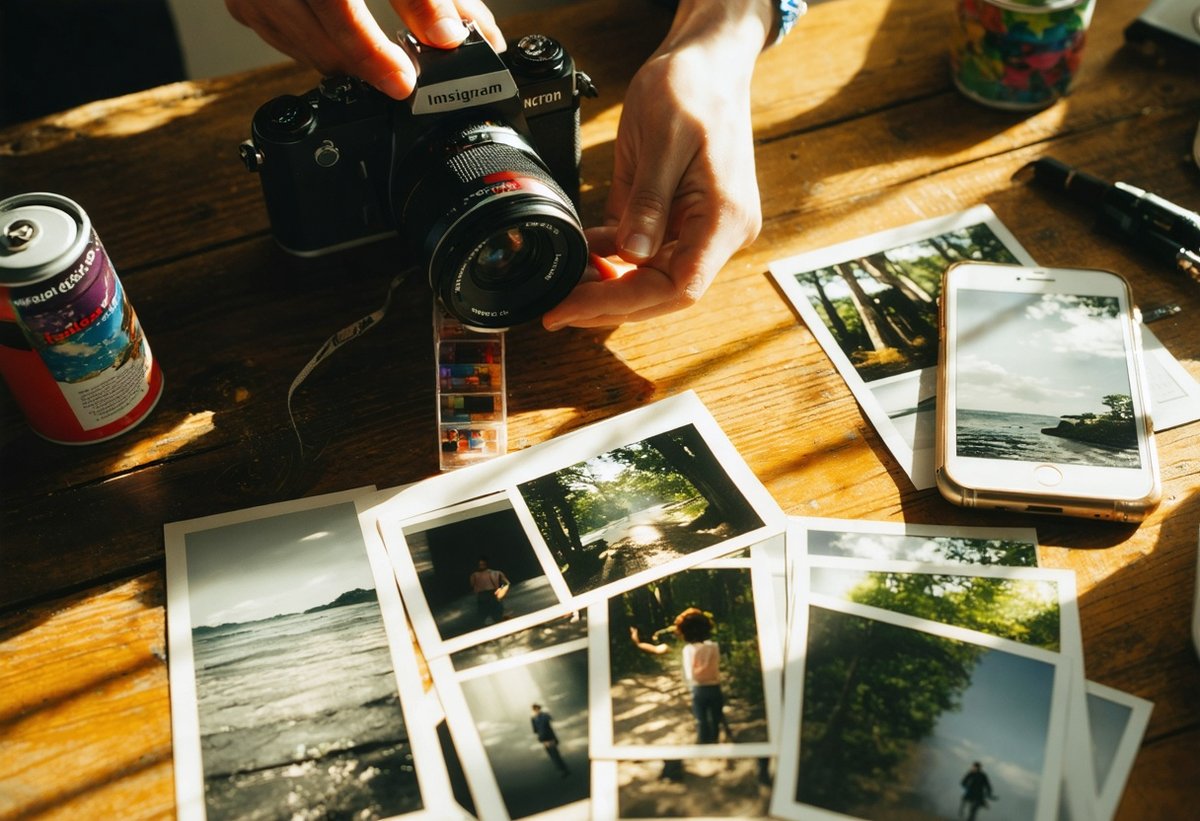
What started as a quiet undercurrent among photography purists has exploded into a viral phenomenon, with TikTok hashtags like #FilmTok accumulating billions of views and Instagram feeds flooded with grainy, perfectly imperfect 35mm shots. The film photography revival represents something deeper than aesthetic preference—it's about reclaiming intentionality, embracing unpredictability, and creating images that feel genuinely human in an increasingly AI-saturated visual landscape.
The Cultural Forces Driving the Film Photography Revival
Understanding why analog photography has surged in 2025 requires examining the perfect storm of cultural, technological, and psychological factors converging at this moment. The film photography revival isn't happening in isolation—it's part of a broader movement toward tangible, authentic experiences in our hyper-digital world.
Gen Z's Quest for Authenticity
Generation Z has grown up entirely in the digital age, yet they're the demographic most enthusiastically embracing analog photography in 2025. This paradox makes perfect sense when you consider their relationship with technology. Having witnessed the mental health impacts of infinite scrolling, algorithmic manipulation, and carefully curated digital personas, many young photographers are seeking something more genuine and grounded.
Film photography offers what digital cannot: limitation as liberation. With only 36 exposures on a roll of 35mm film, every shot matters. There's no endless burst mode, no immediate deletion of "bad" photos, no AI enhancement smoothing away reality. This constraint forces photographers to slow down, observe carefully, and commit to their creative decisions—a refreshing antidote to digital photography's abundance.1
The aesthetic appeal of the cinematic film look aesthetic has become a visual language for authenticity on social media. Grain, light leaks, and imperfect exposures signal to viewers that an image is "real"—even as digital photographers scramble to replicate these characteristics through filters and presets.
Rebellion Against AI and Algorithmic Perfection
As AI photography tools become increasingly sophisticated, capable of generating photorealistic images from text prompts and "perfecting" photos with algorithmic precision, film photography stands as a defiant counterpoint. The film photography revival represents a conscious choice to embrace human imperfection, chemical randomness, and the happy accidents that make analog images feel alive.
Where AI smooths skin to porcelain perfection and removes every blemish, film captures texture, character, and truth. Where computational photography stacks multiple exposures to eliminate noise, film grain becomes a badge of honor. This isn't Luddism—many film photographers also work digitally—but rather a recognition that not everything should be optimized, algorithmically enhanced, or instantly shareable.
The Economics of Analog Photography in 2025: Supply Shortages and Soaring Prices
The explosive popularity of the film photography revival has created unprecedented market dynamics that would have seemed impossible just five years ago. What was once considered obsolete technology has become a premium product with supply struggling to meet surging demand.
The Vintage Camera Gold Rush
Vintage camera buying has transformed from a niche hobby into a competitive marketplace where desirable models disappear within hours of listing. Classic cameras that sold for $50-100 in 2019 now command $300-500 or more, with pristine examples fetching even higher prices. The Olympus Mju II, once an overlooked point-and-shoot, regularly sells for over $400—more than it cost new in the 1990s.
Professional-grade SLRs have seen similar appreciation. The Canon AE-1 Program, Nikon FM2, and Pentax K1000—workhorses of photography students for decades—are now prized possessions traded at premium prices. Even medium format cameras like the Mamiya RB67 and Hasselblad 500 series, once affordable alternatives to digital medium format systems, have seen dramatic price increases.2
This pricing pressure has pushed many photographers toward more obscure brands and models, creating opportunities to discover hidden gems. Russian cameras like the Zenit series, East German Prakticas, and lesser-known Japanese manufacturers offer quality optics and mechanical reliability at more accessible price points—at least for now.
Film Stock Scarcity and Price Inflation
The film stock situation presents even greater challenges for the film photography revival. Kodak, Fujifilm, and Ilford have all struggled to scale production quickly enough to meet demand, resulting in periodic shortages of popular emulsions. Kodak Portra 400, the gold standard for color negative film, frequently sells out within hours of restocking. Fujifilm's discontinuation of several slide film stocks has created panic buying and hoarding behavior.
Prices reflect this supply-demand imbalance. A 36-exposure roll of professional color negative film that cost $8-10 in 2019 now typically runs $15-20, with processing and scanning adding another $15-25. Shooting a single roll of film—36 images—can easily cost $35-45 when all expenses are included, making analog photography in 2025 a significant investment.3
This economic reality has paradoxically strengthened the film photography revival rather than hindering it. The cost and scarcity reinforce the intentionality that draws people to film in the first place. Each frame becomes more precious when it represents a dollar or more in materials and processing.
Best Film Cameras for Getting Started in 2025
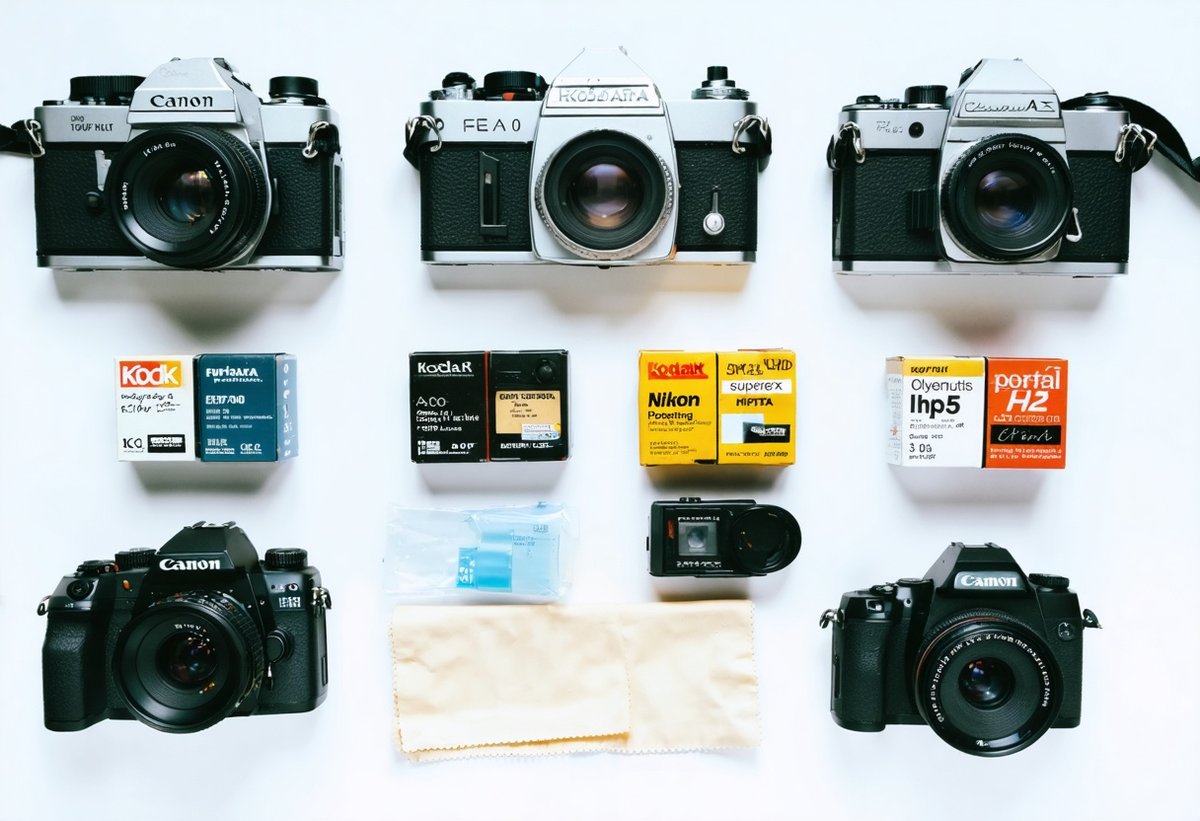
Choosing your first film camera can feel overwhelming given the vast array of options spanning decades of photographic technology. The best film cameras for beginners balance affordability, reliability, availability of repair parts, and ease of use while still offering room to grow as your skills develop.
35mm SLR Cameras: The Foundation of Film Photography
Single-lens reflex cameras remain the most versatile entry point into analog photography. Through-the-lens viewing means you see exactly what the lens sees, and interchangeable lenses allow you to expand your creative toolkit over time. For those serious about mastering the 35mm photography guide fundamentals, these cameras are ideal teachers.
Canon AE-1 Program: Despite inflated prices, this camera remains popular for good reason. Its Program mode allows beginners to start with automatic exposure while manual controls enable learning advanced techniques. The Canon FD lens system offers excellent optics at reasonable prices, and the camera's electronic shutter provides accurate exposures across a wide range of conditions.
Pentax K1000: The ultimate mechanical simplicity, this fully manual camera has taught generations of photographers the exposure triangle. With no batteries required except for the light meter, it's remarkably reliable. The Pentax K-mount lens system is extensive and affordable, with many excellent vintage options available.
Nikon FM2: A professional-grade mechanical camera that's virtually indestructible. The FM2's 1/4000 second top shutter speed and flash sync up to 1/200 make it more capable than many competitors. Nikon F-mount lenses from the manual focus era are legendary for their optical quality and build.
Minolta X-700: Often overlooked in favor of Canon and Nikon, Minolta SLRs offer exceptional value. The X-700 features program and aperture-priority modes while maintaining full manual control. Minolta's Rokkor lenses rival any manufacturer for sharpness and color rendering, often at lower prices than equivalent Canon or Nikon glass.
Point-and-Shoot Cameras: Compact Convenience
For photographers prioritizing portability and spontaneity, compact film cameras offer fixed lenses, automatic exposure, and built-in flash in pocketable packages. While premium point-and-shoots have become absurdly expensive, many excellent alternatives remain accessible.
Olympus Trip 35: This mechanical marvel requires no batteries for shooting, using a selenium light meter for exposure automation. Its compact size and sharp 40mm f/2.8 lens make it perfect for street photography adventures. Prices remain relatively reasonable compared to electronic point-and-shoots.
Canon Sure Shot series: Rather than chasing the hyped Olympus Mju II, consider Canon's extensive Sure Shot line. Models like the Sure Shot Max offer excellent optics, reliable autofocus, and practical features at a fraction of the cost of trendier alternatives.
Nikon L35AF: One of the first autofocus compact cameras, the L35AF features a sharp 35mm f/2.8 lens and straightforward operation. Its understated appearance and solid construction have kept it under the radar of hype-driven price inflation.
Medium Format: Expanding Your Vision
For photographers ready to explore beyond 35mm, medium format film offers dramatically larger negatives with superior detail, tonality, and that distinctive shallow depth-of-field look. While more expensive and slower to operate, medium format cameras provide image quality that rivals or exceeds modern digital systems.
Mamiya RB67: This modular system camera offers professional features including interchangeable film backs, rotating backs for easy orientation changes, and exceptional lenses. While heavy and entirely manual, the RB67 produces stunning 6x7cm negatives with incredible detail.
Yashica Mat 124G: Twin-lens reflex cameras offer a unique shooting experience with waist-level viewing. The Yashica Mat 124G provides excellent optics, built-in light meter, and the classic 6x6cm square format at prices lower than comparable Rolleiflex cameras.
Bronica ETR series: Modular 645 format cameras that offer a good balance between image quality and portability. The ETR system's interchangeable backs, viewfinders, and extensive lens selection provide professional capability at more accessible prices than Hasselblad systems.4
Mastering the 35mm Photography Guide: Technical Foundations
The film photography revival has introduced a new generation to the fundamental principles of exposure, composition, and light that digital automation often obscures. Understanding these technical foundations transforms you from someone who takes pictures into a photographer who creates images.
The Exposure Triangle: Aperture, Shutter Speed, and ISO
Every photograph results from three variables working in concert: aperture controls how much light enters through the lens, shutter speed determines how long that light exposes the film, and ISO (film speed) indicates the film's sensitivity to light. Mastering their relationship is essential for any 35mm photography guide.
Aperture is measured in f-stops (f/1.4, f/2, f/2.8, f/4, f/5.6, f/8, f/11, f/16, f/22). Smaller numbers mean larger openings and more light. Aperture also controls depth of field—the zone of acceptable sharpness in your image. Wide apertures (f/1.4-f/2.8) create shallow depth of field with blurred backgrounds, perfect for isolating subjects. Narrow apertures (f/8-f/16) maximize sharpness throughout the frame, ideal for landscapes.
Shutter speed ranges from several seconds to 1/4000 of a second or faster. Slow shutter speeds capture motion blur and allow shooting in low light but require steady hands or tripods. Fast shutter speeds freeze action but demand more light. The reciprocal rule suggests using shutter speeds faster than your focal length to avoid camera shake—1/60 second for a 50mm lens, 1/125 for a 100mm lens.
ISO/Film speed is fixed once you load a roll of film. ISO 100-200 films offer finest grain and maximum detail but require abundant light. ISO 400 provides versatility for varying conditions. ISO 800-3200 films enable shooting in low light but with increasingly visible grain. Unlike digital, you cannot change ISO mid-roll, so choose film speed based on your shooting conditions.5
Metering and Exposure Strategy
Film's exposure latitude—its ability to capture detail in highlights and shadows—differs significantly from digital sensors. Color negative film is remarkably forgiving, typically handling 2-3 stops of overexposure gracefully while recovering shadow detail from slight underexposure. Slide film and black-and-white film have narrower latitude requiring more precise exposure.
Most film photographers follow the principle "expose for the shadows, develop for the highlights" with negative film. This means metering for the darkest areas where you want detail, accepting that highlights may be bright. For scenes with extreme contrast, consider the zone system developed by Ansel Adams, which divides the tonal range into eleven zones from pure black to pure white.
In-camera light meters work well for average scenes but can be fooled by very bright or dark subjects. Learn to recognize situations requiring exposure compensation: snow scenes need +1 to +2 stops to avoid gray snow, while dark subjects may need -1 stop to preserve detail. Many photographers bracket important shots, taking one frame at the metered exposure plus frames at +1 and -1 stop for insurance.
Focus Techniques for Sharp Images
Manual focus requires practice but offers precision that autofocus cannot match in many situations. SLR cameras provide bright viewfinders with focusing aids—split-image rangefinders or microprism collars that make achieving sharp focus intuitive once you develop the technique.
For stationary subjects, take your time confirming focus before releasing the shutter. For moving subjects, practice zone focusing: pre-focus at a specific distance, set a moderate aperture (f/8) for adequate depth of field, and release the shutter when your subject enters that zone. This technique is invaluable for street photography and spontaneous moments.
Hyperfocal distance focusing maximizes depth of field by focusing at a specific distance where everything from half that distance to infinity appears acceptably sharp. At f/8 with a 35mm lens, focusing at approximately 12 feet renders everything from 6 feet to infinity in focus—perfect for documentary work where you want maximum sharpness throughout the frame.
Film vs Digital Aesthetic: Understanding the Visual Difference
The film vs digital aesthetic debate extends beyond technical specifications to encompass the entire visual and emotional character of images. While digital cameras offer convenience and immediate results, film produces a distinctive look that digital photographers spend countless hours attempting to replicate through editing.
Grain Structure and Texture
Film grain results from the random distribution of silver halide crystals in the emulsion. This organic, three-dimensional structure creates texture that varies across the image based on exposure and development. Digital noise, by contrast, is electronic artifact—uniform, harsh, and distinctly artificial-looking, especially at high ISOs.
Different film stocks produce characteristic grain patterns that become part of their aesthetic signature. Kodak Tri-X's chunky, prominent grain conveys grit and immediacy. Ilford Delta 100's fine grain provides smooth tonality. Cinestill 800T's halation around bright lights creates dreamy, cinematic effects. These qualities cannot be perfectly simulated digitally because they result from physical chemistry, not algorithms.
Color Rendering and Tonal Response
Film's color science developed over decades of chemical engineering produces colors that feel natural and pleasing to human perception. Kodak Portra renders skin tones beautifully while maintaining accurate colors elsewhere. Fuji Velvia's saturated, punchy colors make landscapes pop. These characteristics result from how different dye layers respond to light across the spectrum.
Digital sensors capture light mathematically, applying color science through processing algorithms. While modern digital color is excellent, it lacks the subtle irregularities and organic quality of film. Digital colors can appear clinically perfect—which is sometimes exactly what you don't want. The film vs digital aesthetic difference is particularly noticeable in how each medium handles mixed lighting, shadow transitions, and subtle color shifts.
Highlight and Shadow Rolloff
Film's response curve produces graceful transitions from midtones to highlights and shadows. Highlights gradually compress rather than clipping abruptly, creating a forgiving, natural look even in high-contrast scenes. This "shoulder" in film's characteristic curve is one reason film can handle difficult lighting so well.
Digital sensors have improved dramatically but still tend toward more abrupt tonal transitions. Blown highlights in digital images contain no recoverable information, appearing as blank white areas. Film often retains subtle detail even in very bright areas. This difference is why wedding photographers who shoot film can capture white dresses in bright sunlight without losing texture and detail.6
The Imperfection Factor
Perhaps the most significant aspect of the film vs digital aesthetic debate is imperfection itself. Film cameras leak light, creating unexpected flares. Film scratches during processing, adding character. Dust on negatives creates spots. Colors shift based on storage, exposure, and development variables. These "flaws" make film images feel authentic, handmade, and human in ways that technically perfect digital images often don't.
The film photography revival embraces these imperfections as features, not bugs. Light leaks frame subjects with organic color washes. Grain adds texture and atmosphere. Slight color shifts create mood. In an era when AI can generate flawless synthetic images, film's imperfections become proof of reality—evidence that a human stood in a specific place at a specific time and captured something real.
Developing Film at Home: Reclaiming the Complete Process
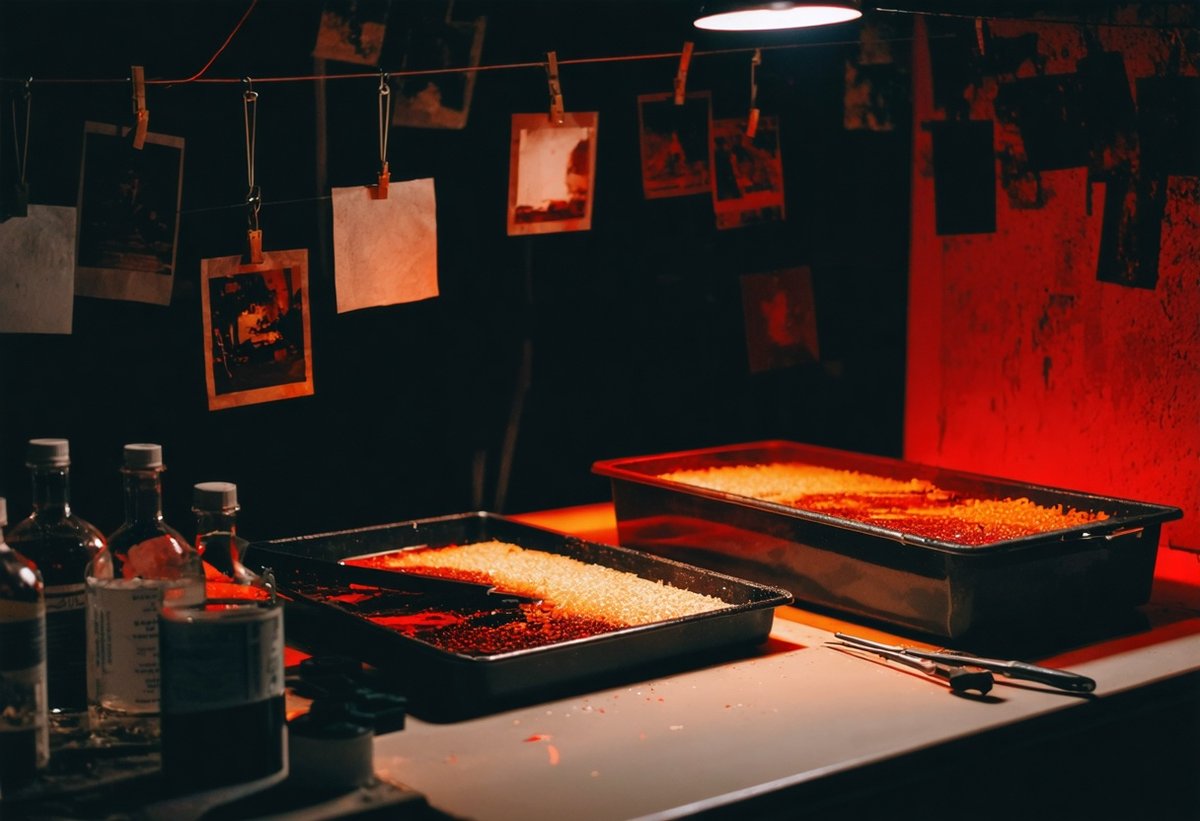
One of the most empowering aspects of the film photography revival is the growing community of photographers developing film at home. What once seemed like arcane darkroom magic is actually a straightforward process requiring modest investment and minimal space. Developing your own film provides complete creative control, significant cost savings, and deep satisfaction.
Essential Equipment for Home Film Development
Starting developing film at home requires surprisingly little equipment, most of which remains affordable despite the analog revival. The core items include:
- Developing tank and reels: Stainless steel tanks (Hewes, Omega) are durable and easy to clean, while plastic tanks (Paterson, AP) are more affordable and beginner-friendly. Start with a tank that holds two 35mm reels or one 120 reel.
- Chemicals: Developer, stop bath (or water), and fixer are the essential three. Popular developers include Kodak D-76 and HC-110, Ilford ID-11 and Ilfosol, and Cinestill's C-41 kit for color negative film.
- Thermometer: Accurate temperature control is critical, especially for color development. Digital thermometers provide precision within 0.5°F.
- Graduates and storage bottles: Measure and store chemistry in labeled containers. Amber glass bottles protect chemistry from light degradation.
- Changing bag: Load film onto reels in complete darkness using this portable lightproof bag—no darkroom required.
- Timer: Precise timing ensures consistent results. Smartphone apps work perfectly.
- Film clips and drying space: Hang developed film to dry in a dust-free area.
Total startup investment typically ranges from $100-200, which you'll recoup after developing 10-15 rolls compared to lab processing costs.7
The Black-and-White Development Process
Black-and-white film development follows a straightforward sequence that becomes second nature with practice. The process for developing film at home typically takes 30-45 minutes from loading the tank to hanging the film to dry.
Step 1: Load the film onto the developing reel inside the changing bag or darkroom. This is the trickiest step initially but becomes easy with practice. Load a sacrificial roll of film in daylight repeatedly until you can do it confidently by feel alone.
Step 2: Pre-soak (optional but recommended) by filling the tank with water at working temperature for 1-2 minutes. This allows the film to swell evenly and can improve development uniformity.
Step 3: Develop by pouring developer into the tank and agitating according to your development scheme—typically 30 seconds of initial agitation, then 5-10 seconds every 30-60 seconds thereafter. Development time varies based on film, developer, dilution, and desired contrast, typically ranging from 5-15 minutes.
Step 4: Stop development by draining the developer and adding stop bath (or water) for 30-60 seconds with continuous agitation. This immediately halts development.
Step 5: Fix the image by adding fixer for the recommended time (typically 3-5 minutes) with regular agitation. Fixer makes the film permanent and stable in light. After fixing, you can open the tank and view your negatives.
Step 6: Wash thoroughly for 5-10 minutes in running water or through multiple water changes to remove all fixer residue, which would eventually damage the negatives.
Step 7: Final rinse with a drop of Photo-Flo or similar wetting agent prevents water spots during drying.
Step 8: Hang to dry in a dust-free area for 2-4 hours before cutting and storing in negative sleeves.
Color Negative Development at Home
Color negative (C-41) development at home has become increasingly popular as part of the film photography revival, with kits like Cinestill's C-41 simplifying the process. While more temperature-sensitive than black-and-white, color development is entirely manageable with attention to detail.
The C-41 process requires maintaining chemistry at 102°F (39°C) throughout development, demanding more careful temperature control than black-and-white. Water baths can maintain temperature, or you can work in a warm room and accept slight temperature drift. Many home developers find that results remain excellent even with temperatures varying by a degree or two.
The development sequence mirrors black-and-white: developer, bleach, fixer (or combined blix), wash, and stabilizer. Total time from pour to pour is typically 8-12 minutes. Color chemistry has limited reusability—most kits process 8-16 rolls before exhaustion—but developing at home still costs $2-3 per roll versus $12-15 at labs.
Scanning Your Negatives
After developing film at home, scanning transforms your negatives into digital files for sharing, editing, and printing. Options range from affordable to professional-grade:
Flatbed scanners like the Epson V600 or V850 provide good quality at reasonable prices ($200-700). Scanning time is slow—10-15 minutes per roll—but quality is excellent for prints up to 16x20 inches.
Dedicated film scanners like the Plustek OpticFilm series offer superior sharpness and detail for 35mm film. Discontinued models like the Nikon Coolscan series command high prices on the used market but deliver exceptional results.
DSLR/mirrorless scanning has become increasingly popular, using a digital camera to photograph backlit negatives. With proper equipment (macro lens, film holder, light source), this method provides excellent quality and speed. A complete setup costs $100-300 beyond the camera you already own.
Lab scanning remains an option if you develop at home but prefer professional scans. Many labs offer develop-only services, or you can send already-developed negatives for scanning at $5-10 per roll.
Exploring Creative Techniques in Analog Photography
The film photography revival has reignited interest in experimental techniques that push beyond conventional image-making. These creative approaches leverage film's chemical nature to produce effects impossible with digital photography, connecting contemporary photographers with alternative process traditions.
Film Soup and Chemical Manipulation
The film soup technique involves soaking exposed or unexposed film in various liquids—coffee, wine, bleach, vinegar, even household cleaners—before or after shooting. These chemical baths interact with the film emulsion, creating unpredictable color shifts, textures, and effects that make each frame unique.
Some photographers soup film before shooting to create consistent atmospheric effects across an entire roll. Others soup after shooting to transform specific images. The unpredictability is part of the appeal—you're collaborating with chemistry rather than controlling every variable. This embrace of chance and imperfection exemplifies the film vs digital aesthetic divide.
Double Exposure and Multiple Exposures
Many film cameras allow shooting multiple exposures on the same frame, layering images to create surreal, dreamlike compositions. Unlike digital multiple exposures created in post-processing, film double exposures blend images chemically on the emulsion, producing organic interactions between layers.
Successful multiple exposures typically require underexposing each frame to prevent overexposure of the combined image. For double exposures, shoot each frame at -1 stop (half the normal exposure). For triple exposures, use -1.5 stops per frame. Plan compositions where darker areas of one image will receive detail from subsequent exposures.
Cross-Processing and Pushing/Pulling Film
Cross-processing develops film in chemistry intended for a different film type—most commonly processing slide film (E-6) in color negative chemistry (C-41). This produces high-contrast images with shifted colors, typically toward cyan-green or magenta-red depending on the film stock. The technique was popular in fashion photography during the 1990s and has been revived as part of the analog photography 2025 aesthetic.
Pushing film means shooting at a higher ISO than the film's rated speed and compensating through extended development. Pulling is the opposite—shooting at lower ISO with reduced development. These techniques allow adapting to available light or creating specific aesthetic effects. Pushed film shows increased grain and contrast, perfect for gritty documentary work. Pulled film produces softer, more pastel tones.
Alternative Processes and Hybrid Techniques
The film photography revival has sparked renewed interest in 19th-century photographic processes. Cyanotype printing creates distinctive blue images using sunlight and simple chemistry. Lumen prints expose silver gelatin paper directly to sunlight without development, producing ethereal color effects. Liquid emulsion allows coating light-sensitive emulsion onto unconventional surfaces like wood, fabric, or found objects.
These alternative processes emphasize photography as craft and chemistry rather than pure technology. They slow down the image-making process even further than conventional film, demanding patience and embracing unpredictability. For photographers seeking unique aesthetics and hands-on engagement with materials, alternative processes offer endless creative possibilities.
Building Your Film Photography Practice: Tips for Success
Transitioning to or starting with film photography requires different habits and mindsets than digital photography. These practical strategies will help you avoid common pitfalls and accelerate your learning within the analog photography 2025 landscape.
Start with One Camera and One Film Stock
The temptation to acquire multiple cameras and experiment with every available film stock is strong, especially given the vintage camera buying frenzy. Resist this urge initially. Master one camera system until its operation becomes instinctive. Learn one film stock's characteristics—how it renders colors, handles highlights, responds to different lighting—until you can predict results before pressing the shutter.
This focused approach builds genuine expertise faster than constantly switching equipment and materials. Once you've shot 20-30 rolls through the same camera with the same film stock, you'll understand both intimately. Then expand your toolkit deliberately, adding cameras or films that offer specific capabilities your current setup lacks.
Keep Detailed Notes
Without instant feedback, learning from film photography requires connecting your shooting decisions with results you won't see for days or weeks. Maintain a shooting log noting exposure settings, lighting conditions, and your thought process for each frame. When you receive your developed film, compare your notes with the results to understand what worked and what didn't.
Many film cameras lack EXIF data recording, making notes your only record of technical decisions. This practice also develops your ability to read light and anticipate exposure, making you a better photographer across all formats. Smartphone apps like Exif4Film simplify logging by allowing quick entries between shots.
Embrace the Delay Between Shooting and Seeing
The gap between capturing an image and viewing the result is initially frustrating for photographers accustomed to digital's instant gratification. Reframe this delay as a feature, not a bug. The separation between shooting and evaluation allows you to approach your images with fresh perspective, seeing what you actually captured rather than what you remember trying to capture.
This delay also encourages shooting for the joy of the process rather than obsessing over results. You cannot immediately delete "bad" photos or endlessly chimp your LCD, so you're forced to trust your skills and commit to your creative decisions. This builds confidence and intentionality that translates across all your photography.
Join the Film Photography Community
The film photography revival has created vibrant online and local communities where photographers share knowledge, trade equipment, and offer support. Reddit's r/analog, various Facebook groups, and Instagram's film photography community provide spaces to ask questions, share work, and learn from others' experiences.
Local film photography meetups and photowalks connect you with fellow analog enthusiasts in your area. These gatherings offer opportunities to try different cameras, learn developing techniques, and discover local labs and resources. The film community tends toward generosity and knowledge-sharing rather than gear-focused competition.
Balance Cost Consciousness with Quality
Film photography's ongoing costs require strategic thinking about where to invest and where to economize. Professional film stocks and lab processing deliver superior results but cost significantly more than budget options. Consider this balanced approach:
- Use professional film (Portra, Ektar, Pro 400H) for important projects where quality matters most
- Shoot consumer films (Kodak Gold, Fuji C200) for practice and casual photography
- Develop at home when possible to reduce per-roll costs
- Bulk-load your own 35mm film from 100-foot rolls for maximum economy
- Buy film in bulk during sales to lock in lower prices
- Consider respooling expired film for experimental work
The goal is sustainable practice—shooting enough to improve while managing costs so film photography remains financially viable long-term.
The Cultural Impact: How Film Photography is Reshaping Visual Culture
The film photography revival extends beyond individual creative practice to influence broader visual culture, affecting everything from social media aesthetics to professional photography and our collective understanding of authenticity in images.
Instagram and the Analog Aesthetic
Instagram's visual landscape has been dramatically reshaped by the analog photography 2025 movement. Hashtags like #FilmIsNotDead, #ShootFilm, and #BelieveInFilm have accumulated hundreds of millions of posts. The platform's algorithm increasingly surfaces film photography content, recognizing engagement patterns that favor authentic, imperfect images over algorithmically perfect ones.
This shift has created interesting paradoxes. Digital photographers apply grain, fade, and imperfection filters to mimic film aesthetics, while film photographers scan their negatives digitally to share online. The film vs digital aesthetic debate plays out in feeds where viewers often cannot distinguish between real film and convincing digital simulation—yet the perception of authenticity remains valuable regardless of technical origin.
Professional Photography's Analog Renaissance
Professional photographers increasingly incorporate film into their workflows, particularly in wedding, portrait, and editorial photography. Clients specifically request film photography for its distinctive aesthetic and the prestige associated with analog craft. Some photographers shoot exclusively film, while others use hybrid workflows combining film's aesthetic qualities with digital's flexibility.
This professional adoption validates film as more than nostalgic hobby, establishing it as legitimate creative choice alongside digital tools. Major photography publications feature film work prominently, and photography competitions increasingly include film-specific categories. Professional labs have expanded capacity to meet demand, while new companies like Carmencita Film Lab and The Find Lab have launched to serve the growing market.8
Education and Film Photography
Photography education programs that had eliminated film instruction during the digital transition are reintroducing analog photography courses. Universities and art schools recognize that film teaches fundamental concepts—exposure, composition, light—more effectively than digital's automated assistance. Students who learn on film develop stronger technical foundations and more intentional creative approaches.
Workshops and intensive courses focused on film photography have proliferated, both online and in-person. Organizations like Film Shooters Collective offer structured learning paths from beginner to advanced techniques. YouTube channels dedicated to film photography attract millions of views, with creators like Grainy Days, Kyle McDougall, and Negative Feedback building substantial audiences hungry for analog knowledge.
Environmental Considerations
The film photography revival raises important environmental questions. Film production, processing chemistry, and disposal create environmental impacts that digital photography avoids. However, digital's environmental footprint—rare earth mineral mining, energy-intensive manufacturing, rapid obsolescence, and e-waste—presents its own significant concerns.
Many film photographers emphasize sustainability by using vintage cameras (keeping existing products in circulation rather than consuming new manufacturing), developing at home with properly disposed chemistry, and shooting less but more intentionally. The film vs digital environmental comparison is complex, with valid arguments on both sides. Conscious photographers consider these factors in their choices while recognizing that both mediums can be practiced responsibly.
The Future of Film: Where the Revival Goes Next
As the film photography revival enters its mature phase in 2025, questions emerge about sustainability, evolution, and what comes next for analog photography in an increasingly digital world.
Manufacturing and Supply Chain Developments
Major manufacturers have responded to sustained demand with production expansions. Kodak continues expanding capacity for core products like Portra, Ektar, and Tri-X. Ilford has introduced new products and packaging options. Smaller companies like CineStill have grown from boutique operations to significant players.
New film manufacturers have emerged, including Orwo in Germany reviving historic film stocks and various companies producing specialty films for niche applications. This manufacturing diversity strengthens the film ecosystem, reducing dependence on any single manufacturer and ensuring continued availability even if market dynamics shift.
However, challenges remain. Film manufacturing requires specialized equipment, skilled workers, and chemical supplies that become harder to source as industries consolidate. The film photography revival's long-term sustainability depends on continued demand sufficient to justify ongoing production investments.
Technological Innovations in Analog
Innovation continues even in "obsolete" analog technology. New camera designs like the Reflex I and Mint Camera's instant film cameras demonstrate that film camera development hasn't ended. These modern film cameras incorporate contemporary manufacturing techniques and materials while maintaining mechanical simplicity and repairability.
Hybrid tools bridge analog and digital workflows. The Lomography Smartphone Scanner and similar devices simplify digitizing film. New film stocks designed specifically for scanning rather than traditional printing optimize for how most photographers actually use film in 2025. These innovations acknowledge that pure analog and pure digital are false binaries—most photographers inhabit the space between.
Generational Shifts and Cultural Evolution
The film photography revival's future depends significantly on whether current enthusiasm represents temporary trend or lasting cultural shift. Early indicators suggest durability—Gen Z's embrace of film appears rooted in genuine values around intentionality, authenticity, and craft rather than superficial nostalgia. As these photographers mature and develop their practices, many will likely continue shooting film alongside or instead of digital.
However, economic factors may influence participation. If film and processing costs continue rising while quality digital cameras become more affordable, some photographers may find analog photography financially unsustainable. The community's challenge is maintaining accessibility so film photography doesn't become exclusively a luxury pursuit for wealthy enthusiasts.
Film Photography's Role in Visual Culture
Looking forward, film photography seems positioned not to replace digital but to occupy a distinct and valued space within visual culture. Like vinyl records coexisting with streaming music, film offers tangible, intentional, craft-focused image-making that serves different needs than digital's convenience and flexibility.
As AI-generated imagery becomes increasingly sophisticated and prevalent, film's authenticity and human imperfection may become even more valuable. Analog photography provides verifiable connection to physical reality—someone actually stood somewhere with a camera and captured reflected light on chemical emulsion. In a world where seeing no longer equals believing, this authenticity carries weight.
The film photography revival has already succeeded in ensuring analog photography's survival and establishing it as legitimate creative choice rather than obsolete relic. Where it goes from here depends on the community of photographers who continue choosing film, shot by shot, roll by roll, because the process and results align with their creative values.
Frequently Asked Questions About Film Photography
Is film photography more expensive than digital?
Film photography has higher per-image costs due to film stock and processing expenses, typically $1-2 per frame when including all costs. However, quality film cameras cost significantly less than equivalent digital cameras—a professional-grade film SLR might cost $300-500 versus $2,000-6,000 for comparable digital equipment. For photographers who shoot selectively, film can be more economical overall. Developing at home reduces ongoing costs substantially, bringing per-roll expenses down to $2-3.
Can you still buy film and get it developed in 2025?
Yes, film remains widely available from manufacturers like Kodak, Ilford, Fujifilm, and specialty companies. You can purchase film online from retailers like B&H Photo, Adorama, and Freestyle Photo, or from local camera shops. Processing is available through mail-order labs nationwide, local professional labs in most cities, and increasingly through drugstores and retail chains that have reintroduced film services. Many photographers also develop film at home, which is straightforward with modest equipment investment.
What's the best film camera for beginners?
The best beginner film camera balances affordability, availability, ease of use, and learning potential. Excellent options include the Canon AE-1 Program (automatic and manual modes, extensive lens selection), Pentax K1000 (simple manual operation, extremely reliable), Minolta X-700 (often more affordable than Canon/Nikon equivalents with excellent lenses), and Olympus OM-1 (compact, well-built, great viewfinder). For point-and-shoot simplicity, consider the Olympus Trip 35 or any Canon Sure Shot model. Choose based on what you can find in good condition at reasonable prices rather than chasing hyped models.
How long does film last, and can you use expired film?
Properly stored film (cool, dry, dark conditions) remains usable for decades beyond its expiration date. Refrigerated or frozen film degrades very slowly. Expired film gradually loses sensitivity and may show color shifts, increased grain, and reduced contrast—effects some photographers deliberately seek for aesthetic purposes. When shooting expired film, try overexposing by one stop per decade past expiration as a starting point. Black-and-white film is more forgiving of age than color film. Always test expired film before using it for important projects.
Why does film look better than digital?
Whether film "looks better" is subjective, but film offers distinctive aesthetic qualities many photographers prefer: organic grain structure versus digital noise, graceful highlight and shadow transitions, characteristic color rendering developed over decades, and subtle imperfections that create authentic, human feel. Film's physical-chemical nature produces results that feel different from digital's mathematical precision. Additionally, film photography's limitations encourage more thoughtful composition and exposure, potentially resulting in stronger images regardless of the capture medium. The film vs digital aesthetic debate ultimately comes down to personal preference and intended use.
Can you make money with film photography?
Yes, professional film photographers work successfully in wedding, portrait, editorial, and commercial photography. Many clients specifically seek film photography's distinctive aesthetic and are willing to pay premium rates for analog work. However, film photography's higher per-image costs and slower workflow require careful business planning. Successful professional film photographers typically charge more than digital-only competitors, target clients who value film's unique qualities, and often use hybrid workflows combining film shooting with digital scanning and delivery. Building a sustainable film photography business requires strong technical skills, distinctive aesthetic vision, and effective marketing of film's value proposition.
Conclusion: Embracing the Film Photography Revival
The film photography revival represents far more than nostalgic trend or aesthetic preference—it's a meaningful cultural movement reclaiming intentionality, craft, and authenticity in image-making. As we navigate 2025's increasingly digital and AI-mediated visual landscape, film photography offers grounding in physical reality, chemical process, and human imperfection that resonates deeply with photographers seeking genuine creative expression.
Whether you're drawn to the distinctive film vs digital aesthetic, intrigued by developing film at home, excited about vintage camera buying, or simply seeking a more mindful approach to photography, analog photography welcomes you. The barriers to entry have never been lower despite rising prices—knowledge freely shared within generous communities, equipment widely available, and resources abundant for learning every aspect of the craft.
The film photography revival's future remains unwritten, shaped by photographers who choose analog not because they must but because it aligns with their creative values and vision. Each roll of film you shoot, each frame you compose with care, each negative you develop contributes to this ongoing story. In embracing film photography, you're not looking backward but choosing a different path forward—one that values process as much as product, imperfection as much as precision, and the irreplaceable satisfaction of creating something real with your own hands.
Pick up that vintage camera, load a roll of film, and discover what the film photography revival can teach you about seeing, creating, and connecting with photography's fundamental magic. The analog renaissance is here—will you join it?
- According to a 2024 survey by Analogue Wonderland, 67% of film photographers under 25 cited "intentionality" and "mindfulness" as primary reasons for choosing film over digital, with 73% reporting that film photography improved their overall photographic skills.
- Market analysis from KEH Camera shows that prices for popular 35mm SLRs increased an average of 180% between 2020 and 2024, with point-and-shoot cameras seeing even more dramatic appreciation of up to 400% for sought-after models.
- Kodak announced in late 2024 that they were expanding production capacity for their most popular film stocks, with new manufacturing coming online in 2025-2026, though industry analysts remain skeptical that supply will fully meet demand in the near term.
- When purchasing vintage cameras, always test or request detailed photos showing the condition of light seals, mirror foam, and shutter curtains. These wear items commonly need replacement on cameras from the 1970s-1990s, though replacement is typically straightforward and inexpensive.
- Many experienced film photographers deliberately choose film stocks for their grain characteristics rather than treating grain as a flaw to minimize. Tri-X 400's distinctive grain has been celebrated since the 1950s as part of the aesthetic of documentary and street photography.
- The characteristic curve (also called H&D curve after its creators Hurter and Driffield) describes how film responds to different amounts of light exposure. Understanding this curve helps photographers predict how film will render various scenes and choose appropriate film stocks for specific situations.
- Many photographers start with black-and-white development, which is more forgiving of temperature variations and simpler chemistry than color development. Once comfortable with black-and-white, color negative (C-41) development is a natural progression, while slide film (E-6) development is more complex and less commonly done at home.
- According to industry analysis, the professional film photography market grew approximately 15-20% annually from 2020-2024, with wedding and portrait photography driving much of this growth. Some wedding photographers report that 30-40% of inquiries specifically request film photography.