In 1989, after nearly three decades of shaping how we see photography, John Szarkowski delivered his final major statement. Photography Until Now, both a sprawling exhibition at the Museum of Modern Art and a 343-page book, wasn't just another survey. It was Szarkowski's attempt to wrestle 150 years of photographic history into a coherent narrative—one organized not by artistic movements or cultural moments, but by the relentless march of technology itself.1
The exhibition opened in February 1990, timed to mark MoMA's 60th anniversary of collecting photography.2 But Photography Until Now Szarkowski MoMA represented something more personal: a capstone to Szarkowski's extraordinary tenure, a curator's last chance to define the medium he'd championed for so long. Published as part of the Springs of Achievement Series on the Art of Photography, the book featured approximately 300 photographers spanning from Fox Talbot's early experiments to Cindy Sherman's postmodern provocations.3
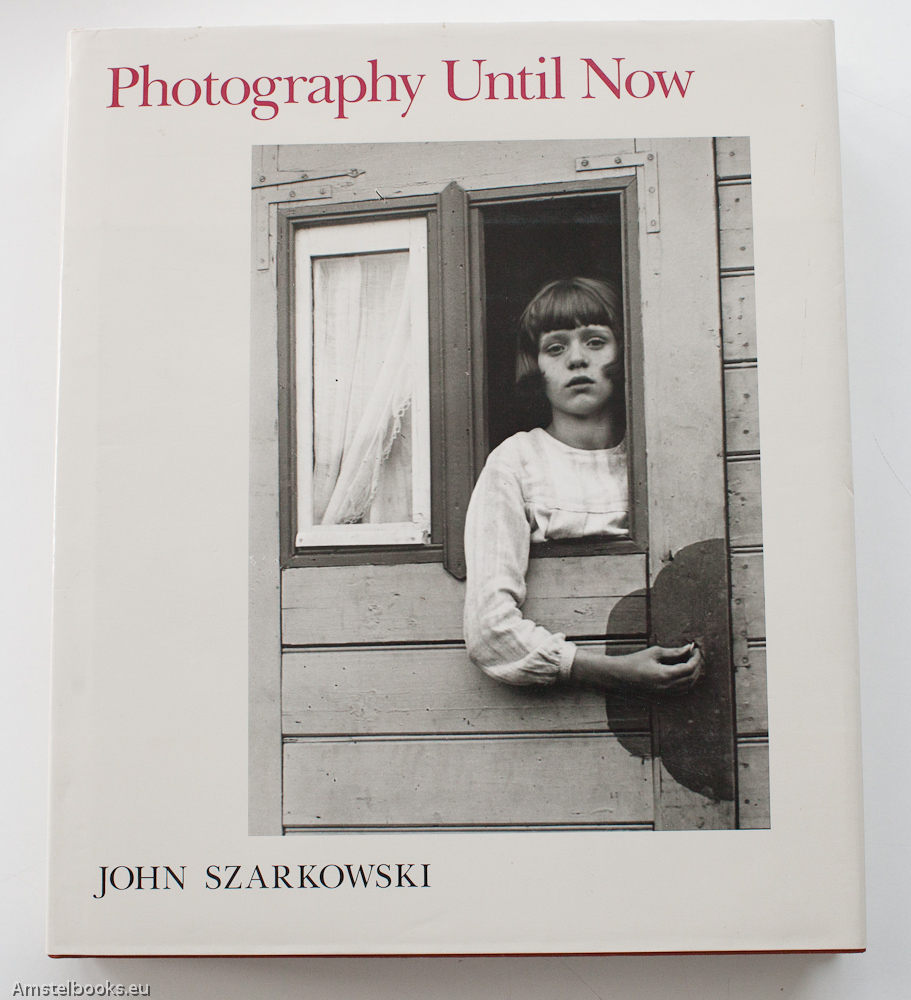
What made this project controversial then—and fascinating now—was Szarkowski's unapologetically technological framework. While other historians were exploring photography's social contexts and cultural meanings, Szarkowski doubled down on cameras, lenses, and chemistry as the primary drivers of photographic evolution. Love it or hate it, you couldn't ignore it.
Szarkowski's Three Decades at MoMA: Context for a Final Statement
To understand why Photography Until Now mattered, you need to grasp what Szarkowski accomplished during his 29-year reign at MoMA. When he took over the photography department in 1962, photography still occupied an uncertain position in the art world—tolerated, perhaps, but not fully embraced.4
Szarkowski changed that. Through exhibitions like "The Photographer's Eye" (1964) and "Mirrors and Windows" (1978), he developed a visual vocabulary for understanding photography as an art form with its own internal logic. He championed documentary photography while simultaneously elevating street photographers like Garry Winogrand and Lee Friedlander. He wrote with clarity and conviction, making complex aesthetic arguments accessible without dumbing them down.5
But Szarkowski also had blind spots. His canon skewed heavily toward American and European male photographers. His technological determinism sometimes felt reductive, as if cameras made pictures rather than people. By 1989, a new generation of scholars was challenging his formalist approach, arguing for more attention to photography's social and political dimensions.6
Photography Until Now arrived at this contested moment. It wasn't a concession to his critics—quite the opposite. Szarkowski used his final major exhibition to reassert his core beliefs about what drove photographic innovation. The book's foreword by Richard E. Oldenburg, MoMA's director, positioned the project as both a summation and a provocation.7
The Technological Framework: How Szarkowski Organized 150 Years
Here's where things get interesting. Rather than organizing Photography Until Now by artistic movements or geographic regions, Szarkowski structured his narrative around technological developments. The daguerreotype, the wet-plate process, gelatin dry plates, roll film, 35mm cameras, color photography—these weren't just technical footnotes. For Szarkowski, they were the main story.8
The book's chronological structure traces how each technological shift opened new aesthetic possibilities while foreclosing others. Early daguerreotypes required long exposures, producing a particular quality of stillness and formality. When faster emulsions arrived, photographers could capture movement—and suddenly the aesthetic of the "decisive moment" became possible. The miniature camera liberated photographers from tripods, enabling the spontaneous street photography that Szarkowski so admired.9
The Three Traditions: Szarkowski's Organizing Principle
Within this technological framework, Szarkowski identified three overlapping traditions that photographers navigated. The first tradition emerged from professional commercial practice—studio portraiture, architectural documentation, scientific illustration. These photographers worked within established conventions, refining techniques to meet client expectations.10
The second tradition comprised what Szarkowski called "vernacular photography"—the vast ocean of anonymous snapshots, postcards, news photos, and utilitarian images. This vernacular tradition interested Szarkowski because it revealed photography's default tendencies, unmediated by artistic ambition.11
The third tradition—and the one Szarkowski cared about most—consisted of photographers who consciously explored the medium's aesthetic potential. These artists didn't just use cameras to record the world; they investigated what photography could uniquely express. From Alfred Stieglitz to Robert Frank to Diane Arbus, these photographers pushed against technical limitations while embracing photography's distinctive characteristics.12
The Exhibition: Scale, Scope, and Significance
The Photography Until Now exhibition at MoMA was massive by the museum's standards. Spanning multiple galleries, it presented hundreds of photographs organized to illustrate Szarkowski's thesis about technological evolution driving aesthetic change. Walking through the exhibition meant moving chronologically through photography's history, seeing how each technical innovation spawned new ways of seeing.13
Szarkowski juxtaposed canonical masterworks with lesser-known images, arguing that understanding photography required looking beyond the established pantheon. You'd see an iconic Ansel Adams landscape next to an anonymous topographic survey photograph, the comparison revealing shared technical concerns. A Weegee crime scene photo might hang near a Walker Evans documentary image, both exploiting the flash's harsh illumination.14
The exhibition opened in February 1990 and ran through May, drawing significant attention from both photography enthusiasts and general museum visitors. As Szarkowski's final major exhibition before his retirement in 1991, it carried extra weight—this was the master curator's farewell address.15 Reviews at the time were mixed, with some praising Szarkowski's synthetic vision while others criticized his omissions and biases.
The Book: Physical Specifications and Content
The book version of Photography Until Now runs 343 pages, densely illustrated with reproductions of photographs spanning 150 years. Published by the Museum of Modern Art, it appeared in both hardcover and paperback editions—the hardcover with ISBN 0870705733, the paperback with ISBN 0870705741.16
Szarkowski's text interweaves with the images, creating a visual argument rather than just illustrating written points. He writes in his characteristic style—clear, confident, occasionally provocative. There's no academic hedging here, no endless qualifications. Szarkowski makes bold claims about what matters in photography history and why.17
The approximately 300 photographers featured range from household names to obscure practitioners. You'll find William Henry Fox Talbot's early calotypes alongside Cindy Sherman's postmodern self-portraits. The book includes work by Eugène Atget, Edward Weston, Henri Cartier-Bresson, Dorothea Lange, Robert Frank, Diane Arbus, and countless others.18
But who's missing? That question reveals as much as who's included. Feminist photographers working in the 1970s and 1980s receive limited attention. Non-Western photography appears primarily through colonial and Orientalist lenses. Conceptual photography that rejected traditional craft values gets short shrift.19 Understanding what Szarkowski left out helps us see the boundaries of his vision—and why subsequent historians felt compelled to tell different stories about photography's global history.
Critical Reception: Praise, Criticism, and Lasting Influence
When Photography Until Now appeared, the photography world was deeply divided about how to understand the medium's history. Szarkowski's technological determinism struck some critics as refreshingly clear-eyed, cutting through pretentious theory to focus on photography's material reality. Others found it reductive, ignoring how social, political, and economic forces shaped photographic practice.20
Positive reviews praised Szarkowski's synthetic vision and his ability to identify patterns across photography's sprawling history. His writing made complex ideas accessible without condescension. The book's illustrations were superb, and the sheer scope of the project impressed even skeptics. For photography students and educators, Photography Until Now offered a coherent framework for understanding the medium's evolution.21
Critical reviews, however, pointed out significant problems. Szarkowski's technological framework sometimes felt like a straitjacket, forcing diverse practices into a single narrative. His emphasis on American photography reflected institutional bias rather than historical reality. The book's treatment of contemporary photography seemed rushed, as if Szarkowski struggled to fit postmodern practices into his modernist framework.22
Perhaps most significantly, critics noted that Photography Until Now represented a particular moment in photography historiography—a late-modernist perspective that was already being superseded by new approaches. Contemporary responses recognized the book as both a culmination and a rearguard action, defending formalist values against emerging theoretical challenges.23
Influence on Photography Education
Despite its limitations, Photography Until Now profoundly influenced how photography was taught in the 1990s and early 2000s. Its clear organizational structure made it pedagogically useful. Students could grasp Szarkowski's technological framework even if they disagreed with his aesthetic judgments. The book's illustrations provided a visual canon, establishing which photographs "mattered" in institutional terms.24
Photography programs used the book to teach visual analysis and historical context. Instructors might supplement Szarkowski's formalism with social history or critical theory, but his framework provided a foundation. Even teachers who rejected his approach found the book useful as a foil—something to argue against while developing alternative narratives.25
Comparing Szarkowski's Vision to Contemporary and Subsequent Histories
How does Photography Until Now compare to other photography histories from its era? Beaumont Newhall's The History of Photography, revised multiple times since its 1937 debut, offered a more encyclopedic approach. Naomi Rosenblum's A World History of Photography (1984) provided broader geographic coverage. Michel Frizot's A New History of Photography (1994) would soon bring European scholarly perspectives to bear.26
What distinguished Szarkowski's approach was its unapologetic focus on aesthetics and technology over social context. While other historians discussed photography's role in colonialism, advertising, or political propaganda, Szarkowski kept returning to formal questions: How did this photograph work visually? What technical choices enabled this aesthetic effect?27
Subsequent photography histories have largely moved away from Szarkowski's technological determinism. Books like Mary Warner Marien's Photography: A Cultural History (2002) and Liz Wells's Photography: A Critical Introduction (1997) emphasize social and cultural contexts. Geoffrey Batchen's Burning with Desire (1997) challenged the very idea of a unified photography history, arguing for multiple, contested narratives.28
Yet Szarkowski's influence persists. His formalist vocabulary—the frame, the detail, time, vantage point, focus—remains useful for visual analysis. His insistence on looking closely at photographs, on understanding their material production, still resonates. Even scholars who reject his conclusions often employ his methods.29 The relationship between technology and aesthetics remains central to photography studies, even as we understand that relationship in more complex, socially embedded terms.
Availability and Legacy: From Out-of-Print Collectible to Digital Access
Photography Until Now has been out of print for years, and physical copies command premium prices in the rare book market. First edition hardcovers can sell for $100-300 depending on condition, while even paperback copies fetch $40-80. For collectors and institutions, the book remains desirable both for its content and as a artifact of Szarkowski's curatorial legacy.30
But here's where things get interesting: the Internet Archive has democratized access to this once-scarce resource. Multiple editions of Photography Until Now are available for free digital borrowing, complete with high-quality scans of Szarkowski's text and the book's illustrations. This digital availability fundamentally changes the book's role in photography education and scholarship.31
The Internet Archive versions preserve the book's original pagination and layout, allowing proper citation and reference. Researchers can search the text, bookmark pages, and share specific sections. This accessibility enables new generations to engage with Szarkowski's work critically, forming their own judgments rather than relying on secondhand accounts.32
Why Collectors Still Seek Physical Copies
Despite digital availability, collectors continue pursuing physical copies. Why? The book's material qualities matter. The paper stock, the reproduction quality, the heft and feel of the object—these aren't incidental. For serious photography students, owning a physical copy of Photography Until Now means being able to study the images properly, seeing tonal gradations and subtle details that digital scans might miss.33
There's also the bibliophile's pleasure in owning a significant book from photography's canon. Like collecting photographs themselves, collecting important photography books connects enthusiasts to the medium's history and culture. A first edition of Photography Until Now represents a moment when MoMA's institutional authority could still define photography's narrative—a historical moment that seems increasingly remote.34
Szarkowski's Writing Style: Making Technical History Accessible
One of Photography Until Now's enduring strengths is Szarkowski's prose. He wrote with uncommon clarity, explaining technical processes without drowning readers in jargon. When discussing the wet-plate process or the Zone System, Szarkowski made you understand not just how these techniques worked but why they mattered aesthetically.35
His sentences have rhythm and punch. He'd build complex arguments through simple declarative statements, each sentence adding another piece to the puzzle. Then he'd step back and show you the completed picture. This pedagogical skill made his writing effective for both specialists and general readers—you didn't need a PhD to follow his reasoning, but you'd find plenty to think about if you had one.36
Szarkowski also knew how to use images as arguments. The book's layout places photographs in dialogue, creating visual conversations that reinforce his textual points. You'd see how a particular technical innovation opened new compositional possibilities, not because Szarkowski told you so, but because the juxtaposed images made the case themselves.37
Compare Szarkowski's writing to academic photography theory from the same period—dense, jargon-heavy, often impenetrable to non-specialists. His clarity was almost radical in its directness. Whether you agreed with his conclusions or not, you always knew what he was arguing and why. That transparency made productive disagreement possible, which may be why Photography Until Now continues generating discussion decades after publication.38
The Book as Time Capsule: Late-1980s Photography Historiography
Reading Photography Until Now today means encountering a particular moment in how we understood photography's history. The book captures late-1980s assumptions about what photography was, what it had been, and where it was heading. Some of those assumptions now seem dated; others remain surprisingly current.39
In 1989, digital photography existed primarily in research labs and science fiction. The internet was a specialized tool for academics and military researchers. Instagram, smartphones, and computational photography lay decades in the future. Szarkowski's history ends with analog photography at its apex, before digital technology would transform the medium as radically as any previous innovation.40
The book also captures a moment when MoMA's authority to define photography's canon remained largely unchallenged. Alternative institutions existed, but MoMA's imprimatur still mattered enormously. Szarkowski could write "Photography Until Now" with confidence that his institutional platform gave him the authority to make such sweeping claims.41
Today, we might ask different questions about photography's history. How did photography enable colonial exploitation? How have women photographers navigated institutional sexism? What role has photography played in constructing racial categories? These questions weren't absent in 1989, but they weren't central to mainstream photography history the way they are now.42 Reading Szarkowski's book means confronting both what we've gained and lost in that historiographic shift. We've gained richer, more inclusive narratives; we may have lost some of Szarkowski's formalist precision and his attention to photography's material specificity. Similar debates about how to balance aesthetic and political concerns continue shaping photography discourse today.
Conclusion: Why Photography Until Now Still Matters
More than three decades after publication, Photography Until Now remains significant—not as the definitive history Szarkowski intended, but as a revealing artifact of how photography's history was understood at a particular moment. The book's technological framework, while limited, offers genuine insights into how material constraints shape aesthetic possibilities. Szarkowski's formalist analysis remains valuable even when divorced from his larger historical claims.43
The book also matters as John Szarkowski's final major statement. His 29 years at MoMA fundamentally shaped how museums collect, exhibit, and interpret photography. Understanding his vision—its strengths and limitations—helps us understand photography's institutional history. We can't fully grasp where photography studies is now without knowing where it came from, and Szarkowski was central to that trajectory.44
For contemporary photographers and students, Photography Until Now offers a masterclass in visual analysis. Szarkowski's ability to articulate what makes photographs work—how they organize space, control time, direct attention—remains unmatched. Even if you reject his historical narrative, you can learn from his looking.45
The book's digital availability through the Internet Archive means anyone can now engage with Szarkowski's arguments directly. You don't have to take anyone else's word for what he said or meant. Read it yourself. Argue with it. Use it as a springboard for your own thinking about photography's history and possibilities. That's perhaps the most fitting legacy for a curator who insisted that looking carefully at photographs was the foundation of all understanding.
What's your take on Szarkowski's technological approach to photography history? Does focusing on cameras and processes illuminate or obscure photography's significance? And if you were writing Photography Until Now today, what would you include that Szarkowski missed? Share your thoughts in the comments below.
Frequently Asked Questions
Where can I find a copy of Photography Until Now by John Szarkowski?
Physical copies are available through rare book dealers like AbeBooks and eBay, typically ranging from $40-300 depending on edition and condition. However, the book is freely available for digital borrowing through the Internet Archive, which offers multiple editions with high-quality scans. This digital access makes Szarkowski's work available to anyone with internet access, democratizing what was once a scarce resource.46
What makes Photography Until Now different from other photography history books?
Szarkowski's book is distinctive for its technological-determinist framework, organizing 150 years of photography history around technical innovations rather than artistic movements, geographic regions, or social contexts. This approach emphasizes how cameras, lenses, and photographic processes shaped what photographers could achieve aesthetically. While other histories focus on cultural or political contexts, Szarkowski keeps attention on photography's material specificity and formal qualities.47
Why was the Photography Until Now exhibition significant for MoMA?
The exhibition marked MoMA's 60th anniversary of collecting photography and served as John Szarkowski's final major exhibition before his 1991 retirement. After 29 years as Director of Photography, Szarkowski used this exhibition to present his comprehensive vision of photography's historical development. The show's scope—spanning from the 1840s to the 1980s with approximately 300 photographers represented—made it one of the most ambitious photography surveys MoMA had mounted, cementing the museum's role in defining photography's canon.48
What are the main criticisms of Szarkowski's approach in Photography Until Now?
Critics have pointed to several limitations: the technological framework can feel reductive, ignoring social and political contexts that shaped photographic practice; the selection heavily favors American and European male photographers, marginalizing women and non-Western practitioners; the emphasis on formal qualities over content reflects modernist biases that were already being challenged by postmodern theory in 1989; and the book's treatment of contemporary photography seems rushed, struggling to accommodate practices that didn't fit Szarkowski's formalist paradigm. Despite these criticisms, many scholars acknowledge the book's value for visual analysis and its historical importance.49
How has Photography Until Now influenced photography education?
The book became widely used in photography programs during the 1990s and early 2000s, providing a clear organizational framework for teaching photography history. Its chronological-technological structure made it pedagogically accessible, even for instructors who supplemented Szarkowski's formalism with social history or critical theory. The book's illustrations established a visual canon, defining which photographs students were expected to know. Even programs that rejected Szarkowski's approach found the book useful as a counterpoint, using it to generate discussion about alternative ways of understanding photography's history.50
Is Photography Until Now still relevant for contemporary photographers?
Yes, though in different ways than Szarkowski intended. The book's formalist analysis of how photographs work visually remains valuable for anyone learning to see photographically. Szarkowski's attention to framing, vantage point, detail, and time offers practical insights for image-making. However, contemporary photographers should supplement Szarkowski's technological history with attention to photography's social, political, and cultural dimensions that his approach underemphasizes. The book works best as one perspective among many, valuable for its strengths while recognizing its limitations.51
- John Szarkowski served as Director of Photography at MoMA from 1962 to 1991, fundamentally shaping the museum's collection and exhibition philosophy.
- Exhibition dates ran from February 28 to May 29, 1990, according to MoMA press archives.
- The book was published in both hardcover (ISBN 0870705733) and paperback (ISBN 0870705741) editions by the Museum of Modern Art.
- Szarkowski succeeded Edward Steichen, whose populist approach to photography exhibitions differed dramatically from Szarkowski's formalist perspective.
- Szarkowski's writing style influenced generations of photography critics and educators, establishing a model for discussing photographic aesthetics.
- Critics like Abigail Solomon-Godeau and Allan Sekula were developing alternative frameworks for photography history that emphasized ideology and representation over formal qualities.
- Oldenburg's foreword emphasized the exhibition's ambition to trace photography's entire history through a single coherent lens.
- This approach reflected Szarkowski's long-held belief that photographic aesthetics emerged from the medium's technical constraints and possibilities.
- Szarkowski devoted considerable attention to the 35mm camera's impact on photographic practice, seeing it as democratizing and liberating.
- This tradition included figures like Nadar, Julia Margaret Cameron, and later commercial photographers who elevated craft to art.
- Szarkowski saw vernacular photography as a kind of photographic unconscious, showing what the medium "wanted" to do naturally.
- This tradition aligned with Szarkowski's formalist interests and dominated his curatorial attention throughout his career.
- The exhibition design emphasized visual connections between works from different eras that shared technical characteristics.
- This curatorial strategy sometimes proved controversial, as critics argued it flattened important distinctions between artistic and utilitarian photographs.
- Szarkowski would continue writing and making his own photographs after retirement, but Photography Until Now represented his last institutional platform at MoMA.
- The hardcover edition featured better paper quality and reproduction, making it the preferred version for serious collectors and libraries.
- This directness was part of Szarkowski's appeal as a writer, though it also made him vulnerable to criticism when readers disagreed with his judgments.
- The selection reflected Szarkowski's personal canon, which emphasized American photography and formalist approaches over conceptual or politically engaged work.
- These omissions reflected both Szarkowski's aesthetic preferences and the limitations of his historical moment, before postcolonial and feminist scholarship had fully transformed photography studies.
- This debate reflected larger tensions in art history between formalist and contextualist approaches that dominated academic discourse in the 1980s.
- Many photography programs adopted the book as a textbook, despite its limitations, because it provided a clear narrative through photography's complex history.
- By 1989, artists like Sherrie Levine and Richard Prince were challenging photography's truth claims in ways that didn't fit Szarkowski's formalist paradigm.
- Poststructuralist theory, feminist critique, and postcolonial scholarship were transforming art history in ways that would make Szarkowski's approach seem increasingly dated.
- This canonical function was both valuable and problematic, as it reinforced existing hierarchies while marginalizing alternative traditions.
- This dialectical use of Szarkowski's work proved surprisingly productive, generating new scholarship that built on and challenged his ideas.
- Each of these histories reflected different institutional contexts and intellectual traditions, revealing how multiple narratives could coexist within photography studies.
- This focus reflected Szarkowski's background as both a practicing photographer and a formalist critic trained in modernist aesthetics.
- This historiographic shift paralleled broader changes in art history toward contextual and theoretical approaches.
- This methodological legacy may prove more durable than Szarkowski's specific historical arguments.
- The book's out-of-print status has ironically enhanced its reputation, making it seem more significant than it might have appeared when readily available.
- Digital access means students and researchers worldwide can engage with Szarkowski's ideas without depending on well-funded institutional libraries.
- The ability to actually read Photography Until Now rather than just read about it has sparked renewed scholarly interest in Szarkowski's methods and arguments.
- Photography books present special challenges for digitization, as their raison d'être is presenting high-quality reproductions that digital screens can't fully replicate.
- The book market for photography titles reflects broader collecting trends, with institutional histories and canonical texts commanding premium prices.
- This ability to connect technical details to aesthetic outcomes distinguished Szarkowski from both dry technical historians and theorists who ignored material constraints.
- Szarkowski's writing style influenced a generation of photography critics who sought to emulate his combination of accessibility and intellectual rigor.
- This visual argumentation reflected Szarkowski's curatorial practice, where exhibition design functioned as a form of critical writing.
- Clear writing enables clear thinking and clear debate, making Szarkowski's prose style a model for photography criticism beyond his specific arguments.
- Historical distance allows us to see how Szarkowski's supposedly objective history reflected his specific institutional position and cultural moment.
- This historical irony—that Szarkowski's technological history appeared just before photography's most dramatic technological revolution—adds poignancy to the book's title.
- The subsequent proliferation of photography museums, galleries, and online platforms has dispersed this canonical authority, making single-author histories like Szarkowski's increasingly difficult to sustain.
- The transformation of photography studies since 1989 reflects broader changes in humanities scholarship toward attention to power, representation, and identity.
- This separation of method from conclusions allows contemporary readers to use Szarkowski's tools while rejecting his biases.
- Institutional history matters because it shapes what gets preserved, exhibited, and studied—determining which photographers and practices enter the historical record.
- This distinction between Szarkowski as visual analyst and Szarkowski as historian allows productive engagement with his work across ideological differences.
- The Internet Archive's lending library allows users to borrow digital books for limited periods, similar to a traditional library.
- This approach reflected Szarkowski's formalist training and his belief that understanding photography required attending to its technical constraints.
- The timing made the exhibition both a celebration of MoMA's photography program and a capstone to Szarkowski's influential career.
- These critiques reflect broader debates in art history about formalism versus contextualism that intensified during the 1980s and 1990s.
- This dialectical use of the book proved surprisingly productive, as students learned to think critically about historiographic assumptions and biases.
- Digital photography's emergence since 1989 also requires updating Szarkowski's technological narrative to account for computational imaging's transformative impact.