When Charlotte Cotton's The Photograph as Contemporary Art first appeared in 2004, photography was still fighting for legitimacy in the fine art world. Sure, Andreas Gursky's prints were selling for millions, but many collectors and curators remained skeptical. Could photography truly stand alongside painting and sculpture? Cotton's book didn't just answer that question—it demolished it entirely.
Published as part of Thames & Hudson's prestigious World of Art series, this compact volume became the definitive guide to understanding photograph as contemporary art Charlotte Cotton style—accessible yet authoritative, comprehensive yet digestible.1 It's been updated three times since its debut (2009, 2014, and 2020), each edition reflecting seismic shifts in how we create, consume, and value photographic images. If you're serious about understanding contemporary art in the 21st century, you can't ignore this book.
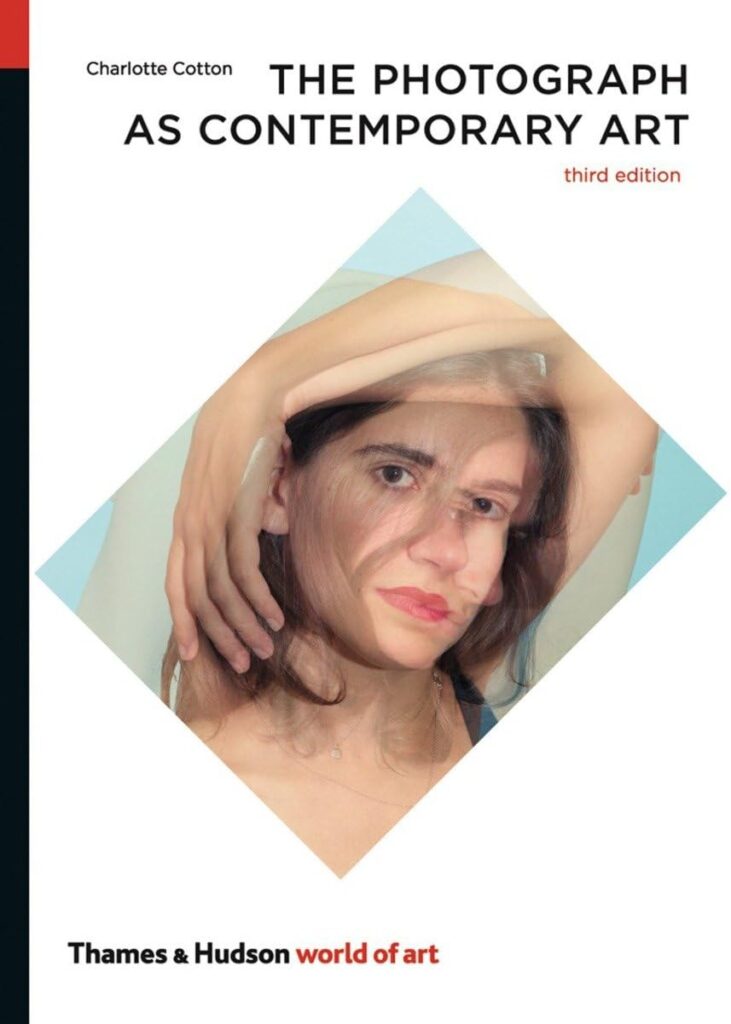
Who Is Charlotte Cotton and Why Does Her Perspective Matter?
Cotton isn't some academic theorist pontificating from an ivory tower. She's been in the trenches. As a former curator of photographs at London's Victoria and Albert Museum and later as Senior Curator in the Department of Photography at New York's Museum of Modern Art, she's handled some of the most significant photographic works of our time.2 She's negotiated acquisitions, mounted exhibitions, and engaged directly with living artists whose work defines contemporary practice.
This curatorial background fundamentally shapes her approach to The Photograph as Contemporary Art. Unlike Susan Sontag's philosophical meditations in On Photography or Roland Barthes's semiotic analysis in Camera Lucida, Cotton writes with the practical knowledge of someone who's actually built exhibitions and justified acquisition budgets.3 Her prose remains remarkably jargon-free—a rare achievement in art writing. She explains complex conceptual photography without condescension, making the work of artists like Gregory Crewdson or Thomas Demand comprehensible to students, collectors, and curious readers alike.
Cotton's institutional credentials also lend the book authority that self-published photography guides simply can't match. When she declares certain artists or movements significant, it carries weight. She's not speculating—she's reporting from the front lines of what museums are acquiring and what galleries are showing. This connection to contemporary photographic practice makes the book invaluable for understanding not just photography's past, but its present and future trajectories.
The Revolutionary Structure: Eight Thematic Categories That Reframe Photography
Here's where Cotton's book breaks from traditional photography surveys. Instead of organizing chronologically or by technical approach (portraiture, landscape, documentary), she divides contemporary photography into eight thematic categories that reflect how artists actually think about their work.4 This structure itself is an argument: photography has evolved beyond genre conventions into a conceptually driven art form.
If This Is Art
The opening chapter tackles photography's legitimacy crisis head-on. Cotton examines work that deliberately questions what constitutes art—photographers who stage elaborate tableaux, create impossible scenarios, or appropriate existing images. Artists like Jeff Wall, with his light-box transparencies that reference art historical paintings, appear here.5 So does Cindy Sherman, whose "Untitled Film Stills" series deconstructs female representation in cinema. This chapter establishes that contemporary art photography isn't about capturing reality—it's about constructing meaning.
Once Upon a Time
This section explores narrative photography—work that tells stories or implies fictional scenarios. Think Gregory Crewdson's cinematic suburban nightmares or Sam Taylor-Johnson's video portraits. Cotton analyzes how photographers borrow from film, literature, and theater to create images that function as frozen narratives.6 The work here often feels staged, artificial, deliberately constructed—and that's precisely the point.
Deadpan
Perhaps the most influential category, "Deadpan" describes the cool, detached aesthetic pioneered by Bernd and Hilla Becher and adopted by their students at the Düsseldorf School—Andreas Gursky, Thomas Struth, Candida Höfer, and Thomas Ruff. These photographers approach their subjects with apparent objectivity, using large-format cameras, neutral lighting, and frontal compositions.7 Yet their work isn't documentary in any traditional sense. Gursky's digitally manipulated landscapes and Höfer's empty institutional interiors reveal something uncanny about contemporary life. As discussed in our analysis of documentary photography's importance, this deadpan approach has fundamentally altered how we understand photographic truth.
Something and Nothing
Cotton examines photography that finds beauty or significance in overlooked subjects—the banal, the everyday, the apparently meaningless. Wolfgang Tillmans's casual snapshots of friends, crumpled clothing, and abstract light phenomena appear here. So does Rinko Kawauchi's delicate observations of domestic life.8 This category challenges photography's historical emphasis on decisive moments or significant subjects, suggesting that meaning emerges from the photographer's attention rather than inherent subject importance.
Intimate Life
This chapter explores photography's unique capacity for revealing private moments and personal relationships. Nan Goldin's raw documentation of her downtown New York circle, Richard Billingham's unflinching portraits of his parents, and Larry Sultan's complex family narratives all appear here.9 Cotton examines how these photographers navigate ethical questions about consent, exploitation, and the boundaries between art and voyeurism—issues increasingly relevant in our image-saturated culture.
Moments in History
Here Cotton addresses photographers engaging with historical events, collective memory, and political realities. But this isn't photojournalism. Artists like Luc Delahaye, who creates large-scale, museum-quality prints of conflict zones, or Sophie Ristelhueber, who photographs war's aftermath rather than its spectacle, appear in this category.10 The work questions photography's traditional role as witness while acknowledging our hunger for images that help us understand traumatic events. This connects to broader questions about photography's relationship to truth in an era of digital manipulation.
Revived and Remade
Cotton examines artists who resurrect historical photographic processes or appropriate existing images. Hiroshi Sugimoto's long-exposure seascapes using 19th-century techniques, Joachim Schmid's collections of found photographs, and Richard Prince's controversial appropriations of other people's images all appear here.11 This category reveals photography's self-reflexive turn—artists increasingly making work about photography itself, its history, and its cultural circulation.
Physical and Material
The final chapter addresses photographers who emphasize the photograph as physical object rather than transparent window. Artists who scratch negatives, create photograms without cameras, or present photographs as sculptural installations appear here.12 James Welling's abstract color studies, Walead Beshty's FedEx boxes (photographs damaged during shipping), and Adam Fuss's photograms all explore photography's materiality. This approach resonates with contemporary interest in alternative processes and darkroom techniques.
These eight categories aren't rigid taxonomies—many artists appear in multiple chapters, and Cotton acknowledges the fluidity. But the structure provides a framework for understanding contemporary photography's diversity without reducing it to technical specifications or historical chronology. It's a curatorial logic made accessible to readers.
Evolution Across Four Editions: Tracking Photography's Transformation
The photograph as contemporary art Charlotte Cotton analyzes hasn't remained static, and neither has her book. Each edition reflects significant shifts in photographic practice, technology, and market dynamics. Comparing these editions reveals as much about photography's evolution as the content itself.
First Edition (2004): Establishing the Canon
The original 224-page edition appeared at a pivotal moment. The art market was beginning to take photography seriously—auction prices were climbing, major museums were expanding photography departments, and digital technology was transforming production.13 Cotton's first edition captured this transitional moment, featuring artists working primarily in analog processes but increasingly aware of digital possibilities. The book focused heavily on work from the late 1980s through early 2000s, with particular emphasis on the Düsseldorf School and staged photography.
Second Edition (2009): Digital's Impact
By 2009, digital photography had moved from novelty to norm. The second edition incorporated artists working primarily with digital capture and post-production. Cotton added discussions of how Photoshop and digital manipulation had become standard practice rather than controversial exception.14 She also expanded coverage of artists using photography alongside video and installation, reflecting photography's increasing integration into broader contemporary art practices. The global financial crisis of 2008 had shaken the art market, but photography remained relatively strong—a shift Cotton acknowledged in her updated introduction.
Third Edition (2014): Social Media and Circulation
The 2014 edition grappled with Instagram's launch (2010) and the explosion of vernacular digital photography. Cotton incorporated artists responding to social media's transformation of how images circulate and acquire meaning.15 She added discussions of appropriation art in the digital age, addressing artists like Mishka Henner who mine Google Street View or Erik Kessels who print thousands of images uploaded to Flickr in a single day. The edition also expanded coverage of non-Western photographers, acknowledging criticism that earlier editions had been too Eurocentric. This connects to broader discussions about global photography practices and cultural specificity.
Fourth Edition (2020): Post-Truth and Algorithmic Vision
The most recent edition confronts photography in an era of deepfakes, algorithmic feeds, and epistemological crisis. Cotton addresses how artists respond to photography's compromised relationship to truth—work that acknowledges we can no longer trust images while still believing in photography's cultural importance.16 She incorporates discussions of archival photography and artists mining historical collections, as well as work addressing surveillance, facial recognition, and algorithmic vision. The edition also expands discussion of photography's environmental impact and artists engaging with climate change—issues barely visible in the 2004 edition but central by 2020.
Each edition maintains the original eight-chapter structure while updating examples and adding new artists. This consistency demonstrates Cotton's framework's durability—the categories remain relevant even as specific practices evolve. Yet the expanding page count (the 2020 edition runs longer than the original) reveals photography's accelerating diversification. There's simply more to discuss, more artists working in more varied ways, than when the book first appeared.
The Book's Academic Impact and Educational Role
The Photograph as Contemporary Art has become standard reading in art schools, photography programs, and contemporary art courses worldwide. Walk into any university bookstore with a photography department, and you'll find it on the required reading shelf. But why did this particular book achieve such ubiquity?
First, accessibility. Cotton writes clearly without dumbing down complex ideas. Students can grasp her arguments without extensive theoretical background, yet the book rewards deeper engagement.17 Unlike dense academic texts that require decoding, Cotton's prose invites readers in. She explains conceptual photography without assuming prior knowledge, making the book ideal for introductory courses while still offering insights for advanced students.
Second, comprehensiveness. The book covers an enormous range of practices, from Gursky's massive digital prints to Ryan McGinley's spontaneous youth culture photography. Students gain exposure to diverse approaches rather than a single aesthetic or theoretical position.18 The over 200 color illustrations provide visual reference points, crucial for a medium where seeing the work matters as much as reading about it. As explored in our discussion of portrait photography aesthetics, visual analysis requires actual images, not just descriptions.
Third, the book bridges academic and professional worlds. Cotton's institutional experience means she understands both scholarly discourse and market realities. Students interested in curatorial work, gallery management, or professional practice find the book as useful as those pursuing academic careers.19 It demystifies the contemporary art world without cynicism, explaining how museums acquire work, how galleries operate, and how artists build careers—practical knowledge often absent from purely theoretical texts.
The book's impact extends beyond formal education. Collectors use it to understand what they're buying. Gallerists reference it when contextualizing artists for clients. Critics cite it in reviews. It's become a shared reference point—when someone mentions "deadpan photography" or "staged tableaux," they're often unconsciously using Cotton's categories. This common vocabulary has shaped how we discuss contemporary photography, for better or worse. Some critics argue Cotton's framework has become too dominant, constraining how we think about photographic practice. But that's the mark of an influential book—it shapes discourse even among those who resist its conclusions.
Cotton's Theoretical Framework: How She Defines Contemporary Art Photography
What exactly does Cotton mean by "contemporary art photography"? The phrase itself is slippery. Is it photography made recently? Photography shown in contemporary art contexts? Photography that engages with contemporary art concerns? Cotton's answer is essentially: all of the above, but with specific criteria.
She defines contemporary art photography as work created primarily for gallery and museum exhibition rather than editorial, commercial, or purely documentary purposes.20 The work appears as prints on walls, not in magazines or advertising campaigns. This doesn't mean the work can't address documentary concerns or use commercial techniques—many artists Cotton discusses blur these boundaries deliberately. But the intended context is the art world, with all that implies about presentation, distribution, and valuation.
Cotton also emphasizes conceptual sophistication. The photographers she features aren't simply making beautiful images—they're engaging with ideas about representation, identity, memory, or photography itself. The work rewards intellectual engagement, not just visual pleasure.21 A Thomas Demand photograph of a meticulously constructed paper model isn't just formally interesting—it's an investigation of how images construct reality. A Taryn Simon portrait from her "The Innocents" series isn't just a portrait—it's a critique of photographic evidence in criminal justice. The work operates on multiple levels simultaneously.
Importantly, Cotton avoids medium essentialism. She doesn't argue that photography has unique qualities distinguishing it from other media. Instead, she treats photography as one tool among many that contemporary artists use.22 Many artists she discusses also make video, installation, or sculpture. Photography isn't a separate category but part of expanded artistic practice. This connects to discussions about contemporary art's interdisciplinary nature and the breakdown of traditional medium boundaries.
Cotton also emphasizes photography's relationship to mass culture and vernacular imagery. Contemporary art photographers don't pretend to operate outside visual culture—they're deeply embedded in it. They reference advertising, cinema, news media, and amateur photography. This self-awareness about photography's cultural circulation distinguishes contemporary practice from earlier modernist photography, which often claimed aesthetic autonomy.23 Contemporary photographers acknowledge that all images exist within networks of meaning shaped by context, distribution, and reception. They work with this reality rather than against it.
Finally, Cotton emphasizes scale and presentation. Many contemporary art photographs are large—sometimes enormous. Gursky's prints can exceed ten feet wide. Jeff Wall's light boxes dominate gallery spaces. This scale isn't accidental—it claims visual authority comparable to painting and asserts photography's status as major art form.24 The work demands physical presence in a way that magazine reproduction or online viewing can't replicate. This emphasis on materiality and scale has influenced even photographers working at smaller sizes, who now think carefully about how their work occupies physical space. As discussed in our exploration of sustainable photography practices, this scale also raises questions about environmental impact and material consumption.
Who Should Read This Book and How to Use It
So you're convinced the book matters. But is it right for you? And if you do get it, how should you approach it?
For Photography Students: This is essential reading, period. Whether you're in art school, studying photography specifically, or taking contemporary art courses, you need this book. It provides context for contemporary practice that technique-focused photography education often lacks.25 Read it early in your education to understand the landscape you're entering. Return to it as your work develops to see where you might fit within Cotton's categories—or how you might resist them. Use it as a springboard for deeper research into artists whose work resonates with your interests. The book's bibliography and footnotes point toward further reading.
For Collectors: Cotton's book functions as an excellent primer for understanding what you're buying and why it matters. It explains the conceptual frameworks and art historical contexts that justify gallery prices. If you're new to collecting photography, read it before making significant purchases. It'll help you distinguish between technically accomplished but conceptually thin work and photography that engages meaningfully with contemporary concerns.26 The book also helps identify emerging trends—artists working in modes Cotton describes are more likely to gain institutional recognition and market value.
For Curators and Gallery Professionals: Even if you're already familiar with the artists Cotton discusses, the book provides a useful framework for organizing exhibitions and writing wall text. Her thematic categories offer alternatives to chronological or medium-based organization. The book also helps when explaining contemporary photography to board members, donors, or skeptical colleagues who question whether photography deserves museum resources comparable to painting or sculpture.27
For General Readers: If you're curious about contemporary art but find it confusing or alienating, Cotton's book offers an accessible entry point. Photography is arguably the most approachable contemporary art medium—we all take photographs, so we have some intuitive understanding of the process.28 Cotton explains why certain work matters without condescension. Start with chapters addressing work you find visually appealing, then branch out to more challenging material. Don't feel obligated to read straight through—the thematic organization allows selective reading based on interest.
For Practicing Photographers: Even if you work primarily in commercial, editorial, or documentary photography, understanding contemporary art photography enriches your practice. It exposes you to conceptual approaches and formal strategies you might adapt. It also clarifies the art world's expectations and values, useful if you're considering transitioning from commercial to gallery work.29 The book might also help you articulate what you're doing and why—useful for grant applications, artist statements, and portfolio presentations. Our guide to monetizing photography discusses how understanding fine art contexts can open additional revenue streams.
Regardless of your background, approach the book actively. Don't just read passively—research artists who intrigue you, visit exhibitions when possible, and think critically about Cotton's categories. Do they make sense? What gets excluded? How might you organize contemporary photography differently? The book works best as starting point for deeper engagement rather than final authority.
Critical Reception and Ongoing Debates
No book achieves canonical status without controversy. While The Photograph as Contemporary Art has been overwhelmingly well-received—translated into multiple languages, adopted by hundreds of institutions, cited in countless academic papers—it's also faced criticism worth considering.
Some critics argue Cotton's framework privileges certain types of work over others. The book focuses heavily on staged, conceptual, and large-scale photography shown in major galleries and museums. Photographers working in more traditional documentary modes, or those operating outside the gallery system, receive less attention.30 Street photography, for instance, appears primarily in the "Something and Nothing" chapter, somewhat marginalized compared to staged tableaux or deadpan typologies. Is this because street photography is less conceptually sophisticated, or because Cotton's curatorial background predisposes her toward work that fits museum contexts?
Early editions also faced criticism for Eurocentrism. The 2004 version featured predominantly European and North American photographers, with limited coverage of Asian, African, or Latin American artists. Cotton has addressed this in subsequent editions, expanding global coverage.31 But the book's framework itself arguably reflects Western art world values and institutional structures. Does "contemporary art photography" as Cotton defines it translate across cultures, or does it impose Western categories on diverse practices?
Some photographers and educators argue the book's influence has been too strong—that Cotton's categories have become prescriptive rather than descriptive. Young photographers feel pressure to fit their work into "deadpan" or "staged narrative" modes to gain institutional recognition. The book's success may have inadvertently narrowed what counts as legitimate contemporary practice.32 Critics worry about homogenization, where diverse practices get flattened into marketable categories.
Others question whether the book adequately addresses photography's digital transformation. While later editions incorporate digital practice, some argue Cotton remains too focused on photography as object—prints on walls—rather than photography as data, algorithm, or networked image. Does the book's gallery-centric framework capture how most people actually encounter photographs today—on screens, in feeds, embedded in interfaces?33 As discussed in our analysis of AI-generated image aesthetics, photography's definition continues expanding in ways that challenge even updated frameworks.
Despite these critiques, the book's influence remains undeniable. It succeeded in making contemporary photography comprehensible to broad audiences while maintaining intellectual rigor. It helped establish photography's legitimacy in contemporary art contexts. And it provided a shared vocabulary that facilitates discussion even among those who disagree with specific interpretations. That's more than most art books achieve.
The Book's Place in Photography Literature
Where does The Photograph as Contemporary Art fit within photography's theoretical canon? How does it compare to other essential texts?
Unlike Susan Sontag's On Photography (1977), which offers philosophical meditation on photography's cultural meanings, Cotton provides practical survey of contemporary practice. Sontag asks big questions about photography's relationship to reality, memory, and ethics. Cotton shows you what photographers are actually making.34 Both books are essential, but they serve different purposes. Read Sontag for theoretical grounding, Cotton for understanding current practice.
Roland Barthes's Camera Lucida (1980) offers semiotic analysis of photography's affective power—how images move us. It's deeply personal, philosophical, and somewhat idiosyncratic. Cotton's approach is more systematic and comprehensive.35 Barthes helps you think about what happens when you look at a photograph. Cotton helps you understand why certain photographs matter in contemporary art contexts.
John Szarkowski's writings, particularly The Photographer's Eye (1966) and various MoMA exhibition catalogs, established modernist photography's canon and critical vocabulary. Szarkowski emphasized photography's formal qualities—the thing itself, the detail, the frame, time, vantage point.36 Cotton's framework deliberately moves beyond formalism toward conceptual and contextual analysis. She's interested in what photographs mean and how they function within contemporary art discourse, not just how they look. This shift reflects broader changes in art criticism from formalist to contextual approaches.
More recent books like Geoffrey Batchen's Photography Degree Zero (2009) or Ariella Azoulay's The Civil Contract of Photography (2008) offer sophisticated theoretical frameworks for understanding photography's political and social dimensions. These books are more academically demanding than Cotton's—they assume theoretical background and engage with complex philosophical arguments.37 Cotton's accessibility is both strength and limitation—she makes contemporary photography comprehensible but doesn't engage deeply with theoretical debates animating academic photography studies.
Perhaps the closest comparison is Liz Wells's Photography: A Critical Introduction, another widely-used textbook. Wells provides more historical depth and theoretical framework, while Cotton focuses more narrowly on contemporary practice.38 Used together, they provide comprehensive photography education—Wells for historical foundation, Cotton for contemporary application.
What makes Cotton's book distinctive is its curatorial perspective and accessibility. She writes from institutional insider position but addresses general audience. She provides survey without sacrificing depth. She organizes thematically rather than chronologically, offering framework that remains relevant as specific artists and movements evolve. These qualities explain why the book has become standard reference despite competition from numerous photography surveys and theoretical texts.
Conclusion: Why This Book Still Matters in 2025
Twenty years after its initial publication, The Photograph as Contemporary Art remains essential reading. Photography has transformed dramatically since 2004—smartphones have made everyone a photographer, social media has revolutionized image circulation, AI is now generating convincing photographs without cameras. Yet Cotton's framework remains remarkably durable.
Why? Because the book addresses fundamental questions about what photography means in contemporary culture, questions that persist regardless of technological change. How do photographs construct reality rather than merely recording it? What happens when photography claims status as fine art? How do photographers engage with history, memory, and identity? These concerns animate contemporary practice whether artists work with film cameras, digital sensors, or algorithmic generation.
The book's thematic organization also proves prescient. Cotton's categories—deadpan, staged narrative, appropriation, materiality—describe approaches rather than techniques. They remain relevant even as specific technologies evolve.39 A photographer can work in deadpan mode using film, digital capture, or AI generation. The aesthetic and conceptual approach matters more than the tool.
For anyone trying to understand contemporary photography—students, collectors, curators, practicing photographers, or curious observers—Cotton's book provides indispensable foundation. It won't answer every question. It won't resolve debates about photography's future in an AI-saturated world. But it will give you vocabulary and framework for engaging with those questions intelligently. It'll show you what contemporary photographers have achieved and suggest possibilities for what comes next.
Get the most recent edition—the 2020 version includes crucial updates addressing digital culture and global practice. Read it actively, questioning Cotton's choices and categories. Research artists who intrigue you. Visit exhibitions. Make your own photographs informed by what you've learned. The book works best not as final authority but as invitation to deeper engagement with photography's ongoing evolution. In that spirit, it's succeeded brilliantly—it's made contemporary photography accessible, comprehensible, and exciting to generations of readers. That's no small achievement.
Ready to dive deeper into photography theory and practice? Explore our guides on photography's global histories and contemporary analog revival techniques. Share your thoughts on Cotton's framework in the comments—which categories resonate with your work? Which feel limiting? Let's continue the conversation.
Frequently Asked Questions
Which edition of The Photograph as Contemporary Art should I buy?
Get the 2020 fourth edition if possible. It includes the most comprehensive coverage, addressing digital culture, social media, and global perspectives that earlier editions lack. However, if you're on a budget, even the 2004 first edition provides valuable foundation—the core framework and many featured artists remain relevant. Used copies of earlier editions are often significantly cheaper. Just be aware you'll miss discussions of recent developments and artists who've emerged since publication.40
Is The Photograph as Contemporary Art suitable for beginners with no art background?
Absolutely. Cotton writes accessibly without requiring prior knowledge of art history or theory. She explains concepts clearly and provides visual examples that help readers understand abstract ideas. The book assumes curiosity rather than expertise. That said, you'll get more from it if you actually look at the reproduced images carefully rather than just reading the text. Take time with the photographs—notice composition, lighting, subject matter, and how they make you feel. Cotton's analysis will make more sense when grounded in visual engagement.41
How does Cotton's book differ from photography technique manuals?
Completely different purposes. Technical manuals teach you how to operate cameras, control exposure, use lighting, and process images. Cotton's book explores what contemporary photographers are making and why it matters culturally and artistically. It won't teach you f-stops or Photoshop techniques. Instead, it provides conceptual framework for understanding photography as art form. Think of technical manuals as teaching you grammar and vocabulary, while Cotton's book analyzes great literature—both are valuable, but they serve different functions in photographic education.42
Does the book address smartphone and social media photography?
Later editions (particularly 2014 and 2020) discuss how smartphones and social media have transformed photography. Cotton addresses artists responding to Instagram culture, appropriating found online images, and engaging with photography's ubiquity in digital life. However, the book focuses primarily on work intended for gallery exhibition rather than vernacular social media photography. If you're interested specifically in Instagram aesthetics or smartphone photography as cultural phenomenon, you'll want to supplement Cotton with other sources. That said, understanding the art photography context Cotton provides enriches how you think about all photographic practice, including social media.43
Can I use this book as a textbook for teaching photography?
Many instructors do exactly that. The book works well for contemporary photography surveys, art photography courses, or contemporary art classes addressing photography. Its thematic organization allows flexible assignment—you can assign specific chapters rather than requiring students to read straight through. The accessible writing makes it suitable for undergraduate courses, while the conceptual depth supports graduate-level discussion. Consider supplementing with primary source readings (artist statements, critical essays) and requiring students to research featured artists beyond Cotton's brief discussions. The book provides excellent framework but shouldn't be the only text in a comprehensive photography course.44
How does Cotton address photography's relationship to truth and manipulation?
This question runs throughout the book, though Cotton doesn't address it in a single chapter. She shows how contemporary photographers have largely abandoned claims to objective truth, instead acknowledging photography's constructed nature. Many featured artists deliberately stage scenes, digitally manipulate images, or appropriate existing photographs—practices that foreground photography's artificiality. Cotton argues this doesn't make contemporary photography dishonest; rather, it's more honest about photography's limitations and possibilities. The work acknowledges what photography has always been—a selective, mediated representation shaped by countless choices—rather than pretending to transparent documentation. This connects to broader cultural shifts in how we understand all images in an era of digital manipulation and misinformation.45
- The World of Art series has published over 400 titles since 1958, establishing itself as the standard for accessible art education across multiple disciplines.
- Cotton's curatorial work at MoMA included organizing exhibitions and acquisitions during a pivotal period when photography's market value exploded in the early 2000s.
- While Sontag and Barthes approached photography primarily as cultural critics, Cotton's methodology reflects institutional practice and market realities.
- This thematic organization mirrors curatorial practice in contemporary art museums, where exhibitions are increasingly organized around conceptual themes rather than medium or chronology.
- Wall's "A Sudden Gust of Wind (after Hokusai)" (1993) exemplifies this approach, recreating a 19th-century Japanese print as a digitally assembled photograph.
- Crewdson's productions involve film crews, elaborate lighting setups, and budgets that rival independent films, blurring the line between photography and cinema.
- The Bechers' systematic documentation of industrial structures established a typological approach that influenced an entire generation of German photographers.
- Tillmans's approach democratized photography subject matter, suggesting that anything could be worthy of aesthetic attention if approached with genuine curiosity.
- Goldin's "The Ballad of Sexual Dependency" (1980s) pioneered a confessional photographic style that influenced countless subsequent artists.
- Delahaye's transition from photojournalism to fine art photography sparked controversy about whether war should be aestheticized for gallery consumption.
- Prince's Instagram portraits sparked legal battles about appropriation art in the digital age, testing fair use boundaries.
- This category gained prominence as digital photography threatened to dematerialize the medium entirely, prompting artists to reassert photography's physical presence.
- Andreas Gursky's "99 Cent II Diptychon" sold for $3.3 million in 2007, signaling photography's arrival in the high-stakes art market.
- The transition to digital fundamentally altered photography's evidentiary status, accelerating debates about truth and manipulation that continue today.
- Instagram reached 300 million users by 2014, fundamentally altering photography's cultural role and creating new contexts for artistic practice.
- The 2020 edition appeared as the COVID-19 pandemic forced reconsideration of photography's role in documenting collective experience and individual isolation.
- The book's reading level is approximately undergraduate—accessible to motivated high school students but sophisticated enough for graduate seminars.
- This breadth makes the book useful across different course types—from photography history to contemporary art surveys to studio practice seminars.
- Several major auction houses and galleries reportedly use the book for training junior staff in contemporary photography.
- This distinction matters economically—gallery photography typically exists in limited editions with higher price points than commercial work.
- This conceptual emphasis reflects broader trends in contemporary art, where idea often takes precedence over craft or beauty.
- This position reflects photography's integration into contemporary art after decades of medium-specific discourse.
- Modernist photographers like Edward Weston or Ansel Adams emphasized photography's formal qualities and aesthetic independence from commercial culture.
- Large-scale printing became economically feasible with digital technology, enabling photographers to compete with painting's traditional dominance of gallery walls.
- Many photography programs emphasize technical skills while providing limited theoretical or historical context for contemporary practice.
- The contemporary photography market can be opaque to newcomers; Cotton's institutional perspective helps decode gallery and auction house rhetoric.
- Many museum administrators and board members come from traditional fine arts backgrounds where photography's art status remains contested.
- This accessibility makes photography an ideal gateway to broader contemporary art engagement.
- Many successful art photographers began in commercial or editorial work before transitioning to gallery representation.
- This critique reflects broader debates about what counts as "contemporary art" and whose work gets institutional recognition.
- The 2014 and 2020 editions include significantly more non-Western artists, reflecting both Cotton's response to criticism and genuine shifts in the art world's geographic focus.
- This phenomenon isn't unique to Cotton's book—any influential framework risks becoming constraining over time.
- This critique reflects broader tensions between traditional art world structures and digital culture's distributed, dematerialized image circulation.
- Sontag's influence on photography theory remains profound, but her work predates contemporary art photography's emergence as distinct category.
- Barthes's concepts of studium and punctum remain influential in photography criticism, but his methodology differs fundamentally from Cotton's curatorial survey approach.
- Szarkowski's influence as MoMA's photography curator from 1962-1991 shaped how museums collected and exhibited photography for decades.
- Batchen and Azoulay write primarily for academic audiences, while Cotton addresses broader readership including students, collectors, and general readers.
- Wells's book covers photography's entire history from invention through present, while Cotton concentrates on work from late 1980s forward.
- This conceptual rather than technical organization explains the framework's longevity compared to books organized around specific processes or equipment.
- Earlier editions can be found used for $10-20, while the 2020 edition typically costs $25-35 new.
- Some readers find it helpful to research additional images by featured artists online, as the book's reproductions are necessarily limited.
- Ideally, photographers develop both technical skills and conceptual understanding; Cotton's book addresses the latter.
- The book's gallery focus reflects Cotton's curatorial background and the World of Art series' emphasis on museum-quality work.
- Many instructors pair Cotton's book with historical surveys, technical manuals, and theoretical texts for well-rounded photography education.
- Cotton's position reflects post-modern skepticism about photographic objectivity that became dominant in art photography by the 1980s.