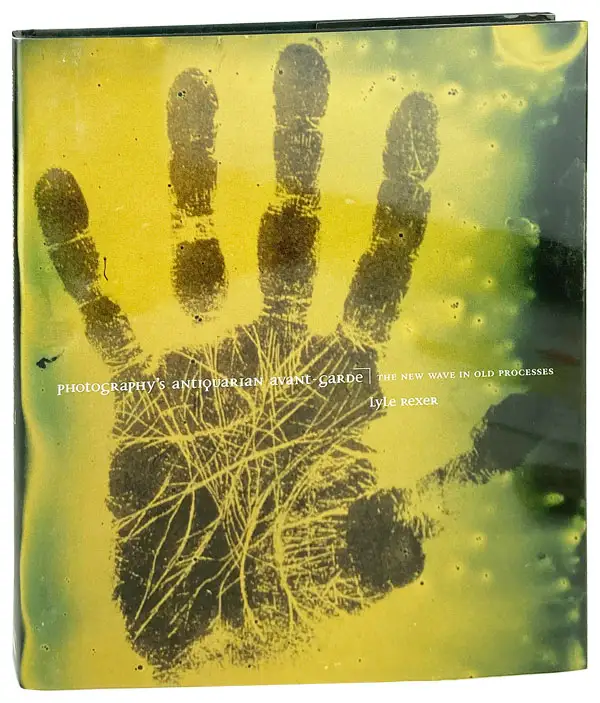
In 2002, as digital cameras were rapidly colonizing the photography world, art critic Lyle Rexer published a book that celebrated exactly the opposite impulse. Photography's Antiquarian Avant-Garde documented contemporary artists who'd turned their backs on technological progress to embrace processes invented in the 1840s. Cyanotypes. Platinum prints. Wet plate collodion. These weren't nostalgic hobbyists—they were serious artists using 19th-century chemistry to create cutting-edge contemporary work. The title itself captured the paradox: how could something antiquarian be avant-garde?
Published by Harry N. Abrams, this 192-page volume became the first comprehensive survey to treat alternative photographic processes not as historical curiosities but as vital contemporary art practices. Rexer's timing was prescient. Just as photography seemed destined for complete digitization, he argued that these "obsolete" techniques offered aesthetic and conceptual possibilities that modern technology couldn't replicate. More than two decades later, the book remains essential reading for understanding why artists continue choosing slow, unpredictable, hands-on processes in our instant-gratification era.
Decoding the Antiquarian Avant-Garde: A Beautiful Contradiction
What does "photography antiquarian avant garde lyle rexer alternative processes" actually mean? The phrase seems contradictory—antiquarian suggests looking backward, while avant-garde means pushing forward. But that's precisely Rexer's point.1 These contemporary photographers weren't engaging in historical reenactment. They were mining forgotten techniques for qualities that felt radically fresh in the late 1990s: materiality, unpredictability, visible craft, and resistance to mechanical reproduction.
Consider the cultural moment. By 2002, Photoshop had become ubiquitous. Digital cameras were approaching film quality. Photography was losing its connection to physical chemistry and entering the realm of pure data.2 Against this backdrop, artists coating paper with light-sensitive iron salts or silver nitrate weren't being retro—they were making a statement about photography's essence. What happens when you can't undo, when every print is unique, when the process itself leaves visible traces?
Rexer understood that these artists were participating in a broader cultural conversation about handcraft versus automation, similar to movements in ceramics, letterpress printing, and other analog arts. The book positioned alternative processes within contemporary art discourse rather than relegating them to technical manuals or historical surveys. This framing legitimized what practitioners had known all along: these weren't just different ways to make pictures—they were different ways to think about pictures.
Inside the Book: Structure, Scope, and Visual Feast
Photography's Antiquarian Avant-Garde isn't organized chronologically or by process—instead, Rexer groups work thematically, emphasizing artistic vision over technical taxonomy. The book features approximately thirty contemporary photographers, each represented by multiple images alongside contextual essays and artist statements. The reproductions are exceptional, capturing the subtle tonalities and surface qualities that make these processes distinctive.3
Rexer's introductory essay establishes the historical and conceptual framework. He traces how these processes—dominant in photography's first decades—were gradually abandoned as faster, more convenient methods emerged. Gelatin silver prints replaced albumen. Commercial labs replaced darkrooms. By the 1950s, techniques like gum bichromate or platinum printing seemed hopelessly arcane.4 But their very obsolescence became their appeal for late 20th-century artists seeking alternatives to photography's increasing standardization.
The Processes Covered: From Cyanotype to Wet Plate
The book surveys the major alternative processes that experienced revival in the 1990s. Cyanotypes, invented by Sir John Herschel in 1842, produce distinctive Prussian blue images through iron salts exposed to UV light.5 Artists featured in Rexer's book weren't just making blue pictures—they were exploiting cyanotype's connection to blueprints, its association with reproduction and documentation, its chemical simplicity that allows for experimentation.
Platinum and palladium printing, which produce images of extraordinary tonal range and permanence, attract photographers seeking maximum detail and archival stability. Unlike silver prints that sit on paper's surface, platinum embeds in the paper fibers, creating a matte, luminous quality that feels simultaneously delicate and substantial. Gum bichromate, meanwhile, allows for painterly manipulation—artists can apply multiple layers in different colors, control density through brushwork, and create images that blur photography's boundary with painting.
Wet plate collodion, the process that dominated portrait studios in the 1860s-1880s, requires coating a glass plate with light-sensitive chemicals, exposing it while still wet, and developing immediately.6 It's demanding, unpredictable, and produces images of remarkable clarity and depth. Contemporary artists embrace its difficulty as part of its meaning—the visible effort becomes embedded in the work's aesthetic. Salt printing, photography's earliest practical negative-positive process, creates soft, warm-toned images with a distinctive matte surface that contemporary practitioners value for its quiet, contemplative quality.
The Artists: Visionaries Working Against the Grain
Rexer's selection of photographers demonstrates alternative processes' range and artistic legitimacy. Sally Mann appears prominently, her platinum prints of Southern landscapes and family life gaining additional emotional weight from the process's historical associations.7 The chemical imperfections—light leaks, streaks, uneven coating—aren't flaws but essential to the work's meaning. They evoke memory's imperfection, history's instability, the South's unresolved past.
Chuck Close's daguerreotype portraits represent perhaps the most extreme example of the antiquarian avant-garde paradox. Close, known for monumental photorealist paintings based on photographs, turned to photography's earliest process—one that produces a single, unreproducible image on a silver-coated copper plate. His large-format daguerreotype portraits are technical marvels, reviving a process most people assumed was dead. The choice isn't arbitrary: daguerreotypes' mirror-like surfaces and reversed images create an uncanny viewing experience that reinforces Close's interest in how we perceive faces.
Adam Fuss works extensively with photograms—cameraless images created by placing objects directly on light-sensitive paper. While technically photography's most primitive form, Fuss's work is anything but simple. His large-scale cibachrome photograms of water droplets or his daguerreotype photograms of babies underwater achieve an almost mystical quality. The processes' directness—light touching paper without mediation—becomes conceptually crucial to work exploring themes of presence, absence, and life's fragility.
Other featured artists include Christopher Bucklow, whose pinhole portraits create constellation-like fields of light; France Scully Osterman and Mark Osterman, wet plate collodion practitioners who combine technical mastery with artistic vision; and Jill Enfield, whose hand-colored tintypes and creative darkroom techniques push alternative processes toward new territory. Each artist demonstrates that these aren't limitations to overcome but aesthetic resources to exploit.
Why 2002 Mattered: Digital Revolution Meets Analog Resistance
The book's publication timing was crucial. By 2002, digital photography had reached a tipping point. Professional photographers were switching to digital. Photoshop was industry standard. Film sales were declining. Against this technological tsunami, Rexer's book argued that something valuable was being lost—not just film, but photography's connection to material process, to chemistry, to craft knowledge accumulated over 160 years.
This wasn't Luddism. Rexer wasn't arguing against digital photography per se, but for preserving and valuing alternative approaches. His book arrived just as the nostalgic photography and film revival movements were beginning to coalesce. It provided intellectual ammunition for artists who felt that digital photography's perfection and reproducibility eliminated qualities they valued: chance, imperfection, uniqueness, visible process.8
Looking back from 2025, the book seems remarkably prescient. The analog revival it documented has only intensified. Film photography has experienced a genuine renaissance. Vinyl records outsell CDs. People pay premium prices for mechanical watches and manual typewriters. Rexer understood early that technological progress doesn't make older methods obsolete—it can actually increase their artistic value by making their differences more apparent.
The book also captured a specific educational moment. By the late 1990s, many university photography programs had eliminated alternative process courses, focusing resources on digital instruction. Photography's Antiquarian Avant-Garde helped justify maintaining or restoring these programs by demonstrating that alternative processes weren't historical footnotes but viable contemporary practices. Today, most serious photography programs include alternative process instruction, partly due to the legitimacy books like Rexer's provided.
Technical Meets Conceptual: Understanding the Aesthetic Qualities
What do these alternative processes actually look like? Why can't you just replicate them in Photoshop? Understanding their distinctive aesthetic qualities is crucial to appreciating why contemporary artists choose them. Each process has characteristic visual signatures that result directly from its chemistry and physics.
Platinum prints exhibit an extraordinarily long tonal scale—they can hold detail in both deep shadows and bright highlights that silver prints can't match. The image sits embedded in the paper rather than on its surface, creating a matte, luminous quality. The tonality tends toward cool neutrals or warm browns depending on chemistry choices. Most importantly, platinum prints have an almost three-dimensional quality—you feel you could reach into them. This isn't romantic exaggeration; it's a real perceptual effect of how the metal particles are distributed within the paper fibers.9
Cyanotypes' Prussian blue color is unmistakable—it's not just "blue" but a specific, intense blue that carries associations with technical drawings, childhood sun prints, and 19th-century botanical studies. The process is wonderfully forgiving for beginners but capable of sophisticated results in skilled hands. Contemporary artists exploit cyanotype's cultural baggage—its association with reproduction, documentation, and amateur science—while pushing its technical possibilities through toning, bleaching, or combining it with other processes.
Wet plate collodion produces images of startling clarity and depth. The glass negative creates sharpness that even modern films struggle to match. But the process also introduces beautiful imperfections: uneven coating creates vignetting or streaking, chemistry variations affect tonality, and the need for immediate processing means the photographer must work quickly and decisively. These "flaws" become part of the image's character, visible evidence of human process in an age of automated perfection.
The Materiality Argument: Why Physical Process Matters
Rexer emphasizes throughout the book that alternative processes foreground photography's materiality—they make visible what digital photography renders invisible. When you make a platinum print, you're coating paper with iron salts, exposing it to UV light, developing it in platinum or palladium solution. You smell the chemicals. You watch the image emerge. You feel the paper's texture. Each print is slightly different because chemistry varies, coating is never perfectly even, exposure times shift.
This materiality isn't incidental—it's central to these works' meaning. In an increasingly virtual world, where photographs exist primarily as screen images, alternative processes insist on photography as physical object. They can't be perfectly reproduced digitally because their essence includes surface texture, subtle tonal variations, and even imperfections. You must encounter them in person. This resistance to reproduction has become increasingly valuable as images circulate endlessly online, stripped of their physical presence.
The connection to sustainable photography practices is worth noting. While alternative processes use chemicals that require careful handling, they often avoid the industrial scale and electronic waste of digital photography. Many practitioners emphasize using traditional chemistry responsibly, disposing of waste properly, and valuing the slower, more deliberate pace these processes require. There's an environmental ethics embedded in choosing processes that demand attention and care.
Lyle Rexer's Perspective: Critic as Advocate
Who is Lyle Rexer, and why did his voice matter for this project? Rexer isn't a practitioner of alternative processes—he's an art critic, curator, and photography historian. This outsider perspective gives the book credibility it might lack from a technical manual written by a practitioner. Rexer approaches alternative processes as an informed observer interested in their cultural and artistic significance rather than their technical minutiae.10
His other works, including The Edge of Vision: The Rise of Abstraction in Photography, demonstrate his interest in photography's experimental edges. Rexer consistently champions work that challenges photography's conventions, whether through alternative processes, abstraction, or conceptual approaches. His critical framework positions alternative processes not as nostalgia but as legitimate contemporary practice with distinct aesthetic and conceptual possibilities.
Throughout Photography's Antiquarian Avant-Garde, Rexer makes several key arguments. First, that these "obsolete" processes offer qualities unavailable in modern photography—not better or worse, but different. Second, that choosing an antiquarian process is itself a meaningful artistic decision that shapes how viewers interpret the work. Third, that photography's history isn't linear progress toward perfection but a branching tree of possibilities, each with distinct aesthetic potential. Finally, that materiality and process matter—they're not just means to an end but integral to photography's meaning.
These arguments might seem obvious now, but in 2002 they needed stating. Digital photography's rise threatened to flatten photography's diversity into a single technological approach. Rexer's book insisted on preserving multiplicity, on valuing different ways of making photographs that prioritize different qualities. His advocacy helped legitimize alternative processes in contemporary art contexts, contributing to their current vitality.
The Book's Impact and Legacy: Shaping Contemporary Practice
How has Photography's Antiquarian Avant-Garde influenced photography over the past two decades? Its impact has been substantial, particularly in education and critical discourse. The book provided a comprehensive survey that instructors could use to introduce students to alternative processes within a contemporary art framework rather than as historical curiosities. It helped justify maintaining darkroom facilities and alternative process studios as universities transitioned to digital instruction.
The book also influenced how galleries and museums approached alternative process work. By positioning these practices as contemporary art rather than craft or historical reenactment, Rexer helped create exhibition opportunities and market recognition for practitioners. Work by artists featured in the book—Sally Mann, Adam Fuss, Chuck Close—commands serious attention in the art world, with their alternative process works valued as much as their other output.11
Perhaps most importantly, the book helped articulate why alternative processes matter in the digital age. Rather than competing with digital photography on its terms (convenience, speed, reproducibility), Rexer showed how alternative processes offer different values: uniqueness, visible craft, material presence, connection to history, resistance to perfect reproduction. These qualities have become increasingly valued as digital photography has become ubiquitous.
The book's influence extends beyond alternative processes to broader conversations about craft, materiality, and slow practices in contemporary art. It connects to movements in ceramics, letterpress printing, bookbinding, and other fields where artists deliberately choose labor-intensive historical techniques. Rexer helped establish the intellectual framework for understanding these choices not as nostalgia but as critical engagement with questions of process, materiality, and technology's role in art-making.
Comparing Rexer to Other Alternative Process Resources
How does Photography's Antiquarian Avant-Garde compare to other important texts on alternative processes? Christopher James's The Book of Alternative Photographic Processes is the standard technical manual—comprehensive, detailed, indispensable for practitioners. But James's book is primarily instructional, focused on how to execute various processes rather than why artists choose them or how to interpret the results. Rexer's book is the opposite: it's about context, interpretation, and artistic vision rather than formulas and procedures.12
Beaumont Newhall's The History of Photography covers alternative processes historically but doesn't address their contemporary revival. Newhall treats these techniques as historical stages superseded by technological progress. Rexer's contribution was demonstrating that photography's history isn't a linear narrative of improvement but a resource for contemporary artists to draw upon selectively.
More recent publications like New Dimensions in Photo Processes by Laura Blacklow or Historic Photographic Processes by Richard Farber offer updated technical information and contemporary examples. But Rexer's book remains valuable for its critical framework and its specific historical moment—documenting the alternative process revival at its emergence rather than after it became established. The book is a primary source for understanding the movement's origins and motivations.
Practical Value: Who Should Read This Book?
Is Photography's Antiquarian Avant-Garde still relevant in 2025? Absolutely, though for different audiences than in 2002. Photography students will find it essential for understanding alternative processes' conceptual foundations and seeing how established artists use these techniques. It provides context that purely technical manuals lack—why these processes matter, not just how they work.
Practicing photographers considering alternative processes will find inspiration and conceptual frameworks. The book shows the range of artistic approaches possible with these techniques, from Sally Mann's poetic evocations to Chuck Close's technical virtuosity. It demonstrates that alternative processes aren't a single aesthetic but a diverse set of tools that different artists deploy for different purposes.
Collectors and curators need this book to understand alternative process work's context and significance. Why does this print look this way? Why did the artist choose this particular process? Rexer provides the critical vocabulary and historical framework for interpreting and valuing this work. The book has become a standard reference for understanding contemporary photography's relationship to its historical techniques.
Photography historians and theorists will appreciate how Rexer complicates simplistic narratives of technological progress. His argument that "obsolete" techniques can become avant-garde artistic resources challenges assumptions about photography's development. The book contributes to ongoing discussions about technology's role in photography, from film's persistence in the digital age to current debates about AI-generated images.
Even general readers interested in photography will find the book accessible and visually stunning. Rexer writes clearly without excessive jargon, and the reproductions showcase these processes' distinctive beauty. You don't need technical knowledge to appreciate why these images look different from conventional photographs or to understand the artistic motivations behind choosing difficult, time-consuming processes.
Finding and Acquiring the Book
Photography's Antiquarian Avant-Garde is available through various booksellers, though the original 2002 hardcover edition (ISBN: 0810904020) is out of print from the publisher. Used copies circulate through online marketplaces, typically ranging from affordable reading copies to pristine collectible editions. The book is also available through many university and public libraries, and some institutions offer digital access through lending programs.13
The book's production quality rewards physical ownership. The reproductions are excellent, capturing the subtle tonalities and surface qualities that make alternative processes distinctive. This is one case where digital access can't fully substitute for the physical book—you need to see the reproductions' quality to appreciate what these processes achieve. For serious students or practitioners, owning a copy remains worthwhile despite the book's age.
Beyond the Book: Resources for Learning Alternative Processes
Reading Photography's Antiquarian Avant-Garde might inspire you to try these processes yourself. Where do you start? The good news is that alternative processes have become more accessible since 2002, with better availability of materials, more workshops, and extensive online resources. Many practitioners share information freely, maintaining the community spirit that has always characterized alternative process photography.
For hands-on learning, workshops are invaluable. Organizations like the Penland School of Craft, Anderson Ranch Arts Center, and Maine Media Workshops regularly offer alternative process instruction. Many universities and art centers provide weekend or week-long workshops in specific techniques. Learning from an experienced practitioner accelerates your progress and helps avoid frustrating mistakes that can discourage beginners.14
For technical information, Christopher James's The Book of Alternative Photographic Processes is essential—it provides detailed instructions for virtually every historical process. Online communities like the Alternative Photography forum offer troubleshooting help and technical advice from experienced practitioners. YouTube has become an unexpected resource, with practitioners demonstrating techniques that are difficult to explain in text alone.
Materials are more accessible than ever. Suppliers like Bostick & Sullivan, Photographers' Formulary, and Freestyle Photographic Supply stock chemicals and materials for alternative processes. Some processes, like cyanotype, require only a few inexpensive chemicals and can be done with basic equipment. Others, like platinum printing, demand significant investment in materials and equipment. Start simple—cyanotype or salt printing—before tackling more complex processes.
The relationship between experimental darkroom techniques like chemigrams and traditional alternative processes is worth exploring. Both emphasize process, materiality, and direct engagement with chemistry. Practitioners often combine techniques, using gum bichromate with cyanotype, or platinum printing with hand-coloring. The boundaries between processes are permeable, encouraging experimentation.
The Philosophical Dimension: Slow Photography and Digital Resistance
Rexer's book touches on deeper questions about photography's nature and purpose. Why do artists deliberately choose difficult, time-consuming processes when easier alternatives exist? The answers go beyond aesthetics to philosophy. Alternative processes embody values increasingly rare in contemporary culture: patience, craft knowledge, acceptance of imperfection, connection to history, resistance to automation.
The "slow photography" movement, which emerged in the 2000s, explicitly positions itself against digital photography's speed and convenience. Like slow food, which opposes fast food's standardization and disconnection from sources, slow photography values deliberation, connection to materials, and awareness of process. Alternative processes are slow photography's natural medium—you can't rush coating a platinum print or developing a wet plate negative. The process demands time and attention.15
There's also a political dimension to choosing alternative processes. In an era of corporate-controlled imaging technology, where cameras are designed for obsolescence and software requires subscriptions, alternative processes offer independence. The chemistry hasn't changed since the 19th century. You can mix your own from basic chemicals. The knowledge is freely shared. This independence from corporate ecosystems appeals to photographers who value self-sufficiency and resist planned obsolescence.
The relationship to contemporary debates about AI in photography is striking. Just as alternative processes offered resistance to digital photography's automation, they now represent an even more emphatic rejection of AI-generated imagery. Alternative processes insist on human presence, physical process, and material reality—everything AI images lack. As photography becomes increasingly computational, alternative processes' handmade quality becomes more distinctive and valuable.
Then and Now: How the Alternative Process Movement Has Evolved
What's changed in the two decades since Rexer's book appeared? The alternative process movement has grown significantly. What seemed like a small counter-cultural phenomenon in 2002 has become an established part of contemporary photography. University programs routinely include alternative process instruction. Galleries regularly exhibit this work. Materials and workshops are widely available. The movement Rexer documented has matured into an ongoing practice.
The digital revolution that seemed to threaten alternative processes has paradoxically strengthened them. Digital tools have become part of many practitioners' workflows—using digital negatives for contact printing, scanning alternative process prints for reproduction, or combining digital and analog techniques. Rather than competing, digital and alternative processes often complement each other. Artists use each for what it does best.16
The broader analog revival has also supported alternative processes. Film photography's resurgence, vinyl records' persistence, and renewed interest in handcraft across multiple fields have created cultural space for alternative processes. What seemed eccentric in 2002—deliberately choosing obsolete technology—now fits within a recognized pattern of valuing analog materiality in a digital world.
New practitioners have brought fresh perspectives. While Rexer's book focused primarily on fine art photographers, alternative processes have spread to other contexts: editorial photography, fashion, portraiture, even commercial work. The techniques' distinctive look has commercial value, not just artistic meaning. This broader adoption has increased visibility while raising questions about commodification and authenticity that the early alternative process revival didn't face.
Environmental consciousness has also evolved. Contemporary practitioners increasingly emphasize sustainable practices, non-toxic alternatives, and responsible chemistry disposal. The movement has developed an environmental ethics that wasn't prominent when Rexer wrote. Organizations like the Sustainable Darkroom Project promote safer alternatives and responsible practices, addressing legitimate concerns about alternative processes' environmental impact.
Critical Reception and Ongoing Relevance
How was Photography's Antiquarian Avant-Garde received when it appeared? Reviews were generally positive, praising Rexer's critical framework and the book's comprehensive scope. Critics appreciated that Rexer treated alternative processes seriously as contemporary art rather than nostalgic craft. The book received attention in both photography and art publications, helping bridge the gap between photography's technical culture and contemporary art's critical discourse.17
Some critics questioned whether grouping such diverse practices under "alternative processes" was meaningful—does cyanotype really have more in common with wet plate collodion than with digital photography? Rexer's response, implicit throughout the book, is that these processes share an emphasis on materiality, craft, and resistance to standardization that distinguishes them from mainstream photography regardless of their technical differences.
The book has become a standard reference cited in academic writing about contemporary photography, alternative processes, and photography's relationship to digital technology. It appears regularly in course syllabi and recommended reading lists. For scholars studying photography in the digital transition period, Rexer's book is a primary source documenting how practitioners and critics understood alternative processes at a crucial historical moment.
Its ongoing relevance stems from addressing questions that remain current: How do we value handcraft in an automated world? What's lost when technology prioritizes convenience over other qualities? How do artists maintain connection to their medium's history while creating contemporary work? These questions have only become more pressing as automation extends into more areas of life, making Rexer's book more rather than less relevant over time.
Conclusion: An Essential Text for Understanding Photography's Multiplicity
Photography's Antiquarian Avant-Garde by Lyle Rexer remains essential reading for anyone interested in photography's full range of possibilities. Published at a pivotal moment when digital technology seemed poised to make analog processes obsolete, the book argued persuasively that "obsolete" techniques offer distinctive aesthetic and conceptual resources unavailable in modern photography. More than two decades later, that argument has been vindicated by alternative processes' continued vitality and growth.
The book's greatest contribution is its critical framework for understanding why artists choose historical processes in contemporary contexts. Rexer showed that these choices aren't nostalgic but forward-looking, using photography's history as a resource for creating work that addresses contemporary concerns. The "antiquarian avant-garde" isn't a contradiction but a productive tension between past and present, tradition and innovation, craft and concept.
For students, practitioners, collectors, and anyone interested in photography beyond its commercial or documentary functions, this book provides crucial context. It documents a movement, articulates a philosophy, and showcases extraordinary work that demonstrates alternative processes' artistic potential. While technical manuals teach how to execute these processes, Rexer's book explains why they matter—and that understanding is essential for creating meaningful work rather than merely reproducing historical techniques.
As photography continues evolving—now facing questions about AI-generated imagery, computational photography, and virtual reality—the issues Rexer raised about materiality, process, and handcraft become even more relevant. Alternative processes offer a model for maintaining human presence and physical reality in increasingly virtual practices. They insist that how we make images matters, not just what they depict. That insistence feels more necessary than ever.
Whether you're a photographer considering alternative processes, a student studying photography history, or simply someone interested in contemporary art's relationship to technology and tradition, Photography's Antiquarian Avant-Garde deserves your attention. It's a beautifully produced book filled with stunning images, but more importantly, it's a thoughtful meditation on what we value in photography and why some artists deliberately choose the difficult path of historical processes in a world that prizes convenience and speed. That choice—and Rexer's articulation of its significance—continues to resonate powerfully in our current moment.
Frequently Asked Questions
What is Photography's Antiquarian Avant-Garde by Lyle Rexer about?
Photography's Antiquarian Avant-Garde is a comprehensive survey of contemporary artists using 19th-century photographic processes like cyanotype, platinum printing, wet plate collodion, and gum bichromate. Published in 2002 by Harry N. Abrams, the book features approximately 30 photographers and argues that these "obsolete" techniques offer unique aesthetic and conceptual possibilities unavailable in modern photography. Rexer positions these practices as contemporary art rather than historical curiosity, coining the term "antiquarian avant-garde" to describe the paradox of using old methods to create cutting-edge work.
Which photographers are featured in Photography's Antiquarian Avant-Garde?
The book features prominent contemporary photographers including Sally Mann (known for platinum prints of Southern landscapes and family), Chuck Close (who created large-format daguerreotype portraits), Adam Fuss (whose photograms and underwater daguerreotypes explore presence and absence), Christopher Bucklow (pinhole constellation portraits), and France Scully Osterman and Mark Osterman (wet plate collodion masters). Each artist demonstrates different approaches to historical processes, from technical virtuosity to conceptual exploration, showing the range of artistic possibilities these techniques offer.
Why did artists return to alternative photographic processes in the 1990s-2000s?
Artists returned to alternative processes for several reasons: these techniques offered materiality and uniqueness that digital photography couldn't replicate; they provided resistance to photography's increasing standardization and automation; they emphasized visible craft and handwork during a period of growing digitization; and they connected contemporary practice to photography's history in meaningful ways. The movement coincided with broader cultural interest in handcraft, slow practices, and analog materiality as counterpoints to digital culture's speed and virtuality. Rexer argues these weren't nostalgic choices but deliberate artistic decisions that shaped how viewers interpreted the work.
What alternative photographic processes does the book cover?
The book covers major alternative processes including cyanotype (which produces Prussian blue images through iron salts), platinum and palladium printing (known for extraordinary tonal range and permanence), gum bichromate (allowing painterly manipulation and multiple colored layers), salt printing (photography's earliest practical negative-positive process), wet plate collodion (requiring coating and developing glass plates while wet), and pinhole photography. Each process has distinctive aesthetic characteristics—from cyanotype's intense blue to platinum's matte luminosity to wet plate's remarkable clarity—that contemporary artists exploit for specific artistic purposes.
Is Photography's Antiquarian Avant-Garde still relevant in 2025?
Yes, the book remains highly relevant for several reasons: it documents the alternative process revival at its emergence, providing essential historical context; it articulates a critical framework for understanding why artists choose historical processes that continues to apply; the questions it raises about craft, materiality, and technology's role in art-making have become more pressing with AI and computational photography; and alternative processes have grown significantly since 2002, making the book valuable for understanding the movement's origins. While newer technical manuals exist, Rexer's book offers conceptual insights and historical perspective that remain unique and valuable.
How does Lyle Rexer's book differ from technical manuals on alternative processes?
Unlike technical manuals that focus on how to execute various processes, Rexer's book emphasizes why artists choose them and how to interpret the results. It provides critical and historical context rather than formulas and procedures. While books like Christopher James's The Book of Alternative Photographic Processes are essential for learning techniques, Rexer's book explains their cultural significance, artistic potential, and place in contemporary art discourse. The two approaches complement each other—technical manuals for practitioners learning processes, Rexer's book for understanding their meaning and significance in contemporary photography and art.
- The term "avant-garde" originated in French military terminology, referring to the advance guard that scouts ahead of the main force.
- Kodak would file for bankruptcy protection just a decade later, in 2012, marking the symbolic end of the film era.
- The book includes both color and black-and-white reproductions, essential since many alternative processes produce unique color palettes impossible to convey in monochrome.
- Platinum printing was particularly affected by World War I, when platinum was diverted for military use, making the process prohibitively expensive.
- Anna Atkins used cyanotypes to create the first photographically illustrated book, Photographs of British Algae: Cyanotype Impressions, in 1843.
- Wet plate collodion was invented by Frederick Scott Archer in 1851 and quickly replaced the daguerreotype due to its ability to produce multiple prints from a single negative.
- Mann often uses cameras and lenses from the 19th century, compounding the temporal complexity of her work.
- The "slow photography" movement that emerged in the 2000s explicitly positioned itself against digital photography's speed and convenience, much like slow food opposed fast food.
- Platinum prints are also among the most permanent photographic processes, with properly processed prints remaining stable for centuries.
- Rexer has written extensively on photography for publications including The New York Times, Aperture, and Art in America.
- Sally Mann's platinum prints regularly sell for six figures at auction, demonstrating the market's acceptance of alternative processes as fine art.
- The two books complement each other perfectly—James for learning how to do it, Rexer for understanding why it matters.
- Check with your local library system or university library for access—many have physical copies or can obtain them through interlibrary loan.
- The Alternative Photography website maintains a directory of workshops and instructors worldwide, updated regularly.
- The Slow Photography Movement, founded in 2010, advocates for mindful, deliberate photography that prioritizes quality over quantity and process over product.
- Digital negatives, created by printing digital files onto transparent film, have revolutionized contact printing processes by allowing precise control over density and contrast.
- Reviews appeared in publications including Aperture, Afterimage, and various photography journals, generally praising the book's ambition and execution.