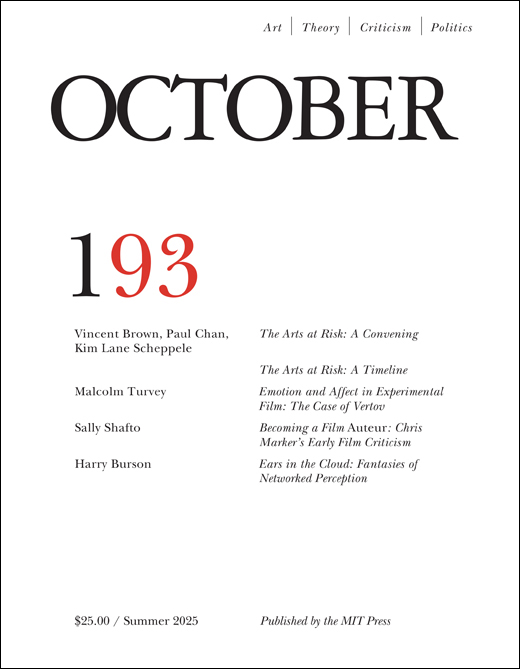
In 1976, two art historians launched a quarterly journal that would fundamentally reshape how we think about photography. October journal, founded by Rosalind Krauss and Annette Michelson, didn't just publish photography criticism—it dismantled the entire edifice of modernist photography theory and rebuilt it from scratch. For nearly five decades, October has been the intellectual engine driving photography discourse from formalist appreciation toward semiotic analysis, poststructuralist critique, and ideological interrogation. If you've ever questioned the "decisive moment," analyzed appropriation art, or considered photography's relationship to power, you're walking terrain that October mapped.
This wasn't another photography magazine celebrating beautiful prints. October brought European critical theory—Barthes, Foucault, Benjamin, Derrida—to American photography discourse with surgical precision. The journal's influence extends far beyond its academic readership. Photography MFA programs structure their theory courses around October articles. Museums reconsidered acquisition policies. The Pictures Generation found their theoretical framework. And contemporary debates about AI-generated images echo arguments October made about mechanical reproduction decades ago.1
The Revolutionary Founding: 1976 and the Birth of Critical Photography Discourse
When Krauss and Michelson launched October through MIT Press, they weren't simply adding another voice to photography criticism. They were staging an intellectual coup against the dominant paradigm.2 At that moment, photography criticism in America meant John Szarkowski at MoMA—formalist readings emphasizing the medium's unique properties, celebrating the photographer's eye, venerating the decisive moment. Beaumont Newhall's "Photography: A Short Critical History" had established the canon. Photography was understood through its formal qualities: sharpness, tonal range, composition.
October said: not so fast. What if photography's meaning isn't inherent in the image but constructed through discourse? What if we stopped worshiping the photographer's vision and started analyzing the ideological work photographs perform? The journal's early issues introduced American readers to Walter Benjamin's "The Work of Art in the Age of Mechanical Reproduction," fundamentally challenging photography's claims to authenticity and aura.3
The founding editors brought formidable credentials. Krauss had studied with Clement Greenberg but broke from his formalist orthodoxy. Michelson specialized in film theory and avant-garde cinema. Together, they assembled an editorial board committed to rigorous theoretical inquiry: Hal Foster, Yve-Alain Bois, Benjamin Buchloh, Denis Hollier.4 This wasn't dilettantish dabbling. October maintained peer-review standards that rivaled any academic journal, yet wrote with intellectual urgency that transcended academic stuffiness.
Douglas Crimp's "Pictures": The Essay That Defined a Generation
If you want to understand October journal photography theory criticism, start with Issue 8, Spring 1979. Douglas Crimp's essay "Pictures" didn't just analyze a group of emerging artists—it provided the theoretical framework that would define postmodern photography.5 Crimp examined how artists like Sherrie Levine, Richard Prince, Cindy Sherman, and Robert Longo weren't creating original photographs but appropriating, re-staging, and deconstructing existing images.
The essay's radical insight? Photography's postmodern condition meant abandoning originality entirely. These artists photographed photographs, re-performed film stills, appropriated advertising imagery. They weren't documenting reality—they were revealing how images construct reality. Crimp drew on Roland Barthes's semiotics and poststructuralist theory to argue that meaning resides not in images themselves but in the systems of representation that frame them.6
"Pictures" gave the Pictures Generation their name and their critical legitimacy. More importantly, it shifted photography criticism's entire vocabulary. Suddenly critics weren't discussing composition and print quality—they were analyzing appropriation, simulacra, the death of the author, the constructed nature of photographic truth. Museums that had ignored these artists scrambled to acquire their work. Photography departments restructured curricula around postmodern theory.
The Ripple Effects Through Photography Education
Walk into any photography MFA program today and you'll see October's influence. Students don't just make photographs—they theorize their practice using frameworks October established. The journal's articles became required reading, shaping how emerging photographers understand their medium. Programs at Yale, CalArts, Bard, and countless other institutions built theory seminars around October's photography criticism.7 This represents October's most enduring legacy: transforming photography education from technical training into critical inquiry.
Rosalind Krauss and the Semiotic Turn in Photography Theory
While Crimp defined the Pictures Generation, Rosalind Krauss provided October's most sustained theoretical engagement with photography. Her essays—collected later in books like "The Originality of the Avant-Garde and Other Modernist Myths"—applied semiotic analysis to photography with unprecedented rigor. Krauss asked: what makes a photograph mean what it means?8
Her 1982 essay "Photography's Discursive Spaces" remains essential reading. Krauss examined how photography's meaning shifts depending on institutional context—the same image reads differently in an art gallery, a newspaper, a family album, or a police file. This wasn't abstract theorizing. Krauss analyzed specific photographers: Eugène Atget's Paris street scenes, Walker Evans's Depression-era documentation, Edward Weston's formalist still lifes. She revealed how each photographer's work had been conscripted into narratives that obscured their actual complexity.9
Krauss challenged photography's indexical claims—the notion that photographs are direct traces of reality. Yes, photographs result from light hitting film or sensors. But that physical connection doesn't guarantee truth or transparency. Photographs are coded, constructed, ideologically loaded. They participate in discourse rather than transcending it. This semiotic approach fundamentally opposed the formalist tradition that dominated American photography criticism. Where Szarkowski celebrated photography's descriptive power, Krauss interrogated its representational claims.
The implications extended beyond theory. Museums began reconsidering how they displayed photographs, acknowledging that exhibition contexts shape meaning. Collectors questioned assumptions about photographic authenticity and originality. And photographers themselves absorbed these ideas, creating work that foregrounded photography's discursive construction. The shift from modernist to postmodernist photography criticism runs directly through Krauss's October essays.
Allan Sekula's Marxist Photography Criticism and the Critique of Documentary
October wasn't just about semiotics and poststructuralism. Allan Sekula brought Marxist analysis to photography criticism, examining how photographs serve economic and political power. His essays—particularly "The Traffic in Photographs" and "Dismantling Modernism, Reinventing Documentary"—interrogated documentary photography's claims to represent reality objectively.10
Sekula asked uncomfortable questions. Who benefits when photographers document poverty, war, or social injustice? How do photographs circulate through markets, institutions, and media systems? What ideological work do documentary images perform? His analysis revealed how documentary photography—often presented as neutral observation—actually reinforces existing power structures. The photographer arrives, extracts images from communities, and departs. The photographs circulate in galleries and publications that those photographed will never access. Meanwhile, the subjects' actual conditions remain unchanged.11
This critique hit hard because it challenged photography's liberal conscience. Documentary photographers believed they were doing good—exposing injustice, giving voice to the marginalized, creating social change. Sekula suggested they might be perpetuating exploitation through representation. His essays appeared regularly in October throughout the 1980s and 1990s, providing a materialist counterpoint to the journal's poststructuralist tendencies. For photographers committed to documentary practice, Sekula's work demanded ethical reckoning.12
Craig Owens, Allegory, and the Postmodern Photographic Image
Craig Owens brought yet another critical framework to October's photography discourse: allegory. His 1980 essay "The Allegorical Impulse: Toward a Theory of Postmodernism" examined how postmodern artists—including photographers—employed allegorical strategies rather than symbolic ones.13 Where symbols suggest transcendent meaning, allegories accumulate fragmentary meanings through appropriation and juxtaposition.
This distinction matters for understanding postmodern photography. When Sherrie Levine re-photographed Walker Evans's photographs, she wasn't creating symbols with fixed meanings. She was constructing allegories about authorship, originality, gender, and art history. When Richard Prince photographed Marlboro advertisements, he allegorized American masculinity, advertising culture, and appropriation itself. Owens provided the theoretical vocabulary for understanding these gestures.14
Owens also contributed crucial feminist analysis to October's photography criticism. His essays on representation, desire, and the male gaze examined how photographs construct gendered viewing positions. This work connected to broader feminist critiques by Laura Mulvey, Griselda Pollock, and others, establishing photography as a key site for analyzing visual power and gender politics. The intersection of feminism, psychoanalysis, and photography theory became one of October's most productive areas of inquiry.15
October's Ongoing Evolution: From Postmodernism to Digital Image Culture
October journal photography theory criticism didn't freeze in the 1980s. The journal has continuously evolved, addressing new technologies, practices, and theoretical frameworks. The 1990s saw increased attention to globalization, postcolonial photography, and non-Western photographic practices. The 2000s brought engagement with digital photography and its implications for indexicality, authenticity, and circulation.16
Recent issues have tackled computational photography, machine learning, and AI-generated images. The theoretical frameworks October established—questioning photographic truth, analyzing power relations, examining institutional contexts—prove remarkably adaptable to new technologies. When we debate whether AI-generated images constitute "real" photography, we're rehearsing arguments October initiated about mechanical reproduction and authorship decades ago.17
The journal has also expanded beyond its founding editors. New contributors bring diverse perspectives while maintaining October's intellectual rigor. Scholars like Abigail Solomon-Godeau, Benjamin Buchloh, and Hal Foster have published landmark photography essays in October, extending and complicating the journal's theoretical project. The October Files book series—published by MIT Press—has produced volumes dedicated to specific photographers and photographic topics, making the journal's scholarship accessible in new formats.18
Accessing October's Photography Archives
For photographers, scholars, and students wanting to engage with October's photography criticism, access has never been easier. The complete archive is available through JSTOR, which many universities and libraries subscribe to. MIT Press Direct also provides digital access to current and back issues. The Internet Archive hosts some early issues, though coverage is incomplete.19
For those without institutional access, many university libraries offer day passes or community borrowing privileges. Public libraries increasingly provide JSTOR access through digital research databases. Individual articles can be purchased, though subscription provides better value for serious research. October also maintains a website with information about current issues, submission guidelines, and subscription options.20
October Versus Aperture: Two Approaches to Photography Criticism
Understanding October requires contrasting it with other photography journals. Aperture, founded in 1952 by Minor White, Ansel Adams, and others, represents the formalist tradition October challenged. Where Aperture celebrates photographic craft, print quality, and the photographer's vision, October interrogates photography's ideological functions. Aperture publishes beautiful reproductions; October publishes dense theoretical analysis. Aperture addresses photographers; October addresses scholars, critics, and theoretically-engaged artists.21
The difference isn't just stylistic—it's philosophical. Aperture assumes photography has inherent aesthetic value worth celebrating. October questions that assumption, examining how value gets constructed through institutional, economic, and discursive systems. Aperture treats photography as art; October analyzes how photography becomes art. Both approaches have merit, but they address different audiences and serve different purposes.22
Other journals occupy different positions in this landscape. Camera Lucida (no longer published) focused on contemporary art photography. History of Photography provides historical scholarship. Photography & Culture examines photography's social dimensions. But October remains unique in its sustained theoretical engagement with photography across nearly five decades. No other journal has influenced photography criticism so profoundly or consistently.23
The October Effect: How One Journal Transformed Photography's Status
Perhaps October's greatest achievement was elevating photography from craft practice to critical discourse. Before October, photography occupied an uncertain position in the art world—accepted in some contexts, dismissed in others, rarely theorized with the sophistication applied to painting or sculpture. October changed that. By applying rigorous theoretical frameworks to photography, the journal demonstrated that photographs demanded serious intellectual engagement.24
Museums responded. Photography departments expanded. Major contemporary art museums began collecting photographs seriously. Galleries represented photographers alongside painters and sculptors. Photography entered the mainstream art market with prices reflecting its newfound legitimacy. While market forces and institutional politics drove these changes, October provided the intellectual justification. Collectors and curators could point to October's theoretical work when arguing for photography's artistic importance.25
This legitimation had complex effects. On one hand, photographers gained access to resources, exhibitions, and recognition previously unavailable. On the other hand, photography's absorption into the art world meant accepting art world hierarchies, market logics, and institutional constraints. October's critics—and there are many—argue the journal contributed to photography's gentrification, transforming a democratic medium into another luxury commodity. The journal's defenders counter that theoretical sophistication doesn't preclude political engagement or democratic access.26
Reading October Today: A Guide for Contemporary Photographers
Should you read October if you're a photographer in 2025? That depends on what you want from photography. If you're satisfied making beautiful images without questioning photography's broader implications, probably not. October demands intellectual labor. The writing is dense, theoretically sophisticated, and assumes familiarity with critical theory. You won't find practical tips about lighting or composition.27
But if you want to understand photography's cultural work—how images shape consciousness, serve power, construct identity, circulate through networks—October remains essential. Start with the classic essays: Crimp's "Pictures," Krauss's "Photography's Discursive Spaces," Sekula's "Dismantling Modernism, Reinventing Documentary," Owens's "The Allegorical Impulse." These texts established frameworks that subsequent photography criticism builds upon. They're challenging but rewarding, opening perspectives that transform how you see photographs.28
Then explore more recent issues addressing digital photography, globalization, and contemporary image culture. October continues publishing cutting-edge photography criticism that addresses current technologies and practices. The journal's engagement with AI photography and computational imaging provides theoretical tools for understanding these developments beyond technical description.29
Consider forming a reading group with other photographers. October's difficulty becomes more manageable when discussed collectively. Many photography programs and workshops organize October reading groups, working through articles together and debating their implications. This collaborative engagement mirrors how the journal itself functions—as a site for ongoing theoretical conversation rather than definitive pronouncements.30
Essential October Photography Articles: A Reading List
Building a comprehensive understanding of October's photography criticism requires reading widely across the journal's nearly five-decade run. Here's a curated list of essential articles that trace the journal's evolution and major themes:
- Douglas Crimp, "Pictures" (Issue 8, Spring 1979)
- Rosalind Krauss, "Photography's Discursive Spaces" (Issue 22, Autumn 1982)
- Allan Sekula, "The Traffic in Photographs" (Issue 29, Summer 1984)
- Craig Owens, "The Allegorical Impulse: Toward a Theory of Postmodernism" (Issue 12, Spring 1980)
- Abigail Solomon-Godeau, "Photography After Art Photography" (Issue 28, Spring 1984)
- Benjamin Buchloh, "Residual Resemblance: Three Notes on the Ends of Portraiture" (Issue 50, Autumn 1989)
- Hal Foster, "The Archive Without Museums" (Issue 77, Summer 1996)
These articles provide foundation for understanding October's approach to photography theory and criticism. They're frequently cited in photography scholarship and remain relevant to contemporary practice.31
October's Legacy and Contemporary Photography Criticism
Nearly fifty years after its founding, October journal photography theory criticism continues shaping how we understand photographs. The journal's theoretical frameworks appear everywhere—in museum wall texts, academic articles, artist statements, critical reviews. Terms October popularized—appropriation, simulacra, the constructed photograph, photographic discourse—are now standard vocabulary. Photographers who've never read October nevertheless work within conceptual territories the journal mapped.32
Contemporary photography criticism exists in October's shadow. Online platforms, blogs, and social media have democratized criticism, but serious theoretical engagement still references October's work. When critics analyze post-documentary photography, they're extending arguments Sekula made in October. When scholars examine photography's relationship to power and surveillance, they're building on frameworks October established. The journal's influence is so pervasive it's almost invisible—like water to fish.33
Yet October also faces criticism. Some argue the journal's theoretical density excludes broader audiences, creating an elite discourse accessible only to academics. Others suggest October's focus on Western art and theory marginalizes non-Western photographic practices. Still others contend the journal's absorption into academic institutions has blunted its critical edge. These critiques have merit and reflect ongoing debates about photography criticism's purposes and audiences.34
Despite these limitations, October remains indispensable for anyone seriously engaged with photography theory. The journal demonstrated that photographs aren't just pictures—they're complex cultural objects that demand rigorous analysis. Whether you agree with October's specific arguments or not, engaging with them sharpens your thinking and deepens your understanding. That's what great criticism does: it challenges you to see differently, think harder, question assumptions.35
Conclusion: Why October Still Matters for Photography
October journal photography theory criticism transformed how we understand photographs—from transparent windows on reality to constructed representations embedded in power relations. For nearly five decades, the journal has provided intellectual frameworks that photography criticism continues using. Douglas Crimp defined postmodern photography. Rosalind Krauss established semiotic analysis. Allan Sekula brought Marxist critique. Craig Owens theorized allegory and appropriation. Together, these and other October contributors dismantled modernist photography theory and built something more sophisticated in its place.
Today, as we navigate AI-generated images, deepfakes, and computational photography, October's theoretical tools remain relevant. The journal taught us to question photographic truth, analyze institutional power, examine representation's politics, and recognize photography's ideological work. These skills matter more than ever in our image-saturated culture. Whether you're a photographer, scholar, curator, or simply someone who thinks seriously about images, October offers frameworks for understanding photography's complexity.36
The journal isn't perfect. It can be dense, exclusionary, and limited in scope. But it's also brilliant, challenging, and endlessly generative. Reading October won't make you a better technical photographer, but it might make you a more thoughtful one. It'll certainly make you see photographs differently—not as simple records but as complex cultural productions worthy of serious analysis. And in a world drowning in images, that critical perspective is invaluable.
Ready to dive deeper into photography theory? Start with October's classic essays, available through JSTOR or your university library. Join a reading group. Engage with the arguments. Let October challenge your assumptions about what photography is and does. The journey won't be easy, but it'll transform how you understand this medium we call photography.
Frequently Asked Questions About October Journal and Photography Criticism
What makes October journal different from other photography publications?
October journal photography theory criticism differs fundamentally from publications like Aperture or other photography magazines. Rather than celebrating photographic craft or showcasing beautiful images, October applies rigorous theoretical frameworks—semiotics, psychoanalysis, Marxist critique, poststructuralism—to analyze photography's cultural work. The journal treats photographs as complex ideological objects rather than aesthetic achievements, examining how images construct meaning, serve power, and circulate through institutional systems. This theoretical sophistication makes October essential for scholars and critics but challenging for readers seeking practical photography advice.37
How did October influence the Pictures Generation artists?
October provided the theoretical framework that legitimized and explained the Pictures Generation's artistic practices. Douglas Crimp's 1979 essay "Pictures" in October Issue 8 gave the movement its name and intellectual foundation. Crimp analyzed how artists like Sherrie Levine, Richard Prince, and Cindy Sherman used appropriation, re-photography, and constructed imagery to critique modernist assumptions about authorship, originality, and photographic truth. October's theoretical work helped museums, collectors, and critics understand these practices as sophisticated conceptual gestures rather than derivative copying. The journal's ongoing coverage provided Pictures Generation artists with critical legitimacy that translated into institutional recognition and market success.38
Can photographers without academic backgrounds benefit from reading October?
Yes, but it requires commitment. October's writing is theoretically dense and assumes familiarity with critical theory, art history, and philosophical concepts. However, photographers willing to invest effort will find frameworks that transform their understanding of photography's cultural work. Start with foundational essays like Crimp's "Pictures" or Krauss's "Photography's Discursive Spaces," which are challenging but accessible. Consider joining a reading group to discuss articles collectively. Many self-taught photographers report that engaging with October—despite initial difficulty—fundamentally changed their practice, prompting them to think critically about representation, power, and photography's ideological functions. The journal won't improve your technical skills, but it'll deepen your conceptual sophistication.39
How do I access October's photography articles if I'm not affiliated with a university?
Several options exist for accessing October journal photography theory criticism without university affiliation. Many public libraries provide JSTOR access through their digital resources, allowing cardholders to read October's complete archive. Some university libraries offer community borrowing privileges or day passes that include database access. Individual articles can be purchased directly from JSTOR or MIT Press, though this becomes expensive for extensive research. October also offers individual subscriptions at reasonable rates, providing access to current and recent issues. Additionally, some October articles have been anthologized in photography theory collections available at bookstores and libraries. Finally, many photographers and scholars share PDFs through academic networks, though copyright considerations apply.40
How is October's approach relevant to contemporary digital and AI photography?
October's theoretical frameworks remain remarkably relevant for analyzing contemporary digital and AI-generated imagery. The journal's critique of photographic authenticity, originality, and indexicality—developed in the 1970s and 1980s—anticipated many current debates about computational photography. When October questioned photography's claims to truth and examined mechanical reproduction's implications, it established conceptual tools applicable to AI image generation, deepfakes, and algorithmic manipulation. Recent October issues have directly engaged with digital photography, examining how computational processes transform photographic meaning and circulation. The journal's emphasis on analyzing power relations, institutional contexts, and ideological functions helps photographers and critics understand digital image culture beyond technical description. October's historical work on appropriation and simulation provides frameworks for analyzing how AI systems remix and recombine existing imagery.41
What are the main criticisms of October's approach to photography?
Critics raise several concerns about October journal photography theory criticism. First, the journal's theoretical density and academic language exclude broader audiences, creating an elite discourse accessible mainly to scholars. Second, October's focus on Western art and European theory marginalizes non-Western photographic practices and alternative critical frameworks. Third, some argue the journal's poststructuralist approach overemphasizes theory at the expense of photography's material practices and social contexts. Fourth, October's institutional position within academia has allegedly blunted its critical edge, making it complicit in systems it once critiqued. Fifth, the journal's emphasis on conceptual photography and appropriation art neglects other photographic traditions and practices. Finally, critics suggest October contributed to photography's commodification by providing intellectual justification for its absorption into the art market. These critiques reflect ongoing debates about photography criticism's purposes, audiences, and political commitments.42
- October's theoretical frameworks established in the 1970s and 1980s provided conceptual tools that remain relevant for analyzing contemporary digital image culture.
- The journal's name referenced Sergei Eisenstein's 1928 film, signaling its commitment to avant-garde aesthetics and revolutionary cultural politics.
- Benjamin's essay, originally published in 1936, gained widespread influence in American photography discourse through October's translation and theoretical contextualization.
- The editorial board's interdisciplinary expertise—spanning art history, film studies, literary theory, and philosophy—enabled October's distinctive cross-pollination of critical approaches.
- Crimp's essay originated from his 1977 exhibition "Pictures" at Artists Space in New York, which featured Troy Brauntuch, Jack Goldstein, Sherrie Levine, Robert Longo, and Philip Smith.
- Barthes's concepts of the "studium" and "punctum" from "Camera Lucida," along with his earlier semiotic analyses, provided crucial theoretical tools for October's photography criticism.
- A 2015 study of photography MFA syllabi found October articles among the most frequently assigned readings, particularly essays by Crimp, Krauss, and Sekula.
- Krauss's semiotic approach drew heavily on Charles Sanders Peirce's theory of signs, particularly his concept of the "index"—a sign connected to its referent through physical trace.
- Krauss's analysis of Atget particularly influenced how museums and scholars reconsidered his work, moving beyond surrealist appropriation to examine his commercial practice and archival intentions.
- Sekula's work built on John Berger's Marxist cultural criticism while engaging with Michel Foucault's analysis of power and surveillance.
- Sekula's critique influenced subsequent generations of documentary photographers to develop more collaborative, community-engaged practices.
- Contemporary debates about photojournalism ethics, representation of marginalized communities, and photographer positionality trace directly to questions Sekula raised in October.
- Owens drew on Walter Benjamin's study of German Baroque allegory in "The Origin of German Tragic Drama," applying Benjamin's insights to contemporary art practices.
- Owens's work on allegory influenced how critics analyzed not just the Pictures Generation but subsequent photographers working with found imagery and appropriation strategies.
- Feminist photography criticism in October influenced artists like Cindy Sherman, Barbara Kruger, and Martha Rosler, who explicitly engaged with questions of gender, representation, and spectatorship.
- October's engagement with digital photography built on earlier theoretical work while addressing new questions about algorithmic image production, database logic, and networked circulation.
- October's critique of photographic authenticity and originality anticipated many contemporary debates about deepfakes, generative AI, and computational image manipulation.
- The October Files series includes volumes on photographers like Diane Arbus, Cindy Sherman, and Jeff Wall, providing comprehensive critical anthologies.
- JSTOR's searchable database allows researchers to find October articles by keyword, making it possible to locate all photography-related content across the journal's nearly five-decade run.
- Student subscription rates make October accessible to emerging photographers and scholars, continuing the journal's influence on photography education.
- This isn't to dismiss Aperture, which has published important criticism and evolved considerably since its founding. But the journals represent fundamentally different approaches to photography discourse.
- Many photographers engage with both journals, using Aperture for visual inspiration and October for theoretical frameworks.
- October's influence extends beyond photography to contemporary art criticism generally, but photography remains central to the journal's theoretical project.
- This transformation wasn't October's work alone—other scholars, critics, and institutions contributed—but October provided the primary theoretical foundation.
- The relationship between October's theoretical work and photography's market value raises interesting questions about how critical discourse shapes economic value.
- This debate continues in contemporary photography discourse, with October remaining a focal point for arguments about photography's institutional and market positions.
- For photographers seeking technical instruction, resources like smartphone photography guides serve different purposes than October's theoretical work.
- Many photographers report that reading October fundamentally changed their practice, prompting them to question assumptions they'd previously taken for granted.
- October's theoretical frameworks help photographers think critically about new technologies rather than simply adopting them uncritically.
- Reading groups also help contextualize October's arguments within broader photography discourse, connecting theoretical frameworks to practical concerns.
- Many of these articles have been anthologized in photography theory collections, making them accessible beyond October's original publication.
- This widespread influence demonstrates how theoretical work circulates beyond its original context, shaping practice even when practitioners aren't directly familiar with the source texts.
- This invisibility can make it difficult to recognize October's influence, but tracing contemporary photography criticism's genealogy consistently leads back to the journal's foundational work.
- October's editors and contributors have engaged with these critiques, though opinions differ about how successfully the journal has addressed them.
- This critical function remains vital in an era of image saturation, where we need sophisticated frameworks for analyzing photography's cultural work.
- Engaging with October's photography criticism provides conceptual tools applicable far beyond academic contexts, informing how we navigate contemporary visual culture.
- October's intellectual rigor and peer-review standards match leading academic journals while maintaining relevance to contemporary art discourse.
- The symbiotic relationship between October's criticism and Pictures Generation art demonstrates how theoretical discourse can shape artistic production and reception.
- Photographers interested in critical image theory will find October's frameworks particularly valuable for developing conceptually rigorous practices.
- Investing in a personal subscription supports the journal while providing ongoing access to one of photography criticism's most important publications.
- Photographers working with AI tools will find October's theoretical frameworks valuable for thinking critically about these technologies' implications.
- Engaging with these criticisms alongside October's work provides a more nuanced understanding of photography theory's possibilities and limitations.