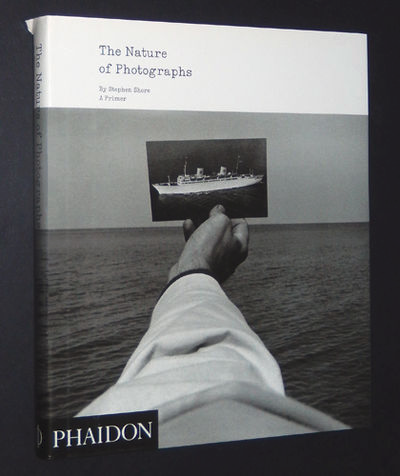
If you've ever wanted to understand what makes a photograph work—not just technically, but visually—you need to know about The Nature of Photographs by Stephen Shore. First published in 1998 and revised in 2007, this slim volume has become the essential primer for anyone serious about photographic literacy. Shore doesn't teach you how to operate a camera. Instead, he teaches you how to see. And that's a far more valuable skill.
What makes this book remarkable isn't just that it breaks down complex visual concepts into digestible insights—it's that Shore, one of the most influential living photographers, distilled decades of practice and teaching into 133 pages of pure clarity.1 Born from his teaching experience at Bard College, The Nature of Photographs offers a systematic framework for understanding how photographs communicate, focusing on form over content in ways that feel counterintuitive at first—then suddenly obvious.
Who Is Stephen Shore and Why Does His Theory Matter?
Before diving into the book itself, you need context about its author. Stephen Shore isn't just another photographer writing about photography—he's someone who fundamentally changed how we think about the medium. In the 1970s, when serious art photography meant black-and-white prints, Shore was shooting color snapshots of everyday America. His groundbreaking series American Surfaces (1972-73) and Uncommon Places (1973-81) elevated vernacular subjects—motels, intersections, meals—into high art through meticulous attention to formal structure.2
Shore's background gives him a unique dual perspective. He started photographing at age six and sold prints to Edward Steichen at MoMA by age fourteen. He hung out with Andy Warhol at the Factory as a teenager, documenting that scene with precocious sophistication. By the time he began teaching at Bard College in 1982, Shore had already revolutionized documentary practice. The Nature of Photographs emerged from those college courses, where he needed to articulate what he'd been doing intuitively for decades.3
This practitioner-theorist combination matters because Shore writes from experience, not abstraction. He's not imposing academic frameworks onto photography—he's describing how photographs actually function in the world. That practical grounding makes the book accessible to students while remaining rigorous enough for serious practitioners. It's why The Nature of Photographs has become standard curriculum in photography programs worldwide.
The Book's Core Framework: Physical and Mental Levels
Shore's analytical framework divides photographic understanding into two fundamental levels: the physical level and the mental level. This distinction forms the conceptual backbone of the entire book, and understanding it unlocks everything else.4
The Physical Level: What's Actually There
The physical level concerns the photograph as an object—its size, surface, tone, color. When you hold a print in your hands, you're experiencing its physical properties. Is it glossy or matte? Large or small? These qualities affect how we perceive the image before we even consider what it depicts.5 A billboard-sized print creates a different experience than a wallet-sized snapshot, even if they show the same image.
Shore doesn't just mention this abstractly—he demonstrates it through careful analysis of specific photographs. He shows how Ansel Adams's large-format contact prints demand close viewing, creating an intimate relationship between viewer and landscape. Meanwhile, Ed Ruscha's small, matter-of-fact gas station photographs in Twentysix Gasoline Stations use their modest scale to reinforce their deadpan conceptual approach.6
The Mental Level: Depictive and Mental Images
The mental level gets more complex. Shore subdivides it into the depictive level (what the photograph shows) and the mental level (what we think about what's shown). The depictive level is straightforward—it's the literal content. A photograph depicts a woman standing in a doorway, or a car parked on a street.7
But the mental level involves everything we bring to that depiction: our associations, memories, cultural knowledge, emotional responses. When you see that woman in the doorway, you might think about waiting, or departure, or solitude. These aren't in the photograph—they're in your mind, triggered by what you see. Shore argues that understanding this distinction helps photographers recognize what they can control (depictive choices) versus what they can only suggest (mental associations).8
This might sound academic, but it's intensely practical. When you're composing a shot, you're making depictive decisions—what to include, where to stand, when to click. But you're hoping to trigger specific mental responses in viewers. Shore's framework helps you think through that relationship systematically rather than hoping for magic. For those interested in developing their visual thinking, this connects well with broader approaches to image critique and semiotics.
The Four Essential Qualities: Flatness, Frame, Time, and Focus
After establishing his analytical framework, Shore identifies four fundamental qualities that define every photograph. These aren't optional features—they're inherent to the medium itself. Every photograph is flat, framed, exists in time, and has a focus structure. Understanding how these qualities work gives you a systematic way to analyze any image.9
Flatness: The Two-Dimensional Reality
Photographs are flat. This seems obvious, but Shore shows how this flatness creates specific challenges and opportunities. A three-dimensional world gets compressed onto a two-dimensional surface, which means photographers must use visual cues—perspective, scale relationships, overlapping forms—to suggest depth.10
Shore demonstrates this with examples ranging from Walker Evans to Garry Winogrand. Evans often emphasized flatness, creating images where foreground and background compress into graphic planes. Winogrand, conversely, used wide-angle lenses and dynamic angles to exaggerate depth, fighting against the medium's inherent flatness. Neither approach is better—they're different strategies for managing this fundamental quality.11
For contemporary photographers working with smartphone cameras, understanding flatness becomes especially relevant. Phone cameras have wide-angle lenses that create specific spatial distortions, and knowing how flatness works helps you use those characteristics intentionally.
Frame: The Edge as Active Element
The frame isn't just a border—it's an active element that shapes meaning. What you include matters, but what you exclude matters just as much. Shore shows how the frame creates relationships between elements within the image and implies a world beyond the edges.12
He analyzes how different photographers use the frame differently. Cartier-Bresson's frames feel inevitable, as if the world arranged itself perfectly within his viewfinder. Robert Frank's frames often feel arbitrary, cutting through scenes in ways that suggest spontaneity and chance. Lee Friedlander uses the frame to create complex spatial puzzles, layering reflections and overlapping forms that challenge easy reading.13
Shore's discussion of framing connects to broader questions about documentary photography and representation. When you frame a scene, you're making editorial choices about what matters. Understanding this helps photographers work more ethically and intentionally.
Time: The Decisive Moment and Beyond
Photographs exist in time in multiple ways. There's the moment of exposure—the slice of time the photograph captures. There's the time it takes to view the photograph. And there's the historical time the photograph depicts and the time when we view it.14
Shore explores how photographers handle time differently. Cartier-Bresson's "decisive moment" approach seeks peak instants of visual and narrative significance. Diane Arbus photographed people in moments of stillness, creating images that feel suspended outside normal time. Shore's own work in Uncommon Places often depicts empty or static scenes, where time feels dilated rather than captured.15
This discussion resonates with contemporary debates about photography in the digital era. When you can shoot thousands of frames in a burst mode, what does the "decisive moment" mean? Shore's framework helps you think through these questions systematically rather than getting lost in nostalgia for film-era practices.
Focus: What's Sharp and What Isn't
Focus directs attention. What's sharp draws the eye; what's soft recedes. But Shore shows how focus works more subtly than simple sharp-versus-blurry binaries. Depth of field creates spatial zones. Selective focus isolates subjects. Overall sharpness can feel clinical or descriptive, while soft focus might suggest memory or emotion.16
He analyzes how photographers from different traditions use focus. Large-format photographers like Shore himself often work with extensive depth of field, rendering everything sharp from foreground to background. This creates images where every detail matters equally, forcing viewers to navigate the frame actively. Other photographers use shallow focus to create dreamlike atmospheres or direct attention forcefully.17
Understanding focus becomes crucial when working with different camera systems. The computational photography in modern smartphones creates focus effects algorithmically, which operates differently than optical depth of field. Shore's framework helps you understand what's actually happening in your images.
The 1998 Edition vs. 2007 Revision: What Changed?
The book's publishing history matters for understanding its evolution. Johns Hopkins University Press published the first edition in 1998 as part of their photography series. It was well-received in academic circles but had limited reach beyond university libraries and serious photography students.18
In 2007, Phaidon published a revised and expanded second edition. This wasn't just a reprint—Shore redesigned the entire book. The new edition features better reproduction quality, more illustrations, and clearer layout. The text was revised for clarity, though the core framework remained consistent.19 Phaidon's distribution network also brought the book to general photography audiences, not just students and academics.
The 2007 edition is the one most readers encounter today, and it's the version typically referenced in photography curricula. If you're looking for a copy, the Phaidon edition is worth seeking out for its superior production values. You can find detailed information about both editions through Open Library.20
The Book's Structure and Pedagogical Approach
The Nature of Photographs is remarkably concise—133 pages in the second edition. Shore structures it systematically, building from basic concepts to more complex analysis. The book doesn't follow a traditional chapter structure but rather presents a series of interconnected observations, each illustrated with specific photographic examples.21
Shore's pedagogical approach emphasizes looking before theorizing. He presents photographs and asks you to observe specific qualities before explaining what you're seeing. This trains your eye rather than just filling your head with concepts. It's the difference between learning about photography and learning to see photographically.22
The book includes plates from various photographers—not just Shore's work. You'll find images by Atget, Evans, Frank, Arbus, Friedlander, Winogrand, and others. Shore analyzes these photographs to demonstrate his concepts, showing how his framework applies across different styles, periods, and approaches. This breadth prevents the book from becoming a manifesto for one particular aesthetic.23
What's striking is what Shore doesn't include. There's minimal discussion of camera technique, darkroom processes, or equipment. He's not interested in teaching you how to expose film or mix chemicals. He assumes you can figure that out elsewhere. Instead, he focuses entirely on visual literacy—how to read photographs and, by extension, how to make them more consciously.24
For photographers interested in developing their visual thinking beyond technical mastery, Shore's approach complements practical resources like guides to portrait aesthetics or mood creation in photography.
Why This Book Matters in the Digital Photography Era
You might wonder whether a book first written in 1998—before digital photography dominated—remains relevant today. The answer is absolutely yes, perhaps even more so now than when Shore wrote it.25
Shore's framework addresses the fundamental nature of photographs, not the technology used to create them. Whether you shoot film, digital, or smartphone doesn't change the fact that photographs are flat, framed, temporal, and focused. The medium's essential qualities remain constant even as capture technology evolves.26
In fact, the book's relevance has intensified in the Instagram age. When everyone has a camera in their pocket and millions of images flood social media daily, visual literacy becomes more crucial, not less. Shore's framework gives you tools to understand why certain images work and others don't—tools that apply whether you're analyzing Ansel Adams or evaluating your Instagram feed.27
The book also addresses questions that digital photography makes more pressing. When you can shoot unlimited frames, how do you choose the right moment? When computational photography can manipulate focus and depth of field after capture, what does that mean for photographic intention? Shore's framework doesn't answer these questions directly—he couldn't have anticipated them—but it gives you conceptual tools to think them through.28
For photographers navigating the complexities of modern image-making, including questions about AI-generated imagery and authenticity, Shore's emphasis on understanding fundamental visual qualities provides crucial grounding.
Practical Applications: Using Shore's Framework
Theory matters only if it changes how you work. So how do you actually use Shore's ideas when you're out shooting or editing?29
Start with the frame. Before you click, ask yourself what's at the edges. What are you including? What are you cutting off? How do those choices affect meaning? This simple habit—checking the frame edges before shooting—immediately improves composition. You stop centering subjects automatically and start thinking about spatial relationships.30
Consider time. Are you photographing a peak moment, or a durational state? A gesture mid-flight, or a static scene? Understanding what kind of time you're capturing helps you choose the right moment to shoot. It also affects how you sequence images when editing—do you want narrative progression or spatial exploration?31
Think about focus and depth of field. What do you want sharp? What can be soft? Don't just default to maximum sharpness or fashionable shallow focus—choose based on what you want viewers to see and feel. If every detail matters, shoot for depth. If you want to isolate a subject emotionally, use selective focus.32
When editing, use Shore's depictive/mental distinction to evaluate your images. Ask: What does this photograph literally show? What do I want viewers to think or feel about what's shown? If there's a gap between depiction and desired mental response, you might need a different frame, moment, or approach.33
Shore's framework also helps you analyze other photographers' work more systematically. Instead of vague responses like "I like it" or "it's interesting," you can identify specific formal qualities that create particular effects. This analytical skill feeds back into your own practice, helping you make more conscious choices.34
The Book's Influence on Photography Education
The Nature of Photographs has become a standard text in photography programs worldwide. It's assigned in introductory courses, discussed in theory seminars, and referenced in critiques. Its influence extends beyond formal education into workshops, online courses, and self-directed study.35
What makes the book so effective pedagogically? First, it's accessible without being simplistic. Shore writes clearly, avoiding unnecessary jargon while maintaining conceptual rigor. Students can understand his ideas without extensive background in art theory or photographic history.36
Second, the book provides a shared vocabulary for discussing photographs. When students and teachers can reference Shore's framework—talking about depictive versus mental levels, or analyzing how a photographer uses the frame—critiques become more productive. You move beyond subjective reactions to systematic analysis.37
Third, Shore's approach is generative rather than prescriptive. He doesn't tell you how photographs should look or what makes a "good" photograph. Instead, he gives you tools to understand how photographs work, leaving aesthetic judgments open. This makes the book useful across diverse photographic practices, from post-documentary approaches to commercial work.38
The book has also influenced how photography is taught online and in workshops. Many instructors adapt Shore's concepts for shorter formats, creating exercises based on his four qualities or using his depictive/mental distinction to structure image critiques. You can see Shore's influence in countless photography blogs, YouTube channels, and online courses—even when they don't cite him directly.39
Critical Reception and Expert Perspectives
The photography community has embraced The Nature of Photographs enthusiastically, though not uncritically. Reviewers consistently praise Shore's clarity and the book's practical utility. One reviewer described it as "rich as prose-poetry," noting how Shore's concise observations reward repeated reading.40
Photography educators particularly value the book's systematic approach. Unlike texts that emphasize photographic history or technical processes, Shore provides a framework for visual analysis that students can apply immediately. This makes it effective for self-study as well as classroom use.41
Some critics note what the book doesn't address. There's minimal discussion of photographic meaning, social context, or political implications. Shore focuses almost exclusively on formal qualities, bracketing questions of content and ideology. For some readers, this feels limiting—a formalist approach that ignores photography's social dimensions.42
But this narrow focus is also the book's strength. By concentrating on how photographs work visually, Shore provides tools applicable across diverse practices and ideologies. You can use his framework whether you're shooting fashion, documentary, or conceptual work. The formal analysis doesn't preclude other modes of interpretation—it provides a foundation for them.43
The book's influence appears in how photographers talk about their work. You'll hear Shore's concepts referenced in artist statements, interviews, and critiques. Terms like "depictive level" and attention to the "nature" of the photographic medium have entered common usage among serious practitioners.44
Comparing Shore to Other Photography Theory Resources
How does The Nature of Photographs stack up against other photography education resources? It occupies a unique niche—more accessible than academic theory, more rigorous than how-to guides.45
Compare it to Susan Sontag's On Photography, perhaps the most famous book about the medium. Sontag addresses photography's cultural and philosophical implications—how photographs shape consciousness, memory, and power. She's concerned with what photography does in the world. Shore, conversely, focuses on what photographs are and how they work visually. Both books are essential, but they serve different purposes.46
Or consider John Berger's Ways of Seeing, which examines how visual culture shapes perception and ideology. Berger connects images to power structures and historical contexts. Shore, again, takes a different approach—he's interested in the photograph itself rather than its social circulation. You could read both productively, gaining complementary perspectives.47
Among books focused on photographic practice, Shore's stands out for its emphasis on seeing rather than technique. Most photography instruction books teach camera operation, lighting, composition rules. Shore assumes you'll learn those elsewhere. He teaches visual literacy—a more fundamental and transferable skill.48
The closest comparison might be John Szarkowski's writings, particularly The Photographer's Eye. Szarkowski, the legendary MoMA curator, also emphasized photography's formal qualities and distinctive characteristics. But Szarkowski wrote as a curator and historian, while Shore writes as a practitioner and teacher. Shore's book feels more directly applicable to making photographs, while Szarkowski's work excels at analyzing photographic history.49
For contemporary photographers, Shore's book pairs well with resources addressing current practices. Understanding Shore's formal framework helps you navigate questions about developing a personal aesthetic or working with emerging technologies.
Who Should Read This Book?
If you're serious about photography—whether as a student, professional, or dedicated enthusiast—you should read The Nature of Photographs. It's that simple. The book works for different readers in different ways.50
Beginning photographers benefit from Shore's systematic framework. If you're moving beyond automatic modes and starting to think about composition, Shore gives you concepts to organize your learning. Instead of absorbing rules of thirds and leading lines as disconnected tips, you develop a coherent understanding of how photographs work.51
Intermediate photographers use the book to deepen their practice. If you've mastered technical basics but feel your work lacks something, Shore helps you understand what that might be. His framework reveals gaps between what you're depicting and what you want viewers to experience, helping you work more intentionally.52
Advanced photographers and professionals find the book valuable for teaching and articulating their practice. Shore gives you vocabulary to discuss your work with clients, students, or critics. His concepts help you explain why certain formal choices matter, moving beyond intuition to systematic understanding.53
The book also serves readers interested in photography without being practitioners. If you want to understand how photographs communicate—whether for curatorial work, criticism, or personal enrichment—Shore provides accessible entry into visual analysis. You don't need to own a camera to benefit from his insights.54
Students in formal photography programs will likely encounter the book in coursework, but it's equally valuable for self-directed learners. The book's clarity and systematic approach make it effective for independent study. You can work through it alone, applying Shore's concepts to your own photographs and images you encounter daily.55
Shore's Legacy: Form, Content, and Photographic Literacy
The Nature of Photographs represents more than just a useful textbook—it embodies Shore's broader contribution to photographic culture. Throughout his career, Shore has insisted that form and content are inseparable, that how you photograph something shapes what you're saying about it.56
This philosophy appears in his own work. In Uncommon Places, Shore photographed ordinary American scenes—parking lots, street corners, motel rooms—with the formal rigor typically reserved for grand subjects. The large-format camera, careful composition, and rich color weren't decorative—they were essential to the work's meaning. By treating banal subjects with such attention, Shore suggested their overlooked significance.57
The book extends this philosophy into pedagogy. By teaching readers to see form—to notice flatness, frame, time, and focus—Shore cultivates a more sophisticated photographic literacy. This matters because we live in an image-saturated culture. Understanding how photographs work helps you navigate that visual landscape more critically.58
Shore's influence extends beyond his own students to shape photography education broadly. His systematic approach to visual analysis has been adapted by countless teachers and integrated into curricula worldwide. The book democratized photographic analysis, making sophisticated visual thinking accessible beyond elite art schools.59
In an era of computational photography and AI image generation, Shore's emphasis on understanding photographic fundamentals becomes even more crucial. As technology automates technical processes, the human contribution shifts toward intentionality and vision—precisely what Shore teaches.60 Whether you're working with film, digital, or emerging technologies, Shore's framework helps you make conscious choices about how images look and what they communicate.
Conclusion: Why The Nature of Photographs Remains Essential
More than two decades after its initial publication, The Nature of Photographs by Stephen Shore remains the essential primer for understanding how photographs work. Its longevity isn't accidental—Shore identified fundamental qualities of the medium that transcend technological changes and stylistic trends.61
The book succeeds because it teaches seeing rather than technique, analysis rather than rules. Shore gives you a framework for understanding any photograph, from nineteenth-century daguerreotypes to Instagram stories. This flexibility makes the book permanently relevant—its insights apply regardless of how you capture images.62
For photographers at any level, the book offers practical value. It helps you make more conscious decisions about framing, timing, focus, and composition. It gives you vocabulary to discuss your work and analyze others' photographs. It bridges the gap between intuitive response and systematic understanding.63
In an image-saturated world, visual literacy matters more than ever. Shore's systematic approach to understanding photographs helps you navigate visual culture more critically and create images more intentionally. Whether you're a student beginning formal photography education, a professional refining your practice, or an enthusiast deepening your understanding, The Nature of Photographs deserves a place on your shelf—and in your thinking about photography.64
Pick up a copy. Read it slowly. Look at the photographs Shore analyzes. Apply his framework to your own images and the photographs you encounter daily. You'll find your seeing sharpens, your choices become more intentional, and your understanding of this endlessly fascinating medium deepens. That's the real nature of photographs—and Shore's book is the best guide to discovering it.
Frequently Asked Questions
What is the main focus of The Nature of Photographs by Stephen Shore?
The book focuses on understanding the formal and physical qualities of photographs rather than technical camera skills or content interpretation. Shore teaches readers to analyze how photographs work visually through his framework of physical and mental levels, examining four essential qualities: flatness, frame, time, and focus. The emphasis is on developing visual literacy—learning to see and understand photographs systematically.65
Is The Nature of Photographs suitable for beginners?
Yes, absolutely. Shore wrote the book as an accessible primer for students and anyone interested in understanding photography. The text is clear and jargon-free while remaining conceptually rigorous. Beginners benefit from Shore's systematic framework, which provides organized concepts for understanding composition and visual structure rather than disconnected tips. The book doesn't require extensive background in art theory or photographic history.66
What's the difference between the 1998 and 2007 editions?
The 1998 first edition was published by Johns Hopkins University Press, while the 2007 second edition came from Phaidon. The later edition features revised and expanded text, better reproduction quality, more illustrations, and improved layout. Shore redesigned the entire book for the 2007 version, though the core conceptual framework remained consistent. The Phaidon edition is more widely available and generally recommended for its superior production values.67
Does the book remain relevant in the digital photography era?
Absolutely. Shore's framework addresses fundamental qualities of photographs that don't change with technology. Whether you shoot film, digital, or smartphone, photographs remain flat, framed, temporal, and focused. The book's relevance has arguably increased in the Instagram age, when visual literacy becomes more crucial as millions of images circulate daily. Shore's systematic approach helps photographers understand why images work regardless of capture technology, making it applicable to computational photography and even AI-generated imagery.68
How does Shore's book differ from other photography theory texts?
Shore occupies a unique position—more accessible than academic theory but more rigorous than technical how-to guides. Unlike texts focusing on cultural critique (like Susan Sontag's On Photography) or photographic history, Shore concentrates on formal visual analysis. He writes as both practitioner and teacher, providing a framework directly applicable to making and understanding photographs. The book emphasizes seeing and visual literacy rather than camera technique or theoretical abstraction, making it practical for photographers while remaining conceptually sophisticated.69
Who was Stephen Shore and why is he qualified to write this book?
Stephen Shore is one of the most influential living photographers, known for revolutionizing color photography as an art form in the 1970s. His series American Surfaces and Uncommon Places elevated vernacular subjects through rigorous formal attention. Shore began photographing at age six, sold prints to MoMA at fourteen, and documented Andy Warhol's Factory as a teenager. He has taught at Bard College since 1982, and The Nature of Photographs emerged from those college courses. His dual perspective as pioneering practitioner and experienced educator makes him uniquely qualified to write about photographic fundamentals.70
- Stephen Shore is widely recognized as a pioneer of color photography and conceptual documentary practice.
- Shore's work was instrumental in establishing color photography as a legitimate fine art medium, alongside contemporaries like William Eggleston.
- Shore's teaching methodology emphasizes visual literacy and formal analysis rather than technical instruction.
- This framework allows for systematic analysis of any photograph, regardless of subject matter or intent.
- Shore emphasizes that the physical properties of a photograph are inseparable from its meaning and impact.
- The physical presentation of photographs shapes viewer expectations and interpretive frameworks.
- The depictive level can be described objectively, though even description involves interpretation.
- This framework has influenced how photography is taught, moving beyond simple subject identification to sophisticated visual analysis.
- These four qualities provide an accessible entry point for students learning to read photographs critically.
- The management of flatness distinguishes photography from direct perception and connects it to painting traditions.
- Understanding flatness helps photographers make conscious choices about spatial representation rather than defaulting to conventional perspective.
- Framing decisions determine not just composition but narrative implications and viewer interpretation.
- The frame mediates between photographer's vision and viewer's experience, making it a crucial site of artistic decision-making.
- Time in photography involves simultaneity, duration, and historical distance, creating complex temporal relationships.
- Different approaches to time reflect different photographic philosophies and create distinct viewing experiences.
- Focus decisions shape not just visual hierarchy but emotional tone and interpretive possibilities.
- Focus choices reflect both technical constraints and aesthetic intentions, making them a key site of artistic expression.
- The first edition established Shore's pedagogical framework but lacked the visual richness of the later version.
- The 2007 edition made Shore's ideas more accessible to a broader audience beyond academic settings.
- The improved design and production quality of the 2007 edition better serves Shore's emphasis on visual analysis.
- The book's structure mirrors Shore's teaching method, presenting concepts incrementally with visual reinforcement.
- This experiential approach makes the book effective for self-study as well as classroom use.
- Using diverse photographic examples demonstrates the universal applicability of Shore's analytical framework.
- This focus on visual analysis rather than technical instruction distinguishes Shore's book from most photography education resources.
- The book's focus on visual fundamentals makes it technology-agnostic and therefore permanently relevant.
- Understanding fundamental photographic qualities helps photographers adapt to technological changes without losing sight of core principles.
- The democratization of photography makes Shore's systematic approach to visual analysis more valuable than ever.
- Shore's principles provide a foundation for addressing contemporary photographic questions and debates.
- Shore's framework provides practical decision-making tools for photographers at all levels.
- Conscious attention to framing decisions distinguishes intentional photography from snapshot casualness.
- Temporal awareness shapes both capture decisions and post-production editing choices.
- Focus choices should serve photographic intentions rather than following technical defaults or trends.
- This analytical framework helps photographers evaluate their work critically and make stronger selections.
- Systematic analysis of others' work develops visual intelligence applicable to one's own photography.
- The book's widespread adoption in photography education has shaped how multiple generations of photographers think about the medium.
- Shore's clear prose makes complex visual concepts accessible to students at various levels of experience.
- A shared analytical vocabulary improves the quality of photographic criticism and educational dialogue.
- The framework's flexibility allows it to serve diverse photographic practices and aesthetic positions.
- Shore's pedagogical approach has permeated photography education far beyond direct use of his book.
- The book's depth reveals itself through multiple readings, making it valuable for students at different stages of development.
- The book's practical applicability distinguishes it from more theoretical or historical photography texts.
- Shore's formalist approach reflects his teaching priorities but may not satisfy readers seeking cultural or political analysis.
- Formal analysis and contextual interpretation are complementary rather than mutually exclusive approaches.
- Shore's vocabulary has shaped how photographers articulate their intentions and analyze their results.
- Shore's book bridges the gap between technical instruction and theoretical analysis in photography education.
- Sontag and Shore represent complementary approaches to understanding photography—cultural critique versus formal analysis.
- Different theoretical approaches to photography address distinct questions and serve different analytical purposes.
- Visual literacy transcends specific technologies and techniques, making it a more durable educational foundation.
- Both Szarkowski and Shore emphasize formal analysis, but from different professional perspectives and for different audiences.
- The book's accessibility and depth make it valuable for photographers at all experience levels.
- Shore's framework helps beginners develop visual intelligence rather than just memorizing compositional rules.
- The book helps intermediate photographers move from technical competence to artistic intentionality.
- Professional photographers benefit from Shore's analytical vocabulary when communicating about their work.
- Shore's framework serves anyone interested in visual literacy, not just practicing photographers.
- The book's pedagogical structure supports self-study as effectively as classroom use.
- Shore's career demonstrates the inseparability of formal decisions and photographic meaning.
- Shore's photographic practice demonstrates how formal choices create meaning rather than merely depicting subjects.
- Visual literacy becomes increasingly important as images proliferate in digital culture.
- Shore's pedagogical approach has influenced photography education far beyond his direct teaching.
- Understanding fundamental photographic qualities remains relevant even as capture technologies evolve.
- The book's focus on fundamental qualities ensures its continued relevance despite technological evolution.
- Shore's analytical framework applies across all photographic technologies and practices.
- The book provides both practical tools and conceptual frameworks for photographic practice.
- Visual literacy becomes increasingly important as photographic images proliferate in digital culture.
- Shore's approach prioritizes visual analysis over technical instruction or content-based interpretation.
- The book's clarity and systematic approach make it effective for self-study by photographers at any level.
- The 2007 revised edition improved accessibility and visual quality while maintaining Shore's original pedagogical framework.
- The book's focus on fundamental photographic qualities makes it technology-agnostic and permanently relevant.
- Shore bridges the gap between technical instruction and theoretical analysis through his practitioner-teacher perspective.
- Shore's combination of groundbreaking photographic practice and decades of teaching experience informs his pedagogical approach.