In 1962, as America grappled with civil rights protests and Cold War anxieties, the Museum of Modern Art opened an exhibition that forced visitors to confront a different national crisis—one that had unfolded twenty years earlier. The Bitter Years FSA exhibition 1962 wasn't just another photography show. It was Edward Steichen's farewell statement, a masterclass in curatorial vision, and a profound meditation on American poverty that would reshape how museums approached documentary photography forever.1
Steichen assembled approximately 208 photographs from the Farm Security Administration's vast archive—images that government photographers had captured between 1935 and 1941 to document rural poverty during the Great Depression.2 But this wasn't archival display. This was storytelling elevated to art.
Steichen's Final Act: From Government Propaganda to Museum Walls
Why would an 83-year-old curator—who had already mounted the wildly successful "The Family of Man" exhibition in 1955—choose Depression-era documentary photographs for his swan song? The answer reveals everything about Steichen's understanding of photography's power.3
Edward Steichen didn't see the FSA photographs as historical artifacts. He saw them as urgent human documents that spoke directly to 1960s America. The Bitter Years exhibition transformed images originally commissioned as government propaganda—meant to justify New Deal programs—into fine art worthy of MoMA's prestigious walls.4
This wasn't accidental. Steichen had spent decades navigating the boundary between commercial work and artistic expression. He understood that context shapes meaning. By 1962, these photographs had aged into something more complex than their original purpose. They'd become America's visual conscience, a mirror reflecting not just the 1930s but also the persistent poverty that still plagued the nation during Kennedy's presidency.5
The Curatorial Philosophy: Emotion Over Documentation
Steichen's approach to the Bitter Years exhibition differed dramatically from traditional archival presentations. He wasn't interested in comprehensive documentation or chronological order. Instead, he organized the photographs thematically across distinct wall sections: "Drought and Erosion," "Migrant Workers," "Children," "The Land," and others that created an emotional journey through the Depression's human cost.6
The exhibition design itself was revolutionary. Steichen worked with prints of varying sizes—some intimate 8x10s that demanded close viewing, others blown up to mural scale that commanded the gallery space. This wasn't the uniform grid system typical of photography exhibitions. It was dynamic, visceral, designed to provoke emotional response rather than academic study.7
The FSA Photography Project: Roy Stryker's Vision Meets Artistic Talent
To understand what Steichen curated, you need to understand what Roy Stryker created. Stryker wasn't a photographer—he was an economics instructor turned government bureaucrat who possessed an almost supernatural ability to recognize photographic talent and direct it toward social documentation.8
Between 1935 and 1943, Stryker assembled what remains the most significant documentary photography project in American history. He hired photographers who weren't just technically proficient—they were artists with distinct visions. Dorothea Lange brought her social reformer's eye. Walker Evans contributed his cool, architectural precision. Arthur Rothstein offered compositional dynamism. Russell Lee provided comprehensive coverage. Ben Shahn added a painter's sensibility.9
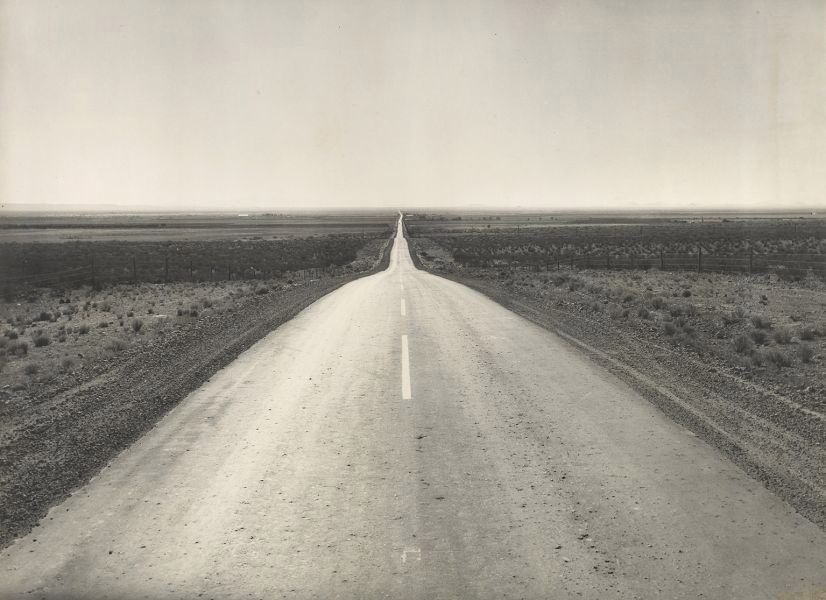
Stryker sent these photographers into America's heartland with shooting scripts—detailed instructions about what to document. But he also gave them freedom to follow their artistic instincts. The result? Photographs that functioned simultaneously as government documentation and personal artistic expression. This duality is precisely what made them perfect for Steichen's purposes two decades later.10
The Photographers: Individual Voices in Collective Crisis
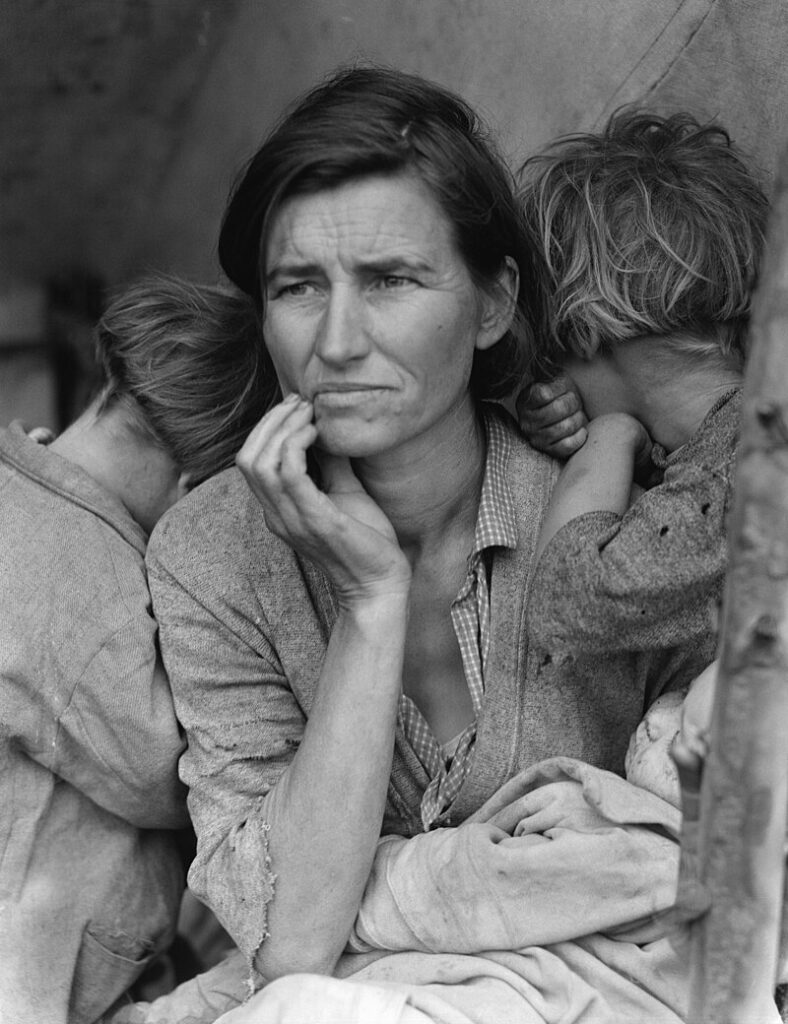
Dorothea Lange's work dominated the Bitter Years exhibition, and for good reason. Her "Migrant Mother" photograph had already become iconic by 1962, but Steichen included lesser-known Lange images that revealed her extraordinary ability to capture dignity amid desperation. Her photographs don't pity their subjects—they honor them. There's a crucial difference.11
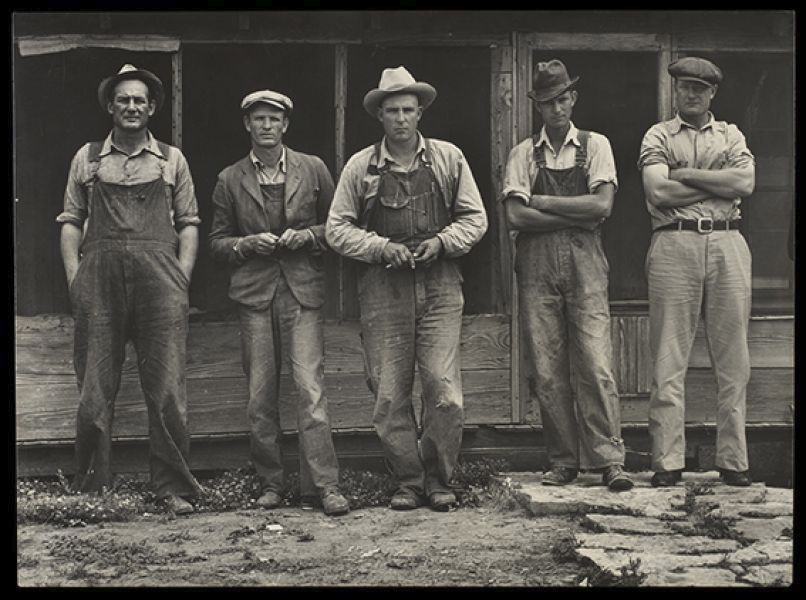
Walker Evans brought something entirely different. His FSA work, particularly his Alabama tenant farmer series, displayed an almost clinical detachment that paradoxically created profound emotional impact. Evans photographed interiors with the precision of an archaeologist documenting ancient ruins. Every object placement mattered. Every detail spoke volumes about the lives lived in these spaces.12
Arthur Rothstein contributed images that demonstrated documentary photography's ethical complexities. His famous "Skull" photograph—showing a bleached cow skull on cracked earth—had sparked controversy when it was revealed he'd moved the skull for compositional purposes. By 1962, this controversy had faded, but the image's visual power remained undeniable.13
The Exhibition Experience: Walking Through America's Bitter Years
Visitors entering MoMA's galleries in October 1962 encountered an exhibition that didn't merely display photographs—it orchestrated an experience. Steichen's installation design created a rhythm of viewing, alternating between intimate portraits and sweeping landscapes, between individual suffering and systemic collapse.14
The "Drought and Erosion" section hit viewers first. Massive prints showed the Dust Bowl's devastation—abandoned farms, dust storms blotting out the sun, land stripped to bare earth. These weren't just environmental photographs. They were images of apocalypse, of nature's revenge against agricultural hubris.15
Then came the human faces. The "Migrant Workers" section presented Lange's and Lee's photographs of displaced farmers traveling west, living in makeshift camps, picking crops for survival wages. These images carried particular resonance in 1962, as documentary photography was increasingly being used to expose contemporary poverty in Appalachia and urban ghettos.16
The Children's Section: Innocence and Deprivation
Perhaps the exhibition's most emotionally devastating section focused on children. Photographs showed kids in torn clothes, barefoot in winter, staring at the camera with expressions that mixed curiosity, wariness, and premature maturity. These weren't sentimental images. They were unflinching documents of childhood stolen by economic catastrophe.17
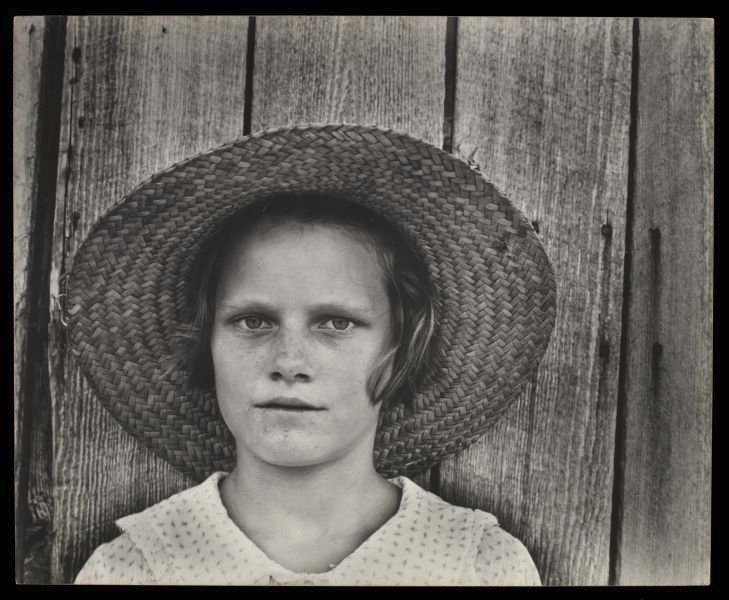
Steichen understood that these children's photographs served dual purposes. They documented 1930s poverty while simultaneously challenging 1960s viewers to confront ongoing child poverty in their own era. The exhibition refused to let visitors treat the Depression as safely distant history.18
1962 Context: Why These Images Mattered Then
The timing of the Bitter Years FSA exhibition 1962 wasn't coincidental. America was experiencing profound social upheaval. The Civil Rights Movement was accelerating. Kennedy's administration was grappling with how to address persistent poverty. The Cuban Missile Crisis would occur the same month the exhibition opened, reminding Americans of their vulnerability.19
In this context, Depression-era photographs carried urgent contemporary relevance. They demonstrated that American poverty wasn't new, wasn't isolated, and required sustained attention. The exhibition's images also implicitly validated government intervention—a timely message as Kennedy's administration developed what would become Johnson's War on Poverty.20
The exhibition also arrived at a pivotal moment in photography's institutional history. Museums were increasingly recognizing photography as legitimate art rather than mere documentation. Steichen's career had been instrumental in this transformation, and the Bitter Years exhibition represented a culminating argument: documentary photographs could function as powerful art without sacrificing their documentary truth.21
Critical Reception: Praise and Controversy
Critics responded to the exhibition with mixed reactions that revealed deeper tensions about photography's purpose. Some praised Steichen's humanistic approach and the exhibition's emotional impact. Others questioned whether his thematic organization and selective editing distorted the FSA archive's historical complexity.22
The debate centered on a fundamental question: Can photographs serve both artistic and documentary functions simultaneously? Steichen argued yes—that emotional engagement didn't compromise documentary truth but rather enhanced it. His critics worried that aesthetic presentation risked romanticizing poverty or manipulating viewers' responses.23
Despite these debates, the exhibition drew substantial crowds. Exact visitor numbers aren't definitively documented, but contemporary accounts suggest strong public interest. The exhibition resonated with audiences who recognized both historical significance and contemporary relevance in these Depression-era images.24
The Exhibition's Journey: From Temporary Show to Permanent Installation
After closing at MoMA, the Bitter Years exhibition embarked on a remarkable journey that would span five decades. Steichen, who had roots in Luxembourg (he was born there in 1879 before emigrating to America as a child), arranged for the exhibition to travel to his homeland. This wasn't just a tour—it was a homecoming.25
The exhibition toured internationally throughout the 1960s before eventually being stored in Luxembourg. For decades, it remained packed away, its prints aging, its cultural moment seemingly passed. But in the early 2000s, Luxembourg authorities recognized the exhibition's historical significance and launched an ambitious restoration project.26
In 2012, fifty years after the original MoMA opening, the restored Bitter Years exhibition found a permanent home in a converted water tower in Dudelange, Luxembourg. This wasn't merely preservation—it was resurrection. The installation carefully recreated Steichen's original design, allowing contemporary viewers to experience the exhibition much as 1962 audiences had.27
Preservation Challenges and Solutions
Restoring a fifty-year-old photography exhibition presented enormous technical challenges. The original prints had suffered from travel, storage, and time. Some had faded. Others showed physical damage. The restoration team faced difficult decisions: Should they create new prints from the original negatives, or preserve the actual prints Steichen had selected and installed?28
The team chose a hybrid approach. Where possible, they conserved Steichen's original prints. Where necessary, they created new prints using archival standards that matched the originals' tonal qualities and dimensions. This meticulous work ensured that the permanent installation maintained historical authenticity while remaining visually powerful.29
Legacy: How the Bitter Years Shaped Documentary Photography
The Bitter Years exhibition's influence extended far beyond its initial 1962 run. It established precedents that shaped how museums approach documentary photography, how curators organize thematic exhibitions, and how audiences understand the relationship between art and social documentation.30
The exhibition demonstrated that historical photographs gain new meanings over time. Images created as government propaganda in the 1930s functioned as art and historical documents in the 1960s. This temporal transformation continues—contemporary viewers in the 21st century see these photographs through yet another lens, informed by subsequent economic crises, ongoing poverty debates, and evolving photographic aesthetics.31
For photographers, the exhibition validated documentary work as artistically legitimate. It showed that photographs made for practical purposes—government documentation, journalism, social reform—could achieve artistic significance without sacrificing their documentary integrity. This validation opened doors for subsequent generations of documentary photographers seeking museum recognition.32
Influence on Curatorial Practice
Steichen's curatorial approach—thematic organization, varied print sizes, emotional narrative—became a template for documentary photography exhibitions. Later curators might refine or react against his methods, but they couldn't ignore them. The exhibition established that curation itself was an artistic act, that how photographs were selected, arranged, and presented fundamentally shaped their meaning.33
The exhibition also raised important questions about archival ethics. Steichen selected roughly 200 photographs from an archive of 175,000. What didn't he show? Whose stories remained untold? These questions became increasingly important as scholars and curators developed more critical approaches to photographic archives, recognizing that selection always involves exclusion, that every curatorial choice reflects particular perspectives and priorities.34
The Photographs Themselves: Aesthetic Analysis
What made these particular photographs so powerful? Beyond their documentary content, they demonstrated extraordinary aesthetic sophistication. FSA photographers understood composition, light, and visual narrative in ways that elevated their work beyond mere recording.35
Consider the formal qualities: the stark tonal contrasts in Lange's portraits, the geometric precision of Evans' architectural studies, the dynamic diagonals in Rothstein's landscape compositions. These weren't happy accidents. They were conscious artistic choices made by photographers who understood that visual power enhances rather than compromises documentary truth.36
The photographs' emotional impact derived partly from their subjects' direct engagement with the camera. Many FSA photographs show subjects looking straight at the lens, meeting viewers' eyes across decades. This direct gaze creates uncomfortable intimacy. You can't look away. You can't pretend these are distant historical figures. They demand recognition, acknowledgment, response.37
Light, Shadow, and Symbolic Resonance
FSA photographers used natural light with remarkable sophistication. Harsh midday sun emphasized the Dust Bowl's brutal conditions. Soft window light in interior shots created moments of quiet dignity. Dramatic shadows added psychological depth to portraits. These lighting choices weren't just technical decisions—they were narrative tools that shaped how viewers understood what they saw.38
The photographs also carried symbolic weight that transcended literal documentation. A dust storm wasn't just meteorological phenomenon—it was biblical plague. An abandoned farmhouse wasn't just empty building—it was failed American Dream. A mother's worried expression wasn't just individual anxiety—it was collective desperation. Steichen's curatorial arrangement amplified these symbolic dimensions, creating visual metaphors that spoke to universal human experiences.39
Comparing Two Steichen Masterworks: The Family of Man vs. The Bitter Years
Understanding the Bitter Years exhibition requires comparing it to Steichen's earlier triumph, "The Family of Man" (1955). Both exhibitions used photographs to create humanistic narratives, they employed thematic organization and varied print sizes. Both aimed for emotional impact over academic documentation. But their approaches differed in revealing ways.40
"The Family of Man" celebrated universal human experiences—birth, love, work, death—across cultures. It was optimistic, inclusive, designed to promote international understanding during Cold War tensions. The Bitter Years took a darker, more focused approach. It examined one nation's failure, one era's suffering. Where "The Family of Man" sought commonality, The Bitter Years insisted on historical specificity.41
Both exhibitions demonstrated Steichen's belief that photographs could educate, inspire, and transform viewers. But The Bitter Years showed a more mature, less idealistic vision. Perhaps after years of Cold War anxiety and witnessing persistent inequality, Steichen recognized that celebrating human commonality wasn't enough. Sometimes you needed to confront specific failures, acknowledge particular sufferings, demand concrete responses.42
Contemporary Relevance: Why the Bitter Years Still Matters
Six decades after the Bitter Years FSA exhibition 1962 opened at MoMA, its relevance hasn't diminished. Economic inequality persists. Rural poverty continues. Climate change creates new environmental refugees. The photographs' specific historical moment has passed, but their broader concerns remain urgent.43
The exhibition also offers lessons about photography's social power. It demonstrates that documentary photographs can serve multiple purposes simultaneously—as art, as history, as political argument. This multiplicity is photography's unique strength. Images can move between contexts, accumulate meanings, speak to different audiences across time.44
For contemporary photographers, the FSA project and Steichen's exhibition offer both inspiration and cautionary lessons. They show documentary photography's potential to create social awareness and influence policy. But they also raise questions about representation, about who has the right to photograph whom, about the ethics of aestheticizing suffering. These questions don't have simple answers, but they're essential to ask.45
Digital Age Considerations
The digital age has transformed how we encounter the Bitter Years photographs. The entire FSA archive is now accessible online through the Library of Congress. Anyone can browse, search, download. This democratized access is wonderful—but it also changes how we experience these images.46
Viewing photographs on screens differs fundamentally from encountering them in Steichen's carefully orchestrated exhibition space. Scale matters. Sequence matters. Physical presence matters. The permanent Luxembourg installation preserves these qualities, offering contemporary audiences something closer to the original 1962 experience. It's a reminder that how we see photographs shapes what they mean to us.47
Conclusion: Steichen's Lasting Gift
The Bitter Years FSA exhibition 1962 represented Edward Steichen's final major statement about photography's power and purpose. At 83, he could have rested on his considerable laurels. Instead, he created an exhibition that challenged viewers, honored forgotten subjects, and established new possibilities for how museums could present documentary photography.48
The exhibition's journey from temporary MoMA show to permanent Luxembourg installation demonstrates how great exhibitions transcend their original moments. The photographs Steichen selected continue speaking to new audiences, accumulating meanings, remaining relevant as both historical documents and artistic achievements. That's the mark of truly significant curatorial work—it doesn't just reflect its moment but creates something that endures beyond it.49
For photographers, curators, and anyone interested in documentary photography's possibilities, the Bitter Years exhibition offers essential lessons. It shows that selecting and arranging photographs is itself a creative act. The exhibition demonstrates that documentary work can achieve artistic power without sacrificing truth : it proves that photographs made for specific purposes can transcend those purposes to speak to broader human concerns. Most importantly, it reminds us that looking at photographs of suffering isn't enough—we must allow them to move us, challenge us, demand our response.
What will you do with that demand? How will you let these images—whether encountered in Luxembourg, in books, or online—shape your understanding of photography's social power? The Bitter Years exhibition succeeded because it refused to let viewers remain passive observers. Sixty years later, that refusal remains its greatest gift.
Frequently Asked Questions
When and where did the Bitter Years FSA exhibition 1962 originally take place?
The Bitter Years exhibition opened at the Museum of Modern Art (MoMA) in New York City in October 1962. It was curated by Edward Steichen as his final major project before retiring as Director of MoMA's Photography Department. The exhibition featured approximately 208 photographs from the Farm Security Administration's archive, documenting rural American poverty from 1935 to 1941.50
Which photographers were featured in the Bitter Years exhibition?
The exhibition featured work by the major FSA photographers including Dorothea Lange, Walker Evans, Arthur Rothstein, Russell Lee, Carl Mydans, Ben Shahn, John Vachon, Marion Post Wolcott, and Jack Delano. These photographers worked under Roy Stryker's direction for the Farm Security Administration (originally the Resettlement Administration) between 1935 and 1943, creating what remains the most comprehensive documentary photography project in American history.51
Where can I see the Bitter Years exhibition today?
The Bitter Years exhibition is permanently installed in a restored water tower in Dudelange, Luxembourg. After touring internationally following its 1962 MoMA debut, the exhibition was stored in Luxembourg for decades before undergoing extensive restoration. In 2012, fifty years after the original opening, the restored exhibition opened to the public in its permanent home. The installation carefully recreates Steichen's original design, allowing contemporary visitors to experience the exhibition much as 1962 audiences did.52
What was Edward Steichen's curatorial approach for this exhibition?
Steichen organized the Bitter Years exhibition thematically rather than chronologically or by photographer. He created distinct sections focused on themes like "Drought and Erosion," "Migrant Workers," "Children," and "The Land." The installation used varied print sizes—from intimate small prints to large-scale murals—to create emotional impact and guide viewers through a narrative journey. This approach prioritized emotional engagement and storytelling over comprehensive archival documentation, reflecting Steichen's belief that photographs should move viewers to understanding and action.53
Why was the exhibition significant in 1962?
The 1962 timing gave the exhibition particular resonance. America was experiencing social upheaval through the Civil Rights Movement, grappling with persistent poverty that would soon prompt Johnson's War on Poverty, and facing Cold War anxieties including the Cuban Missile Crisis. The exhibition demonstrated that American poverty wasn't new and required sustained attention. It also arrived at a pivotal moment in photography's institutional history, helping establish documentary photography as legitimate museum art. By presenting government-commissioned photographs as fine art twenty years after their creation, Steichen showed how photographs' meanings evolve over time and can serve multiple purposes simultaneously.54
How did the Bitter Years exhibition differ from Steichen's "The Family of Man"?
While both exhibitions used humanistic approaches and thematic organization, they differed in scope and tone. "The Family of Man" (1955) featured 503 photographs from 273 photographers across 68 countries, celebrating universal human experiences with optimistic internationalism. The Bitter Years focused narrowly on one nation's crisis during one specific period, taking a darker, more critical approach. Where "The Family of Man" emphasized commonality across cultures, The Bitter Years insisted on historical specificity and confronted American failure directly. The exhibitions represent Steichen's evolution from universal humanism to more critical examination of specific social problems.55
- The exhibition opened at MoMA in October 1962, marking Steichen's final major project as Director of the Department of Photography, a position he held since 1947.
- The FSA photography project, directed by Roy Stryker, ultimately produced around 175,000 photographs, making Steichen's selection represent roughly 0.1% of the total archive.
- "The Family of Man" exhibition had toured internationally and been seen by over 9 million people, establishing Steichen as perhaps the most influential photography curator of the 20th century.
- The Farm Security Administration (originally the Resettlement Administration) hired photographers specifically to document rural poverty and build public support for federal intervention programs.
- Michael Harrington's influential book "The Other America," published in 1962, brought renewed attention to American poverty and influenced Kennedy's policy agenda.
- This thematic organization method would influence subsequent documentary photography exhibitions, establishing a template for narrative-driven curation.
- Steichen's installation techniques drew from his commercial photography background and his understanding of how scale and placement affect viewer engagement.
- Roy Stryker had studied under Rexford Tugwell at Columbia University, who later brought him to Washington to direct the photographic section of the Resettlement Administration in 1935.
- The complete roster of FSA photographers included Dorothea Lange, Walker Evans, Arthur Rothstein, Russell Lee, Carl Mydans, Ben Shahn, John Vachon, Marion Post Wolcott, Jack Delano, Gordon Parks, and several others who contributed to the project at various points.
- Stryker's shooting scripts often included specific details about what to photograph, but he encouraged photographers to explore beyond these parameters, resulting in a collection that balanced systematic documentation with artistic vision.
- Lange's approach involved spending significant time with subjects before photographing them, building trust and understanding that translated into images of remarkable psychological depth.
- Evans' Alabama work would later be published in collaboration with James Agee in "Let Us Now Praise Famous Men" (1941), though the book initially sold poorly and only gained recognition in later decades.
- The Rothstein skull controversy raised important questions about documentary authenticity that continue to resonate in photojournalism ethics discussions today.
- The exhibition occupied multiple galleries at MoMA, allowing Steichen to control the viewing sequence and create narrative progression through spatial arrangement.
- The Dust Bowl resulted from a combination of severe drought and poor farming practices that removed native prairie grasses, allowing topsoil to blow away in massive dust storms throughout the 1930s.
- The early 1960s saw renewed interest in poverty photography, with projects documenting Appalachian coal country and urban poverty that echoed the FSA's Depression-era work.
- Russell Lee's photographs of children were particularly notable for capturing both the hardships they faced and their resilient spirits, avoiding the trap of pure victimization.
- By 1962, approximately 25% of American children lived in poverty, though this reality often remained invisible to middle-class Americans until brought to attention through photography and journalism.
- The Cuban Missile Crisis began on October 16, 1962, bringing the United States and Soviet Union to the brink of nuclear war and creating an atmosphere of national anxiety.
- Lyndon Johnson would launch the War on Poverty in 1964, two years after the Bitter Years exhibition, drawing on renewed awareness of American poverty that exhibitions and publications like Michael Harrington's "The Other America" had helped generate.
- This legitimization of documentary photography in museum contexts would influence institutions worldwide, establishing precedents for how documentary work could be collected, displayed, and preserved.
- Walker Evans himself was reportedly ambivalent about the exhibition, concerned that Steichen's curatorial approach emphasized emotional impact over the photographs' documentary integrity.
- This debate continues in contemporary documentary photography, with ongoing discussions about the ethics of aestheticizing suffering and the relationship between artistic beauty and documentary responsibility.
- MoMA's photography exhibitions in the early 1960s typically attracted significant attendance, though they rarely matched the massive crowds that "The Family of Man" had drawn in 1955.
- Edward Steichen was born Éduard Jean Steichen in Bivange, Luxembourg, in 1879, and maintained connections to his birthplace throughout his life despite spending most of his career in America.
- The restoration project involved careful conservation work on the original prints, many of which had deteriorated during decades of storage and travel.
- The Dudelange water tower, known as "The Bitter Years" exhibition space, was specially renovated to accommodate the exhibition and now serves as a permanent memorial to both the FSA photography project and Steichen's curatorial vision.
- Conservation philosophy generally favors preserving original objects when possible, but severely damaged photographs sometimes require reproduction to remain viewable.
- The restoration project was documented extensively, creating an archive that details both the conservation techniques used and the exhibition's physical history.
- Major subsequent exhibitions like "Harlem on My Mind" (1969) and "The Family of Man" revivals drew on curatorial strategies that Steichen pioneered in exhibitions like The Bitter Years.
- The 2008 financial crisis and subsequent recession prompted renewed interest in Depression-era photography, with many drawing parallels between 1930s economic collapse and contemporary financial instability.
- Contemporary documentary photographers like Sebastião Salgado, Mary Ellen Mark, and others benefited from the institutional legitimacy that exhibitions like The Bitter Years helped establish for documentary photography in museum contexts.
- John Szarkowski, who succeeded Steichen as director of MoMA's photography department, developed a contrasting curatorial philosophy that emphasized individual photographs over narrative arrangements, demonstrating the ongoing evolution of curatorial approaches.
- Contemporary archival theory emphasizes the importance of understanding what's excluded from collections and exhibitions, recognizing that gaps and absences are as significant as what's preserved and displayed.
- Many FSA photographers had fine art training or backgrounds in other visual arts, bringing sophisticated aesthetic sensibilities to their documentary work.
- The tension between aesthetic beauty and documentary subject matter remains a central concern in documentary photography ethics, with ongoing debates about whether beautiful photographs of suffering aestheticize and thereby diminish tragic realities.
- The ethics of the photographic gaze—particularly in documentary contexts involving vulnerable subjects—has generated extensive scholarly discussion, with theorists like Susan Sontag and John Berger offering influential analyses of how photographs create relationships between viewers and subjects.
- Many FSA photographers worked with large-format cameras that required careful consideration of light and exposure, encouraging thoughtful compositional choices rather than rapid-fire shooting.
- Steichen's background in Pictorialist photography, which emphasized symbolic and artistic approaches to photography, influenced his understanding of how photographs could function as visual metaphors beyond their documentary content.
- "The Family of Man" featured 503 photographs by 273 photographers from 68 countries, making it far more expansive in scope than The Bitter Years' focused examination of one nation's crisis.
- Critics have noted that "The Family of Man" sometimes decontextualized photographs, removing them from their specific historical and cultural contexts to emphasize universal themes, while The Bitter Years maintained stronger historical grounding.
- Steichen's evolution from the universal humanism of "The Family of Man" to the historically specific focus of The Bitter Years reflected broader shifts in 1960s political consciousness toward more critical examination of American society's failures.
- Contemporary photographers documenting economic inequality, climate migration, and rural decline often explicitly reference FSA photography's visual traditions and documentary approaches.
- Theorist Allan Sekula's influential essay "On the Invention of Photographic Meaning" (1975) explored how photographs' meanings shift depending on context, using examples that included FSA photography's various uses and interpretations.
- Contemporary discussions about documentary photography ethics increasingly emphasize collaborative approaches, subject agency, and the importance of photographers from affected communities telling their own stories rather than relying solely on outside observers.
- The Library of Congress digitized the FSA-OWI photograph collection, making approximately 175,000 images freely available online, fundamentally changing how scholars, students, and the public can access this historical archive.
- Media theorist Marshall McLuhan's famous dictum "the medium is the message" applies directly to photography—the same image viewed on a phone screen, in a book, or as a large gallery print creates different viewing experiences and potentially different meanings.
- Steichen retired from MoMA in 1962, shortly after The Bitter Years opened, ending a fifteen-year tenure that had transformed the museum's photography program and elevated photography's status in the art world.
- The exhibition's preservation and reinstallation in Luxembourg has inspired similar efforts to preserve and recreate historically significant photography exhibitions, recognizing that exhibitions themselves are cultural artifacts worth maintaining.
- The exhibition ran for several months at MoMA before beginning its international tour, though exact closing dates aren't consistently documented in available sources.
- While the FSA employed additional photographers during its operation, Steichen focused his selection on work by these core group of photographers whose images best served his curatorial narrative.
- The Dudelange installation is part of Luxembourg's Steichen Collections, which also includes "The Family of Man" exhibition permanently installed in Clervaux Castle.
- Steichen's thematic, emotionally-driven curatorial approach influenced subsequent documentary photography exhibitions and established new standards for how museums could present socially-engaged photography.
- The exhibition's 1962 opening coincided with renewed national attention to poverty through publications like Michael Harrington's "The Other America," creating a cultural moment when Depression-era photographs carried urgent contemporary relevance.
- Both exhibitions demonstrated Steichen's belief in photography's power to educate and transform viewers, but The Bitter Years showed a more mature, less idealistic vision shaped by 1960s social consciousness.