Thomas Struth photographs the places where people gather and the structures they build together. His subjects include city streets, family living rooms, museum galleries, rainforests, theme parks and particle-physics laboratories. First, he trained with Gerhard Richter and with Bernd and Hilla Becher in Düsseldorf. Later, he became one of the defining artists of the large colour photograph. His pictures of visitors standing before old masters turned the act of looking into a subject in its own right. This guide follows his work series by series, from 1976 to 2026. It also explains his method, reads key pictures closely and reviews what critics and scholars have made of them.
Key points
- Thomas Struth, born in 1954 in Geldern, studied at the Kunstakademie Düsseldorf from 1973 to 1980, first with Gerhard Richter and then in Bernd Becher’s photography class.
- He works in long series. They include empty streets (Unconscious Places), family portraits, Museum Photographs, forests (New Pictures from Paradise) and sites of science and industry (Nature & Politics).
- His Museum Photographs, begun in 1989, show viewers in front of famous works of art. They helped move photography to the centre of contemporary art.
Who is Thomas Struth?
To begin with, Thomas Struth was born in 1954 in Geldern, a small town on the Lower Rhine near the Dutch border. He first trained as a painter and then enrolled at the Kunstakademie Düsseldorf in 1973. Today he lives and works in Berlin, although some museum biographies still place him in Düsseldorf.
He grew up in a country still marked by the war. For example, in a 2011 interview, Struth recalled strict schools and the gaps left by destroyed houses. He also spoke of his father, who had been badly wounded as a soldier. Indeed, he described a city in which an echo of violence and guilt was “sealed into the post-war urban environment”. That early sense of the street as a record of history runs through his later work.
From painting to photography: Richter and the Bechers
At the academy, Struth followed a clear path. Initially, he took Peter Kleemann’s orientation course in 1973. Then he joined Gerhard Richter’s painting class in 1974 and moved to Bernd Becher’s new photography class in 1976. He stayed with Becher until 1980, alongside students such as Candida Höfer, Axel Hütte and Tata Ronkholz.
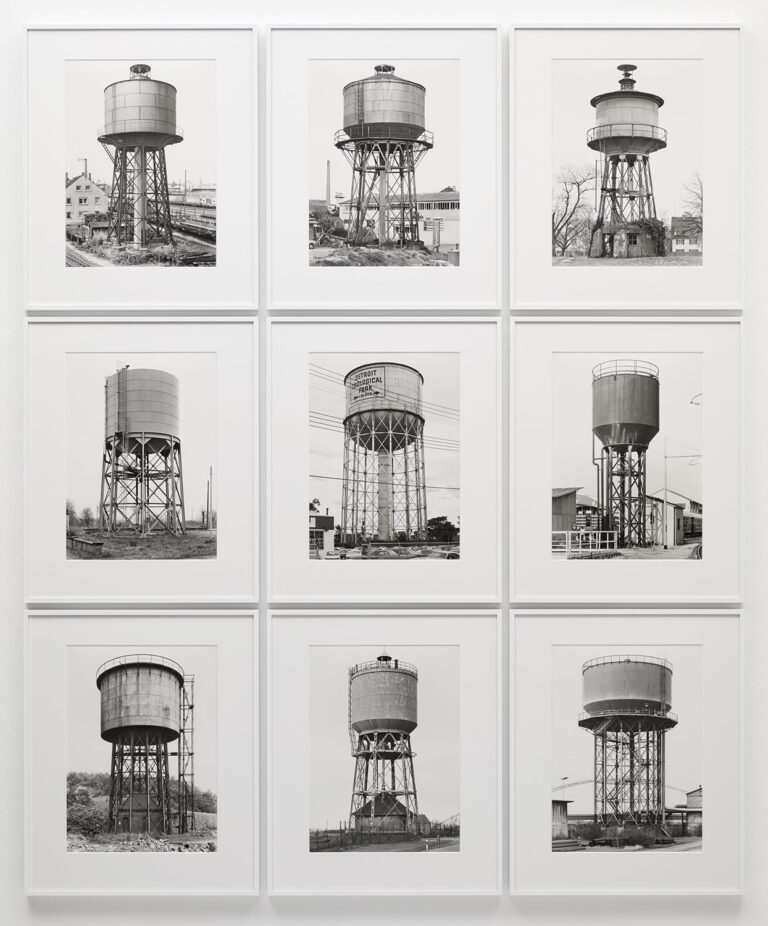
Yet Richter mattered more than one might expect. While studying with him, Struth helped mount the small snapshots of Richter’s Atlas, a vast archive of photographs. Consequently, sorting dozens of similar, ordinary images taught him to notice tiny differences. Struth later said the exercise sharpened his eye. From the Bechers, in turn, he took a disciplined method: a fixed viewpoint, a large camera and work in series.
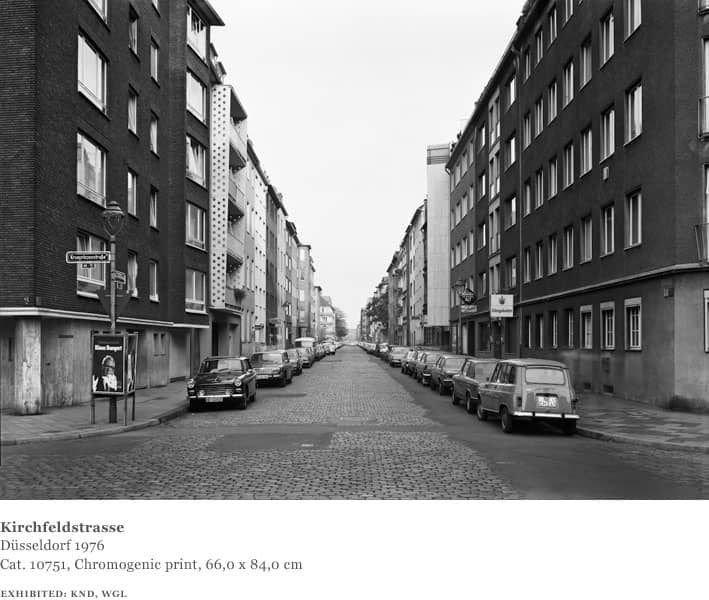
The decisive step came at a student show in 1976. There, Struth hung 49 black-and-white views of Düsseldorf streets in a grid of seven by seven. In each picture, the camera looked straight down the middle of a road. As a result, the grid resembled the Bechers’ typologies, which is to say their side-by-side comparisons of similar buildings. After that show, he left painting behind for good.
New York, civil service and teaching
In 1978 the academy gave Struth its first scholarship to New York. That year, he also showed his New York streets at P.S.1, in Long Island City, in his first solo exhibition. Some biographies date the stay to 1977–78, but the 1978 exhibition is not in doubt. Back in Germany, he did his civilian service in a community centre from 1980 to 1982.
Struth also looked closely at older photography. For example, he made black-and-white enlargements of previously unpublished negatives by Heinrich Zille, the Berlin photographer of the early twentieth century. Later, from 1993 to 1996, he was professor of photography at the Staatliche Hochschule für Gestaltung in Karlsruhe. Since 2024 he has been a member of the Akademie der Künste in Berlin.
Thomas Struth’s series at a glance
In practice, Struth rarely closes a series for good. Instead, he returns to old subjects while starting new ones. The table below therefore gives the years when each group began, with one key picture and its process. It works as a map for the rest of this guide.
| Series | Began | Subject | Process | Key picture |
|---|---|---|---|---|
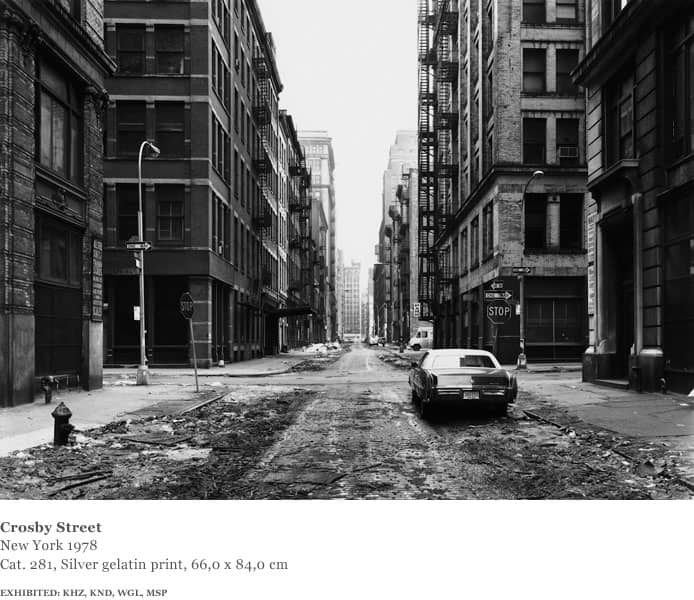
| Unconscious Places | 1976 | Streets and city views, at first in black and white | Gelatin silver prints, later colour | Crosby Street, Soho, New York, 1978 |
| Family portraits | mid-1980s | Families posed at home, looking into the lens | Colour and black-and-white prints | The Hirose Family, Hiroshima, 1987 |
| Museum Photographs | 1989 | Visitors before famous works of art, in museums and churches | Large chromogenic prints | Louvre 4, Paris, 1989 |
| Dandelion Room | 1991 | Flowers and landscapes for hospital wards in Winterthur | Colour prints | Large Sunflower – No. 4, Winterthur, 1991 |
| Video portraits | 1996 | One-hour, real-time portraits of single sitters | Video | — |
| New Pictures from Paradise | 1998 | Forests and jungles without a focal point | Large chromogenic prints | Paradise 1, Daintree, Australia, 1998 |
| Audience | 2004 | Faces of viewers, seen from the artwork’s side | Chromogenic prints | Audience 11, Florence, 2004 |
| Nature & Politics | 2007 | Sites of science, industry and technology | Chromogenic, later inkjet prints | Tokamak Asdex Upgrade Interior 2, Garching, 2009 |
| This Place | 2009 | Israel and the West Bank | Colour prints | Shuafat Refugee Camp, East Jerusalem, 2009 |
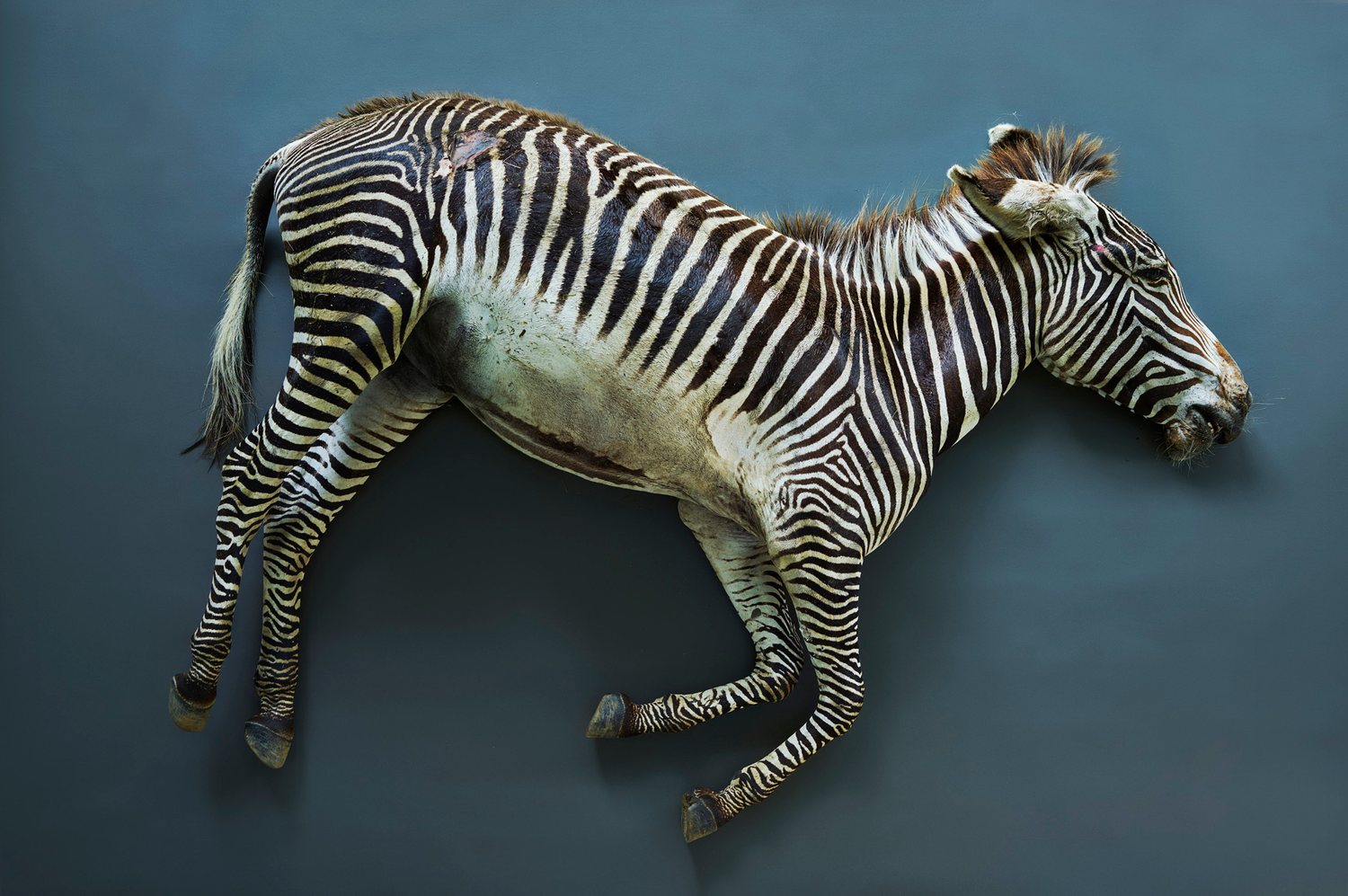
| Animals | 2017 | Animals studied at a Berlin research institute | Inkjet prints | Zebra (Equus grevyi), Leibniz IZW, Berlin, 2017 |
How Thomas Struth works
The camera and the rules
Struth’s method, however, has stayed remarkably stable for half a century. Above all, he works with a large-format view camera on a tripod. In 2003 he described a 13 × 18 cm camera, roughly the American 5 × 7 inch format. He also favours frontal or central views and even, greyish light. This matters because the large negative records fine detail, which lets him print very large without losing clarity.
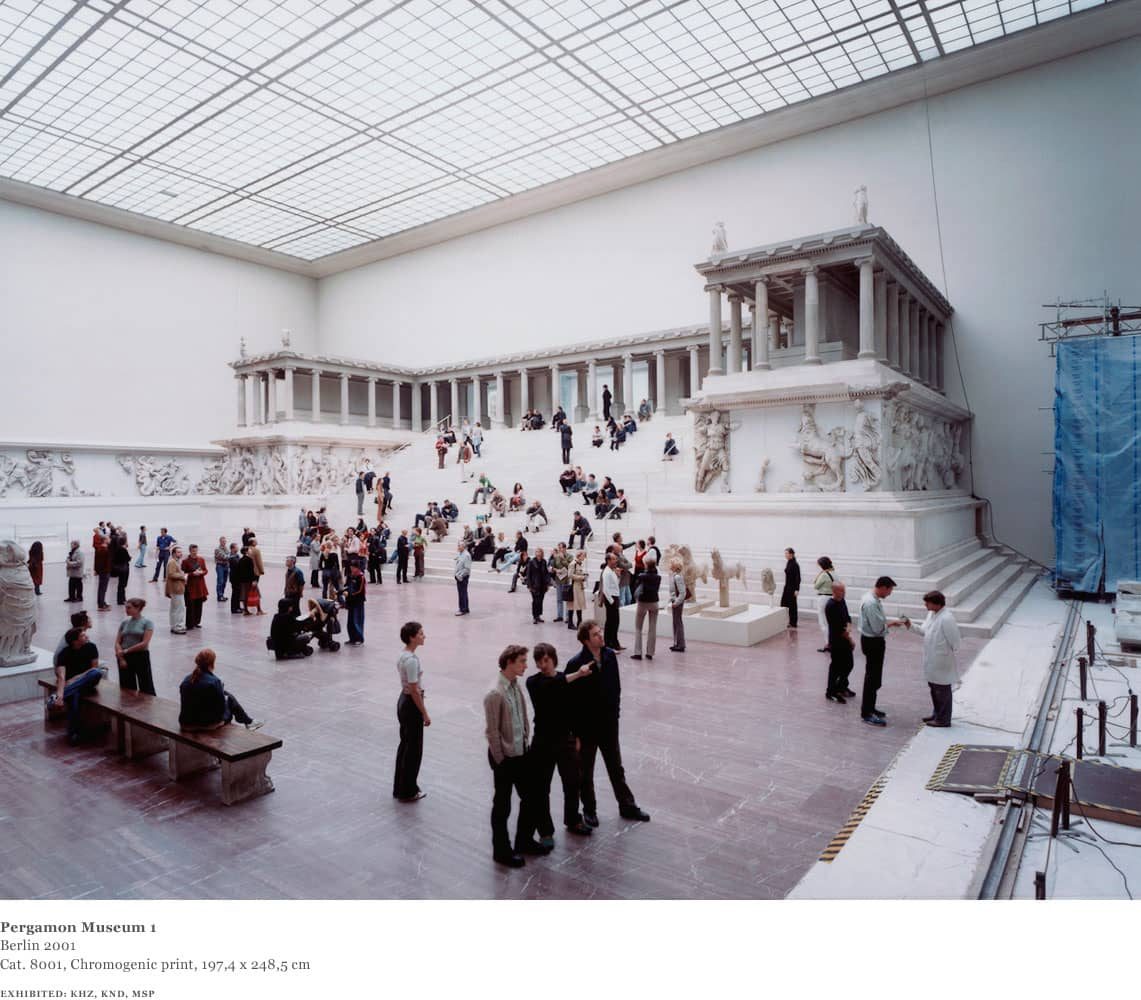
He is also patient. In the early museums, he waited for hours, sometimes for days, until the scene in front of a painting was right. When people appear, he values the single, unrepeatable moment of the exposure. Even so, he has occasionally asked visitors to hold a pose for a moment. Later museum pictures, such as those in the Pergamon Museum, were partly arranged in this way.
Printing, scale and editions
Scale, moreover, is part of the meaning. Many colour prints measure about two metres across, so they meet the viewer at the size of a painting. The Düsseldorf photographers of his generation made such prints with the Grieger laboratory in Düsseldorf. They then often mounted them behind acrylic glass with the Diasec process, which bonds the photograph directly to the glazing.
His editions vary from work to work. For example, Pantheon, Rome (1990) was printed in an edition of ten, while several recent family portraits come in editions of six. His early prints were gelatin silver and chromogenic prints, whereas more recent works are inkjet prints. Around 2008, he also began to scan some large negatives of technical sites, because scanning gave sharper detail in pictures without people.
Above all, Struth works in long series and returns to them over decades. As he has explained, each group has its own subject. The streets deal with society at large, while the family portraits deal with the small primary group. Similarly, the museum pictures concern history and the jungles concern the self. Finally, the technology pictures are about the brain and about entanglement. In his own words, photographs show what people look at and reveal their inner agenda.
Unconscious Places: the street pictures of Thomas Struth
Struth’s first major series grew out of the streets of Düsseldorf. From 1976 he photographed them in black and white, often from the middle of the road. As a result, the buildings recede to a single vanishing point. In addition, the pictures are almost empty of people and traffic. Instead, they show the shape of a city that no single architect planned.
Then New York gave the project its decisive push. During his 1978 stay, Struth likewise photographed Manhattan streets with the same central perspective. As a result, the pictures combine the Bechers’ lessons with the urban views of Charles Marville and Eugène Atget. It also shares the clear geometry of Minimal and Conceptual art. Similar series soon followed in Paris (1979), Rome (1984), Edinburgh (1985) and Tokyo (1986).
Changing the rules: Le Lignon and colour
Over time, Struth loosened his own rules. After a few years, he realised that nothing but his own rules kept him from moving the camera. In Le Lignon, Geneva (1989), for instance, a high, oblique viewpoint takes in a whole modernist housing estate. Around 1980 he also made his first colour pictures. By the mid-1980s, moreover, he had stopped hanging his prints in grids and showed each one as a single work.
Struth chose the title Unconscious Places for his first large exhibition, at the Kunsthalle Bern in 1987. In fact, he wanted to stress that the work was not about architectural styles. Instead, it was about what communities create beyond the will of any single architect or investor. It was also about how that unconscious order shapes the people who live there.
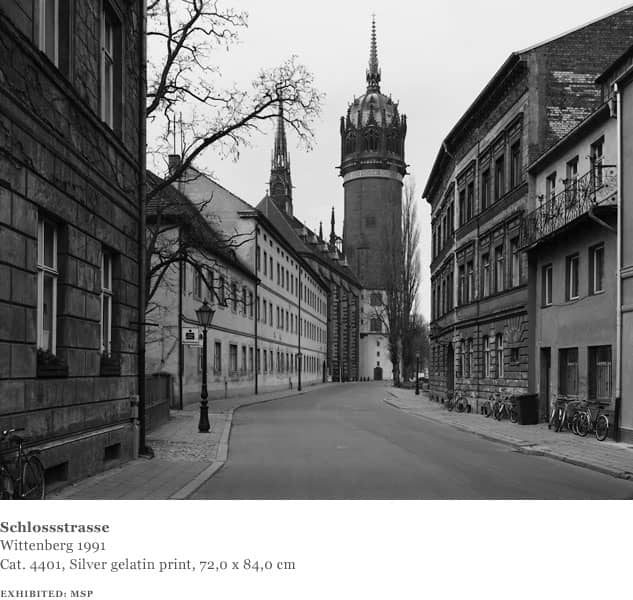
The series continued after German reunification. In 1991 and 1992 Struth photographed streets in Leipzig, Dessau, Wittenberg and other towns of the former East Germany. Several of these pictures, such as Schlosstrasse, Wittenberg 1991, are now in the Tate collection. Later he photographed Shanghai, Lima, Los Angeles and Tokyo.
The family portraits of Thomas Struth
In the mid-1980s, however, Struth turned his large camera on people. The family portraits grew out of an earlier, unfinished project with his friend, the psychoanalyst Ingo Hartmann. Under the title Familienleben (Family Life), the two men studied family snapshots that Hartmann’s patients brought to therapy. Struth thus came to see photography as “a tool of scientific origin for psychological exploration”. For him, it was never a way of exposing his sitters.
However, sources differ slightly on the dates. One museum biography places the project in 1982, while another dates the resulting anthology to 1983–84. In any case, the two men did not photograph the patients themselves. Rather, the snapshots taught Struth how families arrange themselves in front of a camera.
In practice, the portraits follow strict rules. Families pose in their own homes and look straight into the lens. Moreover, Struth makes each picture in close collaboration with his sitters. As a result, the picture records how each family sees itself. It shows who stands close to whom, who touches whom and who looks away. Fittingly, the first exhibition of these portraits took place in an academy for psychoanalysis.
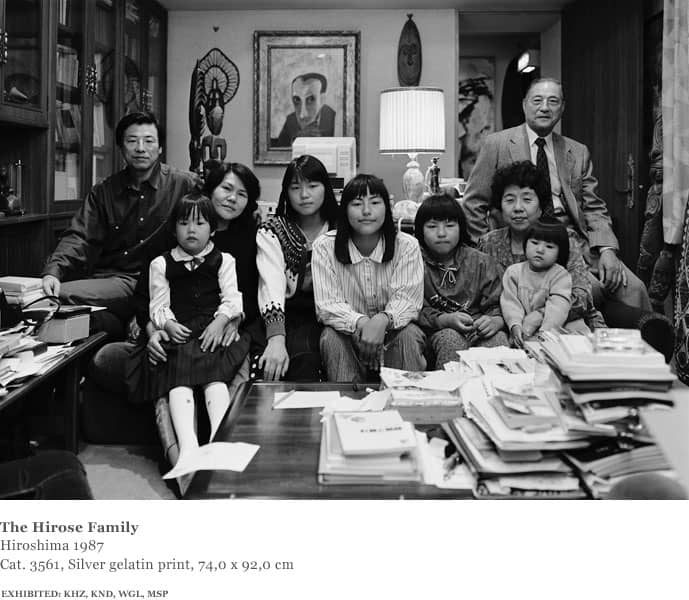
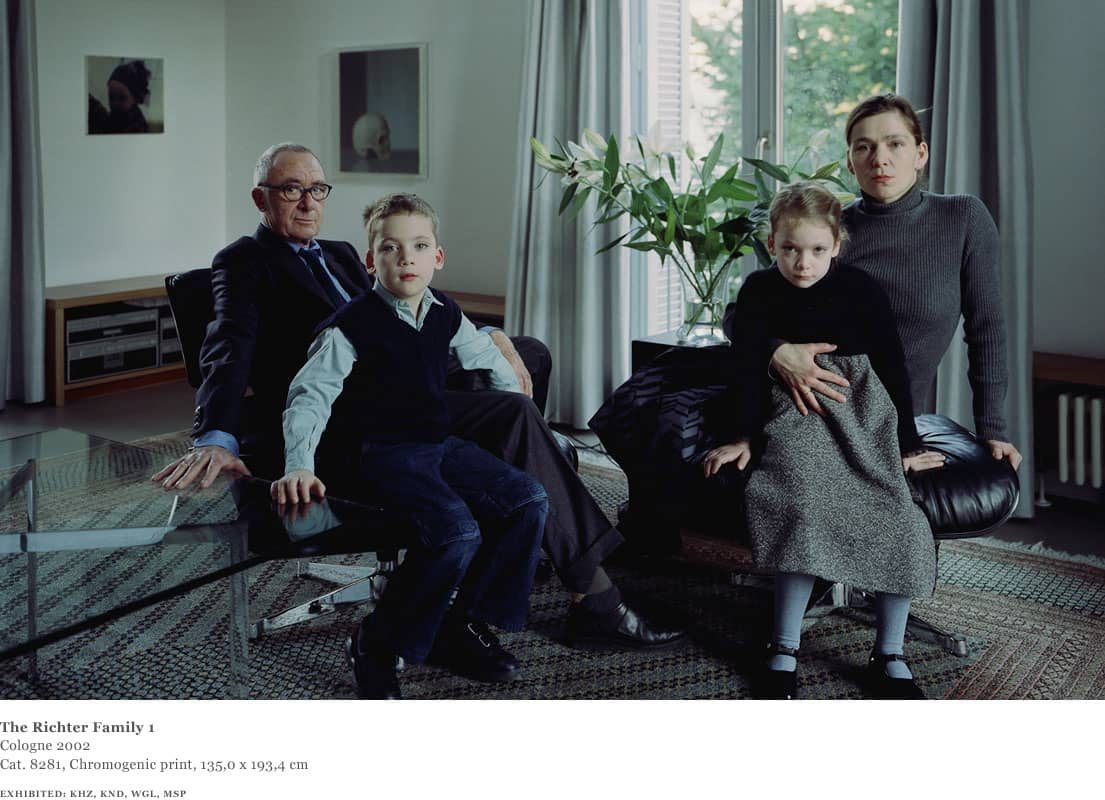
The series has continued for four decades and across continents, from Edinburgh and Hiroshima to Lima, Florence and Berlin. For instance, one of its best-known images shows Gerhard Richter with his family in Cologne in 2002. In fact, Richter asked for it to illustrate an article on his work in The New York Times Magazine. Earlier, in 1990, Marian Goodman Gallery in New York showed the first exhibition devoted to the group portraits. New family portraits made in Berlin and Hamburg in 2021 show that the series is still open.
Thomas Struth’s portrait of the Queen, and video
In 2011 came the most public portrait. That year, the National Portrait Gallery in London commissioned Struth to photograph Queen Elizabeth II and the Duke of Edinburgh. The picture was made for the Diamond Jubilee of 2012. He photographed the couple in the Green Drawing Room at Windsor Castle on 7 April 2011. As a result, it is an unusually frank picture that stresses the couple’s close bond. Still, Struth made it with the same patience as his private family portraits.
Portraiture also led him to moving images. Since 1996 he has made one-hour video portraits: real-time headshots of single sitters who stare back at the camera, silent and almost motionless.
The Museum Photographs of Thomas Struth
Struth’s best-known series began with a group of restorers. In 1988, for example, he photographed conservators at work in the church of San Lorenzo Maggiore in Naples. The picture reads as a manifesto that announces his most famous series. At the time, Struth felt that art was being lost in consumer culture and media noise. His portraits had also given him a new interest in Renaissance painting.
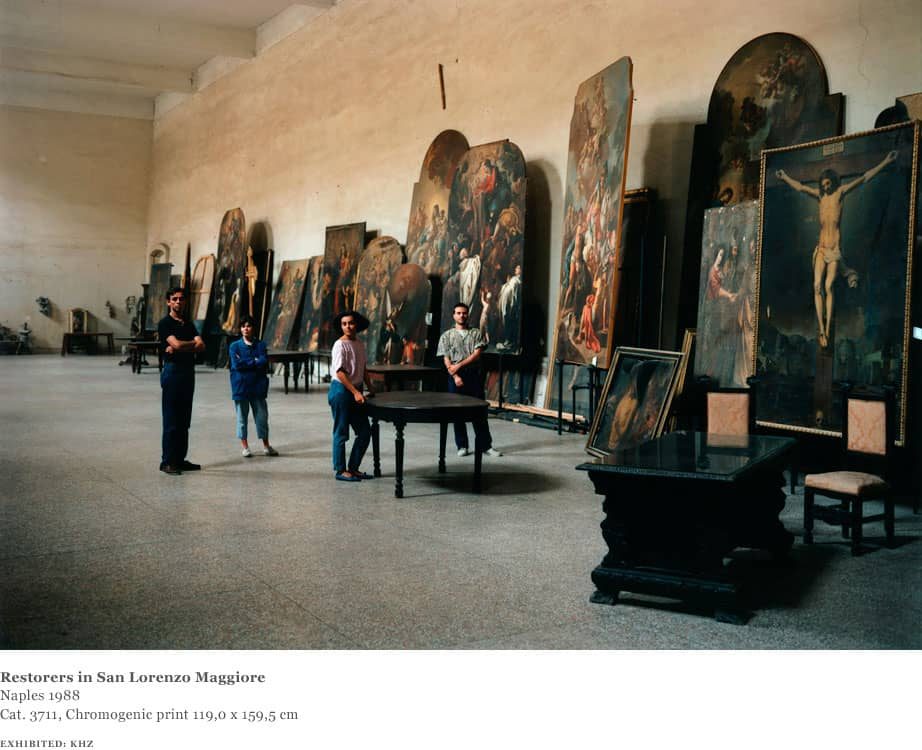
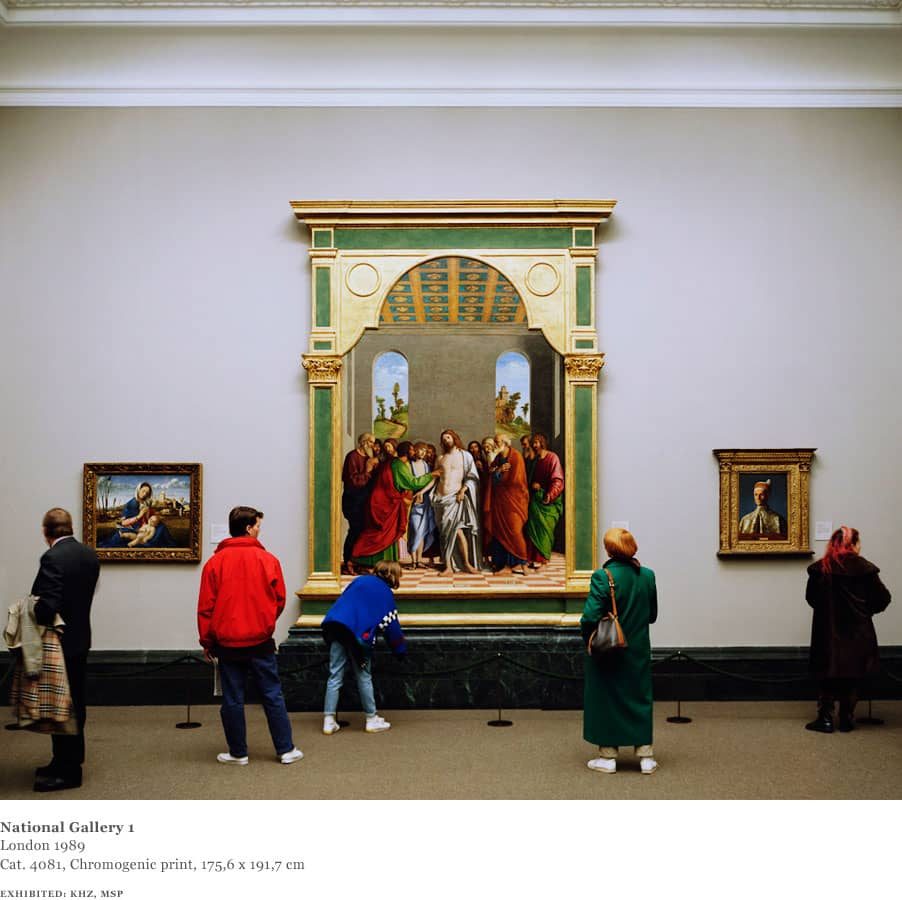
The first Museum Photographs followed in 1989 and 1990. At first they were not staged: Struth set up his camera and waited. He worked in the Louvre, the National Gallery in London and the Kunsthistorisches Museum in Vienna. He also photographed the Art Institute of Chicago, the Pantheon and the Vatican.
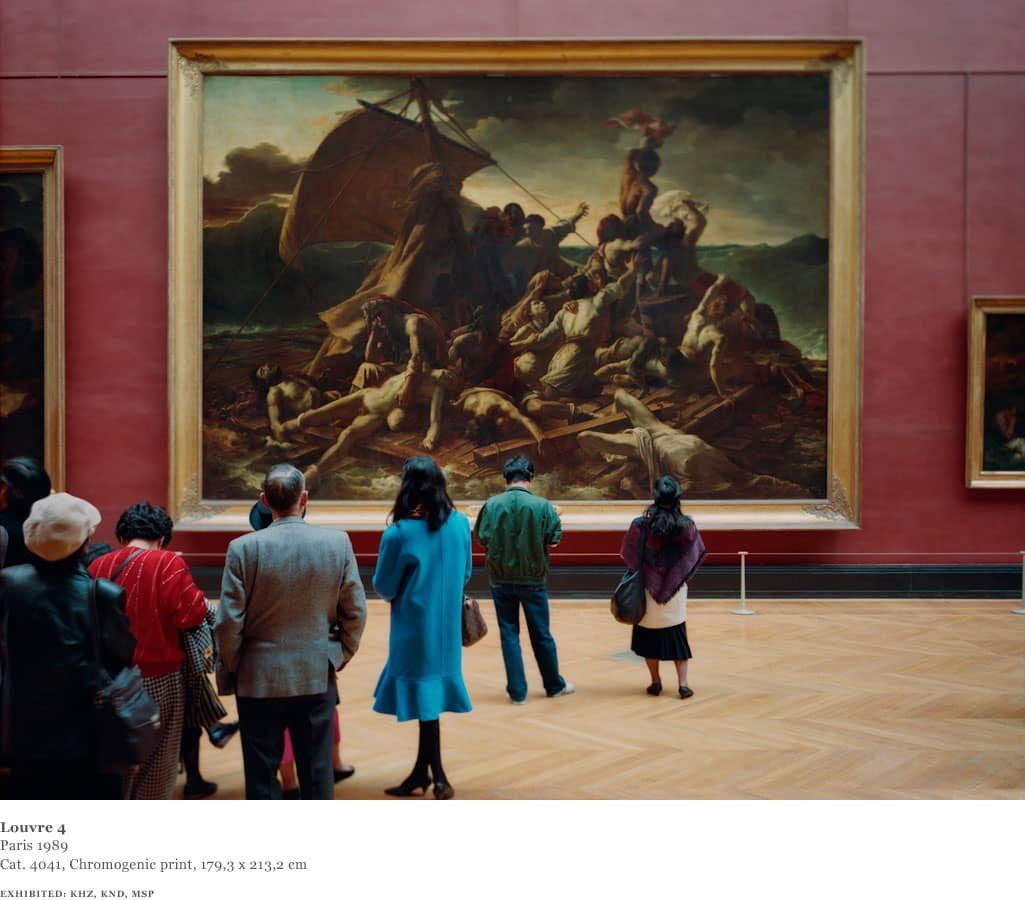
The pictures work on two levels. On the one hand, the visitors echo the paintings: their poses, clothes and colours answer the figures on the walls. On the other hand, the photographs show museum-going as a social ritual of seeing and being seen. Thus, in this ritual, the museum acts as both guardian and broker of cultural capital. The viewer of the photograph, finally, becomes the last spectator in the chain.
Three Thomas Struth museum pictures, read closely
Louvre 4, Paris (1989). A group of visitors stands before Géricault’s Raft of the Medusa, the vast painting of shipwreck survivors. As a result, the crowd seems to repeat the cluster of bodies on the raft. Meanwhile, two visitors look down at their guidebooks instead of the masterpiece.
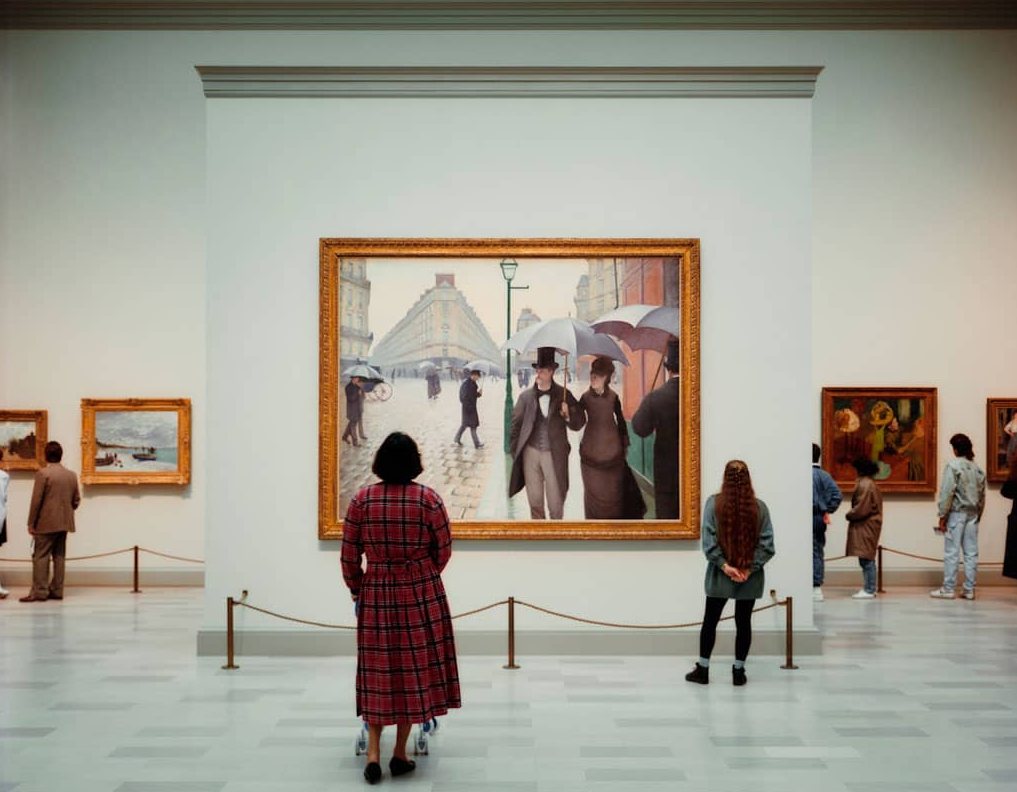
Art Institute of Chicago II (1990). Here Struth frames Gustave Caillebotte’s Paris Street; Rainy Day (1877) in the centre. A woman in a tartan dress stands with a pushchair before the painted boulevard. Consequently, the street in the painting seems to run on into the gallery. Struth later said he wanted to bring together the time of the picture and the time of the viewer, creating a “double reflection of consciousness”.
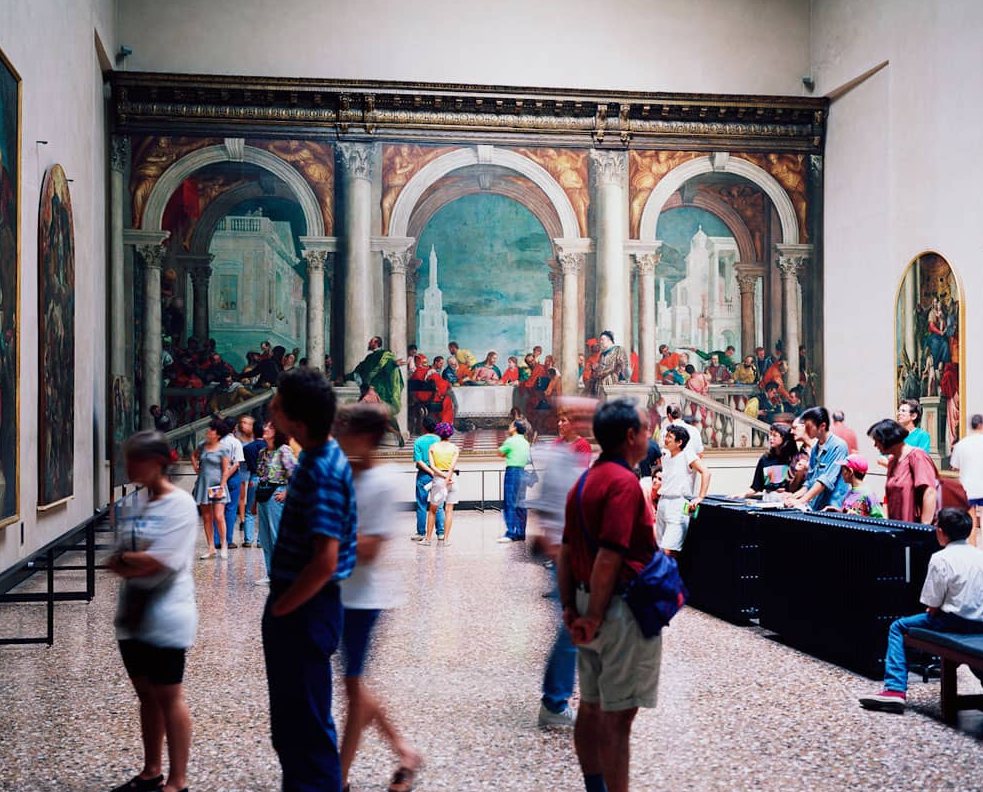
Galleria dell’Accademia I, Venice (1992). Tourists in shorts drift past Paolo Veronese’s Feast in the House of Levi, a banquet scene as wide as a cinema screen. Meanwhile, some visitors are blurred by movement. Struth chose the picture because he loved its party atmosphere. In his own words, “When a work of art becomes fetishized … it dies”.
Thomas Struth in churches and at the Prado
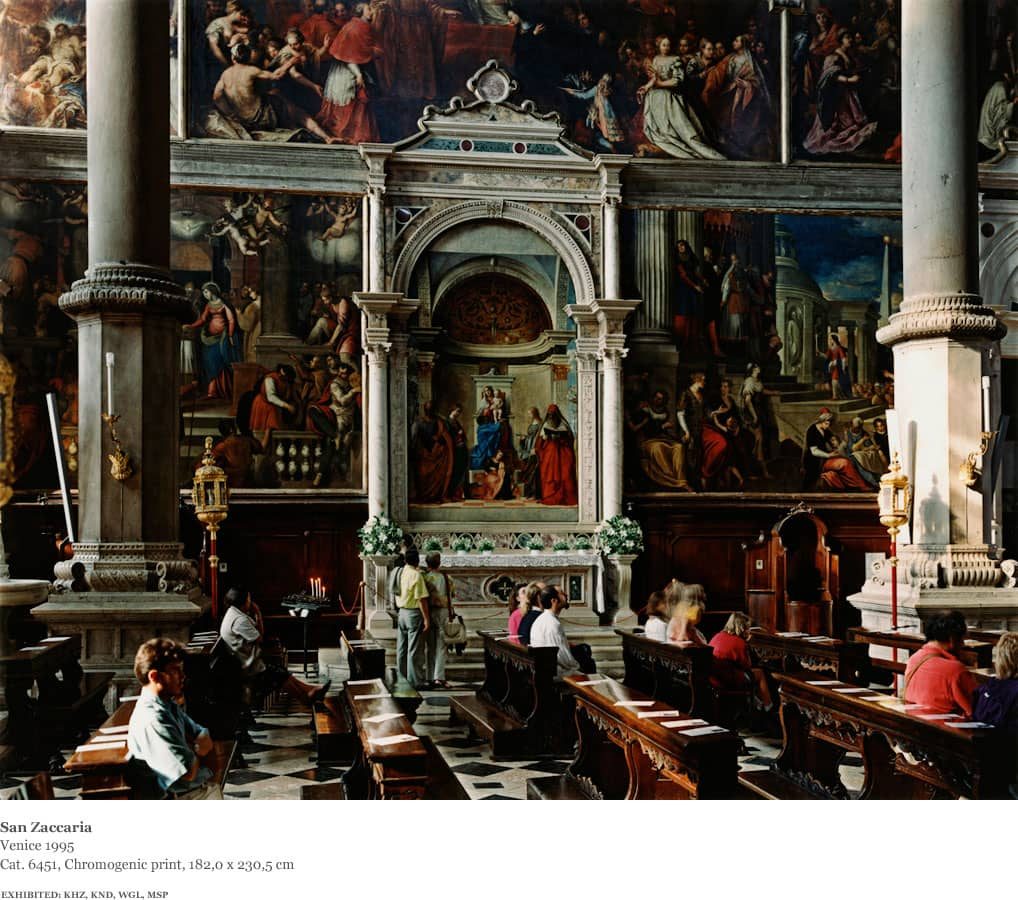
San Zaccaria, Venice (1995). Churches belong to the same story. Here, Giovanni Bellini’s altarpiece of 1505 rises above a few quiet visitors in the pews. Moreover, Struth’s print, almost two metres high, stands as large as the painting it depicts.
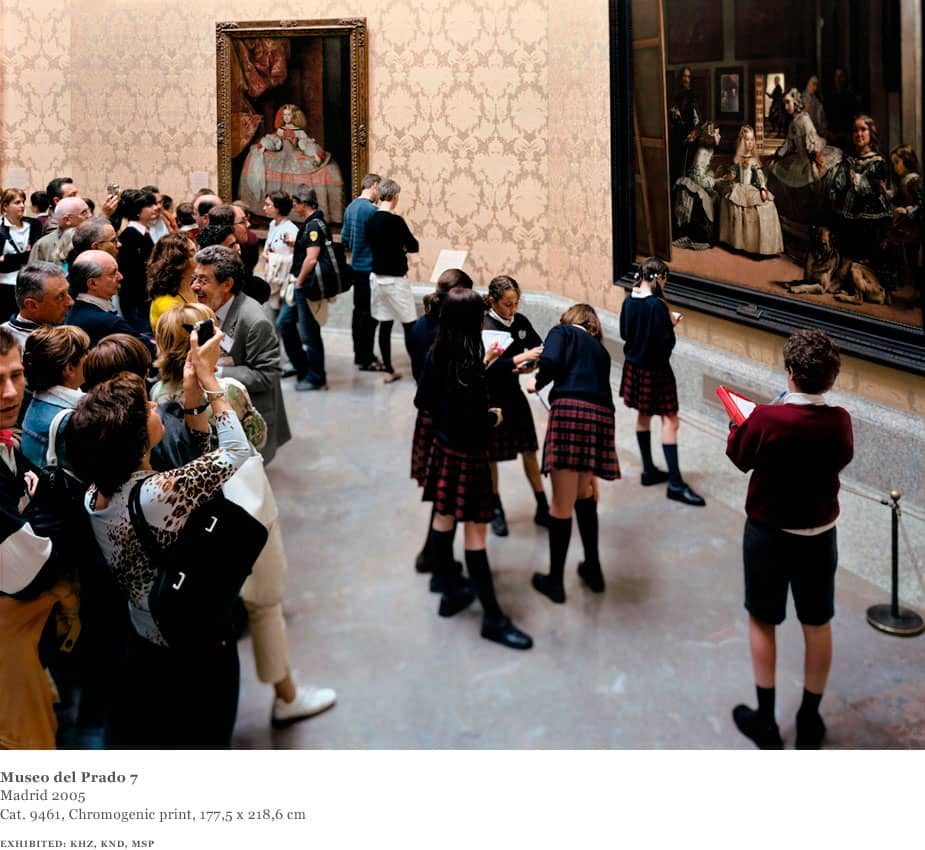
Museo del Prado 7, Madrid (2005). Visitors crowd around Velázquez’s Las Meninas, a painting famous for drawing its own viewer into the scene. Struth’s photograph therefore adds one more layer of looking. The art historian Miranda Baxter calls such works “thinking objects”, because they make us aware of our own status as museum visitors.
In 1999, a decade after the first pictures, Struth returned to the series. Indeed, his Pergamon Museum photographs of 2001 are among its most monumental. The Prado pictures of 2005 are usually treated as its close.
Audience and the Hermitage (2004–05)
In 2004 Struth reversed the direction of the gaze. At the Galleria dell’Accademia in Florence, he mounted his camera at the base of Michelangelo’s David. Then he photographed the visitors looking up at the statue. However, the sculpture itself never appears. Instead, we see tourists, students and families caught in wonder, boredom or distraction. In 2005 he made similar close-ups of viewers in the Hermitage in St Petersburg.
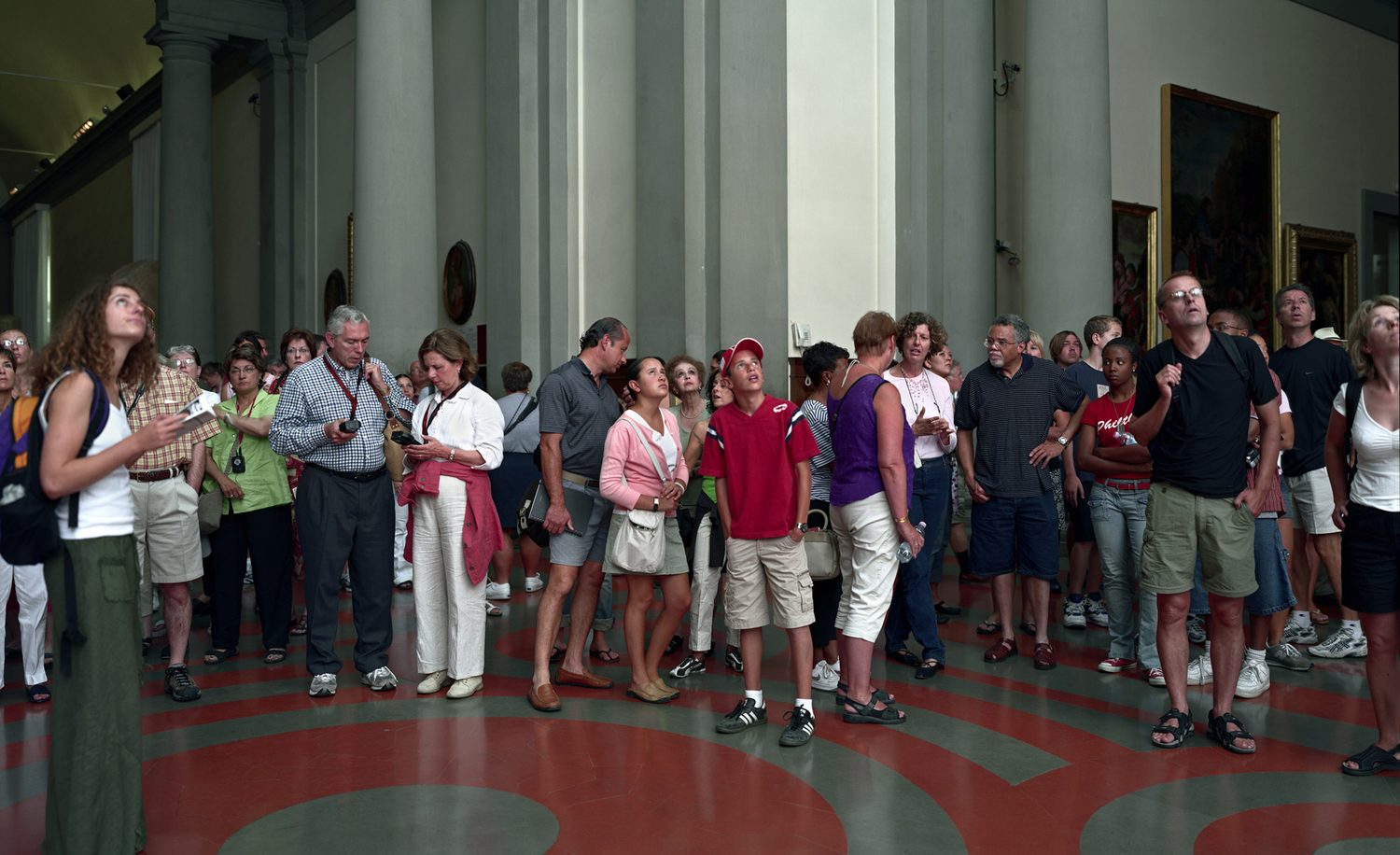
The Audience pictures are among the most direct studies of attention in contemporary photography. In effect, the artwork now looks back at us, and the viewers become the picture.
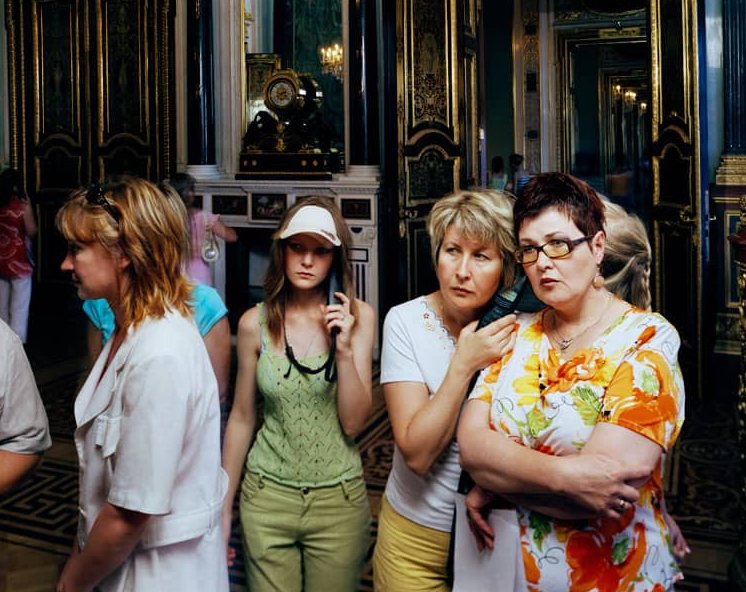
Making Time at the Prado (2007)
From 6 February to 6 May 2007, the Prado hung a selection of Struth’s pictures among its own paintings. Fittingly, the show was called Making Time. The museum presented the show as the start of an initiative to offer “other viewpoints” on its collection. In addition, recent museum pictures from the Hermitage, the Accademia and the Prado appeared in the museum’s new extension.
New Pictures from Paradise (1998–)
In 1998 Struth turned from culture to nature. He began photographing forests and jungles, starting in the Daintree Rainforest in Queensland, Australia. He continued in Brazil, China and Japan, and later in Germany, Peru and Hawaii. The title is ironic: these are not gardens of Eden, but dense walls of leaves, trunks and moss.
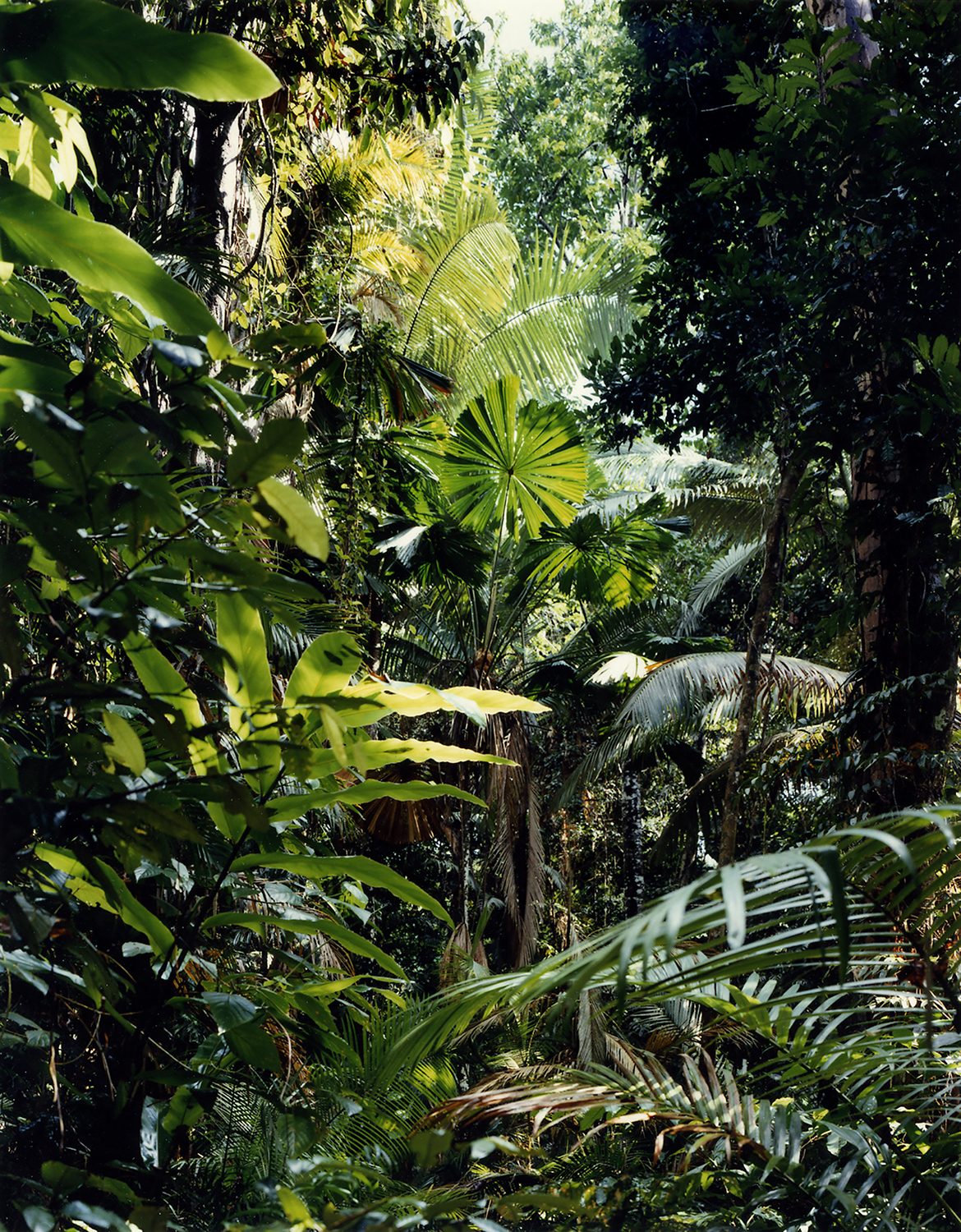
These pictures, by contrast, have no centre. Nothing guides the eye: it finds no path, no figure and no focal point, so it wanders across the whole surface. Accordingly, Struth has compared them to an illegible text. In a statement for the Prix Pictet, which shortlisted the series, he described the clutter of detail as a kind of empty space, “emptied to elicit a stillness and internal dialogue”. In that sense, the jungles are the private counterpart of the crowded museum rooms.
Flowers for a hospital: Dandelion Room
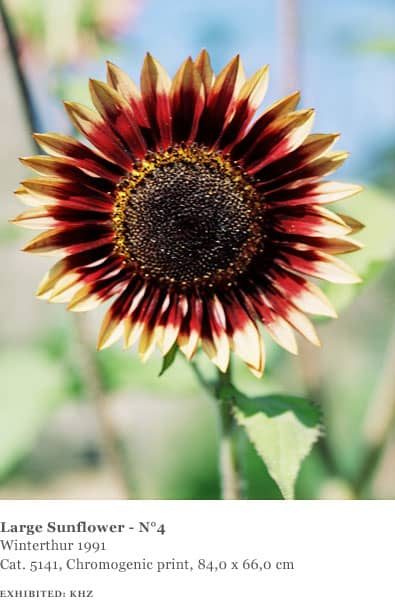
Struth’s gentlest work was made for patients. In the early 1990s he photographed flowers and landscapes for the wards of the Lindberg hospital in Winterthur, Switzerland. The pictures, such as Large Sunflower – No. 4, Winterthur (1991), were later gathered in the book Dandelion Room. They show a side of Struth that is easy to miss: photography as a quiet companion in difficult places.
Nature & Politics: Thomas Struth and technology
From 2007 Struth photographed places where advanced technology is made or tested. For example, he visited a shipyard in South Korea and the Kennedy Space Center. He also photographed fusion research reactors of the Max Planck Institute, chemical plants and operating theatres. The subjects are sites of techno-industrial and scientific research, usually hidden from the public.
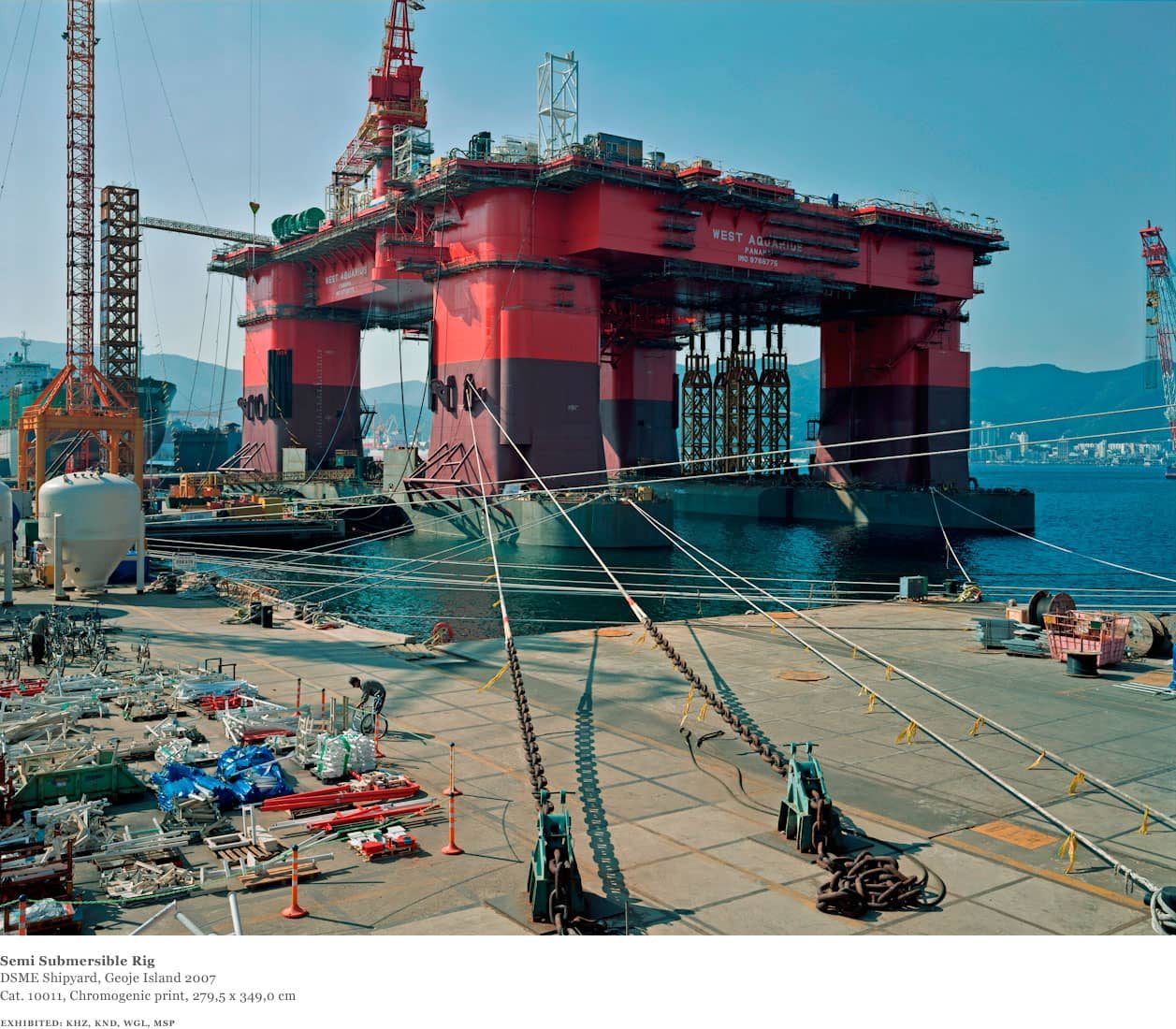
Typically, these pictures are dense with cables, pipes and instruments. At first sight they look chaotic; on closer view, they reveal an order that only specialists understand. Struth has said that he wanted to show these places behind the scenes, without the glossy promises of progress. At the same time, he wanted viewers to understand why such machines fascinate us. He has also pointed to a contradiction. People agree on plasma physics and satellites, yet they still fail to agree on how to live together.
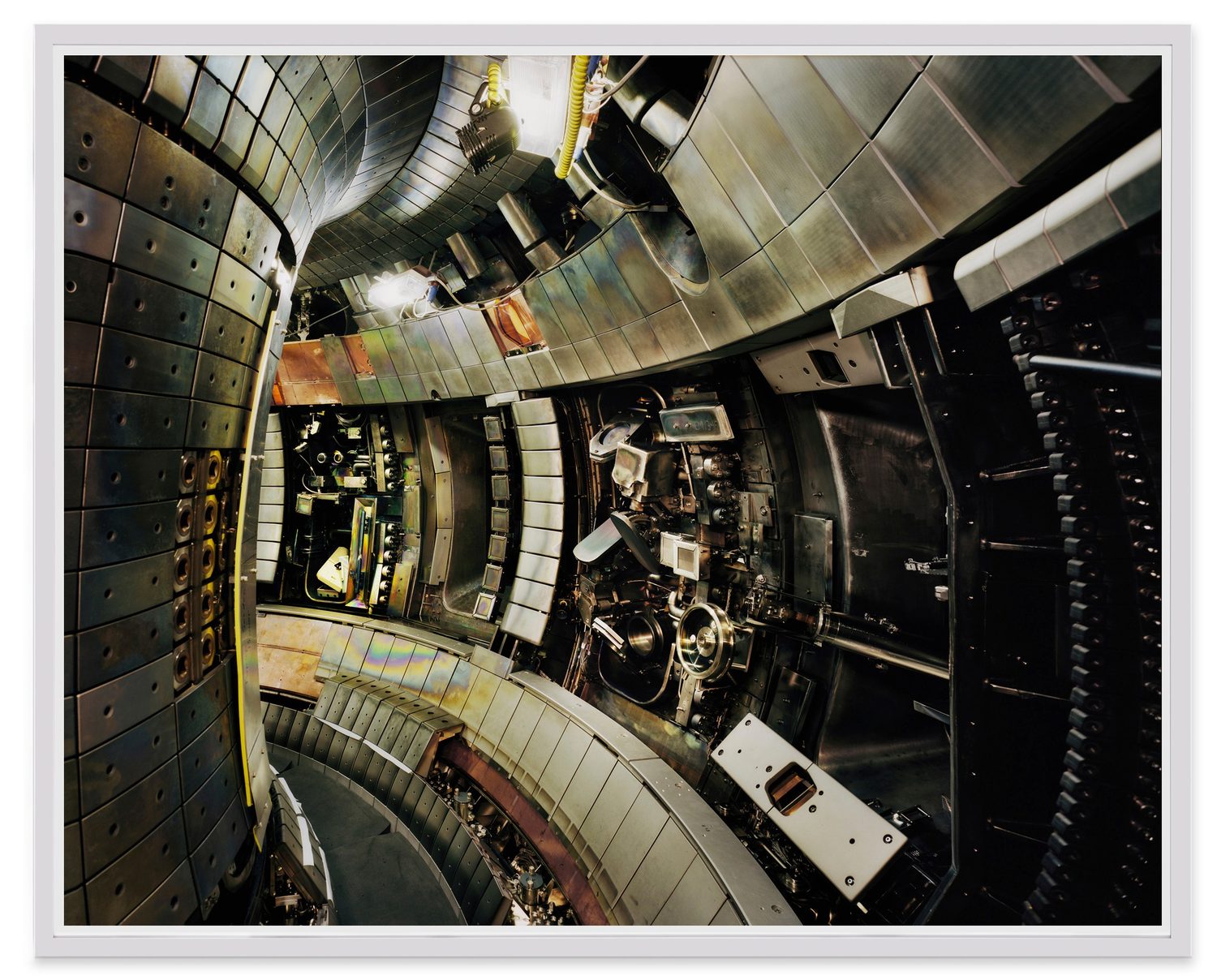
Later, the series gave its name to a touring exhibition. Nature & Politics opened at the Museum Folkwang in Essen in 2016. It then travelled to the Martin-Gropius-Bau in Berlin and the High Museum of Art in Atlanta. After that, it went to the Moody Center for the Arts in Houston, the Saint Louis Art Museum and, in 2019, the MAST Foundation in Bologna.
Disney’s theme parks (2013)
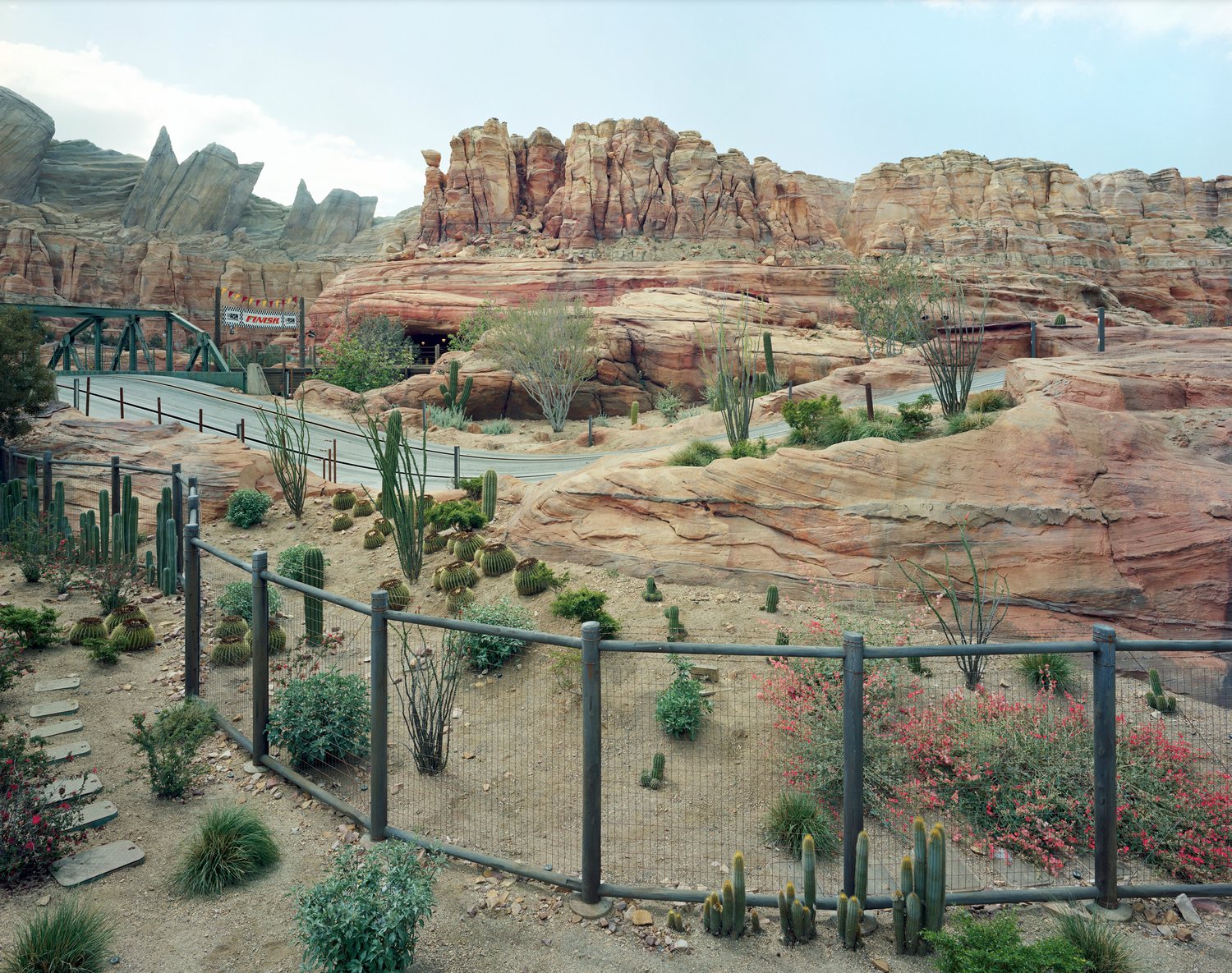
In 2013 Struth turned to a factory of dreams. Specifically, he photographed Disney’s theme parks in Anaheim, California, in wide, almost empty views. A show at Marian Goodman Gallery in 2014 paired these pictures with new sites of technology. The gallery presented the parks as an archetypal place for producing dreams and fantasy. Without crowds, moreover, the artificial canyons and painted rocks look strangely real.
NASA, CERN and IBM (2017–2023)
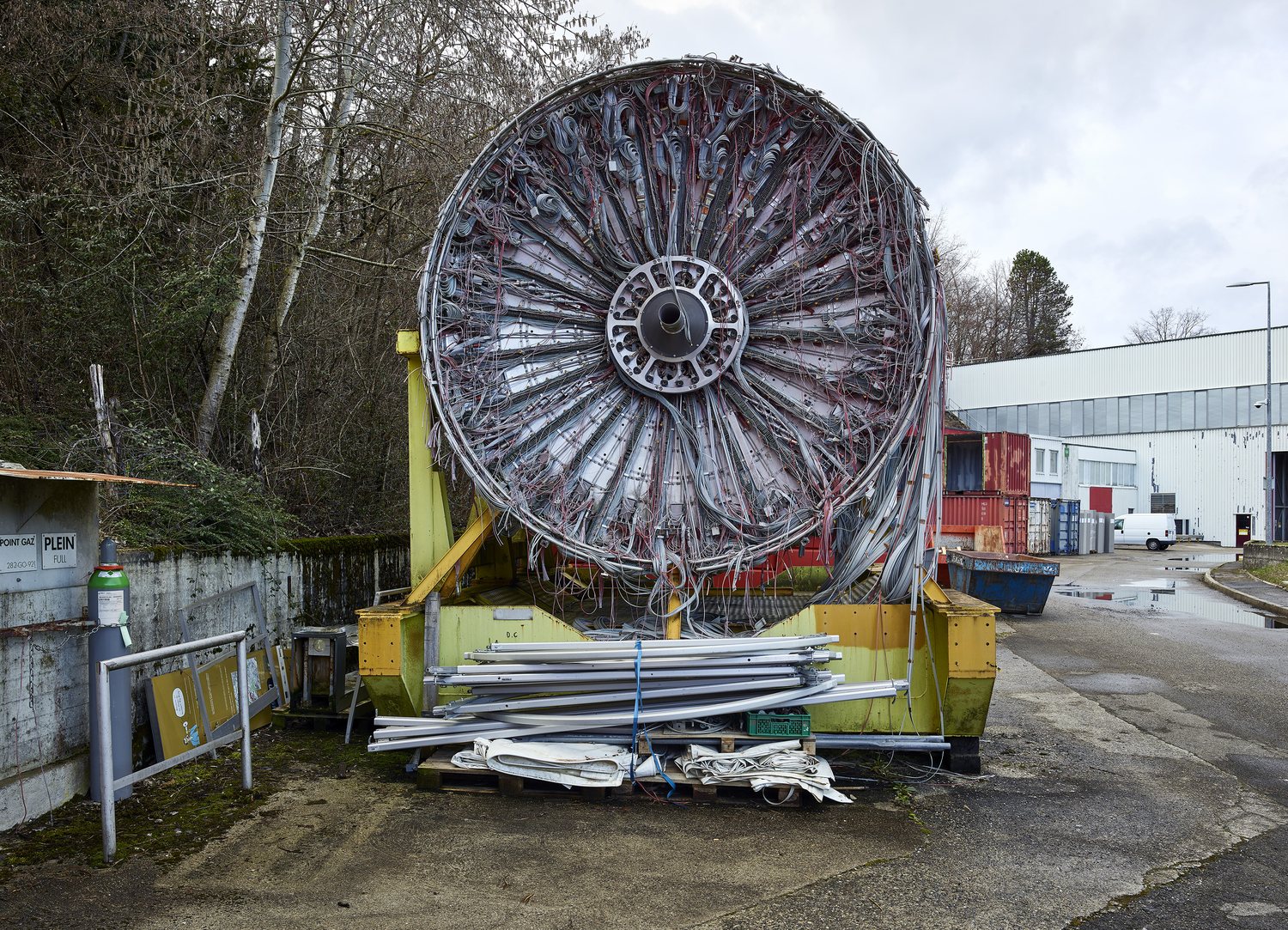
Meanwhile, the technology pictures continue. In 2017 Struth photographed training facilities at NASA’s Johnson Space Center in Houston. From 2019 he worked at CERN, the European particle-physics laboratory near Geneva, where he photographed detectors, test areas and stored equipment. In 2022 he photographed a processing tool at IBM in Yorktown Heights. These recent inkjet prints show retired equipment as well as working machines.
Israel and Palestine, and the Animals series
Between 2009 and 2012, Struth took part in the project This Place, and he went on photographing the region until 2014. Twelve photographers, including Frédéric Brenner, Josef Koudelka, Stephen Shore and Jeff Wall, were invited to work in Israel and the West Bank. Moreover, each artist could approach the region freely. The exhibition, curated by Charlotte Cotton, toured from Prague to Tel Aviv, Florida and the Brooklyn Museum (2016). There, Struth photographed settlements, refugee camps, quarries and research laboratories.
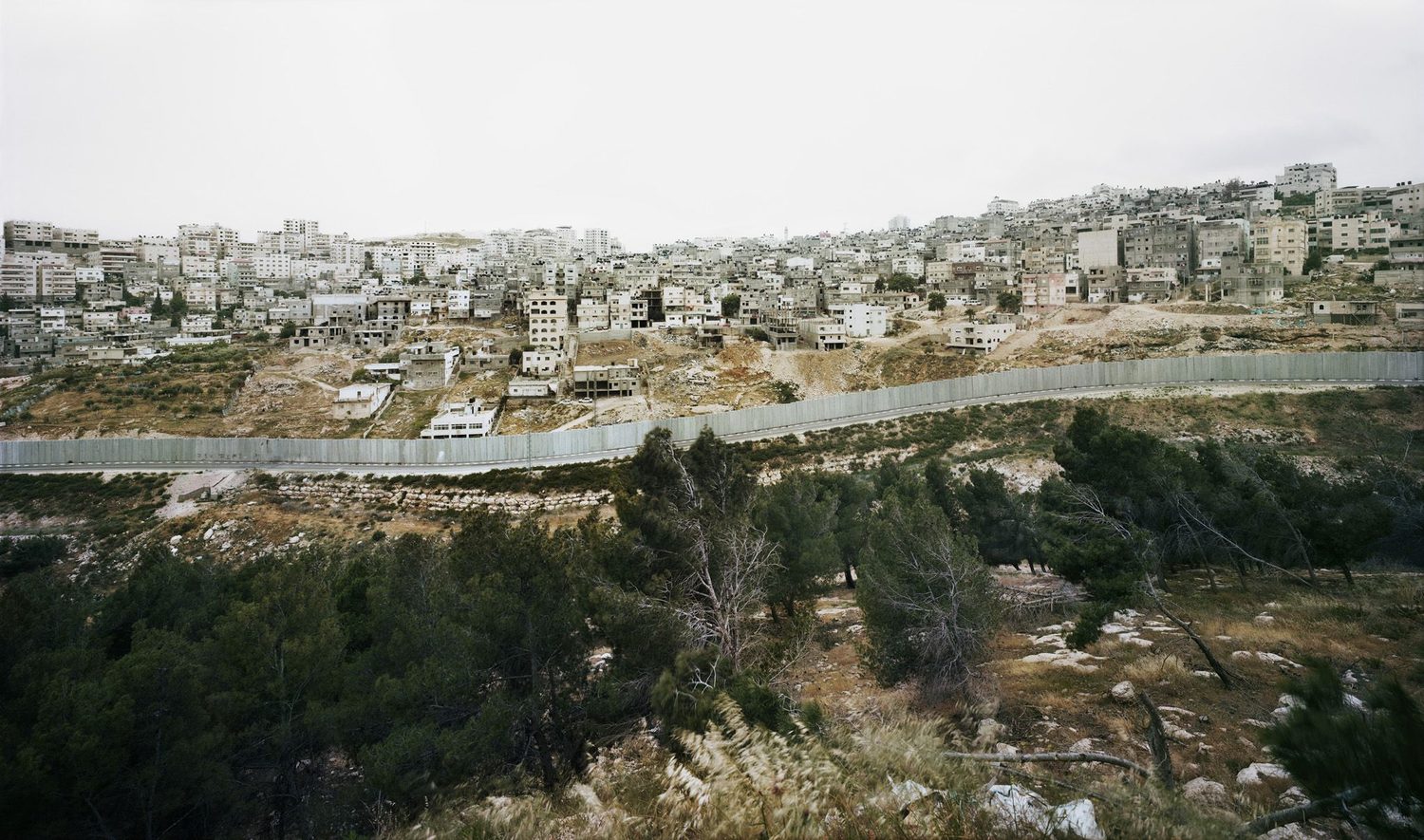
The conflict is never far away, although it often marks the images in ways that are not immediately apparent. Struth’s subjects range from the Har Homa settlement to the Shuafat camp in East Jerusalem. As in his other series, he shows places and structures rather than dramatic events.
Since 2017 Struth has also worked at the Leibniz Institute for Zoological and Wildlife Research in Berlin. At the institute he has photographed animals such as a Grévy’s zebra (2017). In this way, these large, sober pictures continue the themes of Nature & Politics: the meeting of nature and science.
Thomas Struth and the Düsseldorf School
Struth was one of the first and most important students of Bernd and Hilla Becher. Critics have often grouped him with Andreas Gursky, Thomas Ruff, Candida Höfer and Axel Hütte as the “Düsseldorf School” of photography. In particular, the group shares a training, a taste for series and large prints, and a cool distance from the subject.
The label hides real differences, however. The comparison between Struth and Gursky is especially misleading. In one curator’s words, Struth is an artist consumed with history and its relationship to the individual subject. Gursky, by contrast, looks down on the movements of the mass from a bird’s-eye view. Ruff, for his part, made photography itself his subject.
Struth’s large colour prints also belong to a wider shift. From the 1980s, artists such as Cindy Sherman and Jeff Wall helped bring photography into the museum’s main galleries. Struth’s Museum Photographs also took part in that movement. Indeed, they turned the museum itself into a subject just as photography was entering it.
How critics read Thomas Struth
Conceptual art meets the picture
The Museum Photographs of the late 1980s sought to reconcile Conceptualism’s self-critique with a renewed desire for representation and narrative. In other words, Struth kept the analytical rigour of his teachers while bringing back the human figure, colour and storytelling.
Absorption and the tableau
The art historian Michael Fried gives Struth an important place in a much-cited study of recent art photography. In particular, he devotes chapters to the Museum Photographs and to the portraits. In turn, these chapters belong to a wider argument about absorption, theatricality and the large photographic “tableau”. Absorption, in Fried’s sense, means figures lost in what they are doing, unaware of being watched. The book has helped make Struth a key reference in debates about photography as art.
Photographs as thinking objects
More recent scholarship, by contrast, stresses the viewer. Miranda Baxter, writing in the journal Photographies, takes Museo del Prado 7 as her main example. For her, the Museum Photographs make viewers think about their own looking. In short, she calls this effect metacognition, or thinking about thinking. As a result, standing before the photograph becomes a small lesson in how we behave in museums.
A “reluctant modernist”
The scholar Ulrich Baer, writing for a 2008 exhibition in Naples, calls Struth a “reluctant modernist”. On the one hand, Struth finds beauty in places once thought unworthy of it, such as post-war housing or the back areas of museums. On the other hand, Baer argues that he does not simply discover that beauty. Instead, he inscribes it there through framing, scale and patience.
A social and psychological art
Finally, the social meaning of the work is a constant theme. The family portraits look back to August Sander’s great survey of the German people. Meanwhile, the street pictures read as studies of how communities shape their surroundings without fully choosing them. The museum pictures, finally, show how audiences take part in the meaning of art. In this view, the observers of Struth’s pictures become partners rather than mere viewers.
The market for Thomas Struth’s photographs
Today, Struth is one of the few photographers whose prints have sold for more than a million dollars. His most sought-after image is Pantheon, Rome (1990), a view of the ancient temple’s rotunda with a small crowd of visitors. In November 2007, a print sold for $1,049,000 at Christie’s New York. Then, in May 2015, another print fetched $1,810,000 at Sotheby’s New York, the second-highest price for a photograph at auction that year.
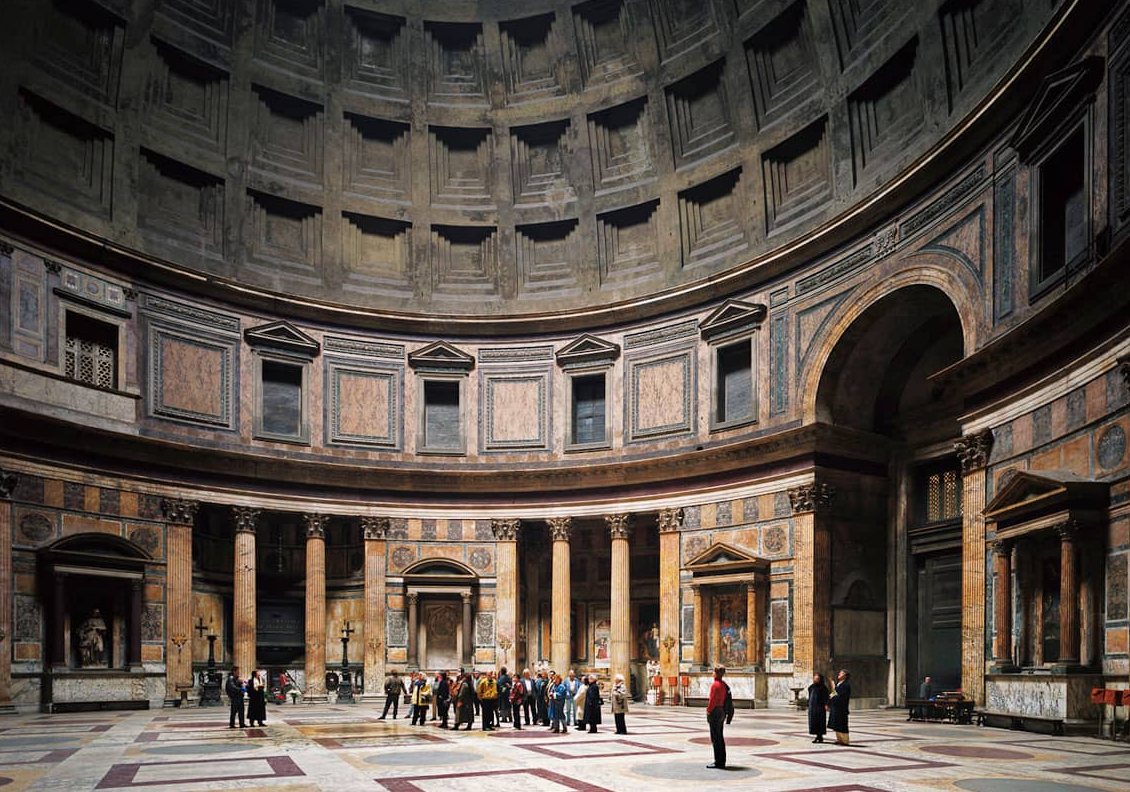
Of course, prices like these say more about the art market than about the pictures. Still, they show how fully large-format photography has entered the world once reserved for painting.
Key exhibitions and awards
| Year | Exhibition or award | Why it matters |
|---|---|---|
| 1978 | Streets of New York City, P.S.1, New York | First solo exhibition |
| 1987 | Unconscious Places, Kunsthalle Bern, then Edinburgh, Münster, Frankfurt | First large survey; gives the street series its title |
| 1990 | Venice Biennale; Family Portraits, Marian Goodman Gallery, New York | International recognition; first show of the group portraits |
| 1992 | Documenta IX, Kassel; Werner Mantz Prize | Confirms his place in contemporary art |
| 1997 | Spectrum International Prize for Photography | Major German photography award |
| 2002–03 | Thomas Struth 1977–2002, Dallas Museum of Art, MOCA Los Angeles, Metropolitan Museum, MCA Chicago | Touring retrospective in the United States |
| 2007 | Making Time, Museo del Prado, Madrid | Museum pictures shown among the Prado’s old masters |
| 2010–11 | Photographs 1978–2010, Kunsthaus Zürich, K20 Düsseldorf, Whitechapel Gallery, Museu Serralves | Major touring retrospective; first UK survey |
| 2014 | Royal Institute of British Architects, Honorary Fellowship | Recognition from architects |
| 2014–15 | Thomas Struth: Photographs, Metropolitan Museum of Art, New York | Celebrates the Met’s holdings |
| 2016 | Centenary Medal, Royal Photographic Society; American Academy of Arts and Letters | Major honours in Britain and the United States |
| 2016–19 | Nature & Politics, Museum Folkwang, Martin-Gropius-Bau, High Museum, Moody Center, Saint Louis Art Museum, MAST Bologna | Technology series on tour |
| 2017–20 | Figure Ground, Haus der Kunst, Munich, then Guggenheim Bilbao | Retrospective with the artist’s archive |
| 2024 | Member of the Akademie der Künste, Berlin; Helena Vaz da Silva European Award | Recent honours |
| 2025 | Soane Honors Award for Photography; solo show, Galerie Max Hetzler, Berlin | Recent recognition |
| 2026 | Chanel Chair of Photography, Jeu de Paume, Paris (September) | Lectures on four decades of work |
Common mistakes about Thomas Struth
Unfortunately, many short biographies of Struth repeat the same errors. Therefore, the list below corrects the most frequent ones, using museum and gallery sources.
- “The Museum Photographs began in 1980.” In fact, the series began in 1989, after the Naples restorers picture of 1988.
- “He photographed his psychoanalyst friend’s patients.” Rather, he and Ingo Hartmann studied the patients’ own family snapshots.
- “He was the first living artist shown at the Prado.” The Prado’s own exhibition page does not say so, so the claim is best left aside.
- “His prints always come in editions of ten.” Instead, editions vary: ten for many earlier prints, often six for recent ones.
How to look at a Thomas Struth photograph
Above all, Struth’s pictures reward slow looking. For students, five simple questions can guide a first reading. Each one links back to a work discussed above.
- Where is the camera? Notice the central viewpoint in Crosby Street, then the high, oblique view of Le Lignon.
- Who looks at whom? In Art Institute of Chicago II, follow the gazes between the painting, the visitors and you.
- What echoes what? Compare the poses of the visitors in Louvre 4 with the bodies on Géricault’s raft.
- What is missing? In Audience, the David is absent; in the jungles, there is no path.
- How big is it? Imagine the print at two metres wide, as large as the painting it shows.
The legacy of Thomas Struth
Overall, Struth’s influence works on several levels. First, he helped establish the large colour print as a form of contemporary art. As a result, in scale and ambition, it became equal to painting. Second, his Museum Photographs made the museum and its public a subject for art. This happened just as photography was entering the museum’s main galleries. Third, his family portraits showed that a cool, frontal method could produce intimate and psychologically rich images.
His long series also offer a model for students. Generally, each group begins with a simple question, follows strict rules and develops over years. To set Struth among his peers, read our guide to famous contemporary photographers. Charlotte Cotton’s survey of art photography, discussed in our review of The Photograph as Contemporary Art, is another good starting point.
Where to see the work of Thomas Struth and what to read
Today, Struth’s photographs are held by many major museums. For example, they include the Metropolitan Museum of Art, MoMA and the Guggenheim in New York. In London, Tate and the National Portrait Gallery hold his work. Other collections include The Broad in Los Angeles, the Art Institute of Chicago and the Kunstsammlung Nordrhein-Westfalen in Düsseldorf. He is represented by Marian Goodman Gallery and Galerie Max Hetzler.
Useful books for a first approach:
- Hans Belting, Thomas Struth: Museum Photographs (Munich: Schirmer/Mosel, 1993; later editions), the classic book on the museum series.
- Douglas Eklund and others, Thomas Struth, 1977–2002 (New Haven: Yale University Press, 2002), the catalogue of the first American retrospective.
- Michael Fried, Why Photography Matters as Art as Never Before (New Haven: Yale University Press, 2008), with chapters on Struth.
- Thomas Struth: Figure Ground (Munich: Schirmer/Mosel, 2017), the catalogue of the Haus der Kunst retrospective.
- Nana Last, Archive, Matrix, Assembly: The Photographs of Thomas Struth 1978–2018 (Applied Research & Design, 2021).
FAQ: Thomas Struth
What is Thomas Struth known for?
He is best known for his Museum Photographs, large colour pictures of visitors in front of famous works of art. His street views, family portraits, jungle pictures and images of science and technology are equally central to his work.
What does Thomas Struth photograph?
He photographs streets, families, museum visitors, forests, theme parks and research sites. In each case, he looks at how individuals fit into a larger structure.
What camera does Thomas Struth use?
He works mostly with a large-format view camera on a tripod. For instance, in 2003 he described a 13 × 18 cm model. As a result, he can print very large without losing detail.
Is Thomas Struth part of the Düsseldorf School?
Yes. He was one of the first students in Bernd Becher’s photography class at the Kunstakademie Düsseldorf. Critics group him with Candida Höfer, Axel Hütte, Andreas Gursky and Thomas Ruff.
Are Thomas Struth’s photographs staged?
Mostly not. For example, the early museum pictures were made by waiting for the right moment. However, the family portraits are formal sittings, and some later museum pictures were partly arranged.
Did Thomas Struth photograph Queen Elizabeth II?
Yes. In 2011 the National Portrait Gallery in London commissioned him to photograph Queen Elizabeth II and the Duke of Edinburgh. He made the picture at Windsor Castle for the Diamond Jubilee.
How much are Thomas Struth photographs worth?
Prices vary widely by series, size and edition. However, at the top of the market, a print of Pantheon, Rome sold for $1.81 million in 2015.
Sources
Museums and institutions
- Akademie der Künste, Berlin, Thomas Struth, biography
- Solomon R. Guggenheim Museum, Thomas Struth, artist biography
- Guggenheim Museum Bilbao, Thomas Struth, 2019–2020
- Douglas Eklund, “Photography in Düsseldorf”, Heilbrunn Timeline of Art History, The Metropolitan Museum of Art, 2004
- The Metropolitan Museum of Art, Restorers at San Lorenzo Maggiore, Naples, 1988
- The Museum of Modern Art, Le Lignon, Geneva, 1989
- International Center of Photography, Thomas Struth
- National Portrait Gallery, Queen Elizabeth II and The Duke of Edinburgh, Windsor Castle 2011
- Museo Nacional del Prado, Thomas Struth: Making Time, 2007
- TBA21, Paradise 7, Daintree, Australia, 1998
- The Broad, Thomas Struth
- Moody Center for the Arts, Thomas Struth: Nature & Politics, 2017
- Museum Folkwang, Thomas Struth. Nature & Politics, 2016
- Whitechapel Gallery, Thomas Struth: Photographs 1978–2010, 2011
- Brooklyn Museum, This Place, 2016
- Tate, Thomas Struth
- Prix Pictet, Growth: Thomas Struth, Paradise
Galleries, auction houses and press
- Marian Goodman Gallery, Thomas Struth, biography and works
- Marian Goodman Gallery, Thomas Struth, New York, 2014
- Galerie Max Hetzler, Thomas Struth, biography and exhibitions
- Phillips, “Thomas Struth: Museum Photographs”, 2016
- Sotheby’s New York, Contemporary Art Evening Auction, May 2015, lot 52
- artnet, “Art Market Watch”, 14 November 2007
- Collector Daily, “Top 10 Highest Priced Photography Lots at Auction in 2015”
- Phyllis Tuchman, “On Thomas Struth’s Museum Photographs”, artnet Magazine, 2003
- Louisa Buck, “Interview with Thomas Struth: Photographs reveal people’s inner agenda”, The Art Newspaper, 30 June 2011
Books and scholarship
- Michael Fried, Why Photography Matters as Art as Never Before (New Haven: Yale University Press, 2008)
- Miranda Baxter, “Seeing for the First and Last Time in Thomas Struth’s Museum Photographs”, Photographies, vol. 7, no. 2, 2014
- Ulrich Baer, “The Reluctant Modernism of Thomas Struth”, in Thomas Struth (Naples: MADRE, 2008)
- Douglas Eklund and others, Thomas Struth, 1977–2002 (New Haven: Yale University Press, 2002)
- Hans Belting, Thomas Struth: Museum Photographs (Munich: Schirmer/Mosel, 1993)
- Thomas Struth: Figure Ground (Munich: Schirmer/Mosel, 2017)