Viral photography looks like pure luck, yet research shows that shared images follow patterns. This guide separates what studies actually demonstrate from social-media folklore. Then it turns the evidence into honest, practical advice for photographers.
Most advice on this topic recycles the same claims. For example, post at a certain hour, use a certain filter, or copy a certain trend. However, very few of those claims come with a source. Instead, we looked for peer-reviewed studies, platform statements and well-documented cases, and we flagged what remains uncertain.
What Viral Photography Actually Means
First, we need a clear definition. In research, “viral” usually means shared: people choose to pass an item along to others. Jonah Berger and Katherine Milkman built their well-known study on that idea. They analysed all the New York Times articles published over three months.1
Views, likes, reach and sends are different measures, however, and they do not always move together. For instance, a picture can collect a million views and almost no sharing. Another can circulate privately in group chats and never trend. Therefore this article uses viral photography to mean images that spread through sharing, and it says so whenever a study measures something else.
Viral Photography Existed Long Before Instagram
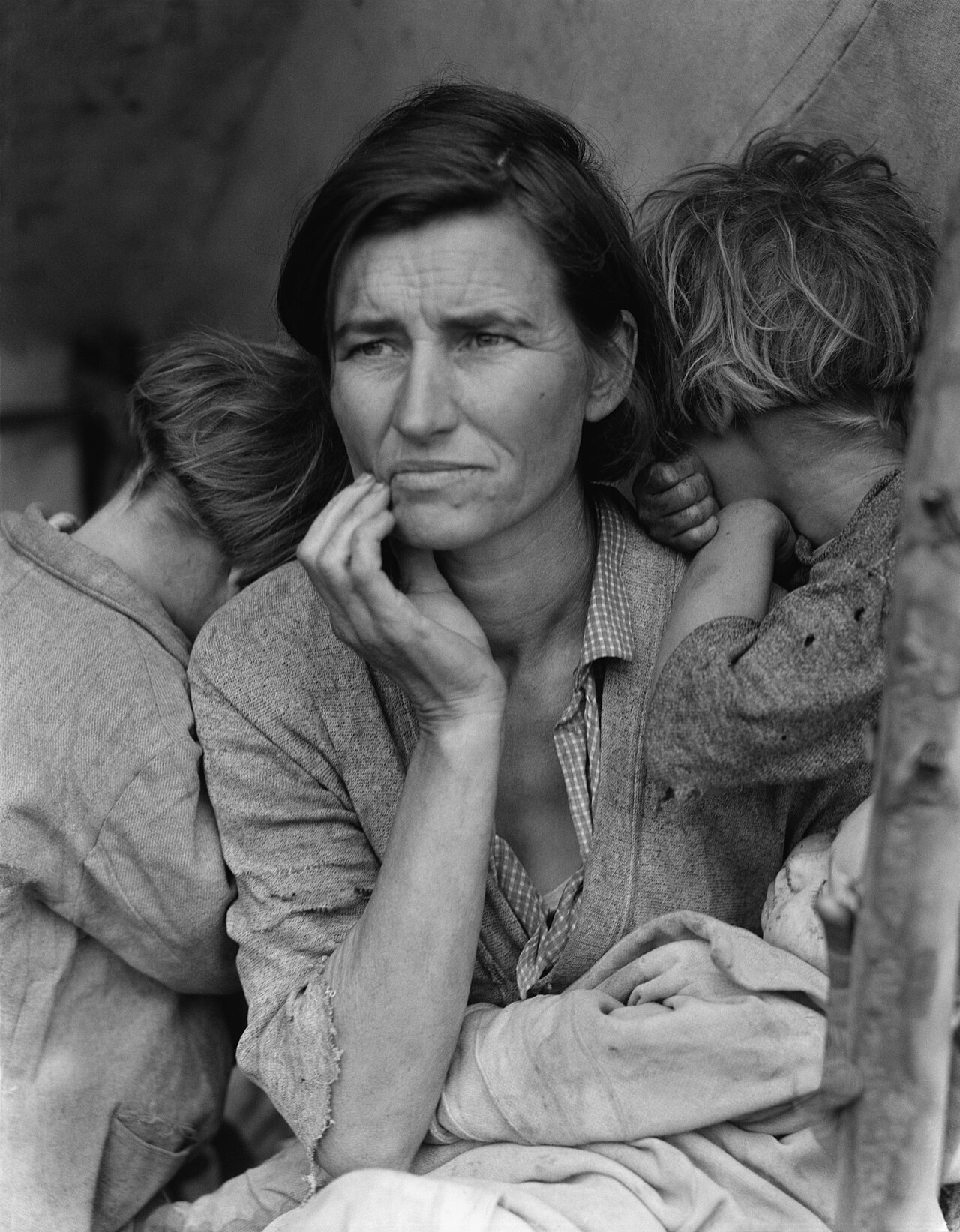
Images travelled widely long before social networks existed. Dorothea Lange made Migrant Mother in March 1936 while working for the Resettlement Administration, and the picture soon became one of the best-known images of the Great Depression.2
Likewise, other pictures followed the same path. The Bitter Years (1962) revisits the legacy of that Depression-era work. Meanwhile, Afghan Girl and Lunch Atop a Skyscraper show how a single frame can become a cultural fixture. In fact, magazines, wire services and exhibitions were the networks of their day.
What has changed is the speed, and the audience’s role. Today, readers redistribute images themselves, one tap at a time. As a result, the question is no longer only what the photographer made, but also what people will do with it.
The Science of Viral Photography: Emotion and Arousal
Berger and Milkman’s central finding concerns emotion. Content that evoked high-arousal emotions was shared more often, whether positive, like awe, or negative, like anger and anxiety. In contrast, content that evoked low-arousal emotions such as sadness was shared less. On average, positive content also travelled farther than negative content. Their experiments supported the idea that arousal itself pushes people to share.3
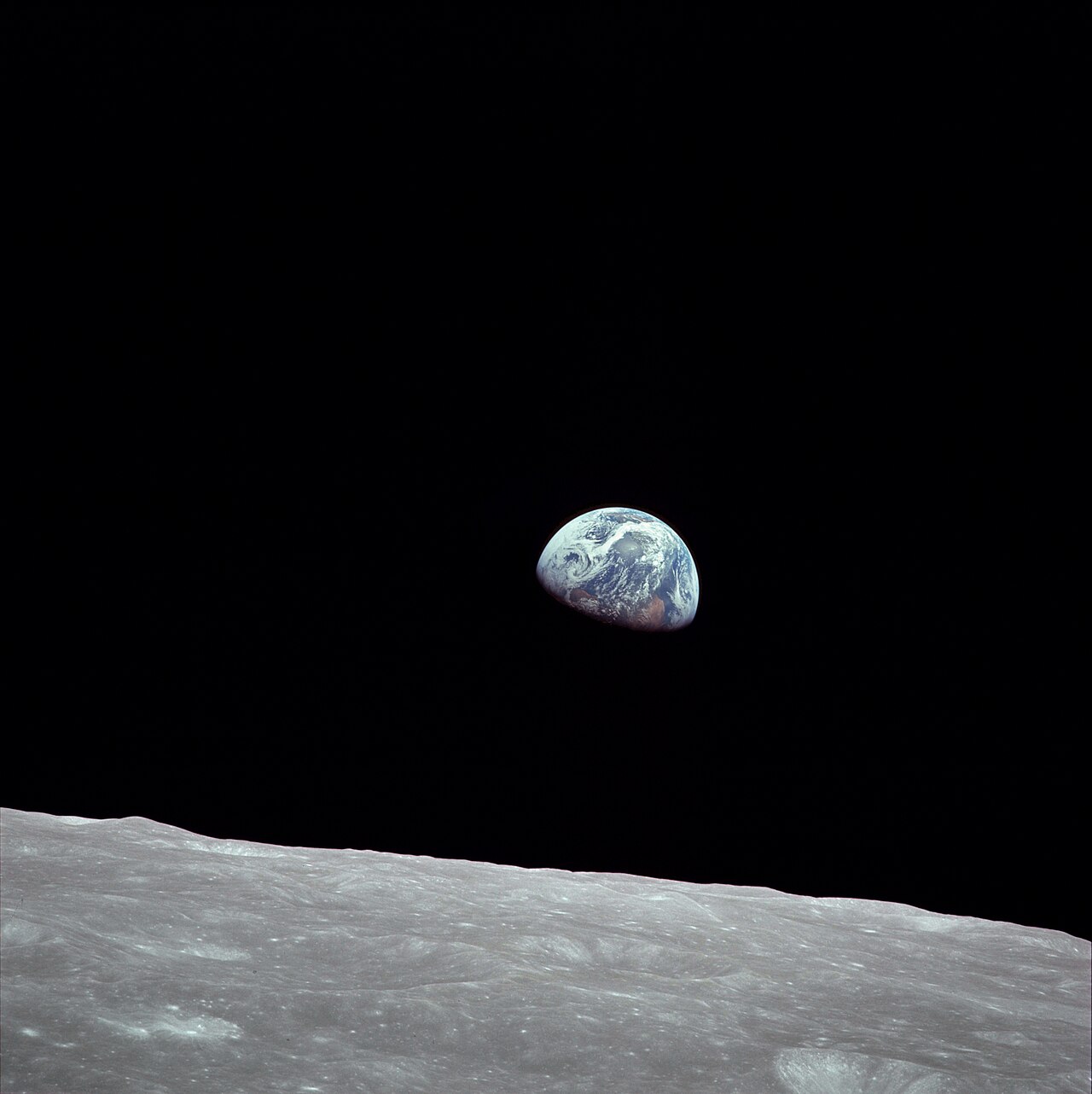
For photographers, the lesson is practical. A picture that quickens the viewer’s pulse has an advantage over a technically perfect picture that leaves them calm. Earthrise is a good illustration. Astronaut Bill Anders took it from Apollo 8 on 24 December 1968, and it shows our planet rising over a barren lunar horizon.4 Indeed, awe is almost the whole subject. Still, that is our reading of the image, not a result from the study.
However, one caution matters here. The study analysed news articles, not photographs. Therefore it describes a tendency, not a law, and it cannot promise that any specific image will spread.
Novelty, Surprise and the Speed of Spread
Another landmark study looked at Twitter rather than images. Soroush Vosoughi, Deb Roy and Sinan Aral followed about 126,000 stories shared by roughly three million people between 2006 and 2017. False stories travelled farther and faster than true ones, and the authors linked this to novelty.5 In short, people like to share what feels new.
The study concerns news, not photographs, so we should not overstate it. Even so, it points to a useful idea. Surprise helps an image travel, whereas accuracy does not guarantee reach. We will return to that tension when we discuss AI-generated images.
What Flickr and Instagram Data Say About Viral Photography
Computer scientists have tried to predict which pictures become popular. In 2014, Aditya Khosla and colleagues studied about 2.3 million Flickr images. Their model combined image content with social context, and it reached a rank correlation of about 0.81 with view counts.6 Color, gradients, the objects shown and learned visual features all contributed. Likewise, social signals, such as the uploader’s number of contacts.
This matters because pixels are only half of the story. Who posts, and to whom, shapes the outcome. A 2021 conference paper on Instagram even carries the word “limits” in its title, because predicting popularity from images and metadata only goes so far.7 Prediction is also not explanation. A model can find features that correlate with popularity without proving that they cause it.
If you want a current look at what performs on the platform, our analysis of US Instagram’s visual grammar in 2026 covers the style trends in detail.
The Dress: When Viral Photography Divides Us
In late February 2015, a blurry phone picture of a dress spread across the internet. Some people saw blue and black. Others saw white and gold. Then researchers turned the argument into data.
Rosa Lafer-Sousa, Katherine Hermann and Bevil Conway surveyed about 1,400 people. Of them, 57% reported blue and black, 30% white and gold, 11% blue and brown, and 2% something else. Older respondents and women reported white and gold more often.8 A larger study by Pascal Wallisch, with more than 13,000 participants, found that assumptions about the lighting shaped what people saw.9
The lesson is not that ambiguity is a recipe, because the picture went viral by accident. Still, it suggests that an image which makes people ask “what do you see?” invites replies and shares. That is our inference, not a finding of those papers.
How Instagram Ranks Viral Photography in 2026
Many guides to viral photography talk about “the algorithm” as one machine. Instead, Instagram says otherwise. In a May 2023 post, Adam Mosseri wrote that the platform does not have a single algorithm. Feed, Stories, Explore and Reels each use their own ranking systems.10
For each surface, Instagram lists the actions it tries to predict. In Feed, these include spending a few seconds on a post, commenting, liking, sharing and tapping the profile photo. Explore, by contrast, looks at likes, saves and shares. Reels focus on resharing, watching to the end and liking.
In January 2025, Mosseri added that the top three signals are watch time, likes and sends. A send is a private share by direct message. He advised creators to watch their average watch time, likes per reach and sends per reach.11 Likes matter slightly more for people who already follow you, whereas sends matter slightly more for reaching new audiences.
Two cautions apply. First, we found no published weights for these signals, so claims such as “a send is worth five likes” are guesses. Second, Instagram does not explain how watch time applies to a single still image. For photographers, the safest reading is simple: make pictures that people like, and make some that people want to send to a friend.
Viral Photography in the Age of AI Images
Generative tools have changed what spreads, and viral photography now includes pictures that no camera ever recorded. In March 2023, pictures of Pope Francis in a white puffer jacket appeared on a Midjourney forum. Over the weekend, they spread on Twitter, and one tweet was retweeted more than 25,000 times by Monday. Meanwhile, many people believed the images were real. Visible flaws, such as distorted hands and a warped crucifix, eventually gave them away.12
The pattern is not only playful. Renée DiResta and Josh Goldstein studied Facebook pages that posted AI-generated images at scale. Spammers and scammers used such images to build audiences, and many viewers did not seem to recognise them as synthetic.13 Engagement, in other words, does not prove that an image is honest or even real.
This is why we treat reach with caution. If you use generative tools, label the result clearly. Our essays on the collapse of truth in the age of AI and on the debate over AI’s photorealistic images go deeper.
The Hidden Cost of Viral Photography
However, fame is not always kind to the people inside the frame. Florence Thompson, the woman in Migrant Mother, was upset by the picture, according to the Oakland Museum of California. She felt she gained nothing from it and wished it had not been taken.14 Her story is a reminder that a famous image can outlive the comfort of its subject.
Platforms also decide what circulates. In 2016, Facebook removed Nick Ut’s Pulitzer Prize-winning “Napalm Girl” picture for nudity. On 9 September, the Norwegian paper Aftenposten printed an open letter from its editor, Espen Egil Hansen, to Mark Zuckerberg on its front page. Facebook then reversed course and said it would reinstate the image, citing its historical importance.15
These cases show two sides of the same coin. Algorithms can amplify an image beyond anyone’s control, and they can also erase a historic one. For deeper reading, see Susan Sontag’s Regarding the Pain of Others and our essay on why documentary work still matters. The Falling Man (2001) shows the same tension.
A Practical Playbook for Viral Photography
None of this guarantees an outcome. Instead, these habits for viral photography follow the evidence we have covered.
Aim for a Feeling, Not a Technique
Ask which emotion your image carries. According to the arousal research, awe, surprise and strong feeling travel better than calm perfection. Then edit toward that feeling.
Make the Picture Worth Sending
Instagram highlights sends as a leading signal. Therefore, imagine a viewer forwarding your image to a friend. What would they write beneath it? If you cannot answer, the picture may need a stronger idea.
Build an Audience Before You Need One
The Flickr study found that social context matters alongside image content. As a result, steady posting and real conversations with followers help each new picture start from a larger base. Our guide to attention and impact in marketing explains how those ideas connect.
Track Rates, Not Raw Counts
Mosseri recommends watching likes per reach and sends per reach. A post seen by 500 people with 50 likes outperforms one seen by 5,000 people with 100 likes. Finally, compare your own posts that way.
Protect the People in Your Frames
First, ask for consent where possible, and think about how a picture might follow someone for decades. After all, a shared image is very hard to recall.
What to Take Away
The research does not offer a formula. Instead, it offers a direction. Strong emotion, novelty, a supportive audience and shareable moments all help, but luck and platform design still play a large part. Therefore, aim to make images that matter to someone, measure them honestly, and remember that viral photography is an outcome you can influence but not command. Treat every shared picture as a result, not a goal.
- Berger, J., & Milkman, K. L. (2012). What makes online content viral? Journal of Marketing Research, 49(2), 192–205. DOI link.
- Library of Congress. Dorothea Lange, Migrant Mother, in Images from the Library. Library of Congress page.
- Berger & Milkman (2012), as above. Consensus summarises the result as follows: online content that evokes high-arousal positive or negative emotions is more viral, while low-arousal emotions make content less viral. See the original article.
- NASA Scientific Visualization Studio, Earthrise, Apollo 8, AS08-14-2383. NASA page.
- Vosoughi, S., Roy, D., & Aral, S. (2018). The spread of true and false news online. Science, 359(6380), 1146–1151. DOI link.
- Khosla, A., Das Sarma, A., & Hamid, R. (2014). What makes an image popular? Proceedings of the 23rd International Conference on World Wide Web, 867–876. DOI link.
- Riis, C., Kowalczyk, D., & Hansen, L. K. (2021). On the limits to multi-modal popularity prediction on Instagram. Proceedings of the 13th International Conference on Agents and Artificial Intelligence, 1200–1209. DOI link.
- Lafer-Sousa, R., Hermann, K. L., & Conway, B. R. (2015). Striking individual differences in color perception uncovered by “the dress” photograph. Current Biology, 25(13), R545–R546. DOI link. Figures as reported in the Wellesley College news release.
- Wallisch, P. (2017). Illumination assumptions account for individual differences in the perceptual interpretation of a profoundly ambiguous stimulus in the color domain: “The dress.” Journal of Vision, 17(4), 5. DOI link. Sample size as reported by Neuroscience News.
- Mosseri, A. (31 May 2023). Instagram Ranking Explained. Instagram blog.
- As reported by Social Media Today (22 January 2025): Social Media Today report.
- NBC News. AI-generated images of Pope Francis in puffer jacket fool the internet. NBC News report.
- DiResta, R., & Goldstein, J. A. (2024). How spammers and scammers leverage AI-generated images on Facebook for audience growth. Harvard Kennedy School Misinformation Review. DOI link.
- Oakland Museum of California. Migrant Mother: Birth of an Icon, in the Dorothea Lange archive. Oakland Museum page.
- KQED/NPR. After Facebook censored iconic photo, Norwegian newspaper pushed back (9 September 2016). KQED report.